

263results found for 'billets'
Sort by : |
- [EU consults on steel regulation scope, posing new compliance risks for Vietnam]
The European Commission has launched a consultation on expanding the scope of its 2026 Steel Regulation, which cuts duty-free steel import quotas to 18.3 million mt/year, nearly 47% below 2024 levels, and raises the out-of-quota tariff to 50%. The regulation also introduces “melt and pour” traceability, requiring importers to identify where steel was originally melted and cast. The consultation considers adding four product groups, including stainless steel wire, steel wire, cast iron pipes and forged steel bars, and will remain open until September 30, 2026. The new rules could pose challenges for Vietnamese exporters using imported billets or hot-rolled steel, as products may be counted under the raw material’s country of origin rather than Vietnam. Vietnam’s steel exports to the EU already fell 18.3% in volume and 23.3% in value year on year in the first five months of 2026. Exporters, particularly those in stainless steel wire and steel pipes, are advised to closely monitor the consultation and engage with EU importers and industry associations.
Aug 5, 2026 17:24 - [SMM Steel] Black Sea Shipping Disruptions Push Up Freight Rates; Turkish Billet Imports Pivot Toward Overland
[Turkey] Driven by frequent attacks on merchant vessels in the Black Sea and surging freight costs, shipping rates from the Russian Black Sea to Turkey have reached approximately 40 USD/tonne, prompting buyers to largely halt new order placements from the Black Sea region. This supply bottleneck pushed Turkish steel billet import quotes slightly higher to 490 USD/tonne CFR. However, with domestic finished steel demand remaining sluggish and mill capacity utilization running low, buyers have not engaged in panic procurement. Against this backdrop, Turkish buyers are substantively adjusting their procurement strategies, with delivered prices for Iranian billets via rail recently stabilizing at 480–485 USD/tonne.
Aug 5, 2026 16:36 - SMM visited Ningbo Jinlong Copper Industry Co., Ltd. to jointly explore development opportunities in the copper billet processing industry and deepen industry chain cooperation.
On August 4, SMM’s Copper Division visited Ningbo Jinlong Copper Co., Ltd. in Ningbo for an on-site survey. They were warmly received by Chairman Liu, Sales Director Jin, and the core management team. During the discussion, the two sides had in-depth exchanges on the company’s current operational and development status, and conducted pragmatic discussions on core topics such as the supply-demand pattern of the copper billet processing industry, corporate strategic development plans, platform empowerment, and business collaboration. This visit further consolidated the long-term and stable cooperative partnership between the two sides, laying a solid foundation for deeper and broader collaboration in the future. Founded in 1989, Ningbo Jinlong Copper Co., Ltd. is located in the Zhenhai District of Ningbo. Specializing in the production of lead brass billets, copper wire, and profiles, it is a top-10 enterprise in the district that integrates manufacturing and trading. The company currently employs over 500 staff, including more than 40 senior and intermediate-level professionals, with total assets of 2 billion yuan. In 2017, it relocated to a new, well-equipped factory site with upgraded facilities at the intersection of Zhenhai Avenue and Jiulong Avenue. The company boasts excellent production equipment and strong technical capabilities, featuring advanced continuous casting and extrusion processing technologies for lead brass. It professionally produces round, square, hexagonal, and special-shaped brass billets, copper wires, and profiles according to European, American, and Japanese standards, such as 58-3A, HPb59-1, and Cw617n, with over 2,000 specifications. It also produces cast lead brass ingots, with an is expected to annual capacity is 80,000 mt. Its products are widely used in over 40 industries, including hardware, sanitary ware, plumbing, automotive parts, machinery, and electrical appliances, supplying high-quality raw materials to industrial enterprises. With the development of its foreign trade business, the company has established long-term, stable cooperative relationships with suppliers in multiple countries, fully ensuring the quality and quantity of raw materials. Technology drives progress, and innovation creates the future. To meet the demands of market competition, the company continuously optimizes its industrial layout and product mix, innovates its business models, and introduces new machinery and equipment, moving towards a direction of specialization, technology orientation, and brand building. Since its establishment, the company has adhered to the business philosophy of "people-oriented, integrity, and rigor." It focuses on technology, character, and product excellence, with customer satisfaction always remaining our ultimate goal. Contact Information Contact: Fan Hongxia 13506848669 Email: 8657@nbjinlongcopper.com Company Address: No. 388, Zhenhai Avenue (West Section), Luotuo Subdistrict, Zhenhai District, Ningbo City WeChat QR Code SMM Contact: Cai Enze 18550876001
Aug 5, 2026 15:06 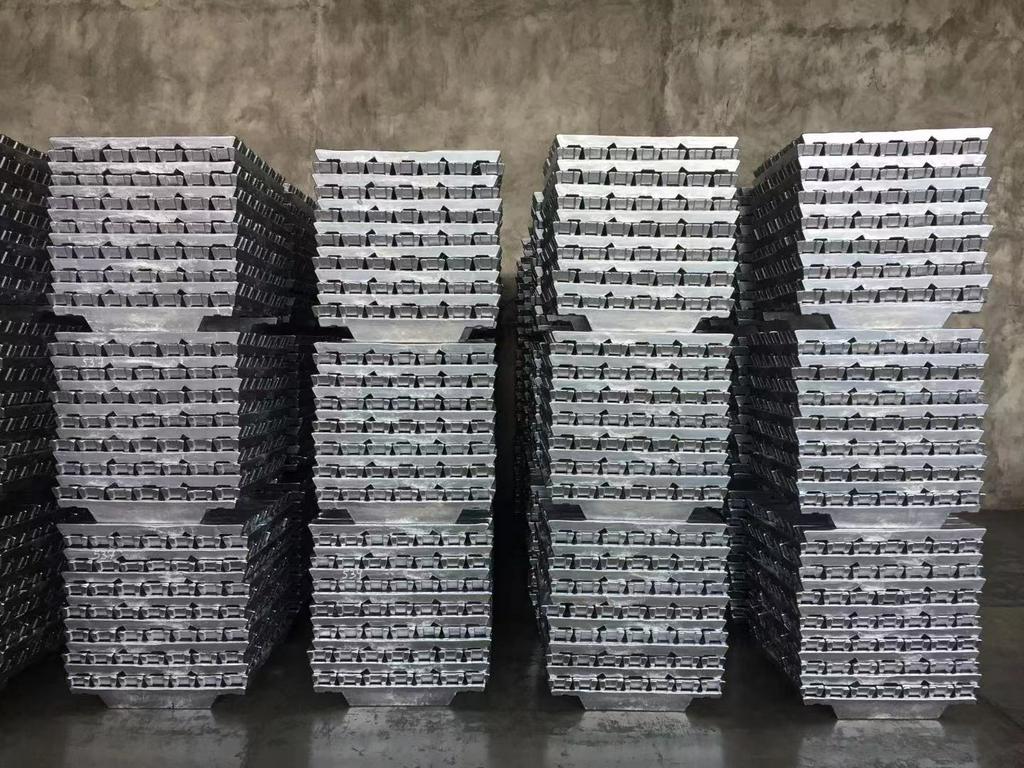 Warehouse Withdrawals Pull Back While Destocking Accelerates, the Logic of China’s Aluminum Ingot Destocking Changing?
As of July 30, China’s aluminum ingot inventory in major consumption areas stood at 953,000 mt. Cumulative destocking from the YTD high of 1.465 million mt in early May has reached 512,000 mt (-35%), with an additional accelerated destocking of 53,000 mt this week, breaking below the 1 million mt threshold as expected. However, the directional divergence between warehouse withdrawals and inventory has raised concerns...
Jul 31, 2026 23:53- Warehouse withdrawals pull back, but destocking accelerates — Is China's aluminum ingot destocking logic changing? [SMM Analysis]
As of July 30, China's major consumption regions reported aluminum ingot inventory of 953,000 mt, having cumulatively destocked 512,000 mt (-35%) from the year's high of 1.465 million mt in early May. Within the week, destocking accelerated further by 53,000 mt, as expected falling below the 1 million mt mark. However, the directional divergence between warehouse withdrawals and inventory drew attention: weekly warehouse withdrawals pulled back to 127,700 mt, losing the advantage of being at a high for the same period in the past four years. The core driving force of this destocking round has shifted from "demand and warehouse withdrawal boost" in June to "supply contraction + slowdown in shipment pace": the proportion of liquid aluminum rose to 78.3% in July, with casting ingot volume down 15.1% YoY; a sharp drop in arrivals in South China pushed Foshan's premium wider by 50 yuan/mt in a single week to 115 yuan/mt; SMM believes...
Jul 31, 2026 23:30 - [SMM Steel] Tight Billet Supply Holds Turkish Rebar Steady While Wire Rod Edges Up
[Turkey] Supported by rising billet costs, the Turkish long steel market held firm overall this week, though sluggish end-user demand prevented a broader price surge. In the rebar sector, after Karabük mill concluded large-volume billet transactions at higher prices, coupled with escalating fuel costs, mills in the Marmara region showed strong resistance to price cuts, pushing domestic rebar offers up to 580 USD/tonne EXW (excl. VAT). However, given tight buyer liquidity and earlier partial restocking, mainstream producers in Iskenderun and Izmir maintained quotes at 570 USD/tonne EXW, leaving export offers steady at 575 USD/tonne FOB amid subdued trading. In the wire rod market, buoyed by domestic price hikes from major producers, Turkish wire rod export quotes advanced in tandem to 585 USD/tonne FOB.
Jul 31, 2026 16:09 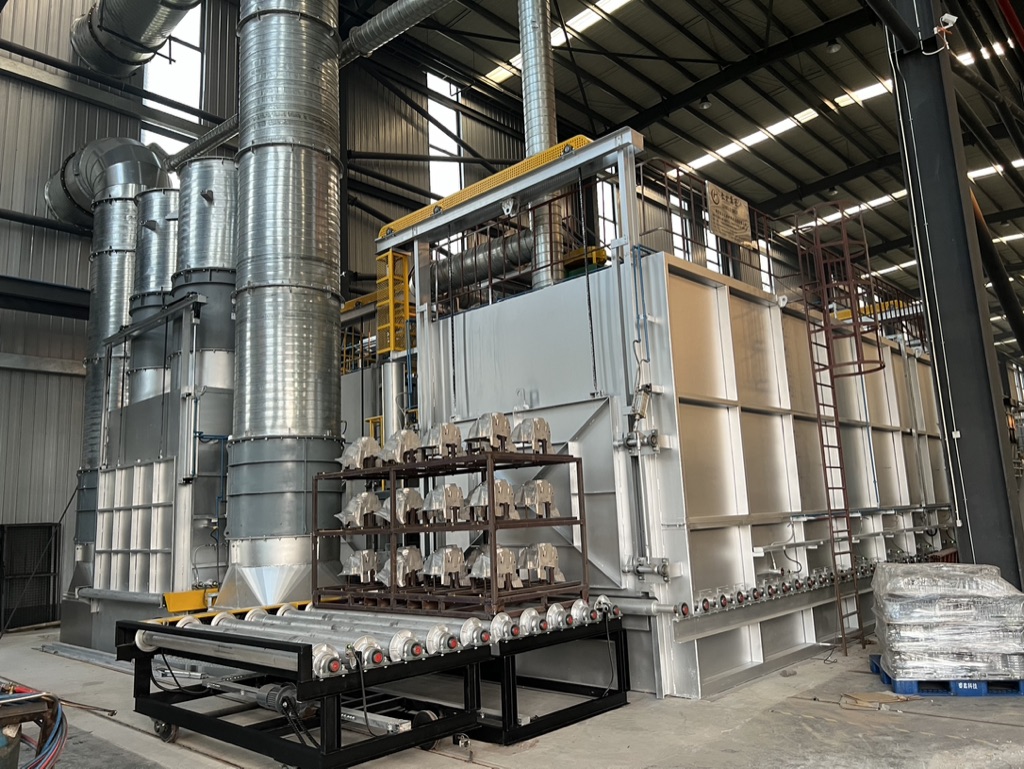 Q3 MJP Hits Record High as Mounting Pressure Weighs on SE Asian Aluminium Billet Transactions in July【SMM Analysis】
As of July 24, premiums for 6063 aluminium billet across major Southeast Asian markets remained broadly stable throughout July, with no adjustments recorded for four consecutive weeks. The ex-works premium for homogenised 6063 aluminium billet in Cambodia averaged $300/mt, while premiums for homogenised billet in Malaysia and Thailand both stood at $262.5/mt. The ex-works premium for non-homogenised 6063 aluminium billet in Thailand was assessed at $222.5/mt, compared with $205/mt in Vietnam. Meanwhile, the CIF Thailand premium for Chinese exports of non-homogenised 6063 aluminium billet was assessed at a range of minus $100/mt to plus $100/mt, with a midpoint of $0/mt. In terms of price movements, premiums for homogenised 6063 aluminium billet in Thailand and Malaysia had already retreated from their previous highs in June compared with May, before stabilising in July. However, stable premiums did not indicate an improvement in market demand. The 2026 Q3 MJP was settled at $395/mt, up $43.50/mt, or approximately 12.4%, from $351.50/mt in Q2, reaching a historical high. As reference prices for Southeast Asian aluminium billet are generally calculated based on the LME Official Cash Settlement, MJP and the applicable premium, the higher MJP further raised the overall procurement cost of locally produced billet and weighed on downstream purchasing interest. At the same time, Chinese aluminium billet exports continued to compete with locally produced material in Southeast Asia. In Thailand, for example, the CIF premium for Chinese non-homogenised 6063 aluminium billet was assessed at minus $100/mt to plus $100/mt, substantially below the ex-works premium of $222.5/mt for locally produced non-homogenised billet. Although the delivery terms and detailed cost structures of the two types of material are not directly comparable, Chinese export cargoes continued to hold a clear price advantage on a delivered basis. According to SMM market research, some Chinese export cargoes consisted of remelted secondary aluminium billet, which carries relatively lower production costs. Other cargoes were processed from imported materials before being re-exported, resulting in a cost structure different from that of conventional export trade. Supported by these cost advantages, purchases of Chinese aluminium billet in Southeast Asia increased, placing additional pressure on orders received by local billet producers. However, as aluminium billet and aluminium ingot are classified under the same aggregated HS code in existing customs statistics, it is currently difficult to quantify billet export growth separately. The assessment is therefore primarily based on feedback collected through SMM market research. On the supply side, renewed tensions in the Middle East continued to disrupt shipping routes between Asia and Europe in July, affecting exports of Southeast Asian aluminium billet to the European market. Some cargoes originally intended for Europe were redirected to domestic and neighbouring regional markets, further increasing the volume that needed to be absorbed within Southeast Asia. On the demand side, growth in local billet consumption remained insufficient to fully absorb both the surplus supply from Southeast Asian producers and the additional material arriving from China. Under the combined pressure of intensifying supply competition, elevated procurement costs and weak end-user demand, overall trading activity in the Southeast Asian aluminium billet market remained subdued in July. Although premiums across major markets had not declined further, buyers slowed their procurement pace and showed stronger bargaining intentions. Looking ahead, Southeast Asian locally produced aluminium billet premiums are unlikely to gain significant upward momentum in the short term, as the Q3 MJP remains elevated, Chinese export cargoes continue to retain a price advantage, and the region’s ability to divert supply to the European market remains constrained. The high MJP will continue to support overall billet prices. However, unless local consumption improves materially, pressure to absorb regional supply is likely to persist, while market transactions are expected to remain weak. To align with buyers’ target transaction levels and compete with the price advantage of Chinese billet exports, some Southeast Asian billet sellers may need to lower their premiums, offer concessions on MJP pricing, or adopt more flexible pricing arrangements based on the prevailing spot MJP to facilitate transactions.
Jul 31, 2026 15:56- Q3 MJP Hits Historic High, July Southeast Asian Aluminum Billet Market Transactions Weaken under Combined Supply-Demand Pressure [SMM Analysis]
As of July 24, the premium for 6063 aluminum billets in major Southeast Asian markets remained stable throughout July, with no adjustments for four consecutive weeks. Among them, the local ex-works premium average for 6063 homogenized aluminum billets in Cambodia was $300/mt; the local ex-works premiums for 6063 homogenized aluminum billets in Malaysia and Thailand were both $262.5/mt; the local ex-works premium for 6063 non-homogenized aluminum billets in Thailand was $222.5/mt; and the local ex-works premium for 6063 non-homogenized aluminum billets in Vietnam was $205/mt. The assessed range for CIF premium of 6063 non-homogenized aluminum billets exported from China to Thailand remained between -$100 and +$100/mt, with a midpoint of $0/mt. From a price trend perspective, the premiums for 6063 homogenized aluminum billets in Thailand and Malaysia pulled back in June from their highs in May, and the price center temporarily stabilized after entering July. However, the stability of premiums did not indicate an improvement in market demand. The MJP for Q3 2026 settled at $395/mt, up $43.5/mt from $351.5/mt in Q2, an increase of approximately 12.4%, remaining at a historically high level. As the all-in reference price for Southeast Asian aluminum billets is mainly composed of the LME spot settlement price, MJP, and premium, the rise in MJP further drove up local procurement costs for billets, somewhat dampening downstream purchase willingness. Meanwhile, China's exported aluminum billets continued to compete with locally produced billets in Southeast Asia. Taking the Thai market as an example, the CIF premium range for 6063 non-homogenized aluminum billets exported from China was -$100 to +$100/mt, significantly lower than the ex-works premium of $222.5/mt for locally produced non-homogenized billets in Thailand. Although the delivery terms and specific cost structures of the two supply sources are not entirely identical, Chinese export cargoes still held a strong competitive advantage in terms of landed price. According to SMM market surveys, some Chinese export cargoes consisted of secondary aluminum remelt billets with relatively low production costs, while others were produced under a processing trade with supplied materials before being exported, offering relatively competitive overall trade costs. Driven by price differences, purchases of Chinese aluminum billets in Southeast Asian markets increased, squeezing orders from local producers. As aluminum billets and ingots share a combined HS code in existing customs statistics, it is currently difficult to separately quantify the supply growth of billets through import and export data, and relevant assessments are mainly based on SMM survey feedback. Supply side, in July, the situation in the Middle East tightened again, continuing to affect shipping on Asia-Europe routes, and the shipment of Southeast Asian aluminum billets to the European market was somewhat restricted. Some cargoes that had originally planned to be exported to Europe were instead diverted for sale in the local Southeast Asian and surrounding markets, further increasing regional supply absorption pressure. Demand side, the growth in local aluminum billet consumption in Southeast Asia is limited, not enough to fully absorb the supply diverted back to the local market by local producers and the new supply from China. Weighed down by intensified supply competition, high procurement costs, and weak end-use demand, overall deals in the Southeast Asian aluminum billet market were subdued in July. Although premiums in various regions have not yet seen further declines, actual procurement pace slowed down, and buyers' willingness to bargain increased. Looking ahead to the near term, with Q3 MJP staying high, Chinese exports continuing to maintain a price advantage, and limited diversion capacity of the European market, the premium for locally produced aluminum billet in Southeast Asia is expected to still lack clear upward momentum. High MJP will continue to support the all-in price of aluminum billet, but if local consumption does not show significant improvement, the pressure to digest regional supply may persist, and market transactions are expected to remain in the doldrums. To get closer to buyers' target transaction levels and cope with the price competition from Chinese exported aluminum billet, some billet sellers in Southeast Asia may need to either lower premiums, make concessions on MJP pricing, or adopt more flexible pricing methods such as spot MJP to facilitate deals.
Jul 31, 2026 15:54 - [SMM Analysis] China Aluminum Billet: Inventory Declines, Prices Rebound, Processing Fees Drop
According to SMM statistics, on July 30, aluminum billet inventory in major consuming regions in China stood at 119,500 mt, down 2,500 mt from last Monday and down 1,500 mt from last Thursday. The inventory ended its two-week buildup trend and shifted to slight destocking. On a YoY comparison basis, inventory was 27,500 mt lower than the same period in 2025, 9,700 mt lower than in 2024, but 40,600 mt higher than in 2023.
Jul 31, 2026 14:42 - Off-Season Demand Remains Weak, Brass Billet Operating Rate Continues to Edge Down [SMM Brass Billet Market Weekly Review]
This week (July 24-30), the SMM brass billet enterprise weekly operating rate was 48.81%, pulling back slightly by 0.32 percentage point WoW, and industry production remained under pressure. The tight supply of recycled brass raw materials has not improved significantly, procurement costs of raw materials stayed high, and sample enterprises' days of raw material inventories were 3.58 days, remaining in a low range. The traditional downstream off-season continued, orders from end-use industries such as refrigeration, sanitary ware, and hardware remained weak, with no new demand support. Downstream procurement wait-and-see sentiment was strong, with purchases maintained at a small scale based on demand. The destocking process of brass billet finished products was slow, and sample enterprises' days of finished product inventories stood at 4.91 days. Looking ahead to next week (July 31-August 6), the short-term end-user off-season conditions are unlikely to improve significantly, and it will take time for downstream orders to recover. Meanwhile, the situation of tight raw material supply and high raw material prices is expected to persist, suppressing enterprises’ production willingness. SMM expects that the operating rate of brass billet sample enterprises will continue to pull back slightly to 48.65%.
Jul 31, 2026 10:01