

39results found for 'aluminum exports'
Sort by : |
- China's Aluminum Exports Down 2% MoM, Up 15% YoY in May 2026
According to customs data, in May 2026, China's exports of aluminum plate/sheet and strip totaled 319,900 mt, down 2% MoM and up 15% YoY.
Jun 25, 2026 22:09 - China's Aluminum Wire Exports Surge 131.4% in May, Hitting 5-Year Record High【SMM Analysis】
June 25, 2026 Customs data showed that in May 2026, China’s aluminum wire exports totaled 63,850 mt, surging 131.4 percentage points MoM, a net increase of 36,260 mt from 27,590 mt in April. Monthly exports hit a new record high in nearly five years, far exceeding prior optimistic expectations. From January to May, China’s cumulative aluminum wire exports reached 170,600 mt, up 53.14% YoY from the same period in 2025. Aluminum Stranded Wire (HS 76149000): Single-Month Shipments Top 50,000 mt, Far Exceeding Expectations Exports under HS code 76149000 (stranded aluminum wire, not containing any steel core) were 50,224 mt in May, surging 222.7% MoM, a net increase of 34,659 mt from April's 15,565 mt. This result significantly exceeded the optimistic forecasts from the April analysis, with actual exports reaching 2.5 times the expected level. The share of pure aluminum stranded wire in total aluminum wire exports climbed further to 78.7% from 56.4% in April, marking a second consecutive month above the 50% threshold and indicating sustained stronger-than-expected demand outside China. The core drivers behind the surge in pure aluminum stranded wire exports were: first, the SHFE/LME aluminum price ratio remained elevated for an extended period, with overseas aluminum prices trading at a significant premium over domestic prices, which kept the export profit window open for a long time and encouraged traders to place concentrated orders; second, orders locked in earlier (March-April) based on the price spread between Chinese and overseas markets were cleared through customs en masse in May, creating a pulse-like spike in monthly export volumes. Aluminum Conductor Steel Reinforced (HS 76141000): Mild MoM Rebound to 13,600 mt Exports under HS code 76141000 (aluminum conductor steel reinforced) were 13,627 mt in May, up 13.3% MoM, a net increase of 1,603 mt from 12,024 mt in April. After the pullback that followed the March peak (18,162 mt), a mild rebound materialized in May. ACSR’s share of exports narrowed further to 21.3% from 43.6% in April, mainly because the massive expansion in pure aluminum stranded wire shipments shifted the proportions, while ACSR export volumes themselves remained relatively stable. Analysis of export destinations for pure aluminum stranded wire: East Asia's share jumped to the top, South Korea imported 17,800 mt in a single month Compared with April, the regional structure underwent significant changes: the East Asia region surged from third place (24.6%) in April to first place (43.0%), driven mainly by South Korea's imports soaring from 2,911 mt in April to 17,797 mt (up 511.4% MoM); Southeast Asia remained in second place, but its share edged down from 33.1% to 31.4%; Africa's share fell from 30.6% to 21.6%, while absolute volume increased from 4,189 mt to 10,131 mt, up 142%. The top five countries by MoM volume increase were South Korea (+14,887 mt), Mozambique (+6,515 mt), Vietnam (+4,966 mt), Malaysia (+3,776 mt), and Japan (+1,886 mt), together accounting for 92.5% of the MoM increase in pure aluminum stranded wire exports. South Korea's performance was especially striking: its monthly imports leaped from less than 3,000 mt to nearly 18,000 mt, representing 37.5% of total pure aluminum stranded wire exports in May, instantly becoming the largest single export destination. Export Province Rankings: Fujian, Jiangsu, and Shanghai Take the Top Three Spots In May, exports of pure aluminum stranded wire were concentrated mainly in coastal provinces such as Fujian, Shanghai, and Zhejiang. Fujian Province topped the list with nearly 20,000 mt of exports, almost entirely pure aluminum stranded wire (99.7%), serving as the core contributor to the surge in pure aluminum exports in May. Jiangsu Province was the largest exporter of steel-cored aluminum stranded wire (8,009 mt), while also recording substantial pure aluminum exports. Analysis of Export Destinations for Steel-Cored Aluminum Stranded Wire: Cambodia Tops the List, Saudi Arabia’s Surge In May, steel-cored aluminum stranded wire was exported to a total of 20 countries and regions, with extremely high export concentration: the top 15 destinations accounted for 11,716 mt, representing 99.4% of total exports. Unlike the explosive growth of all-aluminum stranded wire, exports of steel-cored aluminum stranded wire rebounded mildly by 13.3% MoM, maintaining a generally stable pattern. Notably, Saudi Arabia saw exports jump from just 15 mt in April to 1,866 mt in May (up 12,313% MoM), surging to second place, likely driven by concentrated deliveries from power grid expansion projects in the Middle East. Cambodia has ranked among the top export destinations for steel-cored aluminum stranded wire for several months, and remained firmly in first place in May with 2,003 mt. SMM Outlook: June Exports Remain Supported, with Significant Pullback Risk from July Onward Overall, aluminum wire exports hit a record 63,900 mt in May for a single month over the past five years, mainly driven by a concentrated surge in pure aluminum stranded wire during the window of favorable price spread between Chinese and overseas markets. However, recent industry feedback indicates that signals of an export turning point have already emerged. Order side: According to SMM’s communication with overseas traders and Chinese aluminum wire and cable manufacturers, new export orders for aluminum stranded wire have plummeted recently. The main reason is that overseas aluminum prices have fallen successively, narrowing the SHFE/LME aluminum price ratio. The profit window that previously drove exports is closing rapidly, with losses already occurring in some periods. It is learned that new orders were already very scarce last week, and there have been almost no new export orders this week. The few new orders placed earlier were mainly arbitrage orders by traders who locked in the price spread between Chinese and overseas markets in advance. Production schedule side: In terms of the export pace, enterprises in June are mainly producing previously scheduled orders, and orders on hand are sufficient to cover the entire month. June aluminum wire exports are expected to remain at the May level or edge up slightly, with limited downside room MoM. From July onward, as previously locked-in orders are gradually delivered, the impact of the gap in new orders will become apparent, and pure aluminum stranded wire exports are likely to decline significantly. If the SHFE/LME aluminum price ratio and the price spread between Chinese and overseas markets show no significant improvement in August-September, aluminum wire exports are expected to pull back to the level before the profit window opened.
Jun 25, 2026 17:24 - LME Aluminium Prices Slide: Long-Short Game Behind Sharp Backwardation Contraction 【SMM Analysis】
\LME aluminium prices have retreated steadily from their late-May peak, falling from nearly $3,680 per metric ton to around $3,480 per metric ton. More notably, the LME aluminium Cash-3M spread narrowed sharply over just one week, dropping from a cash premium of $104.56 per metric ton on June 1 to $15.17 per metric ton on June 9, a loss of nearly $90 per metric ton. This marks the steepest contraction in the backwardation structure since the outbreak of the Middle East conflict.
Jun 11, 2026 18:06 - China's Aluminum Exports Surge 15.5% YoY in May 2026, Reaching 632,000 MT
According to data from the General Administration of Customs, exports of unwrought aluminum and aluminum semis reached 632,000 mt in May 2026, up 15.5% YoY from 547,000 mt in the same month last year and up 5.7% MoM from 598,000 mt in April. Additionally, cumulative exports in the first five months of this year reached 2.686 million mt, up 10.5% from 2.43 million mt in the same period last year.
Jun 9, 2026 11:18 - 【SMM Aluminum Flash News】Rio Tinto's Canadian Aluminum Exports to US Recover Despite Tariffs and Middle East Disruption
Amidst the backdrop of the Trump administration's increased tariffs on aluminum imports and disruptions to Middle Eastern supplies, global mining giant Rio Tinto's Canadian aluminum business is experiencing an unexpected boost. The company stated that its aluminum exports to the United States have recovered to pre-tariff levels, making the US once again the primary market for Canadian aluminum products. Last year, the Trump administration raised aluminum import tariffs to 50%, forcing Rio Tinto to divert more Canadian aluminum sales to Europe. However, due to continued tight domestic aluminum supplies in the US, coupled with the shutdown of some Gulf smelters due to the Middle East wars and disruptions to shipping through the Strait of Hormuz, US aluminum prices surged.
Jun 4, 2026 10:02 - Rio Tinto's US Aluminum Exports Rebound to Near Pre-Tariff Levels Amid High Premiums
[SMM Aluminum Express News] Rio Tinto said its aluminum exports to the United States have rebounded to near pre-tariff levels, with North American shipments returning to around 80% of sales after previously falling to the mid-60% range following US import tariffs on Canadian aluminum. The recovery has been supported by elevated US aluminum premiums and tight North American supply, helping offset tariff-related costs and restore trade flows from Rio Tinto’s Quebec smelters into the US market.
Jun 1, 2026 14:43 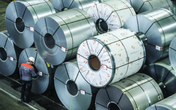 Geopolitical Disruptions and Structural Demand: China's Aluminum Exports to Rebound by 2026
In April 2026, China's aluminum semis exports showed a strong rebound. According to customs data, April exports of aluminum semis (including aluminum extrusion, aluminum plate/sheet and strip, aluminum foil, etc.) reached 535,700 mt, up 20.9% MoM and up 9.8% YoY; exports of aluminum products (including aluminum wire, etc.) reached 318,000 mt, up 32.8% MoM and up 7.8% YoY. Cumulative aluminum semis exports from January to April totaled 1.1555 million mt, up 6.2% YoY cumulatively.
May 28, 2026 16:30- Hindalco Boosts Aluminum Exports to Northeast Asia Amid West Asia Crisis
[SMM Aluminum Express News] Hindalco Industries said aluminum exports to Japan, South Korea, and Taiwan have increased slightly as the company filled supply gaps created by the West Asia crisis. Around 70% of Hindalco’s aluminum is consumed domestically, while 25–30% is exported, with most overseas shipments directed to Northeast Asia. The company is also ramping up its new Aditya FRP rolling mill in Sambalpur, aiming to ease India’s aluminum can supply shortage by end-2026.
May 26, 2026 11:57 - Mere 0.2% ordinary trade share in China's April primary aluminum imports; diversion to high-premium markets expected
SMM May 22: According to data from the General Administration of Customs, China's primary aluminum imports in April 2026 were approximately 265,000 mt, up 4.1% MoM and up 5.9% YoY. From January to April 2026, China's cumulative primary aluminum imports totaled approximately 911,000 mt, up 9.2% YoY. In April, China's primary aluminum exports were approximately 16,000 mt, up 6.3% MoM and up 13.7% YoY. From January to April, cumulative primary aluminum exports totaled approximately 54,000 mt, up around 55.1% YoY. In April, China's net primary aluminum imports were 250,000 mt, up 4.0% MoM and up 5.5% YoY. From January to April, China's cumulative net primary aluminum imports were approximately 858,000 mt, up 7.2% YoY. (The above import and export data are based on HS codes 76011090 and 76011010.) By country of origin, 83.6% of China's total primary aluminum imports in April came from the Russian Federation, 7.9% from Indonesia, 3.5% from Australia, and 2.7% from India. By trade mode, from January to April, the share of primary aluminum imports under Ordinary Trade was 4.0%, 1.3%, 1.7%, and 0.2% respectively, down 23.6, 27.2, 21.3, and 23.7 percentage points YoY respectively. LME aluminum outperformed SHFE aluminum in price trends, the SHFE/LME price ratio declined, and imports under Ordinary Trade decreased. It is possible that large volumes of bonded warehouse cargo may be re-exported to other countries outside China going forward. According to SMM surveys, long-term contracts and previously signed orders in April were fulfilled normally. Combined with in-transit cargo arriving at ports successively, China's primary aluminum imports remained at elevated levels. Currently, the supply-demand gap in the ex-China aluminum market is significant, with high spot aluminum ingot premiums outside China. Going forward, some imported cargo may be diverted for re-export to high-premium regions such as Japan and South Korea, Thailand, India, and Europe and the US. Overall, China's net primary aluminum imports in 2026 are expected to decline YoY.
May 22, 2026 19:43 - Domestic Primary Aluminum Imports and Exports Rise in April 2026, Showing Year-on-Year Growth
Primary Aluminum Imports According to data from the General Administration of Customs, domestic primary aluminum imports reached approximately 265,000 tons in April 2026, rising 4.1% month-on-month and 5.9% year-on-year. The total domestic import volume from January to April 2026 stood at around 911,000 tons, up 9.2% year-on-year. Primary Aluminum Exports Per statistics released by the General Administration of Customs, domestic primary aluminum exports were about 16,000 tons in April 2026, growing 6.3% month-on-month and 13.7% year-on-year. The cumulative export volume in the first four months of 2026 hit roughly 54,000 tons, with a year-on-year increase of about 55.1%. (The above import and export data are based on HS Codes: 76011090 and 76011010)
May 20, 2026 11:26