

275results found for 'aluminum capacity'
Sort by : |
- Indonesia’s 7.7-Magnitude Earthquake Had a Relatively Small Impact on the Aluminum Industry Chain, With the Shock Nearly Zero
SMM tracking feedback: The 7.7-magnitude earthquake on Flores Island, Indonesia, had a relatively small impact on the aluminum industry chain. In terms of capacity distribution, bauxite, alumina, and the vast majority of aluminum capacity are concentrated in western Indonesia, generally more than 1,400 km from the epicenter; even the closest aluminum smelter—Sulawesi Morowali Huachin Aluminum—was approximately 624 km away, still outside the 300 km damage radius. Coupled with a tsunami wave height of less than 0.4 meters, the actual supply shock was virtually zero. On the pricing front, it may at most show a short-term sentiment pulse of 0–1%, which is expected to be unwound within 1–3 days, without changing the medium-term trend.
Aug 15, 2026 10:39 - Petroleum Coke Divergence Pattern Becomes Prominent, Prebaked Anode Overall Cost Edges Down Slightly [SMM Prebaked Anode Weekly Review]
SMM, August 13: Raw material side: this week, trading activity in China's petroleum coke market was moderate, while market divergence intensified; low-sulphur petroleum coke prices continued to rise, while medium- and high-sulphur petroleum coke prices were under pressure. At CNOOC refineries, auction transaction prices for petroleum coke were steady to higher; purchasing demand from downstream anode material producers remained in place, boosting coke prices. PetroChina's in-factory inventory of low-sulphur petroleum coke in north-east China was low, and its EXW prices were raised by 50-60 yuan/mt this week. At Sinopec refineries, downstream purchasing demand recovered; supported by buying from anode material producers, low-sulphur petroleum coke cargoes in the Yangtze River region saw smooth shipments and continued to underpin the market, while Sinopec petroleum coke offers continued to be raised. Overall shipments from independent refineries were moderate. As downstream restocking at the beginning of the month came to an end, the rise in medium- and high-sulphur petroleum coke prices slowed, and some prices came under pressure. The latest SMM data showed that the #1 petroleum coke spot price index in north-east China came in at 4,602.78 yuan/mt (up 1.13% WoW), the #2 petroleum coke spot price index in Shandong at 4,281.67 yuan/mt (up 0.17% WoW), the #3 petroleum coke spot price index in Shandong at 3,822.90 yuan/mt (down 1.59% WoW), and the #4 petroleum coke spot price index in Shandong at 2,069.45 yuan/mt (down 0.90% WoW). During the week, some domestic refineries completed maintenance and resumed operations, lifting refinery operating rates; market supply continued to increase, but demand-side purchasing interest was moderate. In particular, anode material producers continued to buy, supporting further gains in low-sulphur petroleum coke prices; rigid restocking demand for carbon used in aluminum production remained, forming a floor for medium-sulphur petroleum coke. Petroleum coke prices are expected to remain divergent in the short term, with low-sulphur petroleum coke relatively firm and medium- and high-sulphur petroleum coke mainly consolidating. This week, the coal tar pitch market remained strong. As of this Thursday, the average coal tar pitch price was 4,960 yuan/mt, up 1.71% from the previous Thursday. Overall, cost support for prebaked anode remained in place this week. Supply side: prebaked anode producers continued to produce based on sales; new projects in Xinjiang, Guangxi and other regions were commissioned one after another, with new capacity being released continuously. Some producers saw operating rates pull back slightly due to maintenance, but the industry's overall supply capability improved steadily. Demand side: China's operating aluminum capacity remained high, providing stable rigid support for anode consumption. Exports: new aluminum projects in Indonesia continued to be commissioned, boosting China's anode exports. Overall, high operating rates in the aluminum sector effectively underpinned domestic demand, and the export market improved marginally; however, the concentrated commissioning of new capacity made supply grow slightly faster than demand, intensifying market competition. Commentary: This week, raw material prices in China's prebaked anode market diverged, and the industry's overall production cost edged down. According to SMM data, as of August 13, China's prebaked anode production cost was 5,697.23 yuan/mt, down 0.47% from the previous Thursday, mainly because weakening medium- and high-sulphur petroleum coke dragged down raw material costs, while firm coal tar pitch partially offset this. Looking ahead, cost-side floor support remains, but upward drivers are insufficient: low-sulphur petroleum coke is firm, medium- and high-sulphur petroleum coke are consolidating, and coal tar pitch prices are strong; overall, raw materials underpin anode prices but are unlikely to push costs upward. On the supply-demand front, high operating rates in the aluminum sector continued to underpin domestic demand, and export orders recovered at the margin, bringing incremental demand; however, the concentrated commissioning of new industry capacity and the continued expansion of supply further intensified market competition. Going forward, close attention should be paid to changes in supply-demand patterns and price trends of prebaked anode and upstream raw materials.
Aug 13, 2026 19:00 - Divergent Raw Material Prices to Keep Short‑Term Aluminum Costs Stable
SMM, August 3 According to SMM data, the average tax-inclusive full cost of the domestic electrolytic aluminum industry rose 0.9% month-on-month in July 2026, while falling 1.7% year-on-year, mainly driven by slight increases in the monthly average price of alumina, prebaked anode prices, and electricity prices during the period. The monthly average SMM A00 spot price in July (June 26 – July 25) stood at RMB 22,977 per tonne, down 4.2% month-on-month. Electrolytic aluminum profit margins narrowed by RMB 1,146 per tonne to RMB 6,999 per tonne, with average profitability up 56.8% year-on-year. Measured by the monthly average price, 100% of domestic operating electrolytic aluminum capacity was in profit in July. By cost component: Alumina: According to SMM data, the monthly average SMM Alumina Index in July (June 26 – July 25) was RMB 2,745 per tonne, up 1.6% month-on-month. Alumina prices fluctuated within a range through the month as inventories continued to accumulate; overseas alumina prices, however, rose on restocking ahead of production restarts and new capacity ramp-ups. Entering August, the alumina market is expected to maintain its current supply structure. Against a backdrop of net imports, there is no sign of an inflection point toward inventory drawdown, but cost support has lifted Guinean sellers' asking prices, lending upward momentum to alumina costs. In the near term, the tug-of-war between cost support and loose supply in the spot alumina market is set to continue. With prices relatively low at the start of the month, the August average price is expected to edge down slightly. Auxiliary materials: In July, rigid demand from electrolytic aluminum underpinned domestic anode consumption, while export demand from Southeast Asia offset reductions in the Middle East, leaving the prebaked anode market relatively steady. Long-term contract procurement prices rose marginally by RMB 30 per tonne month-on-month. In the fluoride salt market, downstream buyers maintained rigid procurement and held off on purchases to push prices lower, leading to declines in procurement prices at major producers. Entering August, with cost support softening and supply continuing to expand, prebaked anode prices are expected to edge down slightly; fluoride salt prices, by contrast, are projected to rise on the back of rigid cost support combined with low operating rates. Overall, auxiliary material costs for electrolytic aluminum are expected to decline slightly in August. Electricity prices: Electricity prices rose modestly month-on-month in July. Entering August, electricity prices are expected to remain broadly stable, and overall power costs for electrolytic aluminum are projected to hold steady. In summary, the weighted average tax-inclusive full cost of SMM's domestic electrolytic aluminum industry rose slightly in July 2026; electrolytic aluminum costs are expected to decline modestly in August, with the average hovering around RMB 15,700–16,100 per tonne.
Aug 7, 2026 17:25 - August Prices Slightly Declined, Cost Support Continued to Increase [SMM Prebaked Anode Weekly Review]
SMM, August 6: Raw material side: trading in China's petroleum coke market remained strong this week, with performance diverging across grades and overall prices holding up well. Refinery side, major refineries firmed steadily, supporting the market. Auction transaction prices for petroleum coke at CNOOC's various plants continued to climb, with gains concentrated at 30-160 yuan/mt. Downstream anode material enterprises showed strong buying interest, boosting coke prices. In PetroChina's north-east China operations, in-factory inventory of low-sulphur petroleum coke was low. Coupled with the concentrated release of downstream rigid demand, EXW prices were raised by 100-300 yuan/mt this week. At Sinopec refineries, downstream procurement demand recovered, and coke cargoes for anode-material and energy-storage applications in the Yangtze River region shipped smoothly, continuously underpinning the market. Sinopec's petroleum coke offers continued to move higher. Overall shipments from independent refineries were moderate. Prices were strong initially and then weakened, with visible divergence emerging across different specifications. SMM's latest data showed that the No. 1 petroleum coke spot price index for north-east China came in at 4,551.51 yuan/mt, up 3.07% WoW; the No. 2 petroleum coke spot price index for Shandong came in at 4,274.42 yuan/mt, down 0.05% WoW; the No. 3 petroleum coke spot price index for Shandong came in at 3,884.73 yuan/mt, up 3.92% WoW; and the No. 4 petroleum coke spot price index for Shandong came in at 2,088.15 yuan/mt, down 0.23% WoW. Recently, operating rates at China's refineries picked up and market supply increased. However, demand-side purchasing interest remained moderate; coupled with stockpiling and restocking by downstream enterprises early in the month, this provided support. High- and low-sulphur grades continued to diverge, and petroleum coke prices are expected to consolidate at highs in the short term. The coal tar pitch market continued to hold up well this week. As of this Thursday, the average coal tar pitch price was 4,876.67 yuan/mt, up 3.47% from last Thursday. Overall, cost-side support for prebaked anodes continued to strengthen this week. Supply side, prebaked anode enterprises maintained a production pace based on sales. New anode projects in Xinjiang, Guangxi and other regions came online one after another, and new capacity continued to be released. Meanwhile, some enterprises saw operating rates pull back slightly due to maintenance, but overall the industry's supply capability improved steadily and supply flexibility strengthened further. Demand side, China's operating aluminum capacity remained high, providing steady, rigid support for prebaked anode consumption. Export side, new aluminum projects in Indonesia continued to come online, driving continued improvement in China's anode exports. Overall, China's new prebaked anode supply continued to materialize, high operating rates at downstream aluminum enterprises effectively underpinned domestic demand, and the export market improved at the margin. The industry's overall supply-demand balance remained stable, but as new capacity continued to be released, supply grew slightly faster than demand and the competitive landscape became increasingly intense. Brief comment: This week, China's prebaked anode raw material side improved in tandem, and the industry's overall production cost rose. According to SMM data, as of August 6, China's prebaked anode production cost was 5,723.68 yuan/mt, up 2.26% from last Thursday. In terms of prices, China's prebaked anode prices mainly edged down in August. The August prebaked anode tender price at a large aluminum producer in Shandong fell 53 yuan/mt MoM, while quotes from a major domestic prebaked anode sales enterprise showed an upward trend, up 59 yuan/mt MoM. Looking ahead, cost-side support remains in place: petroleum coke still has relatively strong bottom support, coal tar pitch market conditions are improving in tandem, and raw materials overall provide fairly good support for anode costs. Supply-demand side, high operating rates at China's aluminum enterprises continue to underpin domestic anode demand, and export orders are recovering at the margin, bringing incremental growth. However, the concentrated release of new industry capacity and sustained supply expansion are further intensifying market competition. Going forward, close attention should be paid to changes in the supply-demand pattern and price trends of prebaked anodes and upstream raw materials.
Aug 6, 2026 19:03 - China Aluminum Inventory Pulls Back: Aluminum Prices Drift Higher Amid Multiple Factors in Play [SMM Aluminum Morning Meeting Summary]
[China Aluminum Inventory Pulls Back, Multiple Factors Drive Aluminum Prices to Drift Higher] Overall, the macro front has improved recently, and the US Fed’s short-term pause on rate hikes has eased the marginal constraint on the nonferrous sector. Meanwhile, the proportion of liquid aluminum in China has continued to rise, and destocking of China aluminum inventory has resumed, jointly underpinning aluminum price performance. However, the continued rollout of forward capacity outside China, weak traditional end-use demand in China during the traditional off-season, and the recent easing of Middle East geopolitical tensions have together created some upside pressure on aluminum prices. Aluminum prices are expected to continue to consolidate on a strong note.
Aug 6, 2026 09:05 - Central Bank Releases Easing Signals; Aluminum Price Upside Room Limited Amid Supply-Demand and Geopolitical Dynamics [SMM Aluminum Morning Meeting Minutes]
[Central Bank Signals Easing; Aluminum Price Upside Room Limited Amid Supply and Demand and Geopolitical Dynamics] Overall, the macro front has improved somewhat recently, and the marginal constraint from expectations for US Fed interest rate hikes on the nonferrous sector has continued to ease. The proportion of liquid aluminum in China has kept rising, and China’s central bank will implement an accommodative monetary policy, step up countercyclical adjustments, and intensify efforts to expand domestic demand, promoting sustained improvement and positive momentum in the economy. The geopolitical risk premium in the Middle East has persisted, jointly underpinning aluminum price performance, and market confidence has strengthened markedly in the short term. However, the continued rollout of outside China aluminum capacity in the forward horizon, relatively weak traditional end-use demand in China recently, together with repeated swings in expectations for US Fed interest rate hikes outside China and disturbances from uncertainty in the Middle East geopolitical situation, mean that aluminum’s upside room still faces some pressure.
Aug 3, 2026 09:51 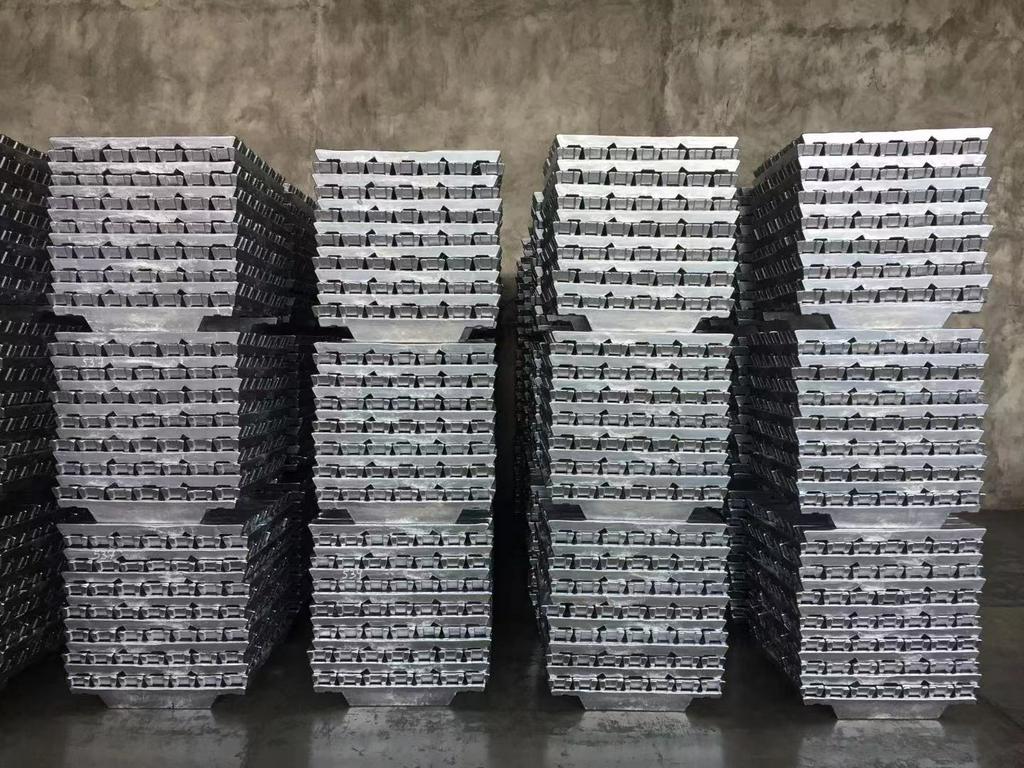 Warehouse Withdrawals Pull Back While Destocking Accelerates, the Logic of China’s Aluminum Ingot Destocking Changing?
As of July 30, China’s aluminum ingot inventory in major consumption areas stood at 953,000 mt. Cumulative destocking from the YTD high of 1.465 million mt in early May has reached 512,000 mt (-35%), with an additional accelerated destocking of 53,000 mt this week, breaking below the 1 million mt threshold as expected. However, the directional divergence between warehouse withdrawals and inventory has raised concerns...
Jul 31, 2026 23:53- Warehouse withdrawals pull back, but destocking accelerates — Is China's aluminum ingot destocking logic changing? [SMM Analysis]
As of July 30, China's major consumption regions reported aluminum ingot inventory of 953,000 mt, having cumulatively destocked 512,000 mt (-35%) from the year's high of 1.465 million mt in early May. Within the week, destocking accelerated further by 53,000 mt, as expected falling below the 1 million mt mark. However, the directional divergence between warehouse withdrawals and inventory drew attention: weekly warehouse withdrawals pulled back to 127,700 mt, losing the advantage of being at a high for the same period in the past four years. The core driving force of this destocking round has shifted from "demand and warehouse withdrawal boost" in June to "supply contraction + slowdown in shipment pace": the proportion of liquid aluminum rose to 78.3% in July, with casting ingot volume down 15.1% YoY; a sharp drop in arrivals in South China pushed Foshan's premium wider by 50 yuan/mt in a single week to 115 yuan/mt; SMM believes...
Jul 31, 2026 23:30 - July’s increase in aluminum’s proportion of liquid aluminum exceeded expectations, and August is expected to edge up [SMM Analysis]
SMM July 31 news: According to SMM statistics, China's aluminum production in July 2026 (31 days) increased 1.6% YoY and 3.5% MoM. Domestic demand was weak, and combined with a pullback in export orders for some downstream products, all industry chain segments were under pressure; however, driven by high processing fees for aluminum rod and billet, downstream procurement demand for liquid aluminum rose, pushing the proportion of liquid aluminum output in China higher. The proportion of liquid aluminum in the month rose 1.1 percentage points MoM to 78.3%, slightly exceeding expectations at the start of the month, with core growth coming from strong processing profits for some products, leading to higher-than-expected demand for liquid aluminum. Based on SMM's proportion of liquid aluminum calculations, China's aluminum casting ingot production in July fell 15.1% YoY and 1.4% MoM. Capacity changes: As of month-end July, SMM statistics showed China's existing aluminum capacity was approximately 46.29 million mt, flat MoM. Production forecast: Entering August 2026, the traditional off-season for downstream continues, and demand for most downstream products is expected to further weaken. However, some primary processed material orders are performing well, boosting downstream enterprises' willingness to purchase liquid aluminum directly. Overall, the proportion of liquid aluminum is expected to rise 0.2 percentage points to 78.5%. [Data source statement: All data except public information is processed by SMM based on public information, market communication, and SMM's internal database models, for reference only and not as investment advice.] Data source: SMM
Jul 31, 2026 16:54 - Destocking and Geopolitics Support SHFE Aluminum's Strong Consolidation; Alumina Inventory Buildup Surplus Continues to Dip to New Lows [SMM Aluminum Brief Review]
SMM July 31: Today, the most-traded SHFE aluminum 2609 contract closed at 23,630 yuan/mt, up 45 yuan on the day, a gain of 0.19%. Trading volume was 139,967 lots, and open interest was 247,263 lots, down 3,338 lots day on day, with funds exiting and clear signs of both bulls and bears reducing positions to realize profits. The price held above the 5-day, 10-day, and 30-day moving averages but remained below the 60-day MA, with short-term bearish pressure continuing to ease. After a sharp decline earlier, the price consolidated at lows for repair, and on the day it shot up then pulled back to close slightly higher, with moderate bullish buying at lows. The 5-day and 10-day MAs turned upward, while the 30-day and 60-day MAs remained downward, leaving the medium-term downtrend unchanged. The 60-day MA above forms strong medium- and long-term resistance, limiting upside room, while the short-term MAs below provide solid support at lows. The DIF and DEA lines stayed below the zero axis, but bearish momentum shrank significantly, and the rebound momentum from lows continued, greatly easing overall downward pressure. SMM Commentary: Recently, the macro front improved somewhat, and the marginal constraints from rate hike expectations on the nonferrous metals sector continued to ease. China’s proportion of liquid aluminum kept rising, and the geopolitical risk premium from the Middle East along with continued destocking of domestic aluminum ingot provided a floor for aluminum prices, significantly boosting short-term market confidence. However, the continued rollout of aluminum capacity outside China in the long term, weak end-use demand in China, together with repeated changes in expectations for US Fed rate hikes and uncertainties in the Middle East, still put some pressure on aluminum’s upside room. Short-term aluminum prices are expected to consolidate on a strong note. Today, the most-traded alumina 2609 contract settled at 2,621 yuan/mt, down 27 yuan on the day, a decline of 1.02%. Trading volume was 185,860 lots, and open interest was 242,811 lots, down 6,081 lots MoM, with funds reducing positions and exiting. The price stayed below the 5-day, 10-day, 30-day, and 60-day MAs, with all MAs forming bearish pressure from top to bottom. Short-term bears continued to press, and the price hit a new low, with weak bullish buying at lows. All medium- and long-term MAs have turned from support to resistance, and the medium-term consolidation downward trend hasn’t changed. During any rebound repair phase, the price will face layered resistance from each moving average. SMM Commentary: On the supply side, weekly production was basically flat compared to the previous week, with stable operations, but the ample supply situation persisted, continuing to weigh on prices. On the inventory front, the buildup trend continued. In markets outside China, affected by geopolitical conflicts, large volumes of low-priced cargo flowed into China earlier, consuming overseas circulating inventory. Recently, the concentrated release of restocking demand from new capacity in Indonesia and production resumptions in the Middle East tightened overseas supplies from loose, driving a notable increase in ex-China alumina prices. Looking ahead, in the absence of macro bullish catalysts in China, the oversupply situation continues to pressure, and short-term prices are expected to remain in the doldrums. Additionally, expectations of production ramp-up in Guangxi will likely lead to further inventory buildup next week. [The information provided is for reference only. This article does not constitute direct advice for investment research or decision-making. Clients should make decisions prudently and not substitute this for independent judgment. Any decisions made by clients are unrelated to SMM.]
Jul 31, 2026 15:09