

10000results found for 'SMM'
Sort by : |
- US Dollar Monthly Line Falls, Crude Oil Monthly Lines Surge Over 24%, LME Outperforms SHFE, Copper, Aluminum, and Gold Monthly Lines Close Positive [Overnight Market]
SMM News August 1: Metals markets: Overnight, base metals in the domestic market showed mixed performance. SHFE copper fell 0.18%, gaining 2.9% in July. SHFE aluminum was unchanged at 23,665 yuan/mt, with a July gain of 4.63%. SHFE lead fell 1.41%, SHFE zinc rose 0.64%, and SHFE tin rose 0.72%. SHFE nickel fell 0.24%. In addition, the most-traded alumina futures edged up 0.04%, and the cast aluminum main contract edged up 0.02%. Overnight, most ferrous metals fell. Stainless steel rose 0.17%, iron ore fell 2.85%, rebar fell 0.83%, and hot-rolled coil fell 0.74%. In terms of coking coal and coke: the most-traded coking coal contract fell 1.38%, and the most-traded coke contract fell 1.51%. In the overnight overseas market, LME base metals broadly rose. LME copper edged up 0.03%, with a July gain of 3.16%. LME aluminum rose 0.06%, gaining 2.9% in July. LME lead fell 0.69%. LME zinc rose 0.84%. LME tin rose 0.26%. LME nickel fell 0.35%. Overnight precious metals : COMEX gold fell 1.49%, but posted its second straight weekly gain, up 0.68% for the week, with a July monthly gain of 1.49%; COMEX silver fell 2.1%, with a weekly decline, down 1.92% for the week, and two straight monthly losses, sliding 3.58% in July. Overnight, the most-traded SHFE gold contract rose 0.89%, posting its second straight weekly gain, up 0.55% for the week, with a July monthly gain of 1.52%; the most-traded SHFE silver contract fell 1.01%, but posted two straight weekly gains, up 0.98% for the week, with a July monthly gain of 1.21%. As of 8:16 on August 1, overnight closing prices: Macro front China side: [State Council executive meeting: Study and implement General Secretary Xi Jinping’s important speech on the H1 economic situation and ensuring sound economic work in H2] The meeting stressed that thinking and understanding should be aligned with the Party Central Committee’s scientific assessment of the economic situation, more concrete measures should be taken to promote sustained, innovation-driven, high-quality, and improved economic development, and efforts should be made to achieve a good start to the 15th Five-Year Plan. The efficiency of macro policy implementation must be effectively enhanced, existing policies should be fully and optimally utilized, and pragmatic and effective incremental policies should be timely devised and introduced. Domestic demand must be effectively expanded, with a focus on sectors with great potential and strong driving force to launch a series of robust measures, accelerating the implementation of major projects set in the 15th Five-Year Plan and solidly advancing the planning and construction of the “Six Networks”. Internal growth drivers should be continuously strengthened, with more effective and concrete measures introduced in building a unified national market and improving the business environment. Sustained efforts must be made to prevent and resolve risks in key areas, solidly carry out tasks such as disaster prevention, mitigation and relief, and workplace safety, strengthen assistance to people in need, and firmly uphold the bottom line of people's livelihoods. (CCTV) [Ministry of Industry and Information Technology Conducts Supervision and Inspection at Some Automotive Producers] To further standardize competitive order in the automotive industry and enhance the production consistency and quality and safety level of automotive products, the Equipment Industry Department I of the Ministry of Industry and Information Technology went to Chery Automobile Co., Ltd., NIO Automotive Technology (Anhui) Co., Ltd., and Anhui Jianghuai Automobile Group Co., Ltd. (JAC) from the 30th to the 31st to conduct supervision and inspection on the product safety assurance capabilities and production consistency of road motor vehicle manufacturing enterprises. It is reported that in the next step, the Ministry of Industry and Information Technology will work with relevant departments to deeply carry out actions to enhance production consistency and quality of road motor vehicle products, further strengthen the management of access review and testing verification for "radical" innovative designs of automotive products, urge automobile and motorcycle manufacturers to thoroughly investigate product safety risk hazards, strengthen product testing verification and safety assessment, standardize marketing and publicity practices, safeguard the bottom line of product safety, and effectively protect the legitimate rights and interests of consumers. (Xinhua) [China Securities Regulatory Commission Approves Coke Options Registration] Recently, the China Securities Regulatory Commission approved the registration of coke options on the Dalian Commodity Exchange. The CSRC will urge the Dalian Commodity Exchange to make thorough preparations to ensure the smooth launch and stable operation of coke options. On the US dollar front: Overnight, the US dollar index fell 0.2% to 99.78. On the weekly chart, the US dollar index declined, dropping 1.65% for the week. On the monthly chart, the US dollar index fell, down 1.37% for the month. According to The New York Times, Fed Chairman Warsh is reportedly considering reducing the number of regularly scheduled interest-rate-setting meetings held by the US Fed, a move that could trigger significant shockwaves and would mark the biggest change in how the Fed operates in recent years. Currently, the Fed's 12-member Federal Open Market Committee (FOMC) meets eight times a year to vote on whether to raise, lower, or maintain borrowing costs. According to four people familiar with the matter, Warsh proposed the idea of adjusting the meeting frequency at this week's Fed meeting. The people said that at the meeting this week, Warsh discussed the legal basis the Fed must follow regarding the minimum number of meetings it must hold each year, as well as the timetable for such an adjustment. Warsh asked officials to provide him with their individual views, rather than holding a full discussion on the meeting schedule at this week's meeting. (Jin10 Data APP) Fed Chairman Warsh kept interest rates unchanged this week, but three officials dissented, advocating for an immediate rate hike to address persistent inflation risks. Katharine Neiss, Deputy Head of Global Economics at PGIM Credit, said that Warsh's press conference performance was “weaker than expected” and expected that the US Fed’s “hawkish pivot” would materialize in September, at which point there could be three consecutive rate hikes. Elias Haddad of Brown Brothers Harriman noted: The support for the US dollar from the resilience of US economic activity has been offset by Warsh's failure to translate his tough inflation rhetoric into credible policy action, raising the risk that the US Fed falls behind the curve. According to the CME FedWatch Tool, the market-implied probability of a rate hike in September was 65%, a pullback from 82% a week earlier. (Wall Street CN) Three US Fed policymakers said their dissenting votes in favor of a rate hike this week stemmed from stubborn inflation pressures, indicating that the internal pressure on Fed Chairman Warsh to act is mounting. In statements released Friday morning, Hammack and Kashkari said they were concerned that, although the current round of price increases may have originated from short-term factors such as President Trump's tariff policies and the Iran war, the inflation situation now warrants action by the US Fed. Logan joined them, saying that even if inflation cools somewhat, it is unlikely to fully pull back to the US Fed’s 2% target unless the US Fed raises rates; without any policy restraint, inflation could continue to run above target until an unexpected shock occurs. Kashkari said that if inflation remains stubborn, he could support a series of rate hikes, not just a single increase, to prevent inflation from becoming further entrenched. He said, “A series of small policy adjustments may be preferable to waiting for the situation to develop and ultimately having to take more aggressive action.” Hammack said that if the US Fed does not tighten policy, the pace of price increases could continue to accelerate. She said, “Inflation has been stubbornly above 2% for more than five years, and I am not confident it will pull back to our target on its own.” (Jin10 Data APP) Fed’s Barkin said that whether the interest rate level set by the US Fed is sufficient to curb inflation is an “open question,” and he also said he is uncertain whether he would join the three other regional Fed presidents who voted for a rate hike this week. In an interview on Friday, Barkin said, “I think there is a good case for tightening policy and taking back some of the rate cuts from last year.”He noted that given the slowdown in inflation data in June, "I think one can also argue... there is still time before the next meeting to determine whether the current policy stance is appropriate." Barkin will not be a voting member on interest rate decisions until next year. Furthermore, Barkin was skeptical about whether the labour market has strengthened significantly. He stated, "It does not feel like the labour market is tight." He also pointed out that the transmission of price increases through the economy is uneven, making it difficult to assess how much inflation remains. (Jin10 Data APP) On the macro front: Next week will see the release of China July RatingDog Manufacturing PMI, Switzerland July CPI MoM, France July Manufacturing PMI Final, Germany July Manufacturing PMI Final, Eurozone July Manufacturing PMI Final, UK July Manufacturing PMI Final, US July S&P Global Manufacturing PMI Final, US July ISM Manufacturing PMI, US June Construction Spending MoM, US June Trade Balance, US June JOLTS Job Openings, US June Factory Orders MoM, China July RatingDog Services PMI, France June Industrial Production MoM, France July Services PMI Final, Germany July Services PMI Final, Eurozone July Services PMI Final, UK July Services PMI Final, Eurozone June PPI MoM, US July ADP Employment Change, US July S&P Global Services PMI Final, US July ISM Non-Manufacturing PMI, Switzerland July Seasonally Adjusted Unemployment Rate, Eurozone June Retail Sales MoM, US July Challenger Job Cuts, US Initial Jobless Claims for the week ending August 1, US July Global Supply Chain Pressure Index, US June Wholesale Sales MoM, France Q2 ILO Unemployment Rate, Germany June Seasonally Adjusted Industrial Production MoM, Germany June Seasonally Adjusted Trade Balance, UK July Halifax Seasonally Adjusted House Price Index MoM, France June Trade Balance, Switzerland July Consumer Confidence Index, Canada July Employment Change, US July Unemployment Rate, US July Seasonally Adjusted Nonfarm Payrolls, US July Average Hourly Earnings YoY, US July Average Hourly Earnings MoM, US July NY Fed 1-Year Inflation Expectations, China July Trade Balance in USD terms, China July Foreign Exchange Reserves, China July Trade Balance, China July CPI YoY, China July PPI YoY, and other data. Additionally, attention should be paid next week to: SpaceX releasing its Q2 2026 results; 2028 FOMC voting member and St. Louis Fed President Musalem speaking on the US economy and monetary policy; 2027 FOMC voting member and Richmond Fed President Barkin speaking. Crude oil: Overnight, both oil futures posted sharp gains, with WTI up 3.84% and Brent up 4.79%. On the weekly chart, WTI crude oil futures fell 2.81% over the week, while Brent crude oil futures fell 0.7%. On the monthly chart, WTI crude oil futures surged 24.89% over the month, and Brent crude oil surged 24.8%. The decline in vessel traffic through the Strait of Hormuz heightened market concerns over global crude oil transportation. Uncertainty remains over when crude oil supply from the Middle East will return to normal. The US-Iran ceasefire agreement reached in June completely broke down in early July. From mid-to-late July, the Strait of Hormuz, the world's most critical chokepoint for energy trade, remained severely disrupted, with intermittent blockades at times. Meanwhile, long-range drone strikes by Ukraine on Russian refineries destroyed approximately 30% to 45% of Russia's active refining capacity, pushing European diesel refining margins above $60/barrel and sending global refined product prices near wartime highs. (Wallstreetcn) The international shipping information platform "Marine Traffic" reported on July 31 that vessel transits through the Strait of Hormuz on July 30 dropped to 5 from 22 the previous day, a decline of 77%. Data from the platform showed that all 5 vessels passed through the Strait of Hormuz via the channel on the Iranian side. (Jinshi Data APP) According to CBS News citing multiple sources, the US and Israel are planning one of the most intense bombing campaigns to date against Iranian energy infrastructure, potentially targeting power plants and refineries, with the operation possibly lasting through the weekend. On August 1, Iranian media cited an Iranian official as saying that Iran believes an attack by the US and Israel on Iranian infrastructure would be a "reckless act," and that Iran has formulated a comprehensive plan to respond to "any reckless action by the US." (Jinshi Data APP) According to Iran's Tasnim News Agency, Yemen's Houthi forces stated that in implementing the strategy of "blockade against blockade," 8 Saudi oil tankers have been forced to change course and detour around the Cape of Good Hope after maritime restrictions were imposed on Saudi oil vessels. (Jinshi Data APP) Meanwhile, ICE data showed that for the week ending July 28, Brent crude speculators reduced net long positions by 6,948 lots to 185,083 lots. Diesel speculators increased net long positions by 2,654 lots to 87,194 lots. (Jinshi Data APP) Recommended reading:
Aug 1, 2026 15:51 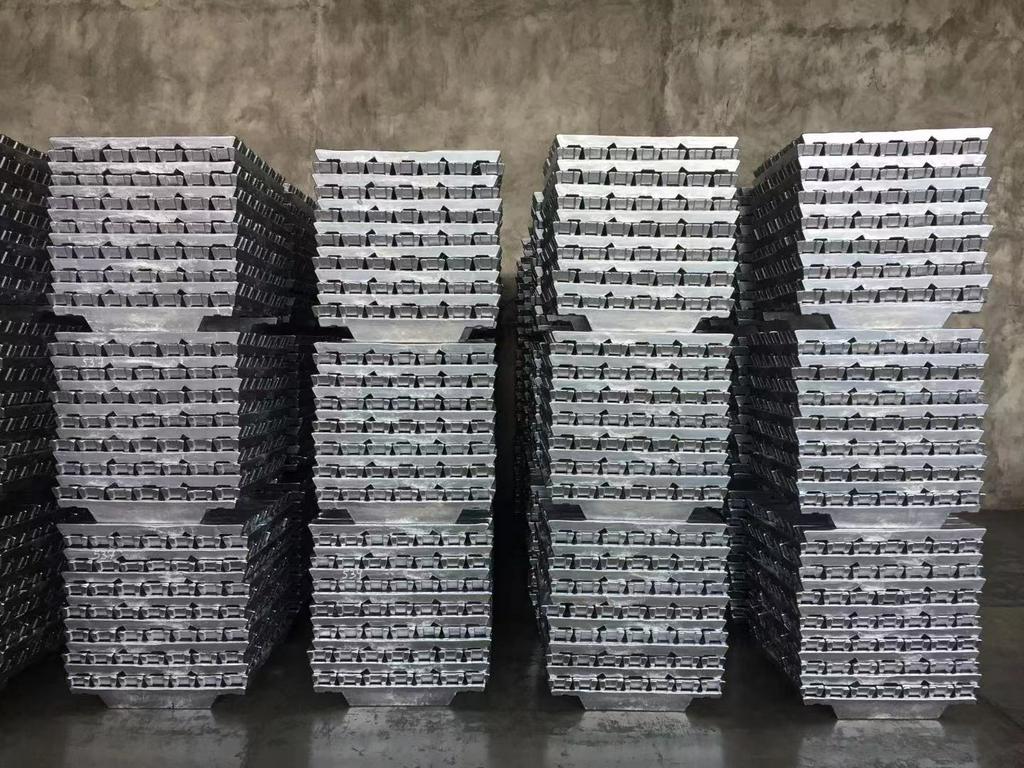 Warehouse Withdrawals Pull Back While Destocking Accelerates, the Logic of China’s Aluminum Ingot Destocking Changing?
As of July 30, China’s aluminum ingot inventory in major consumption areas stood at 953,000 mt. Cumulative destocking from the YTD high of 1.465 million mt in early May has reached 512,000 mt (-35%), with an additional accelerated destocking of 53,000 mt this week, breaking below the 1 million mt threshold as expected. However, the directional divergence between warehouse withdrawals and inventory has raised concerns...
Jul 31, 2026 23:53- Ferrochrome Gains Ground as Raw Chrome Fades in Zimbabwe's 84.7% Mineral Export Surge
[SMM Express] Zimbabwe's mineral export earnings jumped 84.7% in H1 2026 to US$2.532 billion, up from US$1.376 billion a year earlier, according to Minerals Marketing Corporation of Zimbabwe data. The surge was led by PGM matte, spodumene concentrate and PGM concentrates, which together accounted for over 74% of earnings — a marked departure from previous years when gold and raw chrome dominated the export mix. Within that shift, ferrochrome was singled out as one of the processed products "steadily supplanting raw mineral exports," alongside refined steel, polished granite and lithium sulphate. MMCZ's General Manager framed the change as evidence of beneficiation policy taking hold, with processed chrome product gradually displacing unprocessed ore in Zimbabwe's export basket. Industry stakeholders have also called for tighter mineral-tracking systems to guard against smuggling and transfer-pricing risk as the value of processed mineral exports rises.
Jul 31, 2026 23:44 - Warehouse withdrawals pull back, but destocking accelerates — Is China's aluminum ingot destocking logic changing? [SMM Analysis]
As of July 30, China's major consumption regions reported aluminum ingot inventory of 953,000 mt, having cumulatively destocked 512,000 mt (-35%) from the year's high of 1.465 million mt in early May. Within the week, destocking accelerated further by 53,000 mt, as expected falling below the 1 million mt mark. However, the directional divergence between warehouse withdrawals and inventory drew attention: weekly warehouse withdrawals pulled back to 127,700 mt, losing the advantage of being at a high for the same period in the past four years. The core driving force of this destocking round has shifted from "demand and warehouse withdrawal boost" in June to "supply contraction + slowdown in shipment pace": the proportion of liquid aluminum rose to 78.3% in July, with casting ingot volume down 15.1% YoY; a sharp drop in arrivals in South China pushed Foshan's premium wider by 50 yuan/mt in a single week to 115 yuan/mt; SMM believes...
Jul 31, 2026 23:30 - Domestic Wire and Cable Firms' Operating Rate Drops to 69.82% in July 2026 Amid High Copper Prices and Off-Season
According to the SMM survey, in July 2026, the operating rate of mainstream domestic wire and cable enterprises reached 69.82%, down 2.4 percentage points MoM and 2.79 percentage points YoY. Pressured by both copper prices consolidating at highs and the downstream entering the traditional consumption off-season, new orders weakened, leading to a pullback in production loads.
Jul 31, 2026 23:06 - China's Wire and Cable Enterprises See 69.82% Operating Rate in July 2026, Varies by Size
According to the SMM survey, in July 2026, the overall operating rate of China's wire and cable enterprises was 69.82%. Among them, the operating rate for large enterprises was 75.13%, for medium-sized enterprises was 47.75%, and for small enterprises was 46.93%.
Jul 31, 2026 23:06 - China's Wire and Cable Firms See Raw Material Stock Drop, Finished Goods Rise in July 2026
According to the SMM survey, in July 2026, raw material inventories of China’s wire and cable enterprises decreased by 0.45% MoM to 22.54%, while finished product inventories increased by 1.23% MoM to 18.98%.
Jul 31, 2026 23:06 - Domestic Wire and Cable Enterprises See 1.17% MoM Drop in Operating Rate in August 2026
According to the SMM survey, the operating rate of major domestic wire and cable enterprises in August 2026 is expected to be 68.64%, down 1.17 percentage points MoM and 3.78 percentage points YoY.
Jul 31, 2026 23:05 - [SMM Lithium Policy] Zambia Pushes for Pan-African Minerals Exchange, With Implications for Africa's Lithium Trade
Zambian Ministry of Mines is advancing a proposal for a pan-African minerals and metals exchange to give producer nations greater control over mineral trading and pricing. Adviser Jito Kayumba said the plan builds on Zambia's metals-trading tie-up with Mercuria and has already been discussed with the DRC and two undisclosed countries. For lithium, the move aligns with Zimbabwe's SC6 export controls and Mali's Goulamina ramp-up, and could eventually offer an alternative to CIF China spodumene pricing as African-origin volumes grow through ports like Walvis Bay and Beira. DRC's Manono project (targeting 1Mt/y spodumene) would also fall within scope. SMM view: Early-stage and non-binding no confirmed members, governance, or timeline. Relevant to watch for delivered-cost and netback benchmarking on Zimbabwe/Mali/DRC assets, but limited near-term pricing impact.
Jul 31, 2026 22:58 - [SMM Flash News] Kinetic7 Promotes Hydrogen-on-Demand Technology for Decentralised Energy Supply
Abu Dhabi-based Kinetic7 Technologies said hydrogen produced on demand at the point of use could strengthen energy security by reducing dependence on imported fuel, large-scale storage and centralised infrastructure. Its technology uses water and electrolysis to generate hydrogen only when required and has been incorporated into portable cooking systems and the commercial HODBox unit for hospitality and catering applications. The company is also developing a residential version initially targeting off-grid households, which could be powered by solar panels, batteries or grid electricity.
Jul 31, 2026 22:08