

255results found for 'Fujian'
Sort by : |
- 【SMM Nickel Flash News】Typhoon Kujira Brings Heavy Rain to North Luzon, While Typhoon Dolphin May Disrupt Ports
Typhoon Kujira is forecast to pass close to northwestern Luzon on August 5, bringing strong winds, heavy rainfall, and rough seas to northern Philippines. While adverse weather may temporarily affect shipping in northern waters, the country's major nickel-producing regions are expected to remain largely unaffected, limiting the impact on nickel ore exports. Meanwhile, Typhoon Dolphin is forecast to weaken from Category 3 (100 kt) on August 5 to Category 1 (78 kt) by August 8, before approaching China's southeastern coast with sustained winds of around 68 kt on August 9–10. Strong winds and rough seas could temporarily disrupt vessel arrivals and cargo handling at ports around Ningde, Fujian, while the risk to Lianyungang remains relatively limited under the current forecast track. Overall, any impact on Philippine nickel ore shipments to China is expected to be localized and short-lived.
Aug 5, 2026 15:02 - Metals Nearly All Rise, SHFE Nickel, Lithium Carbonate, Polysilicon, Comex Silver Up Over 1%, European Container Freight Index Surges Over 3% [SMM Midday Review]
SMM August 4 news: Metals market: As of the midday close, domestic base metals almost all rose. SHFE copper rose 0.91%, SHFE aluminum rose 1%. SHFE lead rose 0.23%. SHFE zinc fell 0.58%. SHFE tin rose 0.81%. SHFE nickel rose 1.55%. In addition, the most-traded cast aluminum futures rose 0.58%, the most-traded alumina futures rose 0.38%. The most-traded lithium carbonate futures rose 1.07%. The most-traded silicon metal futures rose 0.36%. The most-traded polysilicon futures rose 1.4%. Ferrous metals mostly rose. Iron ore was flat at 702.5 yuan/mt, rebar edged up, while hot-rolled coil edged down. Stainless steel rose 2.06%. Coking coal and coke: the most-traded coking coal contract rose 1.91%, and the most-traded coke contract rose 0.85%. Overseas base metals market, as of 11:41, LME metals all rose. LME copper rose 0.77%, LME aluminum rose 0.56%, LME lead rose 0.80%, LME zinc rose 0.61%. LME tin rose 0.77%. LME nickel rose 0.81%. Precious metals: as of 11:41, COMEX gold rose 0.54%, COMEX silver rose 1.87%. Domestic precious metals: SHFE gold rose 0.35%, the most-traded SHFE silver futures rose 1.64%. Additionally, as of the midday close, the most-traded platinum futures edged up, and the most-traded palladium futures fell 0.54%. As of the midday close, the most-traded European freight futures contract rose 3.19% to 1,843 points. As of 11:41, August 4, some futures midday market quotes: Spot and fundamentals Zinc: In Tianjin market, #0 zinc ingot were mainly traded at 24,760-24,950 yuan/mt, Zijin was traded at 24,880-25,010 yuan/mt, and #1 zinc ingot were mainly traded at around 24,760-24,870 yuan/mt. Zijin was quoted at a premium of around 0-30 yuan/mt against the 2609 contract, Huxin was quoted at 26,220 yuan/mt, #0 zinc ingot was quoted at a discount of around 30-120 yuan/mt against the 2609 contract, and Tianjin market was quoted at a discount of around 110 yuan/mt against Shanghai market. Macro front Domestic: [State Administration for Market Regulation: 20 places including Beijing, Shanghai, etc., designated as national trade secret protection innovation pilot sites] The General Office of the State Administration for Market Regulation issued a notice on promoting typical experiences and practices of national trade secret protection innovation pilot sites. Among them, Beijing Haidian District, Beijing Tongzhou District, Tianjin Binhai High-tech Zone, Shanghai Pudong New Area, Shanghai Fengxian District, Jiangsu Nanjing, Jiangsu Wuxi, Jiangsu Suzhou, Zhejiang Hangzhou, Zhejiang Ningbo, Zhejiang Wenzhou, Anhui Hefei, Fujian Xiamen Haicang District, Hubei Wuhan, Hunan Changsha, Guangdong Guangzhou, Guangdong Shenzhen, Guangdong Foshan, Chongqing Jiangjin District, Sichuan Chengdu Wuhou District were identified as the first batch of national trade secret protection innovation pilot sites. ()Market Regulation Administration [PBOC Net Withdraws 559 Billion Yuan from Open Market Today] PBOC conducted 46.5 billion yuan 7-day reverse repo operations, with an operation rate of 1.40%, unchanged from the previous session. Today, 605.5 billion yuan reverse repos matured. [Shenzhen New Home Sales Up Over 30% YoY in July] According to data from Shenzhen's real estate information platform, the city's new commercial housing sales totaled 3,773 units in July, down 35.2% MoM but up 19.3% YoY; among these, residential sales were 2,664 units, down 6.8% MoM but up 32.5% YoY. Looking at a longer period, new home sales from January to July totaled 35,104 units, a slight 0.7% YoY increase; of these, residential sales totaled 21,935 units, down 10.6% YoY, with the decline narrowing compared with H1. (JIN10 APP) On the US dollar: As of 11:41, the US dollar index rose 0.05% to 100.01. The July US manufacturing PMI data showed strong demand, surging output, and accelerated hiring, marking the fastest expansion in over four years, which to some extent offset the interest rate cut expectations driven by declining oil prices, leaving overall market rate hike expectations relatively unchanged. According to CME FedWatch, the market priced in a 64.5% probability of at least a 25-basis-point rate hike by the Fed in September. (Wall Street CN) (JIN10 APP) Data from the Institute for Supply Management (ISM) showed that the US ISM manufacturing PMI registered 55.6 in July, the highest level since May 2022. A reading above 50 indicates sector expansion, and the industry has remained above that threshold for seven consecutive months. The production index rose to 58.5, the highest since the end of 2021, while the employment gauge indicated that manufacturers added workers for the first time since September 2023. New orders — a signal of demand — also rebounded. Manufacturing momentum has been strong this year, with factories benefiting from solid consumer demand, robust business investment, and government spending on national defense. All but one manufacturing industry reported growth in July, including printing, apparel, and electrical equipment. The only sector reporting contraction was chemical products. Fed’s Williams said he remains optimistic that inflationary pressures will gradually ease, but if that does not happen, the Fed will not hesitate to raise interest rates to ensure price pressures return to target. In an interview with Reuters last Friday, Williams said that if energy prices and trade tariffs have peaked and the economy maintains solid momentum, "I think some of the main factors that have pushed up inflation over the past year and a half will no longer play such a large role, and the disinflationary forces we observed earlier should reemerge."He added: "I am watching very closely what happens to core inflation measures over the coming months, whether that is consistent with inflation trending down to 2% and continuing to move lower, so that we achieve that sustained 2% inflation goal over the longer run by 2028." He also stated: "My own forecast is that inflation will come down somewhat in H2 this year and pull back further next year." Williams reiterated that the current monetary policy stance is "well positioned" to bring inflation back to the target. However, he noted: "If we are not on a path to bring inflation down to 2%... then it would be entirely appropriate to take action to get us back on a path to 2% inflation." (Jin10 Data APP) In terms of data: Today, the US June trade balance, US June JOLTS job openings, US June factory orders MoM, and other figures will be released. Items to watch: SpaceX announces Q2 2026 results; FMS 2026 Flash Memory Summit takes place from August 4-6, with Samsung, SK, and other storage giants in attendance. In terms of crude oil: As of 11:41, both crude benchmarks were up, with WTI rising 0.73% and Brent gaining 1.16%. With the outlook for US-Iran negotiations uncertain and market concerns over supply disruptions persisting, oil prices rebounded after the previous session's plunge. Shipping tracking data shows that six empty Saudi-flagged supertankers changed course in the Gulf of Aden in recent days, heading toward southern Africa. One of them is destined for Gibraltar. On August 3, the six tankers were sailing in formation in the high seas off the coast of Somalia. (Jin10 Data APP) Spot market at a glance: ► ► ► ► ► ► ► ► ► ► ► ► ► ►
Aug 4, 2026 14:12 - [SMM Steel Market Morning Brief] M2 up 8.6% YoY, M1 up 5.5% YoY
Recently, the NDRC is working with relevant departments to accelerate the study and formulation of the Implementation Plan for the Strategy of Expanding Domestic Demand (2026-2030). Moving forward, the NDRC will work with relevant departments to effectively expand China's domestic demand with greater intensity and more concrete measures.
Aug 3, 2026 08:08 - Fluorite Strength Bolsters Cost Base, Supply-Demand Support Drives Aluminum Fluoride Upward in August [SMM Analysis]
Backed by rigid cost-side support, the industry's low supply pattern, and coupled with the significant boost to industry chain sentiment from the sharp hike in August hydrofluoric acid long-term contract prices, the aluminum fluoride market price is expected to hold up well overall in August.
Jul 31, 2026 18:26 - China's Pr-Nd Alloy Output Rises 3.74% MoM in July, Driven by Inner Mongolia Growth
China's Pr-Nd alloy output rose 3.74% MoM and 7.57% YoY in July, driven by stronger toll processing in Inner Mongolia. Tight Pr-Nd oxide supply raised raw material costs, squeezing margins and curbing output at some producers. Weak magnet demand cut downstream operating rates by 3% MoM, leaving the market oversupplied. In August, alloy output is expected to rise about 1% MoM, while magnet production may increase 2.65% MoM, improving market balance.
Jul 31, 2026 17:46 - [SMM Analysis]Dual Pressures at Home and Abroad Force Domestic Enterprises to Accelerate Product Upgrading
I. India’s JSW Steel to Invest in a New 600,000 Tons/Year High-Grade Non-Oriented Silicon Steel Project JSW Steel is India’s largest private steelmaker. It has recently been aggressively expanding its silicon steel capacity to back India’s industrial development roadmap. The roadmap targets doubling India’s national steel production capacity by 2030, and this capacity expansion by JSW is a key initiative in response to the national industrial plan. To be located at JSW Steel’s Vijayanagar plant in Toranagallu, the project will produce non-oriented electrical steel, widely deployed in new energy vehicle motors and general-purpose electric motors. The project entails the design and construction of three silicon steel processing lines: 1 normalizing and pickling line (APL) with an annual capacity of 600,000 tons; 2 annealing and coating lines (ACL), each with an annual capacity of 270,000 tons. II. China Faces Overcapacity in Non-Oriented Silicon Steel, with Nearly 10 Million Tons of New Capacity Yet to Be Commissioned Source: Publicly Available Data In terms of production capacity, the total capacity of the non-oriented silicon steel industry is projected to reach 25.09 million tons in 2026, marking the end of the rapid capacity expansion cycle spanning 2020 to 2026. Capacity growth will slow down starting from 2026, with a modest and steady annual growth rate of only 6% forecast for 2027 through 2030. From the perspective of product mix, a substantial grade upgrade has been realized for commissioned non-oriented silicon steel capacities as of June 2026. In sharp contrast to the low-end product structure in mid-2020 when medium and low grades accounted for 79%, their proportion dropped to 47% in 2026, while the share of high-grade products rose to 30%. More notably, the capacity proportion of new-energy-specific grades applicable to new energy vehicles, wind power and other sectors surged from 8% to 22%. This fully demonstrates the landmark transformation of the non-oriented silicon steel industry, featuring a shift in capacity growth momentum, premium product upgrading and structural iteration toward exclusive grades for new energy applications. Source: Publicly Available Data Pipeline Capacity to Be Commissioned According to public statistics, the pending-to-launch capacity of non-oriented electrical steel totals approximately 9.4 million tons, scheduled to come online mainly from the second half of 2026 to 2027. All projects set for commissioning in 2026 produce high-grade and new-energy-specific premium grades, located in North China (Tianjin), East China (Jiangsu, Zhejiang, Jiangxi), and South China (Fujian, Guangxi). Most adopt the semi-process production route, with deployment by both state-owned and private enterprises. 2027 will also be a peak year for capacity release, with massive incremental capacity rolled out across North, East and South China. While high-grade and new-energy-focused capacity will continue to be launched, a small volume of supplementary medium-and-low-grade capacity will also be added. Large-scale 1-million-ton-level new-energy-grade projects will emerge in Hebei, Jiangsu and other regions, accompanied by an increased share of full-process capacity, with private capital acting as the primary driving force for capacity expansion. Regionally, East China and North China serve as the core areas for new capacity rollout. Production is dominated by the semi-process route, and the product mix is overwhelmingly composed of high-grade and new-energy-exclusive grades tailored for new energy vehicle motors and high-efficiency motors. China has basically completed the structural transformation of its non-oriented electrical steel capacity, which can fully meet domestic market demand. Nevertheless, nearly 10 million tons of new capacity are still pending commissioning, which will further loosen the supply side of domestic non-oriented electrical steel. III. Conclusion China’s non-oriented electrical steel sector is currently undergoing intensive capacity expansion, with a large batch of planned high-end capacities being put into concentrated operation. The industry is already facing prominent overcapacity pressure, and the market expects overseas exports to digest part of surplus output and ease the domestic supply-demand imbalance. However, market access barriers and surging overseas local supply have greatly undermined the feasibility of export-driven absorption: To shield their domestic steel industries, multiple overseas economies have frequently launched anti-dumping and countervailing (AD/CVD) trade investigations targeting Chinese non-oriented electrical steel. They have drastically lifted market entry costs for Chinese products through hefty punitive tariffs and Technical Barriers to Trade (TBT), directly obstructing export shipments. Foreign steelmakers have accelerated localized capacity deployment in parallel. Relying on local policy incentives and low energy costs, they have built new non-oriented electrical steel production lines to progressively achieve self-sufficiency in high-end silicon steel. This not only reduces their reliance on Chinese imports but also creates head-on competition with Chinese products in the global marketplace. Under the compound impact of mounting domestic and external pressures, the export route for absorbing excess domestic capacity has encountered drastically heightened obstacles, making it far more difficult for the industry to clear surplus production. This compellingly pushes domestic manufacturers to accelerate differentiated product upgrading, extend business downstream to high-value-added new energy industrial chains, explore emerging overseas markets, and set up localized overseas production bases to break through the predicament.
Jul 31, 2026 15:44 - China's sulphuric acid market continues to weaken as regional price declines widen and the index moves downward [SMM Sulphuric Acid Weekly Review]
China sulphuric acid market continues weak, regional declines widen, index falls [SMM Sulphuric Acid Weekly Review]
Jul 31, 2026 14:03 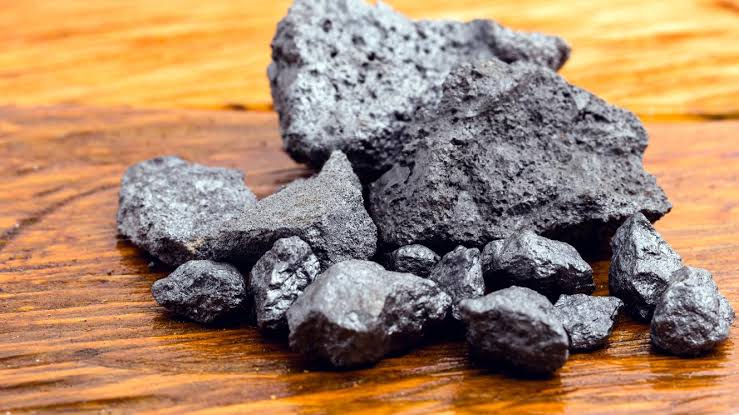 Nigerian Tantalum Concentrate Market: Pricing, Grades and Buyers
[SMM Research] Nigeria remains a key supplier of tantalum concentrate, with exports largely priced on an FOB basis and driven by strong Chinese demand. Concentrate grades vary widely, with higher Ta₂O₅ content commanding significant premiums. Artisanal mining dominates supply, while informal trade continues to limit market transparency. SMM's research indicates that first-hand market intelligence remains essential for assessing pricing, quality and evolving supply chains.
Jul 30, 2026 20:16- China Remains the Primary Export Market for Nigerian Tantalum Concentrates
[SMM Express] China continues to dominate the export market for Nigerian tantalum concentrates, accounting for an estimated 80%–90% of formal export volumes. Most shipments are purchased by Chinese trading companies and processors, with downstream refining concentrated in major processing hubs such as Jiangxi, Fujian and Guangdong. Europe remains an important secondary destination, with tantalum concentrates supplied to processors and commodity traders serving markets in Germany, Estonia, Belgium and the Netherlands. Smaller volumes are also routed through trading hubs in Malaysia and Singapore before entering downstream supply chains, while interest from the United States is increasing as efforts to diversify critical mineral supply chains continue. A notable share of Nigerian columbite-tantalite production is also understood to move through informal cross-border trade routes before entering formal international markets. These unofficial flows make it more challenging to accurately monitor export volumes, pricing and end-market destinations, highlighting the importance of improved supply chain transparency in the global tantalum market.
Jul 28, 2026 22:41 - [Lithium Battery: First Batch Of Xiamen, Fujian 80GWh Lithium Battery Base Completes Completion Acceptance]
Recently, the first batch of the high-performance lithium battery base project, which is constructed by Xiamen Torch Group and managed by Torch Development Company, successfully completed its completion acceptance. The project is located in the Dongliao area of Tongxiang High-tech New City, Xiamen City, Fujian Province. The project plans to build an 80GWh fully intelligent new energy power battery production line, adopting world-leading lithium battery manufacturing processes and equipment. The project has a planned total investment of 16 billion yuan, covering a total land area of approximately 955,000 square meters, with a total construction area of about 925,000 square meters. The main facilities include standard cell plants and supporting production and living amenities, featuring a scientific overall layout to meet the requirements of fully intelligent production.
Jul 28, 2026 13:36