

465results found for 'China stock'
Sort by : |
- Copper Rebounds as China Stockpiling Plans and Risk Appetite Support Prices
Copper prices on the London Metal Exchange rebounded about 3.6% to around USD 13,360/t after dipping to a three-week low, supported by news that China may boost copper stockpiles and improved risk sentiment among global investors.
Feb 11, 2026 11:11 - Just now, it surged by 374%, triggering multiple circuit breakers! Chinese assets experienced a major breakout.
On the evening of the 14th, the three major US stock indices collectively rose at the opening, and European stock markets also surged across the board. Some analysts noted that after the global financial markets experienced an epic level of turbulence, a temporary tariff exemption policy by the Trump administration provided a brief respite for the US tech industry, alleviating market panic. The VIX fear index once plummeted by over 14%. The US Customs and Border Protection previously issued a notice stating that the federal government had agreed to exempt smartphones, computers, chips, and other electronic products from "reciprocal tariffs." Wall Street analysts believe that the exemption of some products from "reciprocal tariffs" indicates Trump's willingness to compromise on the agreement. It is worth noting that the "tariff storm" has not completely dissipated. On April 13, local time, US President Trump stated that he would soon announce tariffs on semiconductors, though he hinted that certain products might be exempt. When asked whether specific products like Apple phones and tablets would be subject to tariffs, Trump said he would discuss the issue with companies. The Nasdaq Golden Dragon China Index surged over 5% at the opening, the 2x leveraged China stock ETF rose over 8%, the 3x leveraged FTSE China ETF increased over 6%, and the China Overseas Internet ETF climbed over 4%. Popular Chinese stocks strengthened across the board, with Niu Technologies up over 9%, Full Truck Alliance up over 7%, Pinduoduo, Trip.com, and Jinko Solar up over 6%, Atour Lifestyle and Gaotu Techedu up over 5%, Alibaba, Tencent Music, and JD.com up over 4%, and iQiyi, MINISO, XPeng Motors, and Weibo up over 3%. Notably, Webull Securities (WEBULL) closed up 374.72%, repeatedly hitting circuit breakers. Public information shows that Webull Securities was founded in 2016 by Anquan Wang, a veteran of the internet industry born in 1979. Wang joined Alibaba in 2006, holding important positions such as architect, technical director, director of the Taobao Loan Business Unit, and assistant general manager of Alibaba Finance. Webull Securities is a digital investment platform dedicated to providing global individual investors with one-stop services for stocks, ETFs, options, and digital currency trading, covering multiple markets including the US, Singapore, and Hong Kong, China. Webull Securities received a filing notice from the China Securities Regulatory Commission on April 8, 2025, with the filing date being March 29, 2024, and subsequently disclosed this information on December 13, 2024. On April 11, local time, Webull Securities successfully listed on Nasdaq. As of the close on April 11, Webull Securities closed at $13.25, with a market value of approximately $6.087 billion. The company accelerated its entry into the US capital market through a backdoor listing. At the close, the three major US stock indices collectively rose. The Nasdaq Golden Dragon China Index closed up 3.23%. Popular Chinese stocks collectively rose, with Alibaba and XPeng Motors up over 5%, JD.com and Pinduoduo up over 4%, Baidu up over 3%, and Li Auto and NIO up over 2%. OPEC significantly lowered its crude oil demand forecast for the next two years. In the crude oil monthly report released on the evening of the 14th, OPEC significantly lowered its global crude oil demand growth forecast for 2025 and 2026, while also lowering its global economic growth forecast, citing the Trump administration's tariff policies potentially severely impacting global crude oil consumption. OPEC lowered its crude oil demand growth forecast for 2025 and 2026 by over 100,000 barrels per day, expecting demand growth for both years to be 1.3 million barrels per day. Previously, OPEC had forecast demand growth for these two years at 1.45 million and 1.43 million barrels per day, respectively. However, OPEC's forecast remains much more optimistic than other industry institutions. The US Energy Information Administration last week significantly lowered its 2025 crude oil demand growth forecast by 30%, to 900,000 barrels per day, while Goldman Sachs expects crude oil demand growth to be only 500,000 barrels per day. SHFE gold continued to hit a record high, and China Construction Bank warned of precious metal risks. In mid-April, gold prices hit a new record high, with both COMEX gold futures and spot gold prices breaking through $3,200 per ounce. On April 14, SHFE gold continued to hit a record high, closing at 763.64 yuan per gram, up 1.45%; the most-traded SHFE silver contract closed at 8,091 yuan per kilogram, up 2%. On April 14, China Construction Bank issued a "Notice on Recent Market Risks in Precious Metal Business" on its official website, stating that recent domestic and overseas precious metal price fluctuations have intensified, increasing market risks. Investors are advised to enhance risk awareness in precious metal business, reasonably control positions, promptly monitor open interest and margin balance changes, and invest rationally. Under the influence of the continuous surge in gold prices, domestic jewelry gold prices also climbed, once breaking through the 1,000 yuan per gram mark. Jianan Gu, assistant general manager of Haitong Futures Research Institute, believes that the main reason for the recent sharp rise in precious metal prices is the surge in global financial market demand for safe-haven assets due to the Trump administration's tariff policies. On April 2, the Trump administration announced a "reciprocal tariff" policy, with tariff rates far exceeding market expectations. The market expects the "reciprocal tariff" policy to have a significant negative impact on global economic growth, with the risk of long-term inflation also significantly increasing. Therefore, after the announcement of the "reciprocal tariff" policy, financial markets reacted violently, with global risk assets plummeting. "Although the 'reciprocal tariff' policy was subsequently temporarily suspended, the probability of stagflation in some economies due to global trade friction remains high. Currently, the global market has a consensus expectation for the medium and long-term upward trend of gold. At the same time, as global capital flows out of US dollar assets, the US dollar index continues to decline, also providing strong support for the rise in gold," said Jianan Gu. In the view of Tian'ao Zhang, a macro researcher at Hongye Futures, although gold has been short-term affected, it is less impacted by tariffs, and the current international situation is turbulent, with safe-haven and inflation pressures potentially pushing gold prices up again in the medium term. After market sentiment stabilized last week, the pressure of a US economic recession increased, and the US Fed may cut interest rates faster, with the US dollar continuously falling, driving gold prices to continue rising and hitting new highs. "Due to excessively high gold prices, consumer wait-and-see sentiment has risen, and domestic jewelry gold consumption has significantly declined in recent years, while investor buying of gold bars has trended upward, and national gold reserves have also continued to rise. Overall, spot jewelry gold consumption has declined, gold shop profitability is poor, but investment gold consumption has risen, and bank gold trading is relatively active," said Tian'ao Zhang. Zhang stated that the main factors currently affecting the precious metal market are as follows: first, safe-haven sentiment, influenced by the repeated changes in US tariff policies, market safe-haven sentiment has significantly risen, with the VIX fear index hitting a new high since 2020, making gold the most certain safe-haven asset; second, under the influence of tariffs and US government agency streamlining policies, the US faces dual uncertainties of inflation and economic recession in the medium term, and the US Fed's monetary policy faces a dilemma, with the market expecting a significant increase in the probability of a US Fed rate cut, the US dollar continues to weaken, pushing up gold prices; third, a large amount of US debt is due this year, and US fiscal tension creates uncertainty in repayment, leading some countries and a large number of institutional investors to reduce US debt and buy gold for safe-haven purposes. Gu said that the main driving force behind the recent surge in gold prices is gold's safe-haven attribute. Whether it is inflation, economic recession risks, or even geopolitical risks, gold can provide some protection for investors' holdings. Looking ahead, Gu believes that the marginal impact of the trade war will weaken in the short term, and global market risk appetite is expected to continue to rebound, with the pace of gold's rise likely to slow, or even experience a brief pullback. However, the impact of the trade war is difficult to completely dissipate, and the safe-haven attribute will keep gold in a state more likely to rise than fall. In the long term, the Trump administration's tariff policies will further drive the "de-globalization" process, and the strengthening of trade barriers will lead to a decline in US dollar settlement demand, with the US dollar credit system inevitably contracting. The monetary attribute will drive gold prices to continue rising. For investors, it is recommended to adopt a long-term gold holding strategy and avoid frequent trading. Zhang believes that although gold prices are currently dominated by financial attributes, under complex international situations, the overall trend remains strong, and gold prices have not yet peaked. In the medium term, the US Fed may start cutting interest rates in June, with a possible 100 basis point cut within the year, and the US dollar index may further decline. Therefore, the upward trend in gold prices may continue in the medium term. However, investors need to be vigilant, as gold prices may experience significant fluctuations if the trade war gradually eases. Medium and long-term investors can hold gold futures, while short-term investors need to keep an eye on market news and be wary of market volatility risks. "The trend of silver may be significantly weaker than gold, mainly because the current gold market is basically driven only by financial attributes, while silver, in addition to financial attributes, also has strong industrial attributes, and industrial attributes are affected by trade blockages, rising US economic recession expectations, and traditional industry downturns, with medium-term bearish forces likely to dominate," said Zhang.
Apr 15, 2025 09:08 - Mid-week aluminum ingot inventory plummeted, expected to drive SHFE aluminum upward [SMM Aluminum Morning Meeting Summary]
SMM Aluminum Morning Meeting Summary: Mid-Week Aluminum Ingot Inventory Plunge Expected to Drive SHFE Aluminum Upward. SMM believes that the good destocking status this week and domestic policy support will bolster short-term prices. If expectations for US Fed interest rate cuts intensify or US-Europe trade relations further ease, aluminum prices may continue to fluctuate upward in the short term. However, the short-term market is still somewhat suppressed by external bearish factors, and whether SHFE aluminum can return to the 21,000 yuan/mt mark still requires further upward momentum. Continued close attention to macro sentiment changes and the actual release of downstream demand is essential.
Mar 27, 2025 10:27 - Prices fluctuated in the morning session, with reduced spot aluminum arrivals stimulating a narrowing of the discount. [SMM Spot Aluminum Midday Review]
SMM Spot Aluminum Midday Review: Prices Fluctuated in the Morning, Reduced Aluminum Spot Arrivals Stimulated Narrowing Discounts. Inventory side, according to SMM's domestic aluminum ingot social inventory in three regions, the inventory of mainstream consumption areas for aluminum ingots on March 26 was 682,500 mt, down 8,200 mt from the previous day. In the short term, the peak season background combined with the continued growth trend of aluminum use in new energy is expected to maintain the destocking trend of social inventory. Additionally, with fewer arrivals in mainstream consumption areas such as Wuxi, the premiums and discounts in the spot market may narrow.
Mar 26, 2025 14:49 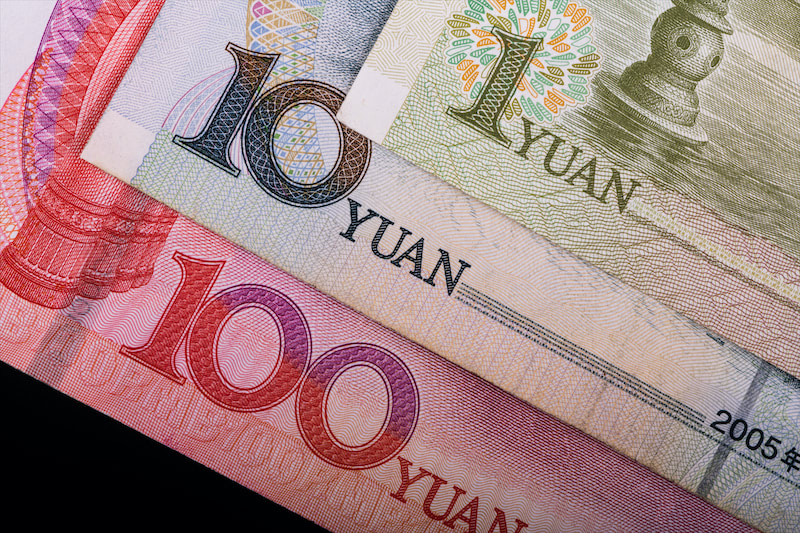 China Will Issue Massive Bills In Hong Kong This Year
Approved by the State Council, the Ministry of Finance will issue 30 billion yuan of bills in Hong Kong in 2023.
Jun 13, 2023 17:38 Zhangze Elec Power: Current Long-Term Contract Coal Price Is Lower Than Market Coal Price, Market Coal Price to Fall
Shanxi Zhangze Elec Power stated on the interactive platform that the current coal price under long-term contracts is lower than the market coal price, and the market coal price is set to fall.
Jun 1, 2023 16:37 Macquarie: Nickel Surplus Will Remain at Least Until 2027
According to foreign news on May 31, an analyst at Macquarie said that with the rapid increase in Indonesian production, the global nickel market is expected to face a supply glut every year, at least until 2027.
Jun 1, 2023 16:27 Global NEV Sales Surged 28% In The First Quarter, Tesla And BYD Battle Again
According to a new report from the global market research agency TrendForce, global sales of new energy vehicles surged in the first quarter of 2023, and Tesla has regained some market share through price adjustments.
Jun 1, 2023 16:26 SMM Survey of Operations at China Transport Infrastructure Companies in May
SMM recently conducted a survey of Chinese transport infrastructure companies with regard to their operations in May.
Jun 1, 2023 14:40 Infrastructure Enterprises Ramped Up Production in May
In May, production at infrastructure enterprises continue to pick up. In terms of production, the construction progress of infrastructure enterprises has accelerated, but the number of new projects decreased month-on-month, and enterprises have reported that it was more difficult to win bids.
Jun 1, 2023 14:38