

53results found for 'Aluminum casting'
Sort by : |
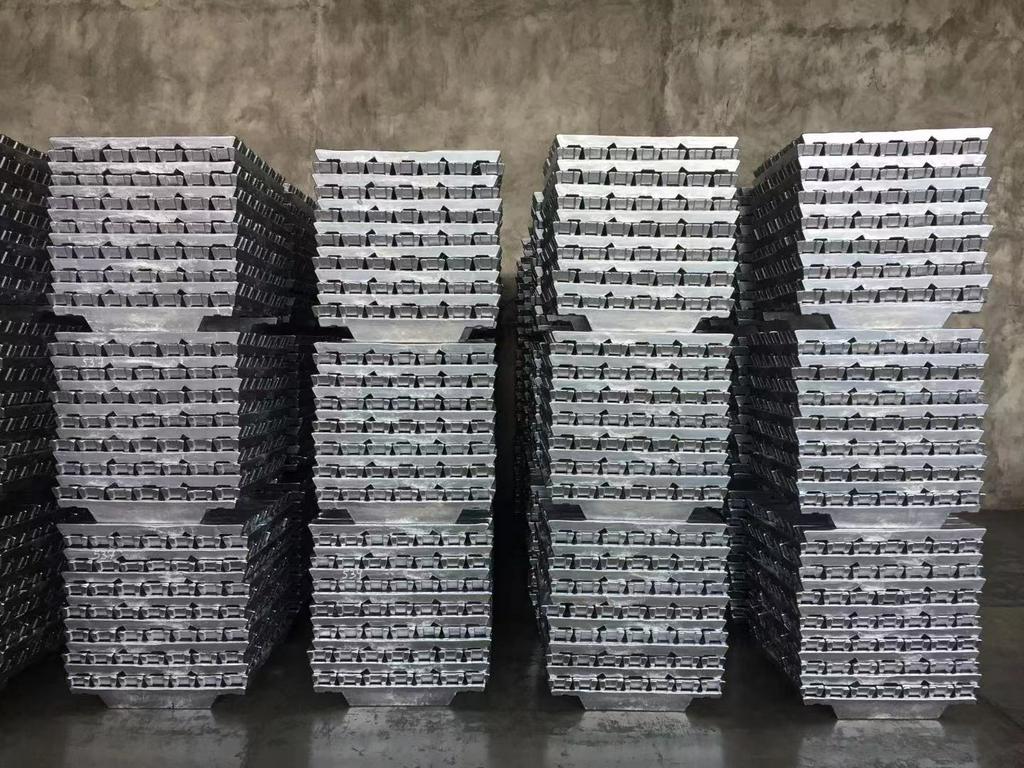 Warehouse Withdrawals Pull Back While Destocking Accelerates, the Logic of China’s Aluminum Ingot Destocking Changing?
As of July 30, China’s aluminum ingot inventory in major consumption areas stood at 953,000 mt. Cumulative destocking from the YTD high of 1.465 million mt in early May has reached 512,000 mt (-35%), with an additional accelerated destocking of 53,000 mt this week, breaking below the 1 million mt threshold as expected. However, the directional divergence between warehouse withdrawals and inventory has raised concerns...
Jul 31, 2026 23:53- Warehouse withdrawals pull back, but destocking accelerates — Is China's aluminum ingot destocking logic changing? [SMM Analysis]
As of July 30, China's major consumption regions reported aluminum ingot inventory of 953,000 mt, having cumulatively destocked 512,000 mt (-35%) from the year's high of 1.465 million mt in early May. Within the week, destocking accelerated further by 53,000 mt, as expected falling below the 1 million mt mark. However, the directional divergence between warehouse withdrawals and inventory drew attention: weekly warehouse withdrawals pulled back to 127,700 mt, losing the advantage of being at a high for the same period in the past four years. The core driving force of this destocking round has shifted from "demand and warehouse withdrawal boost" in June to "supply contraction + slowdown in shipment pace": the proportion of liquid aluminum rose to 78.3% in July, with casting ingot volume down 15.1% YoY; a sharp drop in arrivals in South China pushed Foshan's premium wider by 50 yuan/mt in a single week to 115 yuan/mt; SMM believes...
Jul 31, 2026 23:30 - July’s increase in aluminum’s proportion of liquid aluminum exceeded expectations, and August is expected to edge up [SMM Analysis]
SMM July 31 news: According to SMM statistics, China's aluminum production in July 2026 (31 days) increased 1.6% YoY and 3.5% MoM. Domestic demand was weak, and combined with a pullback in export orders for some downstream products, all industry chain segments were under pressure; however, driven by high processing fees for aluminum rod and billet, downstream procurement demand for liquid aluminum rose, pushing the proportion of liquid aluminum output in China higher. The proportion of liquid aluminum in the month rose 1.1 percentage points MoM to 78.3%, slightly exceeding expectations at the start of the month, with core growth coming from strong processing profits for some products, leading to higher-than-expected demand for liquid aluminum. Based on SMM's proportion of liquid aluminum calculations, China's aluminum casting ingot production in July fell 15.1% YoY and 1.4% MoM. Capacity changes: As of month-end July, SMM statistics showed China's existing aluminum capacity was approximately 46.29 million mt, flat MoM. Production forecast: Entering August 2026, the traditional off-season for downstream continues, and demand for most downstream products is expected to further weaken. However, some primary processed material orders are performing well, boosting downstream enterprises' willingness to purchase liquid aluminum directly. Overall, the proportion of liquid aluminum is expected to rise 0.2 percentage points to 78.5%. [Data source statement: All data except public information is processed by SMM based on public information, market communication, and SMM's internal database models, for reference only and not as investment advice.] Data source: SMM
Jul 31, 2026 16:54 - [SMM Aluminum Flash News] UK Expands Industrial Support Scheme to Benefit More Aluminum Manufacturers
The UK Government has expanded eligibility under the British Industrial Competitiveness Scheme (BICS), adding four industrial classifications covering aluminum casting, metal forming and surface treatment. The move is expected to reduce electricity costs for more aluminum manufacturers and strengthen the competitiveness of the UK's aluminum industry.
Jul 20, 2026 11:50 - [SMM Aluminum Flash News] TCP Acquires Canadian Precision Aluminium Casting Manufacturer Alphacasting
Thrust Capital Partners (TCP) has acquired Quebec-based Alphacasting Inc., a manufacturer of high-precision titanium and aluminum investment castings for the aerospace and defense sectors. The company specializes in high-strength aluminum castings and is Canada's only foundry with titanium casting capabilities. TCP plans to support Alphacasting's operational expansion and long-term growth in the aerospace and defense supply chain.
Jul 20, 2026 11:33 - US dollar fell for two consecutive days, metals broadly rose, platinum and palladium, SHFE tin, and rebar led gains, and lithium carbonate dropped over 2% [SMM Midday Review].
SMM News, July 15: Metal market: As of the midday close, domestic base metals showed mixed performance, with SHFE copper rising 0.57%, SHFE aluminum edging down, SHFE lead falling 1.8%, SHFE zinc up 0.45%, SHFE tin up 1.36%, and SHFE nickel down 0.43%. Furthermore, aluminum casting most-traded futures edged down, alumina most-traded rose 0.89%, lithium carbonate most-traded fell 2.33%, silicon metal most-traded fell 0.35%, and polysilicon most-traded futures fell 1.04%. Ferrous metals all rose. Iron ore rose 1.13%, rebar rose 1.24%, hot-rolled coil rose 1.09%, and stainless steel rose 0.76%. Coking coal and coke: The most-traded coking coal contract rose 2.12%, and the most-traded coke contract rose 1.1%. Overseas base metal market: As of 11:42, LME metals nearly all rose. LME copper rose 0.28%, LME aluminum rose 0.49%, LME lead fell 0.32%, LME zinc rose 0.73%, LME tin rose 0.28%, and LME nickel edged up. Precious metals: As of 11:42, COMEX gold fell 0.8%, and COMEX silver fell 0.67%. Domestic precious metals: SHFE gold rose 0.18%; SHFE silver most-traded rose 1.03%. Furthermore, as of the midday close, platinum most-traded futures rose 2.35%, and palladium most-traded futures rose 3.6%. As of the midday close, the most-traded Europe shipping futures contract rose 2.78% to 2,572.5 points. As of 11:42 on July 15, some futures midday quotes: Spot and Fundamentals Copper: Today, Guangdong #1 copper cathode spot against the front-month contract: High-quality copper was quoted at 80 yuan/mt, flat with the previous trading day; standard-quality copper was quoted at a discount of 20 yuan/mt, flat with the previous trading day; SX-EW copper was quoted at a discount of 80 yuan/mt, flat with the previous trading day. The average price of Guangdong #1 copper cathode was 105,205 yuan/mt, up 1,100 yuan/mt from the previous trading day, and the average price of SX-EW copper was 105,095 yuan/mt, up 1,085 yuan/mt from the previous trading day. Spot market: Guangdong inventory ended a two-session rising streak and fell again today, mainly due to reduced arrivals... Macro Front Domestic: [National Bureau of Statistics (NBS): H1 GDP rose 4.7% YoY; national economy operated within a reasonable range; new momentum grew rapidly] The National Bureau of Statistics (NBS) released data showing that, according to preliminary estimates, H1 GDP reached 69,570.4 billion yuan, up 4.7% YoY at constant prices. By industry, the value added of the primary industry was 3,152.2 billion yuan, up 3.7% YoY; the secondary industry was 25,047.3 billion yuan, up 3.9%; and the tertiary industry was 41,370.9 billion yuan, up 5.2%. By quarter, Q1 GDP grew 5.0% YoY and Q2 grew 4.3%. On a QoQ basis, Q2 GDP rose 0.9%. Overall, the national economy operated within a reasonable range in H1, with new quality productive forces cultivated and strengthened and high-quality development progressing toward new heights of quality. At the same time, we must recognize that external instabilities and uncertainties are mounting, the contradiction between strong supply and weak demand in China remains pronounced, and the foundation for economic improvement still needs consolidation. In the next phase, we will adhere to the principle of seeking progress while maintaining stability, improving quality and efficiency, intensify counter-cyclical and cross-cyclical adjustments, continue to expand domestic demand and optimize supply, enhance growth and revitalize existing assets, focus on building a strong Chinese market, accelerate the cultivation and strengthening of new momentum, step up efforts to stabilize employment, enterprises, markets, and expectations, and promote the effective improvement of quality and reasonable growth of quantity in the economy. [PBOC reverse repo operations achieved a net injection of 911.5 billion yuan on the day] The PBOC conducted 426.5 billion yuan of 7-day reverse repo operations and 1,400 billion yuan of 6-month outright reverse repo operations today. With 15 billion yuan of 7-day reverse repos and 900 billion yuan of outright reverse repos maturing today, the operations resulted in a net injection of 911.5 billion yuan on the day. US dollar: As of 11:42, the US dollar index extended the previous trading day's decline, falling 0.11% to 100.83. Data: A key turning point signal emerged in US inflation. June CPI recorded its first MoM decline in six years, while core inflation was basically flat, prompting the market to dramatically scale back bets on a July rate hike by the US Fed. On Tuesday, data released by the US Bureau of Labor Statistics showed that the June Consumer Price Index (CPI) rose 3.5% YoY, below market expectations of 3.8% and a significant pullback from the prior reading of 4.2%. Core CPI rose 2.6% YoY, also below expectations of 2.8% and the prior reading of 2.9%. (Wall Street See) According to CME "FedWatch": The probability of the US Fed holding rates steady in July is 84.5%, while the probability of a cumulative 25-basis-point rate hike is 15.5%. For September, the probability of holding rates steady is 42.2%, the probability of a cumulative 25-basis-point hike is 50%, and the probability of a cumulative 50-basis-point hike is 7.8%. (Jin10 Data APP) Fed Chairman Walsh stated that he places equal emphasis on the Fed's employment and inflation mandates—a point he has repeatedly stressed since assuming the role of Fed Chairman. "In the mandate you have given us, we do not favor one part over the other," Walsh told members of the House Financial Services Committee. "Price stability and full employment are not trade-offs. I am committed to achieving both. When later asked if he supported targeted measures to address the unemployment rate and employment opportunity gaps between Black and White Americans, Walsh stated: "The US must not leave anyone behind. Economic opportunity is critical to the trajectory of growth for the US over the next five to ten years, meaning every American needs the opportunity to be productive." (Jin10 Data APP) A CICC research note indicated that US June CPI fell 0.4% MoM on a seasonally adjusted basis, with YoY growth pulling back to 3.5%; core CPI was flat MoM and up 2.6% YoY, both below market expectations. The decline in energy prices was the main driver of cooling inflation. Looking ahead, as tensions escalate again between the US and Iran, the outlook for energy inflation remains uncertain. Meanwhile, the AI inflation effect is gradually materializing, with upstream hardware supply-demand mismatch, rising prices for software and related products, and AI capex boosting aggregate demand all potentially making core inflation stickier. For policy, the cooling inflation data in June supports the Fed holding rates steady at its July meeting, but recent remarks by Waller suggest [1] the Fed is reassessing the possibility of a "preventive rate hike." We maintain our base case of no rate hikes for the year, but flag that the bar for hiking has already fallen. If one or two hotter-than-expected inflation prints emerge, it could push the Fed to further discuss rate hike options. A CITIC Securities research note stated that US June CPI came in below expectations across the board, retail gas prices fell, core services inflation was flat MoM, and the second-round inflation effect was minimal. CITIC Securities believes US inflation is not sticky, noting that headline CPI YoY has definitively passed its cycle peak and is expected to trend mildly downward in Q3, hit bottom in September, rise to a secondary peak around year-end, and then decline rapidly next March. CITIC Securities still expects the Fed to stay on hold for the full year, sees room for derivative-priced rate hike expectations to be revised further down, considers US Treasuries currently unsuitable for allocation-based opportunities—with short-dated bonds better than long-dated ones—and believes the US dollar index faces difficulty sustaining upward momentum but has support, while the technology-driven theme in US equities retains its appeal. On the data front: Today will see the release of figures including China's June total electricity consumption YoY, China's June total electricity consumption, the US June PPI annual rate, the US June PPI monthly rate, the US July New York Fed Empire State Manufacturing Index, the Eurozone May industrial output MoM rate, Canada's May wholesale sales MoM rate, and the Bank of Canada's interest rate decision as of July 15. Additionally, attention needs to be paid to: the National Bureau of Statistics (NBS) releasing the monthly report on residential selling prices in 70 large and medium-sized cities; the State Council Information Office holding a press conference on the state of the economy; the State Council Information Office holding a press conference to brief on the execution of monetary policy and financial statistics for H1 2026; the National Energy Administration releasing total electricity consumption data around the 15th of each month. Fed Governor Barr spoke on artificial intelligence at the Fed’s annual financial inclusion conference; 2027 FOMC voting member and Chicago Fed President Goolsbee participated in a fireside chat; Fed Governor Lisa Cook delivered remarks at the Fed’s annual financial inclusion conference; Fed Governor Bowman also spoke at the same conference; permanent FOMC voting member and New York Fed President Williams gave a speech; Fed Chair Warsh attended the Senate Banking, Housing, and Urban Affairs Committee hearing on the Fed’s Semi-annual Monetary Policy Report; Bank of England Governor Bailey spoke; the Bank of Canada announced its interest rate decision and monetary policy report, and Bank of Canada Governor Macklem and Senior Deputy Governor Rogers held a monetary policy press conference. ASML published its Q2 2026 financial report. Crude oil: As of 11:42, both benchmarks rose, with WTI up 1.02% and Brent up 1.32%. Despite improved risk sentiment from cooling inflation, the crude oil market remains driven by geopolitics. The US announced the reinstatement of a naval blockade on vessels transiting Iranian ports and coastal areas, with escalating Middle East tensions supporting oil prices. Meanwhile, the US and European refined product markets are historically tight, heightened Middle East strains have fanned fuel supply concerns, and high oil prices continue to pressure consumers. Goldman’s Privorotsky believes Brent around $85 itself is manageable, the real story is in refined products, distillates rather than crude oil are the true inflation signal, and heating oil futures have hit new highs since the conflict erupted, highlighting tightness in the product market, with any further disruption disproportionately hitting inflation. (Wall Street CN) Additionally, Iran’s Islamic Revolutionary Guard Corps said in a statement on the 15th that as long as the US continues attacks on Iran, the region will not export “a drop of oil” or natural gas. (Xinhua) Spot market overview: ► ► ► ► ► ► ► ► ► ► ► ► ► ►
Jul 15, 2026 14:32 - [SMM Aluminum Flash News] ALFED and CMF Urge UK Government to Cut Industrial Power Costs
The Aluminum Federation (ALFED) and the Cast Metals Federation (CMF) have jointly urged the UK government to strengthen industrial competitiveness by lowering electricity costs for manufacturers. They warned that high energy prices have led to job cuts, hiring freezes, delayed investments, reduced operating hours and idled production capacity across the aluminum and cast metals sectors. The two organizations said temporary support under the British Industrial Competitiveness Scheme (BICS) is insufficient and called for aluminum casting and other energy-intensive non-ferrous sectors to be included. They also urged the government to establish a long-term competitive industrial electricity pricing framework to support investment and strengthen key manufacturing supply chains.
Jul 2, 2026 14:39 - Crude oil drops over 2%, metals show mixed performance, LME zinc falls over 1%, SHFE gold, SHFE silver, iron ore rise over 1% [Overnight Market]
SMM, Jul 2: Metals Market: Overnight, base metals on overseas and China markets showed mixed performance. Only LME nickel, SHFE copper, and SHFE tin rose, with SHFE tin up 0.99%, LME nickel up 0.49%, and SHFE copper up 0.07%. SHFE aluminum closed flat at 22,485 yuan/mt. LME zinc led the decline, down 1.68%, while losses in other metals were within 1%. The most-traded alumina contract rose 0.11%, and the most-traded aluminum casting contract rose 0.4%. In the ferrous metals sector overnight, iron ore led gains, up 1.7%. Rebar rose 0.1%, while stainless steel fell 0.54% and hot-rolled coil edged down 0.09%. Coking coal and coke, coking coal closed flat at 1,265 yuan/mt, and coke fell 1.12%. In the precious metals sector overnight, COMEX gold rose 0.15% and COMEX silver fell 0.53%. On the domestic front, SHFE gold rose 1.23% and SHFE silver rose 1.44%. As of 6:43 a.m. on Jul 2, overnight closing quotes: Macro Front China: The Caixin China Manufacturing PMI, compiled by RatingDog, came in at 51.7 in June, staying in expansion territory for the seventh consecutive month. [Shenzhen Housing Market Trading Volume Hits Near 6-Year High in June] Data released today by the Shenzhen Centaline Research Center showed that combined new and second-hand residential home sales in Shenzhen reached 8,878 units in June, down 11.9% MoM but up 14.2% YoY. This was the highest transaction volume for the same period since 2021. Specifically, online registrations of new homes (pre-sale and move-in) totaled 3,785 units, down 16.7% MoM but up 15.6% YoY. Second-hand home transfers reached 5,093 units, down 8% MoM but up 13.1% YoY. (Jinshi Data APP) US Dollar: As of the overnight close, the US dollar index rose 0.24% to 101.41. Fortress Securities stated that investors are underestimating the likelihood of the Fed raising interest rates as early as this month, as Chairman Kevin Warsh appears ready to take a more preemptive approach to fighting inflation. The firm's head of macro strategy, Frank Flight, continues to view two rate hikes this year—in September and December—as his base case. Even so, he noted that the market is pricing in a roughly 30% probability of a July hike, a level he considers too low. (From Wallstreetcn APP) Fed Chairman Kevin Warsh set an ambitious timetable for the US central bank to "discover" and begin relying on real-time economic data, which he argues would be superior to what he described as "problematic government reports." "My aspiration is that in nine to 12 months, we will be leveraging new technologies to understand what is happening in the real economy in a synchronous, real-time manner, enabling us as central bank policymakers to make better decisions. We will no longer rely solely on data from government agencies that suffer from statistical biases and where surveys have lost their relevance," Warsh said at a monetary policy forum in Portugal. "My ideal data is 'what's happening now.' If we do our jobs well, a year from today we will say: we have uncovered data that helps us make better decisions." Fed Chairman Kevin Warsh stated at the ECB Forum on Central Banking (the final day of the Sintra annual conference) that inflation risks have receded over the past four weeks, while he reaffirmed his commitment to price stability. He declined to provide any forward guidance on future interest rate policy. He described the labour market as "holding steady," noting robust economic demand and strong supply-side performance. Deutsche Bank analysis pointed out that Fed officials' public remarks have declined notably since the Jun 17 FOMC meeting, confirming Warsh's earlier policy stance that "US central bank officials talk too much" and that there is a need to reduce forward guidance and push for "institutional change." (Wallstreetcn) Data: US private-sector job growth slowed in June but increased for the 12th consecutive month, showing the labour market cooldown has yet to evolve into a sharp slowdown. Data released Wednesday by ADP Research showed US private payrolls rose by 98,000 in June, below the 119,000 estimated by economists. The prior month's figure was an increase of 122,000. Although the gain missed expectations, the data still supports the judgment that the labour market has been stabilizing this year. Macro Front: Data releases today include the US June unemployment rate, US June seasonally adjusted non-farm payrolls, US initial jobless claims for the week ended Jun 27, US June average hourly earnings YoY, US June average hourly earnings MoM, US May factory orders MoM, Switzerland June CPI MoM, and the Eurozone May unemployment rate. Due to the US Independence Day holiday (Jul 3), US June non-farm payrolls data will be released earlier, at 8:30 p.m. Beijing time on Thursday, Jul 2. The US stock market will be closed on Friday, Jul 3. Trading in CME precious metals, energy, foreign exchange, US Treasury, and equity index futures contracts will end early at 1:00 a.m. Beijing time on Jul 4. Trading in ICE Brent crude oil futures contracts will end early at 1:30 a.m. Beijing time on Jul 4. Investors are advised to take note. (Jinshi Data APP) In addition, the Ministry of Commerce will hold its first regular press conference for July. 2027 FOMC voter and San Francisco Fed President Daly will attend a conference on the Spanish economy. Crude Oil: Overnight, oil prices fell across both benchmarks, with WTI crude down 2.03% and Brent crude down 2.41%. The immediate driver of the heavy sell-off was a rapid easing of geopolitical tensions in the Middle East. A White House spokesperson explicitly stated there is a strong chance of reaching a deal between the US and Iran, with delegations from both sides having held indirect talks in Doha on Jul 1 on topics including unfreezing assets and ensuring maritime security in the strait. Both Goldman Sachs and Morgan Stanley concluded that the global oil market is about to return to severe oversupply. Even accounting for the massive global demand to replenish strategic petroleum reserves, the daily average net surplus in the crude oil market next year will still approach 2 million barrels, exerting long-term pressure on oil prices. (Wallstreetcn) Official data showed US crude oil inventories fell from 415 million barrels at the end of February to 331 million barrels as of Jun 19, hitting their lowest level since 1983. Although these depleted reserves urgently need to be rebuilt, this is not enough to reverse the surplus pattern. Samantha Dart, Goldman Sachs' co-head of global commodities research, estimated global demand to replenish strategic petroleum reserves is slightly above 1 million barrels per day. While this will tighten the market to some extent, it can only partially offset the anticipated surplus, with the market ultimately still facing a net surplus of nearly 2 million barrels per day. Regarding market concerns over future shipping costs in the Strait of Hormuz, Goldman Sachs believes the material impact on global energy prices would be limited. (Wallstreetcn)
Jul 2, 2026 08:35 - June Aluminum Liquid Aluminum Proportion Increase Exceeded Expectations, July Expected to Edge Up [SMM Analysis]
SMM, June 30: According to SMM statistics, in June 2026 (30 days), China’s aluminum production rose 2.2% YoY but fell 3.1% MoM. Although weak domestic demand dragged down various sectors generally under pressure, export demand for aluminum semis provided effective support for domestic liquid aluminum consumption. The domestic proportion of liquid aluminum edged up, with the liquid aluminum share rising 0.7 percentage points MoM to 77.2% in the month, slightly outperforming expectations at the beginning of the month. The core increase came from attractive processing margins for some products, which boosted demand for liquid aluminum. Based on SMM’s liquid aluminum proportion calculations, China’s aluminum casting ingot volume in June fell 3.8% YoY and 6.2% MoM. Capacity changes: As of end-June, SMM estimated China’s existing aluminum capacity at approximately 46.289 million mt, up 0.17% MoM. Production forecast: Entering July 2026, the price spread between aluminum in and outside China narrowed, squeezing arbitrage profits on aluminum semis exports. However, previously finalized export orders still need to be concentrated for fulfillment, providing a floor for overall aluminum semis exports. Additionally, downstream processors’ attractive processing margins are driving up their willingness to purchase directly supplied liquid aluminum. Overall, the proportion of liquid aluminum is expected to rise 0.4 percentage points to 77.6%. [Data source statement: All data other than public information are processed by SMM based on public information, market communication, and SMM’s internal database models, for reference only and do not constitute decision-making advice.] Data source: SMM
Jun 30, 2026 18:19 - Gold, silver, and oil plunged, metals broadly declined, with LME aluminum falling over 4% and LME copper, LME zinc, and LME tin leading the decline, while NY gold broke below 4,000. [Overnight Market]
SMM June 25: In the metals market: Base metals on the domestic market all fell overnight. SHFE tin dropped 2.64%, SHFE copper fell 2.3%, SHFE zinc lost 1.33%, SHFE aluminum declined 2.13%, and SHFE nickel slid 1.72%. SHFE lead edged down 0.95%. In addition, the most-traded alumina futures contract fell 0.84%, and the aluminum casting main contract lost 1.69%. Ferrous metals showed mixed performance overnight. Iron ore rose 0.47%, rebar and HRC edged lower, and stainless steel fell 0.85%. In coking coal and coke: the most-traded coking coal contract gained 0.4%, and the most-traded coke contract rose 1%. On the overseas market, LME base metals all fell overnight. LME copper dropped 2.59%. LME aluminum tumbled 4.43%, hitting a more than three-month low of $3,110/mt during the session. LME lead fell 1.59%. LME zinc lost 2.67%. LME tin declined 3.05%. LME nickel dropped 2.52%. In precious metals overnight: COMEX gold fell 3.21%, touching a session low of $3,975.7/oz; COMEX silver plunged 7.39%, hitting a session low of $55.75/oz. SHFE gold lost 2.45%, and SHFE silver tumbled 6.31%. As of 7:12 on June 25, overnight closing prices: Macro front China: [Ministry of Commerce: Announcement on Further Improving the Handling of Reports Regarding Violations of Export Controls on Strategic Mineral Dual-Use Items] Announcement No. 26 of 2026 of the Ministry of Commerce. To fully leverage social oversight and combat violations of export controls on strategic mineral dual-use items, all organizations and individuals have the right to report suspected violations of relevant laws and regulations in exporting strategic mineral dual-use items, including: exporting strategic mineral dual-use items without authorization; exporting such items beyond the scope, conditions, or validity period specified in the export license; exporting prohibited strategic mineral dual-use items; circumventing licensing requirements by modifying or disassembling items into components or parts to export strategic mineral-related dual-use items; and evading export control regulations on strategic mineral dual-use items by routing through a third country (region), among others. [Ministry of Commerce Releases "Measures for the Security Investigation of Industry Chain and Supply Chain"] To implement the "Provisions of the State Council on the Security of Industry Chain and Supply Chain" (State Council Order No. 834), conduct security investigations on industry chain and supply chain effectively, and safeguard the security of China's industry chain and supply chain, the Ministry of Commerce formulated the "Measures for the Security Investigation of Industry Chain and Supply Chain," which is hereby released and takes effect from the date of publication. [Ministry of Commerce and seven other departments: Strictly crack down on illegal recycling and dismantling of end-of-life motor vehicles, and regulate the business practices of end-of-life motor vehicle recycling enterprises] The Ministry of Commerce, National Development and Reform Commission (NDRC), Ministry of Industry and Information Technology, Ministry of Public Security, Ministry of Ecology and Environment, Ministry of Transport, State Administration for Market Regulation, and other departments formulated the "Special Rectification Action Plan for Illegal Recycling and Dismantling of End-of-Life Motor Vehicles." It is hereby issued. This special rectification action focuses on addressing prominent issues in the end-of-life motor vehicle recycling industry. All regions and relevant departments should adhere to a problem-oriented approach, improve the coordinated supervision mechanism, strictly crack down on illegal recycling and dismantling of end-of-life motor vehicles, and regulate the business practices of end-of-life motor vehicle recycling enterprises. Through this special rectification action, the standardized operation level of end-of-life motor vehicle recycling enterprises will be continuously enhanced, the proportion of end-of-life motor vehicle recycling volume to vehicle deregistration volume will be steadily expanded, illegal recycling and dismantling of end-of-life motor vehicles will be effectively curbed, the level of parts recycling and reuse from end-of-life motor vehicles will be continuously improved, and the high-quality development of the end-of-life motor vehicle recycling and dismantling industry will be promoted. Additionally, local authorities are guided to concurrently address the recycling standards for PV modules and wind turbine blades. [Central Bank: To conduct 500 billion yuan MLF operation on June 25] According to the central bank, on June 25, 2026, the People's Bank of China will conduct a 500 billion yuan MLF operation through a fixed-quantity, rate-based tender, and multiple-price winning bids, with a term of one year. [CAICT: Domestic mobile phone shipments reached 27.639 million units in May; 5G phone shipments up 23.8% YoY] Data from the China Academy of Information and Communications Technology (CAICT) shows that in May 2026, domestic mobile phone shipments reached 27.639 million units, up 16.5% YoY. Among them, 5G phone shipments were 26.224 million units, up 23.8% YoY, accounting for 94.9% of total mobile phone shipments during the same period. As for the US dollar: The US dollar index extended gains from the previous two trading days, rising another 0.2% overnight to close at 101.57. The PCE price index release on Thursday will be the next key period. Forecasters anticipate that the May data will show acceleration on both MoM and YoY basis, providing new reference for the Fed’s policy direction. Goldman Sachs' chief economist Jan Hatzius reiterated that his baseline forecast remains no rate hike, citing that if a lasting peace is achieved in the Middle East, the inflation environment will be milder than the Fed currently expects. (Wall Street Journal) US Treasury Secretary Bessent praised Fed Chairman Warsh for eliminating forward guidance, and he also believed that no one should make dot plot forecasts. On the economic front, he expected real wage growth to return to its pre-April pace, and he anticipated economic growth to accelerate through the remainder of the year without driving up inflation. He stressed that US dollar dominance was crucial. He believed that after the situation in Ukraine ended, Russia would want to return to the dollar system, and the new Venezuela was moving back into that system. During the period when interest rates were being lowered, the dollar could remain strong, and the US would be happy to take the right measures to keep the dollar strong. On the issue of Iran, Bessent stated that the US Treasury would oversee the distribution of funds to Iran, which would initially be disbursed through Qatar, and a significant portion of those funds would be used to purchase US food and medicine supervised by the Treasury, and any funds received by Iran should belong to Iranians. (Gold Ten Data) According to CME "Fed Watch": The probability of the US Fed keeping interest rates unchanged in July was 65.8%, and the probability of cumulative rate hikes of 25 basis points was 34.2%. The probability of the US Fed keeping interest rates unchanged through September was 33.6%, the probability of cumulative rate hikes of 25 basis points was 49.7%, and the probability of cumulative rate hikes of 50 basis points was 16.7%. Macro front: Data to be released today include Australia's May seasonally adjusted unemployment rate, Germany's July GfK Consumer Confidence Index, US initial jobless claims for the week ending June 20, US May core PCE price index year-over-year, US May personal spending month-over-month, US Q1 real GDP annualized quarter-over-quarter final, US Q1 real personal consumption expenditures quarter-over-quarter final, US Q1 core PCE price index annualized quarter-over-quarter final, US May core PCE price index month-over-month, and US May durable goods orders month-over-month. Furthermore, attention should be paid to: Nvidia's annual general meeting of shareholders; the Bank of Canada's release of monetary policy meeting minutes; the US Fed's release of annual bank stress test results; Bank of Japan Governor Kazuo Ueda's attendance at a central bank lecture event held by the International Monetary Fund (IMF); Micron Technology's fiscal year 2026 Q3 earnings call; 300 billion yuan in 1-year medium-term lending facility (MLF) and 248 billion yuan in 7-day reverse repos maturing today. Crude oil side: Overnight, both oil futures dropped sharply, with WTI falling 4.56% to an intraday low of $69.93/bbl and Brent falling 4.45% to an intraday low of $73.32/bbl. Brent crude has largely erased all the geopolitical risk premium accumulated since the outbreak of the Iran war. News-wise, Trump stated in a social media post on the 24th that Iran had informed the US it would not impose any tolls, insurance premiums, or other charges on ships transiting the Strait of Hormuz, but he also threatened that negotiations would immediately cease if this information proved false. According to estimates by the International Energy Agency, the UAE's oil exports have recovered to nearly 85% of pre-war levels, reflecting a substantial increase in the volume of oil shipped through the Strait of Hormuz in recent weeks. The UAE alone sold about 60 million barrels of crude oil from the Persian Gulf in recent weeks. Data shows that vessel traffic in the Strait of Hormuz has hit a new high since the signing of the memorandum of understanding and continues to rise. (Wall Street See)
Jun 25, 2026 08:35