

- A356 Aluminum Alloy Prices Fell on Feb 9
SMM reported that the price of A356 aluminum alloy dipped 200 yuan/mt on February 9.
Feb 9, 2023 15:02 - Fire at Tokyo's Haneda Airport: Exploring aluminium's role in enhancing aircraft safety
In the recent aviation incident at Tokyo's Haneda airport involving the Japan Airlines Airbus A350, the resilience of the aircraft's composite structure, comprising 53% composite materials, has come into sharp focus.
Jan 5, 2024 17:16 - China’s A00 aluminium ingot price grows to RMB19,340/t; Low carbon aluminium price gains RMB30/t
On Monday, March 25, China’s A00 aluminium ingot price has grown by RMB 40 per tonne to settle at RMB 19,340 per tonne, with the spot contract price expected to be traded at a discount price of RMB 100 to RMB 60 per tonne.
Mar 25, 2024 15:52 - Press Metal focuses on extrusion business: Begins supplying battery casings to Chinese firms and completes new extrusion line in Malaysia
Press Metal Aluminium Holdings Bhd’s extrusion plant in China has reportedly started supplying aluminium battery casings and car bumpers to vehicle manufacturers in the mainland.
May 8, 2024 10:24 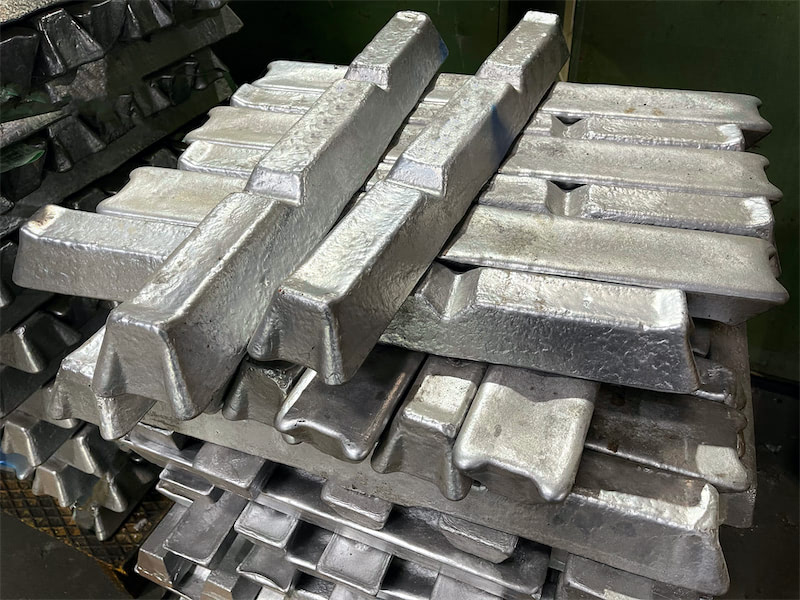 China’s alumina spot price ascends 2.25% M-o-M, falling 1.37% Y-o-Y; SMM A00 aluminium ingot price skids US$50/t
China’s alumina spot price has skipped RMB 1 per tonne upwards, officially closing at RMB 2,913 per tonne.
Aug 24, 2023 16:30- Comparison and Advantages of Low-Pressure Casting and High-Pressure Die Casting Processes [SMM Aluminum Industry Conference]
On April 16, at the AICE 2025 SMM (20th) Aluminum Industry Conference and Aluminum Industry Expo — Aluminum Die Casting Industry Development Forum, co-organized by SMM Information & Technology Co., Ltd., SMM Metal Trading Center, and Shandong Aisi Information Technology Co., Ltd., and co-sponsored by Zhongyifeng Jinyi (Suzhou) Technology Co., Ltd. and Lezhi County Qianrun Investment Service Co., Ltd., Wenping Zhu, Eaton (China) Investment Co., Ltd.'s global aluminum alloy casting expert, special expert/director, and senior die casting engineer qualification certification training lecturer, shared a comparison of low-pressure casting and high-pressure die casting processes, as well as their advantages and disadvantages. **Differences in Process Principles** **Low-Pressure Casting** Pressure range: 0.01-0.1 MPa (low pressure). Principle: Compressed air is used to slowly press molten metal from a sealed holding furnace into the mold through a riser tube. The metal fills the cavity from top to bottom under low pressure and solidifies under pressure. Characteristics: Smooth filling, good metal fluidity, fewer pores and inclusions. **High-Pressure Die Casting** Pressure range: 10-200 MPa (extremely high pressure). Principle: Molten metal is injected at high speed into a steel mold under high pressure (provided by the injection cylinder), rapidly filling the mold and solidifying under high pressure. Characteristics: Fast filling speed (millisecond level), suitable for complex thin-walled parts, but prone to gas entrapment. Low-pressure casting and high-pressure die casting are two common metal casting processes, mainly used for forming non-ferrous metals such as aluminum alloys and magnesium alloys. They have significant differences in principles, application scenarios, and product characteristics. **Comparison of Process Characteristics** **Low-Pressure Casting** Advantages: Good casting density, high mechanical properties, fewer pore defects, capable of producing larger parts. Disadvantages: Long cycle time, higher mold cost, not suitable for ultra-thin-walled parts. Higher production cost, wall thickness must be >3.5 mm, preferably over 4 mm. **High-Pressure Die Casting** Advantages: High production efficiency (multiple parts can be produced per minute), suitable for complex thin-walled parts, high surface precision. High dimensional accuracy, small machining allowance. Disadvantages: Internal pores are common in castings, usually not heat-treatable (pores may expand), extremely high mold cost. Wall thickness greater than 2 mm is sufficient. Low-pressure casting can design closed beams of any diameter, and its advantages in torsional stiffness of closed beams were introduced. High precision dimensions and ultra-thin wall thickness are significant advantages of die casting. Additionally, magnesium alloy high-pressure die castings were introduced. **Breakthroughs and Development Directions for Low-Pressure Casting** 1. Material Innovation: Breakthroughs in high-performance aluminum alloys • Development of high-strength and high-toughness alloys: To meet the needs of new energy vehicles and aerospace, develop new-type aluminum alloys (such as high-silicon aluminum, aluminum-lithium alloys) to improve the specific strength and high-temperature performance of castings. Tensile strength breakthrough of 380 MPa for A356. • Application of composite materials: Breakthroughs in casting technology for aluminum matrix composites (such as SiC particle-reinforced aluminum) to achieve higher stiffness and wear resistance, used for chassis and powertrain components. 2. Process Upgrade: Intelligence and efficiency improvement • Development of low-pressure casting methods with efficient cycles, • Riser tube casting technology, • Electromagnetic pump casting technology • AI algorithm optimization to improve yield and cycle time. • 3D printed sand molds/metal molds **Breakthroughs and Development Directions for High-Pressure Die Casting** Technological breakthroughs: Enhancing performance and process limits, mainly focusing on defect elimination • 1. Ultra-large integrated die casting Breakthroughs needed in mold material heat resistance, press tonnage (over 12,000 mt), and vacuum technology. • 2. Popularization of vacuum high-pressure die casting (VHPDC) Reducing pores through vacuum (porosity 150℃). 3. Efficient application of secondary aluminum Trend: Improving the purity of secondary aluminum through refining technology (Fe content <0.15%), reducing costs and carbon emissions. • The application scenarios and development of magnesium alloy high-pressure die casting and semi-solid die casting, as well as the development and research of magnesium alloy raw materials suitable for die casting, were also elaborated. **Breakthroughs and Development Directions for Both Casting Processes** • Green Manufacturing: Low-carbon and circular economy 1. Energy-saving equipment upgrade: Servo motor-driven die casting machines (energy consumption reduced by 40%), waste heat recovery systems. 2. Environmental protection release agents and coatings: Trend of replacing oil-based agents with water-based release agents, chromium-free passivation treatment. 3. Closed-loop recycling system: Model of OEMs collaborating with aluminum companies to establish scrap recycling networks. • Low-carbon, energy-saving, and environmentally friendly equipment and technologies Analysis of multi-barrel injection technology and micro-precision spraying technology. • Intelligence and Digitization: Precise process control 1. AI-driven process optimization Real-time monitoring. xx launched intelligent die casting machines, improving yield by 15%. 2. Digital twins and virtual trial molds Integration of AI algorithms in simulation platforms such as MAGMA and ProCAST. 3. Blockchain traceability system Function: Recording the process parameters and material sources of each casting, meeting the quality traceability needs of the automotive industry. • Expansion of Application Scenarios: From automotive to multiple fields 1. Aerospace and robotics Drone frames. Robotic arm joints. 2. Consumer electronics: Mobile phone/computer frames 3. Commercial vehicles, general equipment fields. • Peripheral, post-processing automation Online, intelligent detection, automatic feedback, and automatic parameter adjustment. 》Click to view the special report on AICE 2025 SMM (20th) Aluminum Industry Conference and Aluminum Industry Expo.
Apr 16, 2025 19:25 - Comparison of Aluminum Wheel Exports in March-April: Calm on the Surface, but Hidden Complexities Behind? [Analysis by SMM]
[SMM Analysis: Comparison of Aluminum Wheel Export Situation from March to April: Calm on the Surface, but Hidden Complexities?] Customs data shows that in April 2025, China exported a total of 81,400 mt of aluminum alloy wheel hubs, basically flat MoM compared to 82,000 mt in March, highlighting overall resilience, and with a significant YoY increase of 13%. The export performance of domestic aluminum wheels in April remained robust, with the better-than-expected performance attracting market attention. Since the US initiated a tariff war in early April, the aluminum wheel industry, which has accounted for over 30% of direct exports to the US in recent years, was expected to be "the first to bear the brunt," and the market's export expectations for the aluminum wheel industry were relatively pessimistic. However, the aluminum wheel export data for April appeared "calm," or even "serene," exceeding the expectations of most in the market...
May 26, 2025 22:34 - Current Status of Preparation, Processing, and Application of Aluminum Matrix Composites [[SMM Aluminum Conference]]
On April 18, at the AICE 2025 SMM (20th) Aluminum Industry Conference & Aluminum Industry Expo - Industrial Aluminum Extrusion Forum , hosted by SMM Information & Technology Co., Ltd. (SMM), SMM Metal Trading Center, and Shandong Aisi Information Technology Co., Ltd., and co-organized by Zhongyifeng Jinyi (Suzhou) Technology Co., Ltd. and Lezhi County Qianrun Investment Promotion Service Co., Ltd., Professor and Doctoral Supervisor GENG Lin from the School of Materials Science and Engineering at Harbin Institute of Technology shared the current status of preparation, processing, and application of aluminum matrix composites. Research Background of Aluminum Matrix Composites National Significant Demand for Metal Matrix Composites Aerospace: Large aircraft, heavy helicopters, unmanned aerial vehicles, carrier-based aircraft, hypersonic vehicles, near-space vehicles, and strategic transport aircraft. Space: Heavy-lift launch vehicles, manned lunar missions, lunar bases, Mars sampling, small celestial body exploration, Jupiter system exploration, and satellites. Other Fields: Robotics, rail transit, new energy vehicles (NEVs), deep-sea/deep-earth/polar exploration equipment, 3C electronics, etc. Metal matrix composites have taken the first step towards large-scale engineering applications in China's aerospace, defense, electronics, construction machinery, and other fields, becoming one of the irreplaceable basic raw materials for major national projects. He introduced the development history of aluminum matrix composites and pointed out that China ranks among the top internationally in terms of the total number of papers and the number of highly cited papers on aluminum matrix composites. ►Current Status of R&D on Aluminum Matrix Composites in China: Mainly concentrated in high-end manufacturing fields such as aerospace and defense. Aluminum matrix composites have achieved widespread application in high-end manufacturing fields such as aerospace and defense, meeting the demands for small-batch, multi-variety, and customized production. ►One of the Bottleneck Issues in Widespread Application: The strong-toughness inversion problem, where stiffness and strength increase while plasticity decreases. Nature-inspired configuration-based composite strengthening and toughening design has become the main trend in the development of aluminum matrix composites in recent years. In terms of preparation technology, the influencing factors of composite systems are complex: High-quality preparation technologies that match different composite systems need to be selected to meet the demands of complex multi-field coupling applications. In terms of forming and processing technology, the mechanism of microstructure evolution during the forming process is complex: Suitable forming and processing technologies need to be developed to meet the demands for precise shape and property control of complex thin-walled components. Preparation Technology of Aluminum Matrix Composites The preparation of discontinuously reinforced aluminum matrix composites involves various complex processes. Developing suitable preparation technologies is the key to obtaining high-performance composites. II. Preparation Technology of Aluminum Matrix Composites - Solid Phase Method (Powder Metallurgy) The solid phase method refers to the process of preparing metal matrix composites with the matrix in a solid state. Advantages: Lower preparation temperature, easily controlled interfacial reactions, fine microstructure, and high composite performance. It provides analyses of relevant cases, including aluminum matrix composites reinforced with uniformly configured ceramic particles based on traditional ball milling processes, CNT/Al composites with a brick-and-mortar configuration based on flake powder metallurgy, multimodal aluminum matrix composites based on multi-step ball milling, and aluminum matrix composites reinforced with phase change materials. II. Preparation Technology of Aluminum Matrix Composites - Solid Phase Method (Hot Isostatic Pressing) The hot isostatic pressing process involves placing the product in a sealed container, applying isotropic pressure to the product while simultaneously applying high temperature. Under the combined effects of high temperature and pressure, the product undergoes sintering and densification. Most production-scale hot isostatic presses have a maximum operating temperature of approximately 1400°C, with maximum pressures ranging from 100 to 200 MPa. The total tonnage of the largest modern hot isostatic press is approximately 400,000 kN (40,000 tons-force). Example: During the hot isostatic pressing preparation of high volume fraction SiCp/Al composites, the matrix aluminum alloy exists in a solid-liquid two-phase region, facilitating easier densification of the composite under high temperature and pressure conditions. II. Preparation Technology of Aluminum Matrix Composites - Liquid Phase Method (Squeeze Casting) Preform Preparation: Preparing uniformly porous preforms through physical sedimentation; preparing biomimetic configured preforms using methods such as freeze casting and 3D printing. Composite Preparation: Infiltrating molten aluminum into the pores of the preform through mechanical pressurization to achieve the preparation of high-performance composites. It discusses relevant cases, including aluminum matrix composites reinforced with uniformly configured particles, aluminum matrix composites reinforced with uniformly configured whiskers, and biomimetic configured aluminum matrix composites. II. Preparation Technology of Aluminum Matrix Composites - Liquid Phase Method (Vacuum Pressure Infiltration) Vacuum pressure infiltration is similar to squeeze casting, primarily involving the preparation of ceramic porous preforms first, followed by the combination of a vacuum environment and gas pressure pressurization conditions to enable the aluminum alloy melt to fill the micropores of the preform and solidify, thereby preparing aluminum matrix composites. It introduces relevant cases of low-expansion, high-volume fraction particle-reinforced aluminum matrix composites and biomimetic configured aluminum matrix composites. II. Preparation Technology of Aluminum Matrix Composites - Liquid Phase Method (Stir Casting) Basic Principle: Directly adding particles into the semi-solid melt of the matrix metal to increase the shear stress during stirring, enabling uniform dispersion of the particles in the metal melt. Subsequently, rapidly heating to the liquid state to improve the casting liquidity, and finally casting into ingots, castings, etc. Key technologies: Improvement of wettability between the melt and the reinforcement phase, uniform dispersion of the reinforcement phase, and control of oxidation and gas absorption in the metal melt. Technological advantages: Suitable for industrial-scale production; simple process and low manufacturing costs. Preparation capacity: The production scale of stir casting typically ranges from a few kilograms in the laboratory to several dozen tons in industrial production. It elaborates on cases such as the stir casting preparation technology for SiC particle-reinforced aluminum matrix composites, graphite particle-reinforced aluminum matrix composites, and in-situ TiB₂-reinforced aluminum matrix composites. The fluoride salt method mainly involves the reaction of two salts, generating fluoride salt by-products; the master alloy method produces no by-products but has high requirements for raw materials; the in-situ reaction-generated TiB₂ particle composite casting ingot can currently reach a maximum of 11t, providing ingots for subsequent plastic processing to prepare large components. TiB₂ particles exhibit a network-like distribution. Their size can be controlled within the nanometer to submicron range, with regular particle shapes and no significant agglomeration; the in-situ reaction-generated TiB₂ particles have a good interface bonding with the aluminum matrix and are in a coherent relationship, making them ideal reinforcing ceramic particles. TiB₂ particles are excellent grain refiners. In the molten metal, TiB₂ particles act as the core for heterogeneous nucleation, providing more nucleation sites during metal crystallization, ultimately resulting in finer and more uniform grains; a large number of dislocation tangles exist near TiB₂ particles as the second phase particles, effectively hindering dislocation movement during deformation, thereby enhancing the material's strength. Compared to the matrix alloy, the HCF ultimate strength of TiB₂ particle-reinforced aluminum matrix composites is increased by 22% to 44%, reaching up to 730MPa; fine TiB₂ particles can inhibit fatigue crack initiation, avoiding the tendency for premature fatigue crack initiation due to particle-interface debonding and particle fracture. Preparation Technology of Aluminum Matrix Composites - Additive Manufacturing Method Based on additive manufacturing technology, it enables the net-shape forming of complex structural metal components with integrated material-structure, providing a new technological approach for the design and manufacture of high-performance components in aerospace, mainly divided into laser additive manufacturing, arc additive manufacturing, friction stir manufacturing, etc. Preparation Technology of Aluminum Matrix Composites - Additive Manufacturing Method (Laser Additive) Under the action of a laser beam, metal powder is melted and rapidly solidified to form a new layer of material. This process is carried out layer by layer until a complete three-dimensional object is constructed; based on the specified reinforcement particles and Al matrix that have been added, induced grain refinement can be achieved.The lower interatomic mismatch between the α-Al matrix and TiB₂ leads to a decrease in the critical nucleation undercooling ΔT, which can repair crack formation in alloys prone to cracking during the L-PBF process. The addition of second-phase hard particles can significantly refine the microstructure, resulting in higher yield strength due to grain boundary strengthening, as verified in TiB₂-reinforced AlSi10Mg alloys and TiC/TiH₂-reinforced Al2024 alloys. In addition to grain boundary strengthening, the yield strength of the L-PBF TiB₂/AlSi10Mg alloy is increased to approximately 362-407 MPa due to the enhanced resistance to dislocation motion caused by the hard particles. II. Fabrication Technologies for Aluminum Matrix Composites - Additive Manufacturing (Friction Stir) Friction stir additive manufacturing (FSAM) involves local plastic deformation of metal materials using a high-speed rotating stirring tool, followed by layer-by-layer accumulation under pressure to achieve the fabrication of highly dense metal structures. The advantages of FSAM include low-temperature processing, energy conservation and environmental protection, applicability to difficult-to-weld materials, and low residual stress. It is mainly used for the compounding of dissimilar materials and the repair of high-value components, suitable for the efficient large-scale forming of materials such as aluminum alloys and magnesium alloys. The NiTip/Al interface prepared by friction stir additive manufacturing exhibits good bonding without the formation of harmful reaction products. The addition of NiTip forms a fine-grained microstructure with good dispersion, accelerating dynamic recovery by increasing the matrix deformation and promoting dynamic recrystallization through particle-stimulated nucleation. The unique fine-grained microstructure, uniformly dispersed NiTip, and well-bonded NiTip/Al interface significantly enhance strength without adversely affecting ductility. II. Fabrication Technologies for Aluminum Matrix Composites - Additive Manufacturing (Arc Additive) Arc additive manufacturing is a directed energy deposition (DED) 3D printing technology based on arc welding principles, constructing parts by depositing metal materials layer by layer. The grain size of the TiN/Al-Zn-Mg-Cu alloy is refined from 459.3 μm to 104.6 μm, attributed to the formation of Al₃Ti particles acting as nucleating agents, resulting in increased tensile strength in both the horizontal and vertical directions. In the horizontal direction, the tensile strength increases from 207 MPa to 284 MPa. Forming and Processing of Aluminum Matrix Composites III. Forming and Processing of Aluminum Matrix Composites - Hot Extrusion Hot extrusion enables the production of complex cross-sectional profiles, with only compressive and shear stresses applied during the forming process, resulting in good surface finish of the produced parts. Computer simulation can assist process engineers in understanding the metal flow patterns during profile extrusion, predicting defects in advance, optimizing die design, and improving profile quality. III. Forming and Processing of Aluminum Matrix Composites - Forging Based on the simulation of material flow behavior, potential deformation defects can be predicted, providing a theoretical basis for formulating process measures to prevent crack formation. By establishing a hot working map based on the dynamic material model, the optimal processing conditions for the material can be accurately predicted. A multi-scale thermo-mechanical coupling model for composites was established to simulate the deformation process and microstructure. As a result, SiC/Al forgings with diameters ranging from 1760 to 2500mm were successfully developed in one attempt. Numerical simulations of the isothermal forging process for blades/housings were conducted using finite element software to obtain strain distribution and load data. Reasonable forging process parameters were then formulated, ultimately resulting in forgings with ideal microstructure and properties. By combining finite element simulation with hot compression experiments, the influence of deformation process parameters on the damage field, stress-strain field, and temperature field during the forging process of SiCp/Al composites was investigated. The issue of cracking in heterogeneous and difficult-to-deform composite forging blanks was addressed through a combination of upset forging with a can and two-way forging processes. Large annular forgings of aluminum matrix composites were successfully trial-produced using isothermal precision die forging, with excellent forming quality and significantly refined shape and dimensions. Forming and Processing of Aluminum Matrix Composites - Rolling By simulating the residual stress distribution during the rolling process, rolling process parameters can be optimized to reduce residual stress generation, thereby improving the quality and precision of rolled products. During the rolling process, there exists a mechanism of small-sized phase fragmentation and phase transformation, as well as a refinement mechanism where large-sized phases are broken down into smaller ones. After rolling, the material forms a fibrous microstructure with grains aligned along the rolling direction, resulting in an elongated grain structure. Rolling can be divided into cold rolling and hot rolling. Cold rolling significantly increases strength and hardness due to work hardening effects, but reduces plasticity. Hot rolling results in a more uniform microstructure with lower internal stresses, but lower strength. By optimizing rolling parameters and process routes, profiles suitable for automotive or aerospace applications can be prepared. III. Forming and Processing of Aluminum Matrix Composites - Welding On an A356 aluminum alloy substrate, a gradient structure composite can be manufactured using a brazing layer of SiCp/Al composite with varying contents. The welding area is defect-free, continuous, and free of cracks and pores, with good bonding at the gradient structure interface. III. Forming and Processing of Aluminum Matrix Composites - Machining Particle-reinforced aluminum matrix composites: The main parameters affecting the grinding process include grinding wheel speed (vs), table speed (vw), grinding depth (ap), and maximum undeformed chip thickness (hmax). Among these, grinding at high grinding wheel speeds (vs) results in composites with higher surface quality and more ductile deposition zones. Reducing the undeformed chip thickness (hmax) will decrease the number of effective abrasive grains involved in grinding, thereby controlling the pore size on the composite surface and the thickness of the damaged layer, which is beneficial for reducing the formation of subsurface microcracks and pores. The main parameters affecting the turning process include spindle speed (n), feed rate (f), nose radius (r0), cutting depth, etc. Low spindle speed and feed rate are conducive to reducing stress concentration in composites, minimizing the collapse, pull-out, and pitting of SiCp. Whisker-reinforced aluminum matrix composites: The reinforcement phase consists of whiskers with a large aspect ratio, exhibiting anisotropy, making the cutting process more complex. Applications of Aluminum Matrix Composites IV. Applications of Aluminum Matrix Composites - Overseas It introduces the overseas applications of aluminum matrix composites and points out that the development of overseas discontinuous aluminum matrix composites is driven by demand and technological innovation, closely integrating the optimization of preparation processes with multi-domain requirements. Aerospace: The development of lightweight, high-strength, and high-modulus aluminum matrix composites has made it possible to manufacture lightweight, flexible, and high-performance aircraft and satellites in the modern aerospace industry. Weaponry: Discontinuous reinforced aluminum matrix composites possess characteristics such as lightweight, high strength, high-temperature resistance, and impact resistance in the weaponry field, significantly enhancing equipment mobility, battlefield survivability, and service life. 3C Electronics: Aluminum matrix composites, particularly SiC-reinforced aluminum matrix composites, are suitable for manufacturing electronic device liners, heat sinks, and other electronic components due to their advantages of low thermal expansion coefficient, low density, and good thermal conductivity. Click to view the special report on AICE 2025 SMM (20th) Aluminum Industry Conference & Aluminum Industry Expo
May 9, 2025 17:04 - [Morning Briefing] US Adjusts Tariff Hike on China; Social Financing Data for First Four Months Released
Macro News 1. According to the "Executive Order on Modifying Reciprocal Tariff Rates to Reflect the Outcome of Talks with the People's Republic of China" issued by the US White House on May 12, starting from May 14 (Eastern Time), the US will revoke 91% of tariffs on China and adjust 34% of reciprocal tariffs (24% suspended for 90 days, with 10% retained). Meanwhile, the US will also reduce or revoke tariffs imposed on small parcels from China (including those from the Hong Kong Special Administrative Region), lowering the ad valorem tariff rate for international mail from 120% to 54% and revoking the measure scheduled to take effect from June 1, 2025, which would have increased the specific tariff from $100 to $200 per item. 2. According to data from the People's Bank of China, the incremental aggregate financing to the real economy (AFRE) in China from January to April was 16.34 trillion yuan, an increase of 3.61 trillion yuan compared to the same period last year. At the end of April, the balance of broad money (M2) was 325.17 trillion yuan, up 8% YoY. The balance of narrow money (M1) was 109.14 trillion yuan, up 1.5% YoY. The balance of currency in circulation (M0) was 13.14 trillion yuan, up 12% YoY. In the first four months, the net cash injection was 319.3 billion yuan. New RMB loans from January to April amounted to 10.06 trillion yuan. At the end of April, the balance of domestic and foreign currency loans was 269.54 trillion yuan, up 6.8% YoY. The balance of RMB loans at the end of the month was 265.7 trillion yuan, up 7.2% YoY. 3. Yesterday, Foreign Ministry spokesperson Lin Jian stated that the US, using fentanyl as a pretext, unreasonably imposed two rounds of tariffs on China. In response, China promptly took countermeasures, including tariff and non-tariff measures, to firmly safeguard its legitimate rights and interests, and these countermeasures remain in effect. 4. A spokesperson for the Ministry of Commerce responded to inquiries from reporters regarding the work to strengthen the whole-chain management and control of strategic mineral exports. The Ministry of Commerce stated that effective management and control of strategic minerals require addressing the issue from the source, strengthening the whole-chain management and control of mining, smelting, processing, transportation, manufacturing, sales, and exports to effectively prevent the illegal outflow of strategic minerals. 5. On May 14, Zheng Shanjie, Director of the National Development and Reform Commission (NDRC), chaired a symposium with private enterprises, focusing on gathering opinions and suggestions regarding the current economic situation and the implementation of policies to stabilize employment and the economy. At the meeting, the heads of participating enterprises not only introduced the development of their enterprises and industries but also put forward suggestions for promoting the high-quality development of private enterprises under the new situation. 6. The second meeting of the China-EU Financial Working Group was held in Brussels, Belgium, from May 13 to 14. The meeting conducted in-depth exchanges on issues such as global economic uncertainties, the respective macroeconomic and financial stability situations of China and the EU, banking and insurance sector supervision, and the development of pension funds and leasing companies. Constructive discussions were also held on cooperation in emerging areas such as sustainable finance, cross-border data flows, and the construction of cross-border payment systems. 7. The Agreement between the Government of the People's Republic of China and the Government of the Republic of Uzbekistan on Mutual Visa Exemption will come into force on June 1, 2025. According to the agreement, holders of valid Chinese diplomatic, service, and ordinary passports, as well as holders of ordinary Uzbekistani passports, are exempt from visa requirements when entering, exiting, or transiting through the territory of the other Contracting Party, provided that their single stay does not exceed 30 days and their cumulative stay within any 180-day period does not exceed 90 days. 8. When responding to reporters' questions about the suspension of measures related to the Unreliable Entity List for 17 US entities, the spokesperson for the Ministry of Commerce stated that, in accordance with the relevant provisions of the Regulations on the Unreliable Entity List, domestic enterprises may apply to conduct transactions with the aforementioned entities, and the working mechanism for the Unreliable Entity List will conduct reviews in accordance with the law and approve eligible applications. The Ministry of Commerce also stated that previously, 28 US entities had been included in the export control management list, and the export of dual-use items to these entities had been prohibited. To implement the consensus reached during the high-level economic and trade talks between China and the US, it was decided to suspend the aforementioned relevant measures for 90 days starting from May 14, 2025. Industry News 1. Bai Qingyuan, Deputy Director of the State Administration for Market Regulation, chaired a symposium on platform enterprises supporting the development of self-employed businesses. The meeting pointed out that platform enterprises, as an important part of the private economy, can provide broad opportunities for the development of self-employed businesses and offer support in various aspects such as digital empowerment, traffic assistance, and market expansion. Platform enterprises are encouraged to introduce more practical measures to support the development of self-employed businesses based on their own characteristics. 2. Seven departments, including the Ministry of Science and Technology, issued the "Several Policy Measures to Accelerate the Construction of a Science and Technology Financial System to Strongly Support High-Level Scientific and Technological Self-Reliance and Strength," establishing the "National Venture Capital Guidance Fund." Among the measures proposed are conducting pilot programs for M&A loans for technology enterprises in selected commercial banks and pilot cities, increasing the loan-to-value ratio for M&A transactions to 80% and extending the loan term to 10 years; further enhancing the capital market's support for technological innovation enterprises; and establishing a "Science and Technology Board" in the bond market, incorporating high-quality enterprise science and technology innovation bonds into benchmark market-making categories. 3. Tencent issued a company-wide letter regarding adjustments to the WXG Business Group. The main contents include: establishing an E-commerce Products Department responsible for exploring transaction models within WeChat, accelerating the development of transaction infrastructure and the transaction ecosystem, and operating new WeChat transaction models; renaming the Open Platform Infrastructure Department to the Open Platform Department, responsible for the planning, R&D, and operation of WeChat official accounts and Mini Program products. 4. After three years of bottoming-out adjustments, China's dairy farming industry has entered a period of accelerated transformation. Financial reports recently released by several listed raw milk companies show that in 2024, China's raw milk production reached 40.79 million mt, marking the first decline since 2018, and the pace of capacity exit in dairy farms has significantly accelerated. Industry analysts believe that the turning point of this round of deep adjustment in the dairy industry may occur in H2. 5. Given that US importers will enter a clear window of significantly reduced import costs in the next three months, Goldman Sachs analysts stated that China's exports will surge in the next 90 days. As negotiators from both sides strive to achieve further progress in consultations, companies will compete to increase inventory reserves, especially as US importers may initiate another round of purchasing frenzy. 6. According to multiple media reports, Apple has issued a price adjustment notice to channel partners, with the iPhone 16 Pro and iPhone 16 Pro Max in all storage versions seeing price reductions of over 1,000 yuan. Recently, the promotional information released by the official Apple Store flagship store on Tmall shows that starting at 20:00 on May 16, the iPhone 16 Pro 128GB, after applying national subsidies and various discounts, will be available for 5,499 yuan, a reduction of 2,500 yuan from the original price of 7,999 yuan. 7. Ma Huateng, CEO of Tencent, stated that in Q1 this year, Tencent's AI capabilities have made substantial contributions to businesses such as performance advertising and evergreen games, and have also increased investment in new AI opportunities such as Yuanbao applications and AI within WeChat. These strategic AI investments will create value for users and society, and generate long-term, significant incremental returns for us. Company News 1. Vanke A announced that Shenzhen Metro Group plans to provide the company with a loan of up to 1.552 billion yuan. 2. Kweichow Moutai announced that due to the number of registered attendees exceeding the original venue capacity, it plans to adjust the location of the shareholders' meeting. 3. Hongjing Technology announced the signing of a 563 million yuan computing power business contract. 4. Baofeng Energy announced plans to repurchase company shares worth 1 billion to 2 billion yuan. 5. New Huadu announced a collaboration with the Hong Kong Polytechnic University to build an AI laboratory. 6. Tencent Holdings released its financial report, with Q1 non-IFRS operating profit of 69.32 billion yuan, up 18% YoY. 7. ST Lianhe announced plans to purchase part or all of the equity of Jiangxi Runtian Industrial, with the stock suspended from trading. 8. Shenghe Resources announced that its wholly-owned subsidiary plans to acquire 100% equity of Peak Company to promote the development of the Ngualla rare earth mine project. 9. China Rare Earth announced that it is actively cooperating with China Rare Earth Group to address issues of competition within the same industry and will seize opportunities for mergers and acquisitions. 10. China Oilfield Services announced that its subsidiary has won a bid for the EPSCC project of the Atawi Oilfield Gas Processing Plant in Iraq, worth 1.601 billion US dollars. 11. Zhanpeng Technology announced that two shareholders plan to collectively reduce their holdings by no more than 6% of the company's shares. 12. *ST Suwu announced that the company's chairman, Qunshan Qian, has been investigated for suspected violations of information disclosure regulations. 13. Zhao Weiguo, former chairman of Tsinghua Unigroup, was sentenced to death with a two-year reprieve in the first trial. Global Markets 1. The three major US stock indices closed mixed, with the Nasdaq up 0.72%, the S&P 500 up 0.1%, and the Dow down 0.21%. Most large-cap tech stocks rose, with Tesla and Nvidia up over 4%, and Google up over 3%. Among them, Nvidia turned positive for the year. Most popular Chinese stocks rose, with the Nasdaq Golden Dragon China Index closing up 1.17%. The three major European stock indices closed slightly lower, with the German DAX down 0.47%. 2. International crude oil futures settled nearly 1% lower. WTI crude for June fell 0.82%, and Brent crude for July fell 0.81%. 3. COMEX gold futures fell 1.91% to $3,185.7 per ounce; COMEX silver futures fell 2.23% to $32.37 per ounce. Investment Opportunities Reference 1. China's Commercial Space Industry Is Approaching Dual Inflection Points of "Technological Breakthrough" and "Scale Explosion" Recently, China successfully launched multiple satellites. On May 14, China used the Long March 2D carrier rocket at the Jiuquan Satellite Launch Center to successfully launch the Space Computing Satellite Constellation into orbit. On May 13, China used the Long March 3C carrier rocket at the Xichang Satellite Launch Center to successfully launch the Communication Technology Test Satellite No. 19 into its planned orbit, marking a complete success of the mission. GF Securities stated that China's commercial space industry is approaching dual inflection points of "technological breakthrough" and "scale explosion," with the space economy transitioning from vision to reality. Entering 2025, a batch of new commercial rockets, including Zhuque-3, Tianlong-3, Gravity-2, Hyperbola-3, and Zhishenxing-1, are expected to make their maiden flights as planned; China's version of "Starlink," the Qianfan Constellation and GW Constellation, will continue to launch; the Hainan Commercial Space Launch Site will enter a regular launch phase and begin its second-phase construction. It is estimated that the market size of China's commercial space industry will exceed 2.5 trillion yuan this year. 2. The "New Blue Ocean" in the Eyes of Many Enterprises, This Business Model Has Become a Key Driver of Import and Export Growth According to reports, interviews with multiple cross-border foreign trade merchants revealed active inquiries from the US, with many merchants receiving restocking orders. The interviewed merchants indicated that they would still make multiple preparations, including supply chain, overseas warehouses, and emerging market expansion, to achieve a global layout. With the increasing penetration of overseas e-commerce and the further optimization of China's supply chain capabilities, cross-border e-commerce has become one of the important channels for Chinese enterprises to go global. China's manufacturing foundation, complete supply chain system, robust logistics network, and digital payment system have become unique advantages for the country's development of cross-border e-commerce. "Going global" through cross-border e-commerce channels has also become a "new blue ocean" in the eyes of many enterprises. Market analysis indicates that cross-border e-commerce is an embodiment of new quality productive forces, which not only reduces trade links but also lowers trade barriers. The retail business of cross-border e-commerce directly connects small, medium, and micro enterprises with consumers, providing more trade opportunities for these entities, expanding trade scale, and optimizing trade structure. 3. 2025 Data Intelligence Conference to Release "AI Agent Industry Landscape" According to media reports, it has been learned from the China Academy of Information and Communications Technology (CAICT) that the 2025 Data Intelligence Conference will be held in Beijing from June 18 to 19. CAICT will release multiple standards in the field of digital intelligence applications at the conference, as well as the "AI Agent Industry Landscape." According to several authoritative reports, including those from McKinsey, driven by diversified demand, the AI Agent market is experiencing explosive growth. The global AI Agent market size was approximately $5.1 billion in 2024 and is expected to soar to $47.1 billion by 2030, with a compound annual growth rate (CAGR) as high as 44.8%. Guotai Junan Securities stated that with the release of the latest large models by DeepSeek and Tongyi Qianwen, as well as the launch of Agents by platforms like Fliggy and Choice, Agents are expected to gradually land in more scenarios in the future, accelerating the implementation of AI applications. 4. Demand Boost from AI Terminals, Aerospace, and Military Industries Opens Up Growth Space for Strategic Materials in This Sector The 20th Western China International Fair (WCIF) will be held in Chengdu, Sichuan Province, from May 25 to 29. It is reported that this year's WCIF will continue to feature seven exhibition zones focusing on new industrial momentum, highlighting breakthrough achievements in cutting-edge fields such as artificial intelligence, biotechnology, new-type displays, and the low-altitude economy. Among them, world-first technologies and products, such as the global debut of carbon fiber-reinforced polymer wing structural components for the Airbus A350, will be showcased. Due to its superior properties such as weight reduction and strength enhancement, carbon fiber, known as the "black gold" in the materials industry, is regarded as a national strategic material. Carbon fiber and its composites have been widely applied in fields such as aerospace, automotive, new energy development, and leisure products, thanks to their excellent performance. Kaiyuan Securities pointed out that with the development of the domestic low-altitude economy, domestically produced large aircraft, and aerospace industries, the domestic demand for aerospace-grade carbon fiber is expected to accelerate.
May 15, 2025 08:18