

2351results found for 'supply-demand'
Price
News
- [SMM Analysis] Downstream demand is weak, and intermediate product payables are under pressure.
Weak Downstream Demand, Intermediate Product Payables Under Pressure
Jul 17, 2026 17:51 ![[SMM Analysis] Falling Futures and Weak Demand Pressure NPI Prices, Market Stagnation Continues](https://imgqn.smm.cn/usercenter/LNpBh20251217171732.jpeg) [SMM Analysis] Falling Futures and Weak Demand Pressure NPI Prices, Market Stagnation Continues
[SMM Analysis] Falling Futures and Weak Demand Pressure NPI Prices, Market Stagnation ContinuesSMM 10-12% high-grade NPI average price dropped WoW by 3.1 yuan/nickel unit to 1,129.4 yuan/nickel unit (ex-factory, tax included), and the average Indonesian NPI FOB index price dropped WoW by $0.47/nickel unit to record $145.76/nickel unit.
Jul 17, 2026 17:37- Industry-Wide Supply Decline, Limited Spot Price Gains [SMM SiMn Weekly Review]
As of this Friday, SiMn 6517 (cash) in north China was at 5,750-5,800 yuan/mt, up WoW; SiMn 6517 (cash) in south China was at 5,800-5,850 yuan/mt, up WoW from last Friday, while SiMn 6014 (cash) in south China was at 5,350-5,400 yuan/mt, down WoW. Recently, SiMn futures moved sideways in a weak trend. A strong wait-and-see sentiment prevailed, with spot prices edging up slightly, but futures could not drive spot prices significantly higher.
Jul 17, 2026 17:37 - [SMM Analysis] Domestic Demand Underpins Market; Overseas Anti-dumping, July GO Silicon Steel Prices to Consolidate
June Price Review: In June, the monthly average price of GO silicon steel continued its previous rebound trend, with the price center continuing to rise. Despite relatively high supply pressure, the earlier trend of price bottom repair persisted, and the monthly average spot price steadily rose, reflecting that the market held good expectations for a market recovery. However, the oversupply pattern capped the upside room, and the price uptrend was relatively mild without any sharp surge. Fundamental Analysis: In July, GO silicon steel production is expected to stay high. In terms of production by variety, HIB and CGO output will remain stable, with high-grade HIB still accounting for the vast majority of production, while CGO output will hold steady within a narrow range, and the product mix will not undergo significant adjustments. Compared with historical production schedules, the July 2026 production schedule will continue the high-level range, with overall supply releases stable, and total GO silicon steel supply will remain relatively ample. Sustained high output has also become one of the core factors capping the upside room for GO silicon steel prices this round and keeping the supply-demand balance loose. In May, GO silicon steel consumption driven by new grid installations was at a relatively low level for the year. In terms of structure, thermal power and solar power remained the main consumption sources, with wind and hydropower demand providing supplementation, and nuclear power’s share staying low. Compared with the consumption structure of non-oriented silicon steel, thermal power and solar together accounted for 60%, making the demand structure characteristics on the power supply side clear. In May, the pace of new terminal installations slowed down, transformer enterprise order growth was limited, and direct demand for GO silicon steel was released slowly, coupled with sustained high production at steel mills earlier, supply-side pressure was hard to digest, which weighed on silicon steel prices, making it difficult to rely on grid installations for strong demand boost in the short term. July Price Outlook: Looking ahead to July 2026, on the supply side, China's GO silicon steel supply is expected to be basically stable. Mainstream steel mills’ production lines will operate stably with no concentrated maintenance plans, and the overall production load will remain stable. Meanwhile, mainstream steel mills such as Baowu will raise the base price of grain-oriented products by 300 yuan/mt in their July pricing policies. Coupled with production profits maintaining a reasonable range, overall production enthusiasm will be good, and high-grade resources will be steadily released. Demand side, favorable market support continues, with overall demand performing robustly. China’s “15th Five-Year Plan” UHV projects continue to start construction in a concentrated manner, with the construction pace steadily advancing. Demand for transformers supporting new energy grid connections is robust. At the same time, energy efficiency upgrades for home appliances and NEVs are gradually being implemented, keeping demand for high-efficiency motor retrofits high. Moreover, overseas power grid upgrade projects are advancing, and procurement demand for high-grade GO silicon steel remains stable. However, India’s launch of anti-dumping against China’s GO silicon steel may cause some resources to flow back into the domestic market, weighing on price increases. Cost side, with expectations of further shrinking steel mill profits and normalizing production restrictions driven by local environmental protection, hot metal output is expected to continue to decline. However, the off-season impact on the market is expanding, and the average HRC price in July is expected to decline further MoM from June, with the decline narrowing. Overall, SMM expects that GO silicon steel prices will present a consolidation pattern in July 2026.
Jul 17, 2026 16:44 - [SMM Analysis] Off-Season Impact Intensifies; Non-Oriented Silicon Steel Prices Likely to Edge Lower in July
June Price Review: The monthly average price of non-oriented silicon steel exhibited a bottoming-out decline in June. On the supply-demand front, the market shifted from a slight balance to a narrow undersupply, with fundamentals continuing to improve marginally. The oversupply that previously weighed on the market gradually eased, providing price support. Spot prices performed stronger than expected, edging down only slightly. As a transitional month shifting from off-season to peak season, the supply-demand pattern improved in June. Fundamental Analysis: China's production schedule for non-oriented silicon steel continued to decline in July. Comparing with the same period in previous years, the scheduled production in July 2026 was lower than that of July 2025. Analyzing by grade, the proportion of NEV grades in the July production schedule rebounded to 15%, high grades accounted for 19%, while the proportion of low and mid-end grades pulled back to 66%. Steel mills continued to adjust their product mix, with the scheduled production of conventional low and mid-end grades shrinking accordingly. While total scheduled production continued to contract, supply-side pressure persisted. Maintaining original production levels for NEV and high-grade resources while significantly reducing low and mid-end grades optimized the supply structure to some extent, supporting market resilience. Downstream demand for non-oriented silicon steel showed structural divergence in May. In the home appliance sector, total silicon steel consumption pulled back MoM, with air conditioners remaining the core demand driver. Demand from the automotive sector was strong, with silicon steel consumption climbing to a high level for the period in May. Specifically, passenger NEVs provided the largest support for automotive silicon steel demand. Overall, traditional demand from home appliances weakened marginally, while NEV demand continued to strengthen. The demand center shifted toward the automotive sector, generating structural benefits for high-grade and NEV-grade non-oriented silicon steel. July Price Outlook: Supply side, China's planned production schedule for non-oriented silicon steel continued to decrease in July 2026, with reductions primarily focused on low and mid-end grades. On one hand, the off-season impact became more pronounced, downstream demand was soft, and purchasing interest declined, curbing production activity. On the other hand, industry leaders like Baowu and Shougang kept base prices unchanged in July, prioritizing price stability, but bearish sentiment persisted, making prices more likely to fall than rise. Most producers were loss-making and cut production autonomously. Demand side, in the home appliance sector, enterprises slowed their production pace, with orders falling MoM. The 618 shopping festival provided no significant order stimulus. Affected by low demand, high inventory, and high costs, some enterprises cut their production schedules ahead of schedule, and the implementation of new energy efficiency standards for some appliance products led to model upgrades that restricted production. In the automotive sector, automakers generally maintained normal production paces, with some increasing production schedules this month to meet mid-year targets. However, the sales promotions of the 618 festival and policies yielded limited boosting effects, and sales pressure persisted. Breaking it down, NEVs remained the main sales driver this month, orders for internal combustion engine vehicles showed no significant improvement, and exports were mainly directed to markets such as Russia, South America, and Southeast Asia, with the industry's full-year export volume expected to reach 12 million units. Cost side, with steel mill profits continuing to shrink and expectations of normalized local environmental protection-driven production restrictions, hot metal production is expected to continue to pull back. But as the off-season impact expands, the average hot-rolled coil price in July is expected to decline further MoM from June, though the extent of the decline will narrow. In summary, SMM expects that prices for low and mid-end non-oriented silicon steel will drift lower overall in July 2026, with some room for price reductions.
Jul 17, 2026 16:36 - [SMM Weekly Wrap] Overall Rigid Demand Transactions Dominate, Grain-Oriented Silicon Steel Prices May Remain Temporarily Stable Next Week
Grain-Oriented Silicon Steel Price Movements Shanghai B23R085 grade: 12,200-12,200 yuan/mt Wuhan 23RK085 grade: 11,700-11,700 yuan/mt This week, China’s grain-oriented silicon steel market remained stable overall, with no notable price fluctuations. Mainstream quotations in the spot market were steady. Steel mills showed strong willingness to hold prices firm. For August, the base price for GO silicon steel was raised by 50 yuan/mt, with no significant rise or fall. Supply-demand conditions were generally stable. Steel mills maintained a steady production pace, resource supply was orderly, and market circulating inventory remained within reasonable range. Downstream end-users such as transformer enterprises purchased as needed, with just-in-time procurement dominating. The overall transaction pace was moderate. Market trading sentiment was cautious and rational. Traders mostly sold at stable prices, taking a wait-and-see stance, and price concessions or adjustments were rare. Looking at market fundamentals, bullish and bearish factors are currently balanced. The cost side provides bottom support, while the demand side shows no significant boost or weakening signs. Overall, the GO silicon steel market is expected to continue its stable pattern next week, with prices likely to remain steady. Transactions will mostly be just-in-time procurement against a wait-and-see stance, with no clear upward or downward trend for now. Data source statement: Data other than publicly available information is based on public information, market communication, and SMM’s internal database models, processed by SMM. It is for reference only and does not constitute decision-making advice. Note: This article is original content of this official account. For any needs regarding reproduction, whitelisting, or cooperation, please contact us. Without permission, no one may reproduce, modify, use, sell, transfer, display, translate, compile, disseminate, or otherwise disclose the above content to any third party or authorize any third party to use it. Once discovered, SMM will pursue legal liability for infringement, including but not limited to requiring the assumption of contractual breach liability, restitution of unjust enrichment, and compensation for direct and indirect economic losses.
Jul 17, 2026 16:21
Announcements
Malaysia has developed a relatively mature stainless steel network. Domestic transaction prices for 304L stainless steel can effectively reflect changes in local market.
PriceJul 15, 2026 16:25Launch of "SMM UAE Rebar EXW Price" Assessment
PriceJun 24, 2026 16:57SMM plans to add SMM FOB South Korea Sulfuric Acid price point starting from June 26, 2026 (Friday).
PriceJun 23, 2026 10:59
Events
 WebinarSep 10, 17:00 - 23:59 (GMT+8)
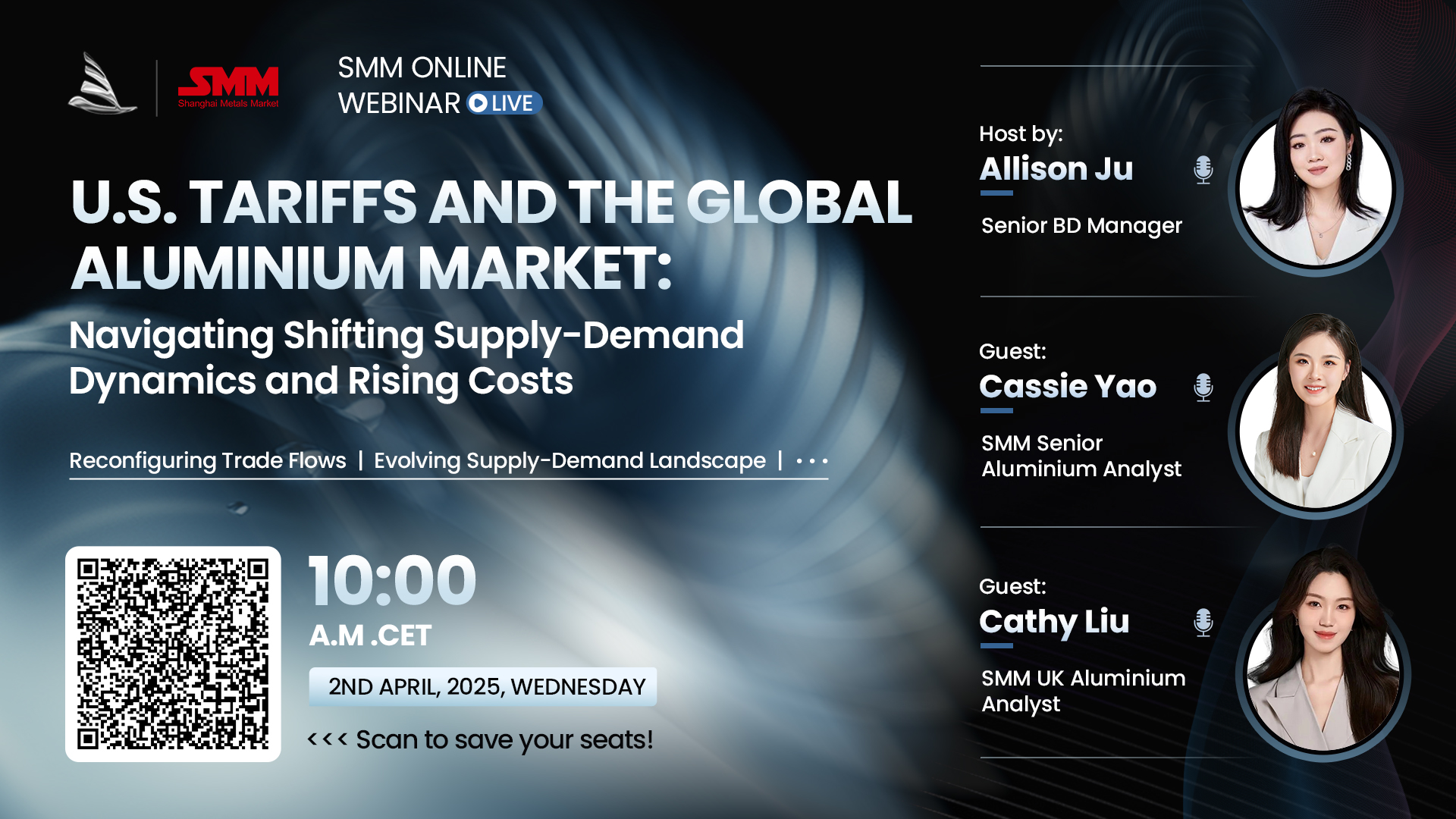 WebinarApr 2, 17:00 - 23:59 (GMT+8)
 WebinarMay 24, 18:00 - 23:59 (GMT+8)