

587results found for 'separation'
Price
News
- Ministry of Industry and Information Technology Deploys Industrial Green and Low-Carbon Transformation, Large-Scale Application of Green Hydrogen and Green Methanol Accelerates
Recently, the Ministry of Industry and Information Technology issued the 15th Five-Year Plan for Green and Low-Carbon Industrial Development, making systematic deployment in areas such as green energy utilization, carbon reduction in key industries, hydrogen industry cultivation, advanced equipment promotion, and technological innovation, to further increase the application proportion of clean energy like green electricity and green hydrogen in the industrial sector. The plan proposes that, on the premise of complying with national industrial layout requirements, regions with abundant green energy be supported to orderly undertake industries such as aluminum, steel, petrochemicals and chemicals, PV, and power batteries, extend the green energy industry chain, promote the large-scale application of green hydrogen, ammonia, and methanol, and enhance the on-site consumption capacity of green energy. At the same time, a number of zero-carbon factories and zero-carbon computing facilities will be built, exploring replicable and scalable construction models. Industrial green microgrids are also listed as a key development direction. The plan proposes promoting the integrated application of technologies such as PV, wind power, heat pumps, new-type energy storage, hydrogen energy, waste heat, pressure, and gas, and smart energy management, to facilitate the efficient complementary utilization of various energy sources in the industrial sector. In terms of key industry transformation, the steel industry will accelerate the concentration of steel scrap and green electricity resources to electric furnace short-process steelmaking enterprises, and promote the industrialisation of low-carbon metallurgical technologies such as hydrogen-rich, oxygen-rich, and carbon-circulating blast furnaces and pure hydrogen direct reduction. The petrochemical and chemical industries will orderly expand the application proportion of green energy and low-carbon raw materials such as green electricity, green hydrogen, and biomass, and implement process upgrades like new-type catalysis, green synthesis, and high-efficiency separation, to drive the upgrade of calcium carbide method PVC production towards a mercury-free direction. The plan clarifies that hydrogen energy industry should be developed according to local conditions, with breakthroughs in key technologies for clean and low-carbon hydrogen production and application, promotion of hydrogen energy comprehensive application pilot projects, and expansion of the use of clean and low-carbon hydrogen in areas such as industry and transportation. In terms of new energy transportation equipment, the policy will support the development of ships powered by batteries, methanol, and hydrogen, and accelerate the application of new energy in inland waterway vessels; at the same time, orderly develop new energy aircraft such as electric and hydrogen-powered ones, and promote the use of sustainable aviation fuel in domestic civil aircraft. The promotion of energy-saving equipment will also be further intensified. The plan proposes accelerating the R&D and application of advanced products such as high-efficiency energy-saving motors, transformers, industrial heat pumps, cooling and heating equipment, water electrolysis hydrogen production equipment, and information and communication equipment, and strengthening the coordination and matching between energy-saving equipment and related systems. Focusing on cutting-edge technological innovation, the plan will prioritize technologies such as hydrogen production from renewable energy, high-efficiency crystalline silicon-perovskite tandem cells, high-efficiency thin-film batteries, all-solid-state batteries, sodium-ion batteries, green metallurgy, inert anodes, flexible electrolysis, kiln hydrogen calcination, direct crude oil to chemicals, and carbon capture, storage, and utilization. In addition, relevant departments will build a number of pilot-scale verification platforms for clean and low-carbon hydrogen, low-carbon and zero-carbon process reengineering, and high-performance water treatment membranes, and through open and shared pilot-scale service capabilities, reduce the market verification costs of low-carbon technologies. In terms of talent cultivation, the plan encourages qualified universities to set up disciplines and majors related to green design, green manufacturing, hydrogen energy, etc., build industry-education integration training bases, explore the establishment of new professions such as green factory management, and accelerate the cultivation of compound talents with both green low-carbon technology and management capabilities.
Aug 3, 2026 11:09 - Guofu Hydrogen Energy co-established an aviation technology company, with a shareholding corresponding to a capital contribution of $6.5 million.
Recently, Jiangsu Guoling Zhixiang Aviation Technology Co., Ltd. was officially established, with its legal representative being Zou Pinfang and a registered capital of $10 million. Equity information shows that Jiangsu Guofu Hydrogen Energy Technology Equipment Co., Ltd. holds 65% of the shares, corresponding to a capital contribution of $6.5 million; HYLIUM INDUSTRIES, INC. holds the remaining 35% equity. The new company's business scope covers R&D of new materials and new energy technologies, technical consulting, and achievement transformation, and also involves manufacturing or sales of products such as new energy prime mover equipment, generator sets, batteries, gas and liquid separation and purification equipment, and hydrogen refueling and storage facilities for stations. In the aviation sector, the company's operating items include manufacturing and sales of intelligent unmanned aerial vehicles, sales of specialized instruments for navigation, surveying, meteorology, and oceanography, and sales of aviation transportation equipment and civil aviation materials. Additionally, its business extends to areas such as software development, artificial intelligence application system integration, intelligent control system integration, industrial design, equipment leasing, and import and export of goods and technologies. The establishment of this joint venture further broadened Guofu Hydrogen Energy's business layout in the new energy equipment and aviation technology fields, and also provided a new industrial carrier for the application of hydrogen energy technology in drones and related aviation scenarios.
Aug 3, 2026 10:57 - Kerala Allocates $11.5M for Rare Earth Mineral Corridor, Signals India's Strategic Mineral Push
[SMM Rare Earth Express] The government of Kerala, India, announced that it has allocated 1 billion rupees (about $11.5 million) in the 2026–2027 budget and plans to build a rare earth and critical mineral corridor centered on Kollam, to promote mineral processing and the development of the critical mineral industry, and enhance India’s critical mineral supply chain capacity. However, the project is still in the planning stage. The construction plan for a rare earth processing plant, industry partners, offtake agreements, and specific timetables have not yet been disclosed, nor has the participation of IREL (India) or international enterprises been confirmed. Industry insiders believe that the 1 billion rupees can only serve as initial startup capital, falling far short of the tens of billions of US dollars needed to build a complete industry chain covering rare earth separation, metal, and magnet manufacturing. Therefore, at this stage, it more represents a policy signal for India to strengthen its strategic layout for critical minerals rather than a mature industrial investment project.
Jul 31, 2026 16:58 - Rare Earth Market Sees Divergent Performance in July, Pr-Nd Oxide Prices Rally and Retreat
The performance of rare earth market varieties diverged markedly in July. Pr-Nd oxide prices followed an overall “rally early on before pulling back, with weakness at month-end” pattern, most directly affected by sentiment driven by negative news. Terbium oxide experienced a reasonable pullback in the second half, but the surge in the first half still lifted its price center. Dysprosium oxide was stable, not following the sharp ups and downs, and remained firm overall. Early in the month, the rare earth market reversed its prior weakness, experiencing a wave of concentrated upward momentum. The core driver was a top-tier player entering the market to purchase, boosting sentiment, coupled with production cuts and shutdowns at raw ore separation and scrap recycling enterprises making low-priced supplies hard to find, prompting upstream suppliers to hold back from selling and hold prices firm. Pr-Nd oxide, as a bellwether, saw prices quickly rebound from around 743,000-747,000 yuan/mt at the start of the month to briefly touch a range of 765,000-770,000 yuan/mt. Terbium oxide was particularly outstanding; affected by tight supply and purchases from major plants, the largest single-day gain in the first half reached 125,000 yuan/mt. However, the upward momentum failed to sustain throughout the month. From mid-to-late month, the traditional high-temperature holiday for downstream users led to a marked decline in operating rates at motor plants and end-user magnetic material enterprises. Magnetic material enterprises were less receptive to high-priced raw materials, shifting to purchasing on a rigid demand basis at lower prices, which cooled trading activity. Toward month-end, negative news combined with a sharp decline in Pr-Nd oxide futures dealt a blow, causing spot market sentiment to turn sharply negative; market quoting and inquiry activity was weak, with Pr-Nd oxide traded prices falling below 750,000 yuan/mt. From the perspective of driving factors, supply-side contraction provided bottom support—production cuts and shutdowns at some raw ore separation and scrap recycling plants tightened spot availability, and upstream players still had the confidence to hold prices firm, limiting the scope for further deep declines. But the demand-side off-season effect capped upside potential; high-temperature holidays caused insufficient downstream operating rates, and magnetic material enterprises purchased based on sales, resulting in a stalemate tug-of-war between upstream and downstream. Meanwhile, sentiment transmission from negative news accelerated fluctuations, triggering a rapid pullback in Pr-Nd oxide prices. On the industry cost front, China Northern Rare Earth and Bao Gang United Steel set the Q3 rare earth concentrates transaction price at 38,565 yuan/mt, down 0.62% QoQ, ending a streak of seven consecutive quarterly increases. Looking ahead to August, the rare earth market is likely to continue its game of push and pull. The supply of rare earth oxides is expected to tighten in the short term, with upstream major producers still holding strong pricing power. Additionally, end-use consumption from NEVs, wind power, and other sectors is expected to see order growth during the traditional peak season in H2. However, August remains a high-temperature off-season, meaning that a noticeable recovery in demand still needs time, and macro uncertainties persist. Mainstream products such as Pr-Nd oxide are expected to consolidate around current levels in the near term, with limited downside room supported by costs. Any rise, however, will need to wait for a substantial recovery in downstream demand and an improvement in macro sentiment.
Jul 31, 2026 15:46 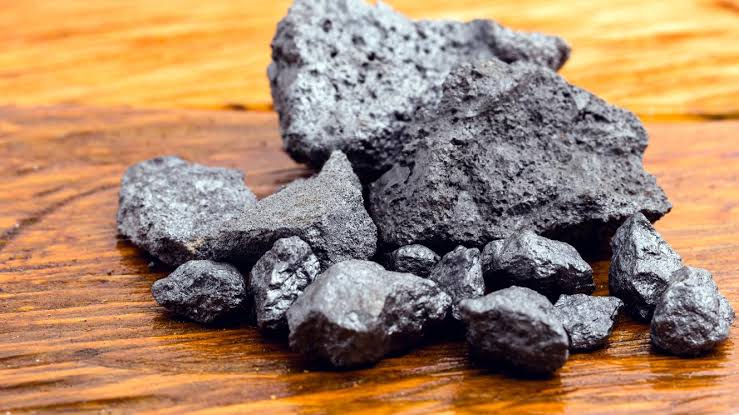 Nigerian Tantalum Concentrate Market: Pricing, Grades and Buyers
[SMM Research] Nigeria remains a key supplier of tantalum concentrate, with exports largely priced on an FOB basis and driven by strong Chinese demand. Concentrate grades vary widely, with higher Ta₂O₅ content commanding significant premiums. Artisanal mining dominates supply, while informal trade continues to limit market transparency. SMM's research indicates that first-hand market intelligence remains essential for assessing pricing, quality and evolving supply chains.
Jul 30, 2026 20:16- China Leads in Rare Earths, Aims for "Rare Earth + Steel" Synergy to Boost Industry Efficiency
Li Yiren, Vice President of the China Iron and Steel Association (CISA) and President of the Metallurgical Industry Sub-Council of the China Council for the Promotion of International Trade (CCPIT), introduced that China leads the world in rare earth reserves, capacity, and separation and purification technologies. Applying high-abundance rare earth elements such as lanthanum and cerium to steel materials can not only diversify and efficiently utilize China’s advantageous rare earth resources, but also drive the transformation and upgrading of the steel industry, achieving the synergistic development goal of “rare earth + steel” for enhanced efficiency.
Jul 30, 2026 18:48