

282results found for 'pricing systems'
Price
News
![[SMM Analysis] Why Is NPI Holding Firm While the FeNi Premium Collapses?](https://imgqn.smm.cn/production/admin/votes/imagesGpjrQ20260724125421.png) [SMM Analysis] Why Is NPI Holding Firm While the FeNi Premium Collapses?
[SMM Analysis] Why Is NPI Holding Firm While the FeNi Premium Collapses?China’s NPI prices have remained firm despite falling production costs because freely available inventories have tightened. FeNi, meanwhile, has followed lower benchmark nickel prices and faced competition from cheaper refined nickel, compressing its premium over NPI. The divergence could reverse as Chinese output rises and Indonesian producers switch capacity back to NPI.
Jul 24, 2026 12:51- [SMM Analysis] One Year After China Reopened Black Mass Imports: What's Really Changed?
Nearly one year after China reopened qualified black mass imports, the market has evolved differently from initial expectations. While stronger linkages have emerged between China's domestic and overseas markets, water-soluble fluorine remains a key constraint on direct imports. Meanwhile, overseas intermediate processing has gained attention as an alternative supply chain model, reflecting the industry's growing focus on cross-border resource integration and supply chain optimization.
Jul 3, 2026 17:30 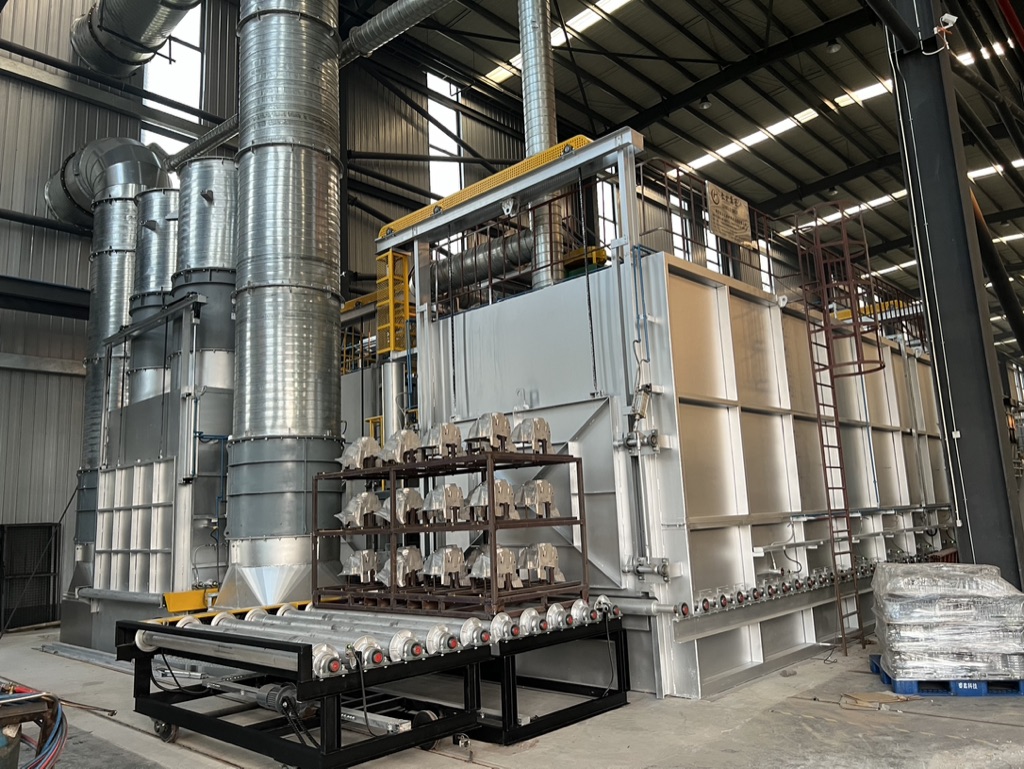 Southeast Asia 6063 Aluminum Billet Market Price System Accelerates Segmentation【SMM Analysis】
With the continued expansion of aluminum processing and downstream industries in Southeast Asia, regional aluminum billet production, consumption and trade markets have attracted growing attention. Malaysia, Thailand and Vietnam are not only important aluminum billet production and consumption hubs in Southeast Asia, but also play a key role in regional aluminum billet trade flows. Markets such as Indonesia, the Philippines and Cambodia, meanwhile, are still at a stage where local processing capacity development and demand for imported aluminum billet are growing simultaneously. Since March 2026, the escalation of geopolitical conflicts in the Middle East has caused significant disruption to the global aluminum supply chain. On the one hand, uncertainty over the supply of primary aluminum and aluminum processed products from the Middle East has increased, pushing up procurement interest in primary aluminum, aluminum billet and secondary aluminum resources across Asian markets outside China. On the other hand, fluctuations in crude oil prices and ocean freight costs have further lifted regional aluminum processing and trading costs. Against this backdrop, LME aluminum prices, Asian regional premiums and Southeast Asian local aluminum billet processing fees have all fluctuated to varying degrees. At the same time, changes in the SHFE/LME price ratio have periodically affected the export arbitrage window for Chinese aluminum processed products. When overseas aluminum prices are stronger than domestic prices and export margins improve, Chinese aluminum processed products and some processing-trade resources show greater willingness to flow into the Southeast Asian market, creating certain disruptions to local billet supply-demand dynamics and quotations. When the price spread narrows, however, regional pricing returns to a framework driven jointly by local supply, imports from the Middle East and other overseas resources. Trade Flows From the perspective of export destinations, the flow of Southeast Asian products under HS760120 is relatively concentrated. In 2025, the top ten export destinations for Southeast Asian HS760120 products totaled around 1.2695 million mt, accounting for approximately 93.3% of total Southeast Asian exports. China was the largest destination, with full-year exports of around 602,100 mt, accounting for approximately 44.3%. Japan, Vietnam and India followed, with around 149,300 mt, 143,500 mt and 111,700 mt respectively, accounting for approximately 11.0%, 10.5% and 8.2%. It should be noted that HS760120 includes primary aluminum alloy ingots, secondary aluminum alloy ingots, other aluminum alloy billets and some cast aluminum alloy products. Therefore, this data mainly serves as a reference for observing trade flows of unwrought aluminum alloys and aluminum alloy billets in Southeast Asia, and cannot be directly equated with 6063 aluminum billet export volumes. Entering 2026, affected by the escalation of the Middle East conflict, uncertainty in the global supply chain for primary aluminum and aluminum processed products increased, and trade flows of aluminum raw materials and aluminum billets in Asia saw certain adjustments. Data shows that total Southeast Asian HS760120 exports fell to around 88,800 mt in February 2026, before rebounding to around 110,700 mt in March and further increasing to around 116,600 mt in April. From February to April, cumulative growth reached approximately 31.2%. In terms of destination changes, China remained the largest export destination, although exports to China declined in April compared with March. India, South Korea, Taiwan, China and Japan showed more obvious increases from March to April. Among them, exports to India rose from around 8,200 mt in February to around 15,700 mt in April; exports to South Korea increased from around 2,400 mt in February to around 10,000 mt in April; exports to Taiwan, China climbed from around 1,500 mt in February to around 4,100 mt in April; while exports to Japan recovered to around 13,700 mt in April. Overall, the rebound in Southeast Asian HS760120 exports from February to April 2026 reflected, on the one hand, the gradual recovery of regional trade after the Chinese New Year holiday. On the other hand, it may also have been related to Asian buyers increasing procurement of Southeast Asian regional resources and supplementing alternative supply sources after the Middle East conflict raised supply risks for overseas primary aluminum, aluminum billet and secondary aluminum. Considering that China, India, Japan, South Korea and Taiwan, China are all important aluminum processing and consumption markets in Asia, the increase in Southeast Asian product flows to these markets indicates that regional unwrought aluminum alloys and aluminum alloy billets have played a certain supplementary and balancing role in trade during periods of supply chain disruption. For the 6063 aluminum billet market, this trend cannot be directly equated with changes in 6063 aluminum billet exports, but it can serve as an important reference for assessing the circulation activity of aluminum billets and aluminum alloy raw materials in Southeast Asia, regional substitution demand and fluctuations in processing fees. Market and Price Analysis With the continued expansion of aluminum processing and downstream enterprises in Southeast Asia, the situation of 6063 aluminum billet differs across countries due to variations in processing levels and downstream demand. Overall, Malaysia and Thailand are the main aluminum billet producing countries in the region and also have certain local consumption capacity. Vietnam’s aluminum processing capacity is growing rapidly, but some local quotations are still mainly for non-homogenized cast billets. Markets such as Cambodia and the Philippines remain at a stage where local processing capacity development coexists with demand for imported aluminum billet. In terms of homogenization status, mainstream 6063 aluminum billet quotations in Malaysia and Thailand usually already include homogenization treatment, and the relevant homogenization cost is mostly included in the aluminum billet processing fee quoted by producers. A small number of non-homogenized 6063 aluminum billet quotations also exist in the Thai market, which can be used to observe the basic processing cost of cast billets. The situation in Vietnam is different. As some enterprises mainly quote non-homogenized cast billets, the apparent processing fee for 6063 aluminum billet is usually around $50-100/mt lower than homogenized quotations in Malaysia and Thailand. Aluminum billet homogenization is an important heat-treatment process in the production of 6063 aluminum billet. It usually refers to placing cast aluminum billets into a homogenizing furnace for heating, holding and cooling treatment, so that the internal composition distribution of the billet becomes more uniform and microstructural segregation formed during casting is improved. For 6063 aluminum billet, homogenization helps improve stability in the subsequent extrusion process, reduce extrusion cracking, surface defects and performance fluctuations, and improve the surface quality and yield of extruded profiles. Therefore, in the aluminum extrusion value chain, homogenized aluminum billet generally has higher use value than non-homogenized cast billet. According to SMM market research, since March 2026, under the influence of factors such as the escalation of Middle East geopolitical conflicts, tighter supply of overseas primary aluminum and aluminum billet resources, and fluctuations in energy and ocean freight costs, 6063 aluminum billet processing fees in major Southeast Asian countries rose to varying degrees. Among them, processing fees for homogenized 6063 aluminum billet in Malaysia and Thailand once increased from the previous $200-250/mt to $250-300/mt, with some high-end quotations even exceeding $300/mt during the peak period. As the Middle East situation eased periodically in mid-June, 6063 aluminum billet processing fees in Malaysia and Thailand declined. At present, mainstream 6063 aluminum billet processing fees in Malaysia have stabilized around $250/mt, and mainstream processing fees for homogenized aluminum billet in Thailand have also stabilized around $250/mt. However, due to differences in raw material structure, product status and quotation basis among enterprises, processing fees still show a wide range. In Thailand, some 6063 aluminum billet processing fees have fallen to as low as around $100-150/mt. In Vietnam, from March to June, 6063 aluminum billet processing fees rose from the previous $150-200/mt to $200-250/mt, before falling back to around $200/mt in mid-June. In addition, from the perspective of the imported aluminum billet arrival market, from May to June, SMM learned that CIF Thailand and Malaysia 6063 aluminum billet premiums/discounts were mostly around a premium of $100/mt, while some low-priced resources even fell to a discount of around $100/mt. These resources were mainly 6063 aluminum billets processed in China under processing trade and then re-exported to the Southeast Asian market. Amid cost advantages and an increase in cargo inflows at certain stages, these resources exerted some impact on the local aluminum billet market in Southeast Asia. From March to April, affected by Middle East geopolitical conflicts, uncertainty over some Middle Eastern aluminum supply increased. Asian buyers in India, Japan, South Korea and Taiwan, China showed higher interest in Southeast Asian aluminum billets and related aluminum alloy resources, driving some Southeast Asian aluminum billet resources to flow out of the region and supporting stronger regional quotations. However, entering May and June, as Chinese aluminum billets flowed into markets such as Thailand and Malaysia through processing trade and re-export channels, competition pressure faced by local Southeast Asian aluminum billet plants increased. SMM research shows that sales pressure for some 6063 aluminum billet producers in Malaysia and Thailand has increased compared with earlier levels, and low-priced imported arrival resources have put certain downward pressure on local ex-works processing fees and the transaction price center. Outlook for Southeast Asian Aluminum Processing Looking ahead, the Southeast Asian 6063 aluminum billet market will continue to evolve around regional processing capacity expansion, import substitution, changes in raw material structure and overseas low-carbon requirements. In the short term, Malaysia, Thailand and Vietnam will remain the core markets for 6063 aluminum billet production and consumption in Southeast Asia. Malaysia and Thailand have relatively mature local billet casting and homogenization capacity, and their pricing systems are closer to a quotation logic based on “LME + regional premium + homogenized processing fee.” Vietnam, meanwhile, still has room for growth in aluminum billet demand as aluminum extrusion and downstream processing capacity improves, but the quotation basis for homogenized and non-homogenized products still needs to be further differentiated. Although local sample coverage in markets such as Indonesia, the Philippines and Cambodia remains limited at present, with the advancement of local aluminum processing projects, future demand for imported aluminum billet, secondary aluminum billet and intra-regional trade flows will remain worth monitoring. In the medium to long term, CBAM and overseas customers’ low-carbon procurement requirements may further drive segmentation in the price system of the Southeast Asian aluminum value chain. For the Southeast Asian aluminum billet market, the impact of CBAM may not necessarily be directly reflected through large-scale exports of aluminum billet itself to Europe, but may instead be transmitted through the export value chain of aluminum profiles, window and door profiles, industrial profiles and other deep-processed products. In the future, when European customers procure aluminum processed products from Southeast Asia, they may pay greater attention to raw material sources, the ratio of primary aluminum, in-house new scrap and aluminum scrap, carbon emission data during production, supply chain traceability and third-party verification capability. Against this backdrop, enterprises with stable homogenization capacity, clear raw material structures, the ability to provide emissions data and low-carbon material options may gain stronger advantages in securing export orders and price negotiations. From the perspective of the price system, CBAM may not immediately drive a one-sided increase in Southeast Asian 6063 aluminum billet processing fees, but it will raise market requirements for differentiating “product status” and “raw material attributes.” In the future, price spreads between liquid aluminum direct-cast billets, remelted aluminum ingot billets and remelted aluminum scrap billets, price spreads between homogenized and non-homogenized aluminum billets, and differences between CIF imported aluminum billet premiums and local ex-works processing fees are all expected to become key areas of market attention. As the aluminum processing industry in Southeast Asia continues to expand, the 6063 aluminum billet market may gradually develop from relatively broad trade quotations in the past toward a more segmented price system differentiated by country, alloy grade, homogenization status, raw material attribute and trade term. SMM Price Points Against the backdrop of regional processing expansion and low-carbon trends, Southeast Asian 6063 aluminum billet processing fees have gradually become one of the key price indicators followed by the market. To help enterprises better track price changes in the Southeast Asian 6063 aluminum billet market, SMM, after market research and improvement of its pricing methodology, will add a series of Southeast Asian 6063 aluminum billet processing fee, calculated reference price and CIF premium/discount price points starting from 3rd July 2026 (Friday) onward for market reference. The Southeast Asian 6063 Aluminum Billet Premium price points will be updated on a weekly basis every Friday at 12:00 noon Kuala Lumpur time, Malaysia, which is the same as Beijing time, GMT+8. Due to differences in settlement methods among enterprises, the full aluminum billet price may vary. For reference, it can be estimated using the following formula: 【LME Official Cash Settlement Price + Quarterly MJP + 6063 Aluminum Billet Processing Fee】. Details of the relevant price points are as follows: Cambodia 6063 Aluminum Billet (Homogenized) Premium, ex-works Cambodia, USD/tonne Malaysia 6063 Aluminum Billet (Homogenized) Premium, ex-works Malaysia, USD/tonne Thailand 6063 Aluminum Billet (Homogenized) Premium, ex-works Thailand, USD/tonne Thailand 6063 Aluminum Billet (Non-homogenized) Premium, ex-works Thailand, USD/tonne Vietnam 6063 Aluminum Billet (Non-homogenized) Premium, ex-works Vietnam, USD/tonne The SMM Southeast Asian 6063 Aluminum Billet price points will be updated on a daily basis every working day at 12:00 noon Kuala Lumpur time, Malaysia, which is the same as Beijing time, GMT+8. The SMM calculated reference price will be derived using the formula: 【LME Official Cash Settlement Price (D-1) + Quarterly MJP + Latest 6063 Aluminum Billet Processing Fee】. Based on this, SMM will publish low-end, high-end and average calculated reference prices. Details of the relevant price points are as follows: SMM Cambodia 6063 Aluminum Billet (Homogenized), ex-works Cambodia, USD/tonne SMM Malaysia 6063 Aluminum Billet (Homogenized), ex-works Malaysia, USD/tonne SMM Thailand 6063 Aluminum Billet (Homogenized), ex-works Thailand, USD/tonne SMM Thailand 6063 Aluminum Billet (Non-homogenized), ex-works Thailand, USD/tonne SMM Vietnam 6063 Aluminum Billet (Non-homogenized), ex-works Vietnam, USD/tonne At the same time, to provide a reference comparison for the Southeast Asian 6063 aluminum billet processing and trading market, SMM will also launch CIF Southeast Asia 6063 Aluminum Billet Premium price points for market reference. The CIF Southeast Asia 6063 aluminum billet premium/discount price points will be updated on a weekly basis every Friday at 12:00 noon Kuala Lumpur time, Malaysia, which is the same as Beijing time, GMT+8. Due to differences in settlement methods among enterprises, the full imported aluminum billet price may vary. For reference, it can be settled using the following formula: 【LME Official Cash Settlement Price + Quarterly MJP + 6063 Aluminum Billet Premium/Discount】. Details of the relevant price points are as follows: CIF Thailand 6063 Aluminum Billet (Non-homogenized) Premium Summary Overall, the Southeast Asian 6063 aluminum billet market is currently at a stage where regional processing capacity expansion, trade flow adjustments and price system segmentation are taking place simultaneously. In the short term, Middle East geopolitical conflicts, changes in overseas primary aluminum and aluminum billet supply, and fluctuations in energy and ocean freight costs will continue to affect Southeast Asian aluminum billet processing fees and import premiums/discounts. At the same time, changes in the SHFE/LME price ratio will also continue to periodically affect the willingness of Chinese aluminum processed products and related aluminum billet resources to flow into the Southeast Asian market. From the perspective of market structure, Malaysia, Thailand and Vietnam remain the core markets for 6063 aluminum billet production, consumption and trade circulation in Southeast Asia. Among them, Malaysia and Thailand have relatively mature pricing systems for homogenized aluminum billet, while Vietnam still requires separate differentiation in price basis due to the relatively high share of non-homogenized cast billet quotations. Going forward, as local processing capacity develops in markets such as Indonesia, the Philippines and Cambodia, changes in regional imported aluminum billet, secondary aluminum billet and local processing fees will also become areas worth continuous tracking. In the medium to long term, CBAM and overseas low-carbon procurement requirements will further increase the importance attached by the Southeast Asian aluminum processing value chain to raw material structure, homogenization capability, carbon emission data and supply chain traceability. Although CBAM may not necessarily drive an immediate one-sided increase in 6063 aluminum billet processing fees, it will prompt the market to more clearly distinguish between different product bases, including liquid aluminum direct-cast billets, remelted aluminum ingot billets, remelted aluminum scrap billets, as well as homogenized and non-homogenized products. Against this backdrop, the launch of SMM Southeast Asia 6063 aluminum billet processing fee, calculated reference price and CIF premium/discount price points will help the market more clearly track changes in regional aluminum billet costs, import substitution space, trade flow adjustments and price differentiation trends under the low-carbon transition.
Jun 26, 2026 14:36- [SMM Analysis] Indonesia’s Energy Transition Accelerates: From Policy Targets to Real-World Deployment
In recent years, Indonesia's energy transition has shown clear signs of acceleration. As the government sets more ambitious renewable energy targets, and as mining decarbonisation, island-based power system upgrades, floating PV project development and local manufacturing build-out continue to advance, the long-term growth potential of Indonesia's solar PV, energy storage and microgrid markets is opening up further.
Jun 19, 2026 18:02 - [SMM Analysis] The Real Barriers to Upgrading Africa’s Battery Metals Value Chain
Developing local processing capacity is not simply a matter of building another plant next to a mine. It requires a country to simultaneously possess reliable energy supply, logistics infrastructure, chemical-industry capabilities, engineering expertise, customer qualification systems, access to financing, policy continuity and transparent pricing mechanisms. Resources can attract investment, but they cannot guarantee project success.
Jun 8, 2026 19:08 - Franklin Technology Looks Forward to Meeting You at AASC 2026 3rd Southeast Asia Automotive Supply Chain Conference
The 2025 2nd SMM Southeast Asia Automotive Supply Chain Conference was successfully held, featuring the on-site launch of 10 new car models, Southeast Asia brand strategies from three automakers, and SMM's local steel prices in Thailand. The event facilitated efficient matchmaking between 12+ buyers and 60+ suppliers, and preliminarily established a communication platform for the entire industry chain of the Southeast Asian automotive industry. Currently, the NEV industry in Southeast Asia is entering a critical development phase. Thailand, Indonesia, and Vietnam each have their own strategic layouts and breakthroughs, while the industry also faces challenges such as supply chain restructuring, competition over technology roadmaps, and localization compliance. Thanks to the support of all parties, SMM's local pricing systems in Thailand and Indonesia have been implemented and adopted by core enterprises, establishing a credible cost benchmark for the industry. The 2026 3rd Conference will focus on three core themes: exploring the auto sales potential of NEVs in Southeast Asia; connecting the last mile of the supply chain and integrating regional industry chain resources; and advancing SMM's Southeast Asia metal pricing from a price reference to a transaction benchmark, implementing electrification material procurement applications and establishing an executable pricing system. We firmly believe that true progress comes from turning consensus into action. At this conference, sincerely invites you to gather again in Bangkok to transform strategic blueprints into competitive market advantages, to witness and participate in this extraordinary and far-reaching industry event, and to co-create a brilliant new chapter! Click the to register now. Francool Technology (Shenzhen) Co., Ltd. was founded in April 2001 and is headquartered in Longhua District, Shenzhen. It is a national high-tech enterprise and national-level Specialized, Refined, Unique & Innovative "Little Giant" enterprise specializing in the R&D, production and sales of metal & new material working fluids, lubricants and intelligent environmental protection treatment equipment. Committed to the vision of becoming a world-leading one-stop supplier of fluid solutions, the company has over two decades of industry experience and has been listed among Shenzhen Top 100 Quality Enterprises and Shenzhen Top 400 Enterprises. Francool Technology (Shenzhen) Co., Ltd. founded in April 2001 and headquartered in Longhua District, Shenzhen, FRANCOOL Technology (Shenzhen) Co., Ltd. is a national high-tech enterprise and national-level Specialized, Refined, Unique & Innovative "Little Giant" enterprise specializing in the R&D, production and sales of metal & new material working fluids, lubricants and intelligent environmental protection treatment equipment. Committed to the vision of becoming a world-leading one-stop supplier of fluid solutions, the company has over two decades of industry experience and been listed among Shenzhen Top 100 Quality Enterprises and Shenzhen Top 400 Enterprises. In terms of development history, the company upholds the philosophy of "Customer-oriented, People-focused, Technology-driven, Sustainable Development" , and has progressively achieved a global layout. It has successively established multiple production sites in Shenzhen, Zhongshan, Kunshan, Vietnam, and Thailand. Through Francool Advanced Industrial Fluid Technology (Thailand) Co., Ltd. , the company has implemented localized production and operations in Thailand, achieving full coverage of core manufacturing clusters in China and key industrial markets across Southeast Asia. Guided by the corporate philosophy of "Customer-oriented, People-focused, Technology-driven, Sustainable Development", the company has steadily rolled out its global footprint with manufacturing bases across Shenzhen, Zhongshan, Kunshan, Vietnam and Thailand. Its localized production and operation in Thailand are implemented via Francool Advanced Industrial Fluid Technology (Thailand) Co., Ltd., enabling full market coverage of core domestic manufacturing clusters and key industrial hubs across Southeast Asia. The core business focuses on three major segments, forming an entire industry chain service capability. Products span six major series and are widely applied in key fields such as consumer electronics and auto parts. Leveraging its self-developed OWS oily wastewater treatment system , the company provides one-stop environmental protection solutions, fulfilling its social responsibilities. Centered on three core business segments, the enterprise has built a full industrial chain service portfolio consisting of six major product lines widely adopted in consumer electronics, auto parts and other pivotal industries. Supported by its self-developed OWS oily wastewater treatment system, FRANCOOL delivers integrated one-stop environmental solutions to fulfill corporate social responsibilities. In terms of technical strength, the company has 3 R&D centers along with postdoctoral and doctoral research platforms, and has assembled a global R&D team. It holds a cumulative total of 122 patents of various categories and 2 software copyrights. Core products have passed multiple international system certifications, with some reaching internationally advanced levels. In terms of technical capacity, the company operates three R&D centers together with postdoctoral and doctoral research platforms and a global R&D workforce. It holds 122 patents of various categories and 2 software copyrights; core products have obtained multiple international system certifications, with some reaching world-class advanced standards. In terms of global layout, the company has 11 wholly-owned subsidiaries and over 20 offices in China. Outside China, with the Vietnam production site as the core and supported by branch offices across multiple regions, the company provides full-lifecycle services to global clients through a direct sales model. In the future, the company will focus on high-end environmental protection products, advance its global layout, and strive to build a world-leading brand for industrial lubricants . For global layout, FRANCOOL owns 11 wholly-owned subsidiaries and over 20 representative offices in China. Overseas operations pivot around its Vietnam manufacturing base and regional branches, adopting a direct sales model to deliver full-lifecycle services to worldwide clients. Going forward, the company will focus on high-end eco-friendly products, accelerate global expansion and strive to grow into a world-leading brand for industrial lubricants. Contact Information Contact Tel: 0755 28130169 Contact Us Yan Caowei 15618581967
Jun 3, 2026 15:14