

4594results found for 'performance'
Price
News
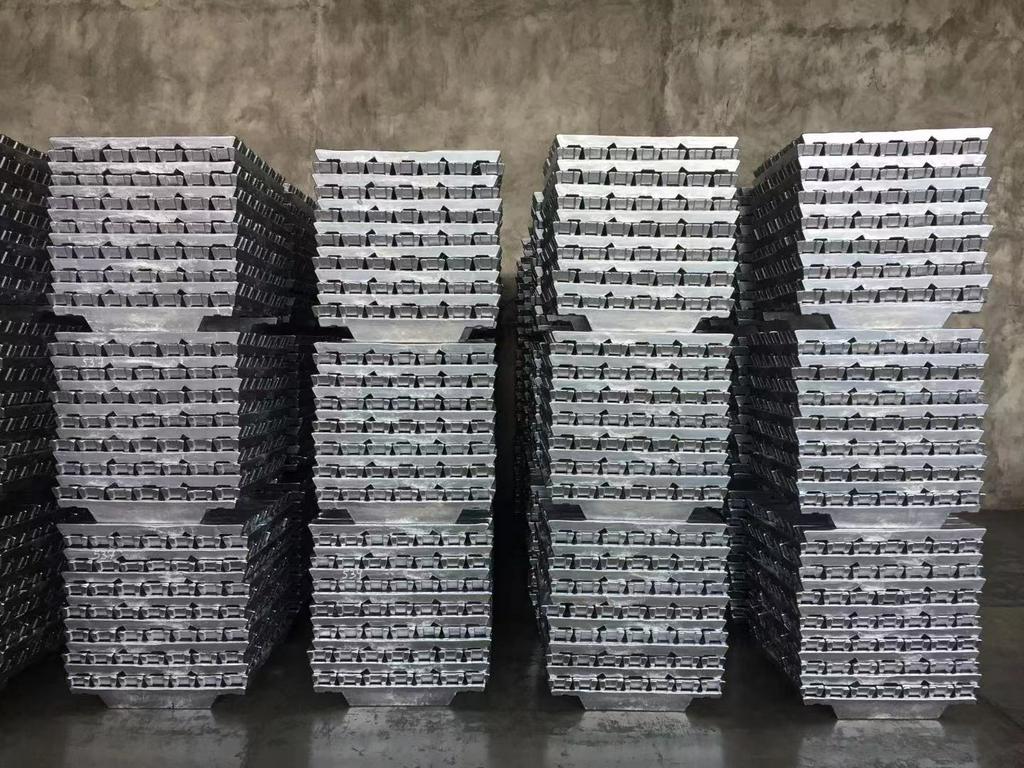 Warehouse Withdrawals Pull Back While Destocking Accelerates, the Logic of China’s Aluminum Ingot Destocking Changing?
As of July 30, China’s aluminum ingot inventory in major consumption areas stood at 953,000 mt. Cumulative destocking from the YTD high of 1.465 million mt in early May has reached 512,000 mt (-35%), with an additional accelerated destocking of 53,000 mt this week, breaking below the 1 million mt threshold as expected. However, the directional divergence between warehouse withdrawals and inventory has raised concerns...
Jul 31, 2026 23:53- Warehouse withdrawals pull back, but destocking accelerates — Is China's aluminum ingot destocking logic changing? [SMM Analysis]
As of July 30, China's major consumption regions reported aluminum ingot inventory of 953,000 mt, having cumulatively destocked 512,000 mt (-35%) from the year's high of 1.465 million mt in early May. Within the week, destocking accelerated further by 53,000 mt, as expected falling below the 1 million mt mark. However, the directional divergence between warehouse withdrawals and inventory drew attention: weekly warehouse withdrawals pulled back to 127,700 mt, losing the advantage of being at a high for the same period in the past four years. The core driving force of this destocking round has shifted from "demand and warehouse withdrawal boost" in June to "supply contraction + slowdown in shipment pace": the proportion of liquid aluminum rose to 78.3% in July, with casting ingot volume down 15.1% YoY; a sharp drop in arrivals in South China pushed Foshan's premium wider by 50 yuan/mt in a single week to 115 yuan/mt; SMM believes...
Jul 31, 2026 23:30 - [CSBearing: Company's Products Already Applied in Tesla Vehicles]
CSBearing stated on its interactive platform that the company is primarily engaged in the R&D, production, and sales of self‑lubricating bearings and high‑performance polymers, with products covering automotive, construction machinery, clean energy, embodied intelligence, and other sectors. As a Tier‑2 or Tier‑3 supplier to automotive OEMs, the company already has products used in Tesla vehicles. In the field of embodied‑intelligence components, CSBearing has established business and technical cooperation with multiple domestic enterprises along the embodied‑intelligence industry chain.
Jul 31, 2026 21:33 - 【SMM Analysis】Off-Season Strain: Si-Mn Stocks Pile Up, Output Cuts to Stay
Since entering Q2 2026, the silicon manganese alloy market has remained under sustained pressure. Prices of upstream raw materials—including manganese ore and coke—have stayed elevated, while downstream steel consumption remains sluggish amid strong price-suppression efforts from mills. The industry is caught in a dual squeeze of “high costs and weak demand,” with losses spreading rapidly from isolated cases to a widespread trend.
Jul 31, 2026 21:07 - Alumina Weakness Persists: Cost Support vs. Excess Supply, 2600 Threshold Under Threat
July 31, 2026 – The main alumina futures contract closed at 2,621 yuan/ton today, extending its recent weak performance. On the previous trading day (July 30), prices briefly touched an intraday low of 2,617 yuan/ton, plunging 1.37% in a single session and marking a fresh near-term trough. Under the combined bearish pressures of sustained supply expansion, intensifying import competition, and fading speculative sentiment, the alumina market is undergoing a fundamental-driven valuation correction. However, unlike the sharp downturn seen in late 2025, the current significantly higher feedstock costs are building a support floor that may prove difficult to break through decisively. On the supply front, domestic alumina operating capacity remains persistently elevated, with incremental pressure continuing to accumulate. In the Guangxi region, previously idled production lines from maintenance shutdowns are steadily resuming operations, gradually restoring regional supply capacity. Meanwhile, the southern region still faces nearly 3 million tonnes of new capacity slated for release in the coming months, further reinforcing market expectations of a loosening supply landscape. The fading excitement surrounding bauxite supply news has further undermined sentimental support for futures prices. Concerns over Guinean bauxite supply disruptions, which once rattled the market, have gradually receded from the spotlight as time passes. With speculative long positions exiting amid waning media attention, the market has lost its sentiment premium, and prices are reverting to supply-demand fundamentals. Overseas supply continues to weigh heavily on the domestic market. Alumina imports have surged significantly this year, with port inventories climbing to a lofty 940,000 tonnes. The persistent inflow of foreign alumina has not only supplemented domestic availability but also placed sustained downward pressure on spot quotations. Weakening spot prices have formed a negative feedback loop with the futures market, reinforcing the downward price spiral. Nevertheless, despite the layered bearish arguments, current prices are not without defense. Compared with the December 2025 selloff that bottomed at 2,437 yuan/ton, expectations for downside floors differ markedly this time. Back then, Guinean bauxite prices were quoted only around $60/ton, while current prices have climbed to the $70-75/ton range, driving the industry average fully-loaded cost to approximately 2,530 yuan/ton. This materially higher cost base implies that even with deeply bearish fundamentals, a repeat of the free-fall price rout is unlikely to materialize, as cost support effects will strengthen marginally as prices decline. The potential opening of export arbitrage remains one of the few upside catalysts on the horizon. Should overseas alumina prices continue to rise while domestic prices remain subdued, widening the price differential sufficiently to cover export costs, export channels could open periodically, providing a marginal outlet for excess domestic capacity. However, even if such a window materializes, the volumes that can be diverted are unlikely to offset the incremental pressure from new capacity additions in the southern region. Export opportunities are more likely to serve as short-term sentiment-driven rebound catalysts rather than a sufficient condition for a trend reversal. Taken together, alumina prices are expected to trade within a narrow range in the near term, caught between the bearish excess supply narrative and cost support. The core trading range is projected at 2,600-2,650 yuan/ton. Given that market fundamentals are expected to remain loose through August, futures prices could breach the key 2,600 yuan psychological level, though downside potential appears limited by rigid cost support on the mining side.
Jul 31, 2026 20:55 - Semiconductor market bucks the trend! Minor metals sector up nearly 3%, with Yunnan Tin and Yunnan Germanium leading the gains [SMM Flash]
SMM, July 31 – Sentiment on A-share semiconductor industry chain futures recovered, and the improved industry chain prosperity transmitted upstream, driving a sharp rally in the strategic minor metal sector. As of the close on July 31, the minor metal sector had risen 2.96%. Among individual stocks, Yunnan Tin and Yunnan Germanium both surged over 8%, while Orient Tantalum, Zhongxi Nonferrous, Xiamen Tungsten, Haotong Technology, Western Metal Materials, Zhangyuan Tungsten, Huaxi Nonferrous, and Shenghe Resources led the gains. This round of minor metal strength was driven by the resonance of multiple industrial dynamics. On one hand, the semiconductor and AI computing track regained heat, with expectations for demand expansion in high-speed optical modules, AI servers, and other fields improving. Germanium and tantalum, as core raw materials for semiconductor optoelectronic devices and high-end tantalum capacitors, are seeing steadily strengthened demand support from downstream emerging industries. On the other hand, germanium and tantalum are strategic dispersed metals with concentrated global supply. Coupled with overseas geopolitical disruptions and expectations of supply tightening from domestic resource controls, while the ongoing localisation of related high-end semiconductor materials continued to advance, this further boosted market allocation sentiment and pushed the sector higher. News [Yunnan Germanium: Subsidiary Signs Major Indium Phosphide Wafer Supply Order Worth RMB 570–855 Million, H1 Net Profit Expected to Increase YoY] Yunnan Germanium announced on July 24 that its controlled subsidiary Yunnan Xinyao recently signed a supply agreement with a client for the sale of indium phosphide wafers (substrates). The total estimated contract value ranges from RMB 570.08 million to RMB 855.12 million (tax inclusive), accounting for 53.48% to 80.23% of the company’s audited revenue for 2025. The contract term runs from August 1, 2026, to December 31, 2027. Regarding the contract’s impact on the listed company, Yunnan Germanium stated that if the contract is fulfilled smoothly, it is expected to have a positive impact on the company’s operating results for the performance years. The specific amount and reporting periods affected will depend on the actual performance of the contract and will be based on the company’s audited revenue. [Orient Tantalum: Domestic Demand for High-Value-Added Products Such as Superalloys and Semiconductor Tantalum Targets Is Gradually Rising] Orient Tantalum stated during an institutional survey on July 23 that, with the continuous development of China’s high-tech and new infrastructure sectors, domestic demand for high-value-added products such as superalloys, semiconductor tantalum targets, and high-purity niobium materials is gradually rising. In recent years, the company has vigorously promoted technical transformation and capacity expansion projects, organized production rationally, and gradually released new capacity. Under the guidance of the strategy for autonomous and controllable industry chains, the localisation substitution process has evolved from breakthroughs in individual products to systematic solutions, laying a solid foundation for the growth of tantalum, niobium, and their alloy products. [Yunnan Tin: Expects H1 2026 Net Profit of 1.47–1.57 Billion Yuan, Up 38.43%–47.85% YoY] Yunnan Tin disclosed an earnings forecast on the evening of July 14, expecting attributable net profit in H1 2026 to be 1.47 billion to 1.57 billion yuan, up 38.43%–47.85% YoY; and recurring net profit is expected to be 1.88 billion to 1.98 billion yuan, up 44.23%–51.91% YoY. Spot Market Tin Overnight, some US chip stocks rebounded, and the Philadelphia Semiconductor Index surged, boosting the performance of tin, known as the “computing metal.” SHFE tin opened higher on July 31, lifting spot prices. In the tin spot market: On July 31, the average price of SMM 1# tin was 425,850 yuan/mt, up 1.51% from the previous trading day. As tin prices rose, spot market trading was sluggish. Fundamentals: (1) Supply: Tight ore and ingot supply, low inventory, amplifying elasticity. Myanmar’s rainy season extends through end-August, with mine flooding and logistics disruptions; Wa State’s June tin ore output was only 6,392 mt in physical content. China’s tin ore imports in July are expected to be basically flat MoM. The slow pace of production resumptions in Wa State has been priced in ahead of time, with no major shutdowns in the near term, but supply contraction expectations during the rainy season have yet to fully materialize. Indonesia’s tin ingot imports in July are expected to show some recovery MoM. (2) Demand: Improved solder operating rates, but acceptance of high prices needs to be tested. The operating rate at solder enterprises was 78.8% in June, up 4.6 percentage points from May; however, after the sharp spot price rally on July 30, downstream users were cautious and stayed on the sidelines, and whether high-priced spot cargoes can be absorbed still requires verification. Stockpiling for new Apple/Huawei models in late August is the next demand trigger point. Institutional Views A research report from Minmetals Securities points out: Germanium accounts for 60% of applications in optical communication and satellite PV fields, making it a metal for “AI computing power + space energy.” With its excellent refractive index tuning capability and radiation resistance, germanium has become a key material for AI data center optical interconnects and low-earth-orbit satellite PV systems. Looking at changes in demand structure, from 2020 to 2026, downstream germanium consumption grew from 160 mt to 240 mt, with optical communication’s share rising to 40% and satellite PV’s share to 20%, together accounting for 60% of total downstream demand. It expects that 90% of the demand growth in 2027 will come from two high-growth sectors: AI hardware and satellite PV. A research report from Caitong Securities shows: As AI computing power demand explodes, the market size of indium phosphide, used as a chip substrate material, will continue to expand. Indium resources are scarce and subject to policy restrictions, and product prices are entering an uptrend. High-purity red phosphorus is a very important semiconductor base material, with high purification technology barriers. Against the backdrop of accelerated AI application deployment driving related infrastructure construction, the indium phosphide substrate industry chain is expected to see dual opportunities from demand growth and domestic substitution. It is recommended to focus on enterprises with resource and technological advantages in the links of indium phosphide, indium, and high-purity red phosphorus. A research report from Datong Securities shows that minor metals have staged an independent rally, with tightened supply combined with strategic attributes leading to a value revaluation. The rare earth sector is preemptively pricing in new regulatory controls, with Myanmar ore imports disrupted, tight spot supply of Pr-Nd oxide driving prices sharply higher; tungsten and antimony ore grades are declining along with environmental protection-driven production restrictions, widening the supply gap, while PV and hard alloy demand remains firm during the off-season, and inventories are at low levels. AI computing power and communications sectors are boosting demand for gallium and germanium, and coupled with export control policies, concentrated stockpiling outside China is widening the price spread between Chinese and overseas markets. Scarce resources are resonating with financial attributes, and the sector continues to be favoured by capital. Recommended Reads:
Jul 31, 2026 20:20
Announcements
Malaysia has developed a relatively mature stainless steel network. Domestic transaction prices for 304L stainless steel can effectively reflect changes in local market.
PriceJul 15, 2026 16:25Belgium, as an important metal trading, port logistics and regional distribution hub in Europe, is one of the key destinations for stainless steel imports entering the European market.
PriceJun 11, 2026 11:31In recent years, with the acceleration of industrialization in Malaysia, the demand for high-quality stainless steel in the local construction, automotive, home appliance manufacturing, and high-end c
PriceMay 28, 2026 14:47