

4269results found for 'metals'
Price
News
- Lloyds Metals’ Q1 Earnings Surge as Pellet, DRI Expansion Accelerates Shift Toward Integrated Steelmaking
Lloyds Metals reported strong Q1 FY27 growth as iron ore production rose 53% y/y to 6.05 million tonnes, while the ramp-up of pellet and DRI capacity strengthened its shift toward integrated steelmaking and increased captive consumption of iron ore.
Aug 12, 2026 10:30 - Silver Prices Retreated after a Rapid Rise, Spot Cargo Transactions Tended towards Parity [SMM Daily Review]
[SMM Daily Commentary: Silver Prices Retreat After Rapid Rise, Spot Transactions Near Parity] SMM, August 12: Cooling rate hike expectations and a weaker US dollar supported silver prices, but insufficient upward momentum saw them pull back, and they are expected to drift higher in the short term. Transactions in the spot market are concentrated near parity, with overall weak demand.
Aug 12, 2026 10:10 - [SMM Rare Earth Morning Meeting Minutes] Pr-Nd series quotations remain firm with weak transactions, medium-heavy rare earth prices stay stable, and magnetic materials see a slight recovery.
[Pr-Nd series: firm quotes, weak transactions; medium-heavy rare earths steady; magnetic materials slightly recover] Yesterday, influenced by the relatively firm price of Pr-Nd oxide, quotes from metal enterprises saw no significant adjustments. However, downstream purchasing attitudes remained cautious, leading to lackluster market transactions and a sluggish trading atmosphere. In the medium-heavy rare earth market, although inquiry activity remained limited, suppliers' quotes were relatively firm, and the overall market operated stably.
Aug 12, 2026 10:05 - Jubilee Receives Two Binding Offers for Zambia Copper Waste Project, Plans to Redirect Capital to Copper Growth
Jubilee Metals has received two binding offers for the outright sale of its Large Waste Project in Zambia, a major copper tailings and waste-rock resource acquired for about US$18 million last year. Both bids are reportedly at a substantial premium to the original acquisition price. Jubilee expects to select a preferred bidder and target definitive agreements within roughly two weeks, with proceeds to be redirected toward expanding its existing Zambian copper operations.
Aug 12, 2026 09:43 ![[SMM Analysis] LME Aluminum Hits Seven-Week High as Low Inventories and Supply Concerns Fuel Rally](https://imgqn.smm.cn/production/admin/votes/imageslvDRc20240314085754.png) [SMM Analysis] LME Aluminum Hits Seven-Week High as Low Inventories and Supply Concerns Fuel Rally
[SMM Analysis] LME Aluminum Hits Seven-Week High as Low Inventories and Supply Concerns Fuel RallyLME aluminium prices have extended their upward momentum in recent sessions. On August 10, LME cash aluminium settled at $3,327.5/mt, while the three-month contract stood at $3,320.5/mt. LME aluminium stocks fell further to 254,900 mt, continuing the sharp decline seen over recent months. Compared with 262,650 mt on August 3, LME aluminium inventories declined by 7,750 mt within a week. More notably, inventories have fallen substantially from 416,775 mt at the end of March, leaving the market with a much thinner visible inventory buffer. The latest rally has been supported by a combination of falling exchange inventories, concerns over short-term supply availability, stronger sentiment across the base metals complex and lingering geopolitical uncertainty. However, downstream demand has yet to strengthen at the same pace, suggesting that the latest rally remains more supply- and sentiment-driven than demand-led. Low LME Inventories Amplify Market Sensitivity The continued decline in exchange inventories has been one of the most direct drivers behind the recent strength in aluminium prices. LME aluminium stocks have fallen to around 255,000 mt, while inventories in China have also shown signs of destocking despite the traditional off-season. With visible stocks remaining low, the market has become increasingly sensitive to marginal changes in physical supply and demand expectations. When inventories are abundant, temporary supply disruptions can be absorbed relatively easily. However, when visible inventories fall to low levels, the market has less of a buffer against unexpected production losses, logistics disruptions or stronger-than-expected physical demand. As a result, even relatively small changes in supply expectations can generate a much larger price response. However, falling LME stocks should not automatically be interpreted as evidence of a sharp improvement in end-user consumption. Some metal may be withdrawn from LME warehouses and transferred to off-warrant storage or directly to consumers. Therefore, movements in cancelled warrants, off-warrant stocks and the LME cash-to-three-month structure remain important indicators when assessing the actual tightness of the physical market. Short-Term Supply Elasticity Remains Limited Earlier expectations were that global aluminium supply would gradually improve as disrupted Middle Eastern capacity recovered and new smelting capacity in Indonesia ramped up. While additional supply is still expected to enter the market, the pace of recovery remains an important uncertainty. Indonesia is emerging as an increasingly important source of new primary aluminium supply, while several Middle Eastern smelters are gradually restoring production. However, newly commissioned capacity requires time to reach stable operating rates, meaning additional tonnes may not immediately offset short-term supply disruptions elsewhere. China's supply response has also become less flexible than in previous cycles. Chinese primary aluminium operating capacity is already running at a high level, while the country's capacity ceiling and energy constraints limit the scope for another large wave of domestic expansion. Historically, higher aluminium prices could encourage rapid capacity additions in China, eventually bringing additional supply into the market and capping prices. The current structure is increasingly different: Higher prices → Chinese operating capacity already near high levels → incremental supply increasingly depends on overseas projects → slower short-term supply response. This structural change means that global aluminium prices may become more sensitive to supply disruptions, particularly when exchange inventories are already low. Broader Base Metals Strength Adds Momentum Aluminium's own fundamentals are not the only factor behind the recent rally. Strength in copper and other base metals has improved broader investor sentiment towards industrial metals, encouraging additional capital flows into aluminium. This has amplified the price response already created by low inventories and supply concerns. The current rally can therefore be characterised as a combination of: Low inventories + supply risk premium + stronger base metals sentiment + momentum-driven buying. This also helps explain why LME aluminium prices have risen faster than the improvement seen in some downstream physical markets. Geopolitical Risks Continue to Add a Supply Premium Geopolitical uncertainty remains another important variable for the international aluminium market. The Middle East remains a major production and export hub for primary aluminium. As a result, uncertainty surrounding regional energy infrastructure, shipping routes and the Strait of Hormuz continues to influence market expectations. Even without another major production disruption, persistent risks surrounding transportation and energy supply can keep a geopolitical premium embedded in aluminium prices. Nevertheless, this should be distinguished from an actual decline in physical production. If geopolitical tensions ease and regional logistics normalise, part of this risk premium could unwind relatively quickly. The Rally Remains More Supply-Driven Than Demand-Led Despite the sharp increase in LME aluminium prices, global aluminium consumption has yet to show a corresponding acceleration. Parts of Asia remain in the traditional seasonal slowdown, while downstream consumers continue to purchase largely on a hand-to-mouth basis. Higher aluminium prices may also discourage aggressive restocking among fabricators and end users. Therefore, SMM believes the latest rally is better characterised by: Low inventories + supply concerns + improving macro and market sentiment rather than a typical: Strong demand-led rally. This distinction will be critical in determining whether aluminium can sustain its recent gains. If physical demand begins to improve while exchange inventories remain low, prices could receive further support. However, if downstream demand remains subdued while Indonesian production ramps up and Middle Eastern supply gradually recovers, the current upward momentum may begin to weaken. Higher LME Prices Provide Support to Aluminium Scrap The rise in primary aluminium prices is also beginning to feed through to the global aluminium scrap market. Several internationally traded scrap grades, including UBC and clean 6063 extrusion scrap, are commonly priced as a percentage of LME aluminium or against an LME-based premium or discount. As a result, higher LME prices can directly lift the nominal purchase price of aluminium scrap even if the underlying percentage remains unchanged. There is also a substitution effect. As primary aluminium becomes more expensive, the economic value of using recycled aluminium increases. Producers may seek to optimise their raw-material mix by increasing scrap consumption where technically possible, providing additional support to scrap demand. This effect may be particularly significant for high-quality scrap with stable chemical composition, low attachments and limited contamination. However, aluminium scrap prices may not rise at the same pace as LME aluminium. Demand for secondary aluminium alloys remains relatively cautious in parts of Southeast Asia. ADC12 buyers in Malaysia and Thailand continue to purchase mainly according to immediate requirements. If LME and scrap prices continue rising while ADC12 prices fail to move higher at the same pace, secondary aluminium producers could face further margin compression. This, in turn, would limit smelters' willingness to accept higher scrap prices. Therefore, while higher LME aluminium prices are expected to provide both cost and substitution support to aluminium scrap, the extent of the increase will continue to depend on downstream secondary aluminium demand. Scrap Is Becoming an Increasingly Strategic Raw Material The relationship between primary aluminium and scrap is also undergoing a longer-term structural change. Growth in recycled aluminium production is expected to outpace primary aluminium over the coming decades as producers seek to reduce energy consumption and carbon emissions while increasing recycled content. Historically, much of the aluminium industry's recycling activity was concentrated on pre-consumer scrap generated during manufacturing. This material already has relatively high recovery rates. The next major source of growth, however, is expected to come from post-consumer scrap. As larger volumes of aluminium used in vehicles, buildings, packaging, machinery, solar equipment and other applications reach the end of their useful lives, the global pool of recoverable aluminium will continue to expand. This means aluminium scrap is gradually shifting from being viewed primarily as a supplementary raw material towards becoming a more strategic feedstock for the aluminium industry. As recycling capacity expands globally, competition for high-quality, traceable and easily recyclable post-consumer scrap could intensify, potentially strengthening the relationship between primary aluminium prices and premium scrap values. Outlook: Can Aluminium Hold Above $3,300/mt? Looking ahead, three factors will be particularly important. First, the market will continue to monitor whether LME and Chinese inventories decline further. Continued destocking would reinforce concerns over limited visible supply and provide further support to prices. Second, the pace of supply recovery will remain critical. Faster-than-expected production recovery in the Middle East or stronger output growth from newly commissioned Indonesian capacity could gradually ease current supply concerns. Third, and most importantly, the market will need confirmation from physical demand. If downstream orders and restocking activity strengthen, low inventories could amplify the impact of improving consumption and provide further upside support. Conversely, if end-user demand remains weak, elevated aluminium prices themselves may begin to suppress purchasing activity. SMM believes the recent LME aluminium rally has been primarily driven by falling exchange inventories, limited short-term supply elasticity, geopolitical uncertainty and stronger sentiment across the base metals complex. Low visible inventories are likely to continue providing support in the near term, but downstream demand has yet to fully confirm the strength of the rally. As overseas production gradually recovers and new capacity comes online, the sustainability of aluminium prices above $3,300/mt will increasingly depend on whether physical demand can catch up with the recent move in futures prices.
Aug 12, 2026 09:03- Pre-delivery rollover demand weighs on premiums, copper prices consolidate at highs, downstream just-in-time procurement [SMM Copper Morning Brief]
SMM Morning Meeting Summary: Overnight LME copper opened at $14,208/mt, touched a high of $14,218/mt in early fluctuations, then drifted lower all the way to $14,142/mt near the end of the session, and finally closed at $14,153/mt, up 0.23%. Trading volume was 15,700 lots, and open interest stood at 261,000 lots, an increase of 2,675 lots from the previous trading day, indicating an increase in bearish positions. Overnight, the most-traded SHFE copper 2609 contract opened at 108,200 yuan/mt, with the price center moving up to touch 108,320 yuan/mt in early trading, then drifting lower to a low of 107,900 yuan/mt, before closing at 108,000 yuan/mt, up 0.04%. Trading volume reached 21,000 lots, and open interest was 213,000 lots, a decrease of 1,714 lots from the previous trading day, indicating a decrease in bearish positions.
Aug 12, 2026 08:58
Announcements
SMM, based on thorough market research and data accumulation, plans to add two new price points – SMM CFR India Sulfur and SMM FOB India Sulfuric Acid – starting from August 22, 2026 (Friday).
PriceAug 12, 2026 09:20Shanghai Metals Market (SMM) will launch four new Philippine low-grade nickel laterite ore price data points on August 17, 2026, expanding its coverage of the Philippine physical nickel ore market.
PriceAug 10, 2026 19:20SMM launches a new price assessment for battery-grade LDP, effective August 10, 2026, to provide a transparent, spot-trading-based price reference.
PriceAug 6, 2026 11:28
Events
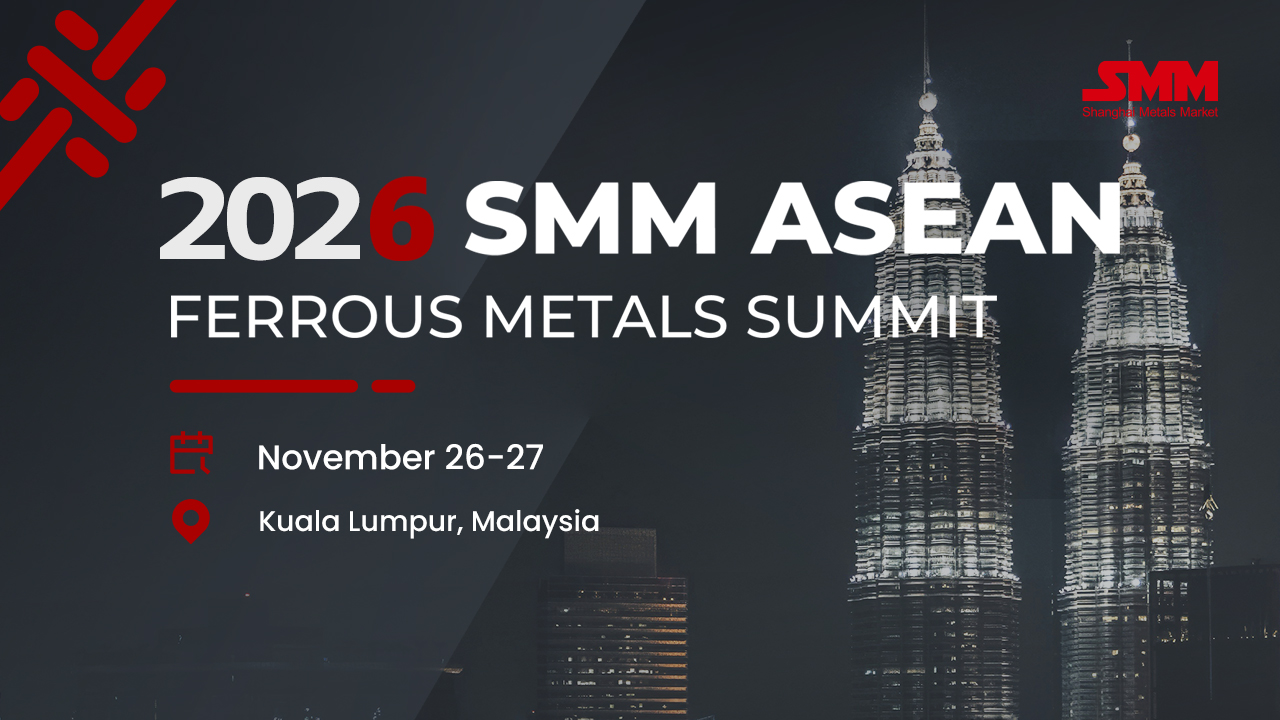 EventsNov 26 - 27, 2026 (GMT+8)KUALA LUMPUR·MALAYSIA
 EventsNov 16 - 19, 2026 (GMT+8)Shanghai, China
 EventsOct 21, 2026 (GMT+8)Guy Whittle Auditorium, 1 Wimpole Street, London W1G 0AE