

165results found for 'macro headwinds'
Price
News
- Platinum and Palladium Market Price Review and Expectations Brief Comment (July 16, 2026) [SMM Platinum and Palladium Weekly Review]
Platinum and palladium prices drifted higher this week and ended the week higher, driven by expectations of US Fed policy, the US-Iran geopolitical situation, and US CPI data. Looking ahead, inflationary headwinds have eased somewhat, but policy and geopolitical uncertainties remain. In the spot market, traders were active in purchasing due to opportunities in the price spread between futures contracts, while downstream consumption remained weak, and premiums were relatively stable.
Jul 16, 2026 16:54 ![[SMM Analysis] Spot Market Squeeze & Fed Policy Shifts Fuel Extreme Volatility in H1 Silver Price; What to Watch in H2?](https://imgqn.smm.cn/production/admin/votes/imagesSbYYY20240307134125.png) [SMM Analysis] Spot Market Squeeze & Fed Policy Shifts Fuel Extreme Volatility in H1 Silver Price; What to Watch in H2?
[SMM Analysis] Spot Market Squeeze & Fed Policy Shifts Fuel Extreme Volatility in H1 Silver Price; What to Watch in H2?H1 2026 silver saw a sharp spike to 30,900 yuan/kg in January, then plunged 55% to 13,816 yuan/kg by June, driven by squeezed spot liquidity and Fed policy reversal from easing to hawkish. Supply grew steadily; PV silver demand fell 21% YoY. H2 outlook: wait for inflation signals and Fed pivot, silver likely remains under pressure.
Jul 10, 2026 19:10- 2026 H1 Silver Market Review and Outlook: After an Extreme Spike, a Trend Decline, Market Awaits Macro Turning Point [SMM Analysis]
In H1 2026, silver experienced an extreme market trend marked by a sharp-peaked inverted-V and stepwise decline, driven by the interplay of two main themes: a spot silver squeeze anomaly and a shift in US Fed monetary policy. After hitting an all-time high of 30,900 yuan/kg in January, silver prices pulled back trend-wise to 13,816 yuan/kg in June, as interest rate cut expectations reversed and hawkish signals strengthened, representing a 55% pullback from the peak. On the supply side, silver ingot production rose 6.9% YoY, and imports surged before returning to normal. On the demand side, PV silver demand fell 21% YoY, with industrial demand taking over from investment as the main driver. In H2, attention will focus on the inflation turning point and marginal changes in the US Fed's policy; silver prices are expected to consolidate on a subdued note.
Jul 10, 2026 18:56 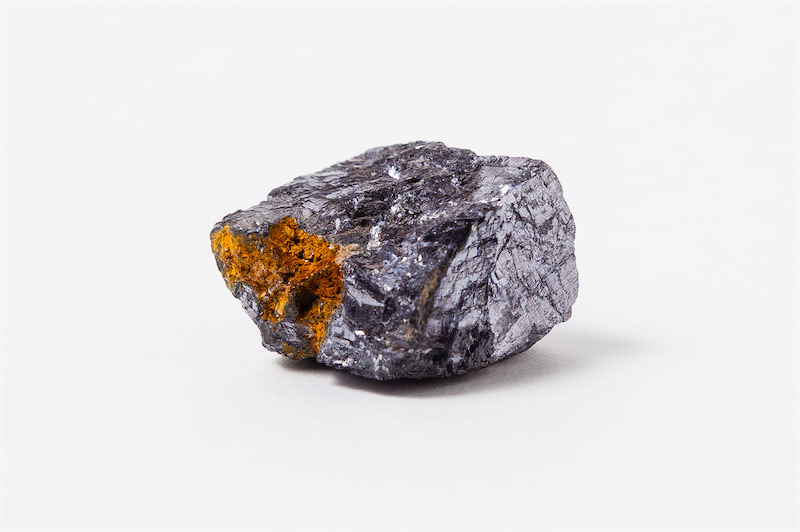 Prices, Losses and Operating Rates Scraping the Floor: 2026 Secondary Refined Lead Review and Outlook
SMM expects secondary lead prices to remain in the doldrums in H2. High scrap battery costs provide rigid bottom support for lead prices, but triple negative factors—macro rate hike expectations, high LME inventories, and the downstream consumption off-season—continue to cap the upside room……
Jul 10, 2026 18:49- Platinum and Palladium Market Price Review and Expectations Brief Review (July 9, 2026) [SMM Platinum and Palladium Weekly Review]
[Platinum & Palladium Price Review and Forecast] This week (July 3 – July 9), platinum and palladium prices retreated after rapid rise with the price center moving lower, ending the week lower overall. On July 3, driven by the much weaker-than-expected US June non-farm payrolls data, market expectations for rate hikes cooled rapidly, and platinum and palladium surged sharply in a single day, with the most-traded platinum contract rising 3.27% to hit the week's high. However, market sentiment gradually faded. Additionally, the renewed US-Iran conflict flared up again, as US forces struck Iranian military targets for several consecutive days, and the first meeting minutes after Warsh took office were released, showing that the AI investment frenzy would significantly influence interest rate decisions. The minutes were broadly interpreted as hawkish. Futures prices for platinum and palladium fell continuously starting Monday, extended losses on Tuesday, recovered slightly on Wednesday before weakening again on Thursday, overall forming a retreat-after-rapid-rise pattern of "one day of gains and four days of declines," with the weekly price center clearly shifting lower. The most-traded platinum futures contract on GFEX reached a high of 415.85 yuan/g, dipped to a low of 392 yuan/g, and closed at 400.45 yuan/g on July 9; palladium weakened in tandem, with the most-traded contract hitting a high of 309.7 yuan/g, a low of 290.3 yuan/g, and closing at 295.25 yuan/g on July 9, falling more than platinum. On the spot side, mainstream spot premiums for platinum and palladium remained around parity with GFEX futures. Spot premiums for palladium were slightly higher than those for platinum, but overall consumption stayed weak, downstream enterprises held strong wait-and-see sentiment, and actual transactions leaned towards the lower end of quotes, mostly around a discount of 1 yuan/g to parity with the most-traded GFEX contract. Overall, spot premiums for platinum and palladium were relatively stable and did not show significant fluctuations alongside futures. Looking ahead, macro headwinds returned this week. Combined with a lack of strong short-term fundamental support, elevated US bond yields and the US dollar index will continue to limit upside room for platinum and palladium, and they are expected to continue witnessing wild swings and consolidation. For spot premiums, market premiums are likely to edge up in the near term as the August contract delivery approaches. [Platinum & Palladium Weekly Data Review] In overseas exchange inventories, platinum extended its one-sided destocking trend, with inventories falling to about 420,000 ounces by end-June, a decline of over 40% from the high at the start of the year. Palladium inventories saw a slight destocking, with current inventories still at a high for the past year. In terms of imports, platinum imports edged up in May, with the overall level similar to that of the same period last year, while palladium imports pulled back slightly, but the overall level remained significantly higher than from 2023 to 2025. [Platinum Group Compounds] Chloroplatinic acid prices declined continuously this week from 166 yuan/g on Monday to close at 164.5 yuan/g on Friday, losing 1.5 yuan/g for the week, a decline of about 0.90%. Palladium chloride prices were also under pressure. It opened at 190 yuan/g on Monday and closed at 186.5 yuan/g on Friday, down 3.5 yuan/g for the week, a decline of about 1.84%. This week, downstream players made just-in-time procurement but no large-scale shipments, and trading was relatively stable.
Jul 9, 2026 17:23 - SHFE Aluminum Consolidates at Highs, Short-Term Correction Continues; Alumina Adds Positions and Rebounds, but Weak Trend Remains Unchanged [SMM Aluminum Briefing]
SMM, July 9: Today, the SHFE aluminum 2608 contract opened at 23,075 yuan/mt, reached a high of 23,095 yuan/mt, dipped to a low of 22,850 yuan/mt, and finally settled at 23,060 yuan/mt, down 10 yuan/mt or 0.04% from the previous trading day. Trading volume was 165,200 lots and open interest was 227,700 lots, with a daily position drop of 4,248 lots. The price remained above the MA5 (22,960) and MA10 (22,822) but below the MA20 (23,332.75), MA40 (23,895.50), and MA60 (24,234.17). The short-term repair continued, but medium and long-term moving average pressure persisted on the upside. On the MACD indicator, the DIFF (-377.42) was above the DEA (-403.42), and a bar value of 52 was recorded. Short-term bearish momentum continued to narrow. Trading volume rose compared to the previous day, but the daily position drop of 4,248 lots showed continued capital outflow, suggesting insufficient upward momentum in the futures. SMM Commentary: Indirect technical talks between the US and Iran made progress as discussions focused on fund repatriation and strait security, and consultations on the nuclear issue are about to start. The geopolitical risk premium continued to converge, while disputes over the management of the Strait of Hormuz persist, leaving the strait's resumption of navigation still uncertain. A hawkish shift by the US Fed boosted the US dollar index, weighing on base metals prices. Aluminum prices in and outside China fell amid macro headwinds. In the short term, bearish factors dominated and aluminum prices are expected to continue in the doldrums. Today, the alumina 2609 contract opened at 2,704 yuan/mt, reached a high of 2,728 yuan/mt, dipped to a low of 2,698 yuan/mt, and finally settled at 2,720 yuan/mt, up 11 yuan/mt or 0.41%. Trading volume was 187,400 lots and open interest was 349,400 lots, with a daily position increase of 3,177 lots. The price reclaimed the MA5 (2,715.20) but stayed below the MA10 (2,750.60), MA20 (2,820.55), MA40 (2,808.73), and MA60 (2,813.25). It rebounded slightly in the short term, but the overall weak pattern has not yet reversed. On the MACD indicator, the DIFF (-34.63) was below the DEA (-19.66), and a bar value of -29.94 was recorded. Bearish momentum persisted but narrowed at the margin. Trading volume edged up from the previous day, and the daily position increase of 3,177 lots showed some capital inflows. However, the rebound was limited, and nearby moving average resistance warrants close attention in the short term. SMM Commentary: According to SMM statistics, as of this Thursday, China's total alumina inventory edged up WoW. By inventory structure, raw material inventory at aluminum smelters continued to destock slightly. However, restocking willingness was weak amid sharp recent price swings and market divergence over the outlook, and end-users mostly stayed on the sidelines. In-factory inventory at alumina refineries declined, mainly because some northern enterprises carried out periodic maintenance, prioritizing the drawdown of in-factory inventory under production constraints. This impact is expected to gradually fade after maintenance ends next week. Port inventory continued to build up, as high port arrivals from outside China supplemented spot supply with imported resources and increased market pressure. Overall, the oversupply pattern remained unchanged. Before the implementation of Guinea's bauxite quota policy, the market lacked clear bullish drivers. Next week, inventory is expected to shift from mild destocking to slight inventory buildup, supply-demand conditions will stay loose, and alumina prices will continue to consolidate on a weak note. [The information provided is for reference only. This article does not constitute direct advice for investment research or decision-making. Clients should make decisions prudently and not use it as a substitute for independent judgment. Any decisions made by clients are not related to Shanghai Metals Market.]
Jul 9, 2026 15:30