

5202results found for 'industry chain'
Price
News
- April Battery Materials Import and Export Data Released: Spodumene and Lithium Carbonate Imports Both Up YoY — How Did Other Segments Perform [SMM Special Report]
Around May 23, 2026, import and export data for cobalt and lithium battery industry chain-related products in April were released in a concentrated manner. Data showed that China's spodumene imports in April reached 758,000 mt in physical content, down 9.5% MoM and up 21.7% YoY. Lithium carbonate imports, China imported 32,650 mt of lithium carbonate in April, up 9% MoM and up 15% YoY.......SMM compiled the import and export data for battery materials, as detailed below: Upstream Lithium Concentrates In April 2026, China's spodumene imports reached 758,000 mt in physical content, down 9.5% MoM and up 21.7% YoY, equivalent to approximately 63,000 mt of LCE. Customs data showed that April spodumene imports pulled back MoM from March, reaching 758,000 mt in physical content. By source country, Australian ore port arrivals returned to a relatively normal level, with over 350,000 mt arriving this month, up 38.9% MoM; Zimbabwe's earlier shipments arrived at port this month at 102,000 mt, down 9.2% MoM; South Africa and Nigeria saw some contraction in monthly port arrivals, while ore from Mali had almost no notable port arrivals this month due to shipping schedule impacts. Notably, spodumene powder sold by Brazil in early 2026 arrived at port this month, driving a significant increase in port arrivals from this country. Additionally, after SMM screening, the month's incoming ore was equivalent to 63,000 mt of LCE. Among the incoming ore, lithium concentrates accounted for 67%, edging down MoM, mainly because apart from Australia , ore from other source countries contained some relatively low-grade ore. Source: China Customs, compiled by SMM Spodumene concentrates (CIF China) spot pricing, according to SMM spot pricing, spodumene concentrates (CIF China) spot prices fluctuated upward in April. As of April 30, spodumene concentrates (CIF China) spot prices rose to $2,540/mt, up $221/mt from the month-end price of $2,313/mt in March, a gain of 9.81%. According to SMM, lithium carbonate prices continued to rise in April, and spodumene concentrates prices rose in tandem with salt prices, with gains exceeding those of lithium carbonate itself, causing non-integrated enterprises that purchase externally spodumene concentrates to suffer losses, with spot profitability remaining in deficit. In April, spot circulation of lepidolite concentrates relatively eased. Meanwhile, as lithium carbonate prices rose, processing fees for non-integrated enterprises also increased accordingly, preserving a certain profit margin for their processing operations and enabling these enterprises to achieve spot profitability. However, recently, spodumene concentrates prices adjusted in tandem with lithium carbonate price fluctuations, and the price center shifted downward. According to SMM's latest findings, disrupted by rumors of production resumptions at Jiangxi mines this week, lithium carbonate futures and spot prices declined, further dragging down the overall price center. Currently, lithium mines showed a weak willingness to make shipments, and transactions were mostly concentrated between traders and buyers. Port lithium ore inventory continued to decline. Going forward, attention should still be paid to the potential tight lithium ore supply triggered by high operating rates in the lithium chemicals industry. Lithium ore prices were expected to continue to hold up well. Lithium Carbonate According to customs data, China imported 32,650 mt of lithium carbonate in April, up 9% MoM and up 15% YoY. Of this, 21,000 mt was imported from Chile (65% of total imports), 9,555 mt from Argentina (29%), and 1,100 mt from Indonesia (3%). From January to April, China's cumulative lithium carbonate imports reached 116,000 mt, up 47% YoY cumulatively. In April, China exported 370 mt of lithium carbonate, down 17% MoM and down 50% YoY. From January to April, China's cumulative lithium carbonate exports totaled 1,886 mt, up 7% YoY cumulatively. In April, China imported 17,942 mt of lithium sulfate, up 9% MoM and up 296% YoY. From January to April, China's cumulative lithium sulfate imports reached 58,900 mt, up 121% YoY cumulatively. According to SMM spot quotes, spot lithium carbonate prices generally trended upward in April. As of April 30, the spot lithium carbonate price rose to 177,000 yuan/mt, up 14,000 yuan/mt from 163,000 yuan/mt on March 31, a gain of 8.59%. According to SMM analysis, China's lithium carbonate prices followed a "V-shaped" trend in April, first declining then rising, with the monthly average price up 6% MoM. In the first ten days, geopolitical disruptions in the Middle East intensified global risk-averse sentiment, causing non-ferrous metals and lithium carbonate prices to fluctuate downward. In the mid-to-late period, driven by Zimbabwe's export ban, Jiangxi mine license renewals, and rising costs, prices began to rebound and fluctuate upward, with the price center shifting notably higher by month-end. Upstream and downstream purchasing remained stagnant, with the psychological price spread widening week by week. Upstream producers held prices firm and held back from selling, maintaining high offer prices, while downstream buyers made just-in-time procurement only, with psychological price levels concentrated at 155,000-175,000 yuan/mt, restocking on dips only when prices fell rapidly. In April, spot battery-grade lithium carbonate prices dropped to around 155,500 yuan/mt in the first ten days, then rallied all the way to 177,000 yuan/mt by month-end. As of May 29, domestic spot battery-grade lithium carbonate was quoted at 174,000-181,000 yuan/mt, with an average price of 177,500 yuan/mt. Lithium Hydroxide According to customs data, in April 2026, China imported 6,689 mt of lithium hydroxide, up 9% MoM and up four times YoY. Of this, 2,252 mt were imported from South Korea, accounting for 34% of total imports; 1,706 mt came from Indonesia, accounting for approximately 25% of imports; and the remaining 40% came from Australia and Chile. In April, China exported 5,535 mt of lithium hydroxide, up 76% MoM and up 31% YoY, of which 3,915 mt were exported to South Korea and 864 mt to Japan. Continued sluggish ternary cathode material output outside China limited the absorption capacity for lithium hydroxide in markets outside China, resulting in a slight surplus in markets outside China, which in turn widened the price spread between domestic and overseas markets. Meanwhile, as suppliers outside China had previously signed long-term supply agreements with domestic traders, they were able to continuously dump lithium hydroxide into the Chinese market. Under the combined effect of these factors, the trade pattern of lithium hydroxide continued to reverse (shifting from net exports to net imports). Source: China Customs, compiled by SMM Battery Materials LiPF6 According to China Customs data, in April 2026, China's cumulative LiPF6 exports totaled approximately 868 mt, down approximately 80.9% MoM, while cumulative imports were approximately 96 mt. Export side, China's LiPF6 exports in April 2026 were approximately 868 mt, down approximately 80.9% MoM from March and down approximately 33.2% YoY. Specifically, as the LiPF6 export VAT rebate policy was officially abolished starting April 1, 2026, enterprises rushed to export in advance in March, and electrolyte enterprises outside China built up certain inventory, leading to MoM declines in China's exports to multiple major destination countries in April. Exports to Poland were 337.5 mt (down approximately 80.4% MoM), South Korea 81.804 mt (down approximately 92.56% MoM), Czech Republic 150 mt (down approximately 67.43% MoM), and the US 101.908 mt (down approximately 61.7% MoM). Only exports to Japan increased — 191.37 mt (up approximately 50.77% MoM). Artificial Graphite In April 2026, China's artificial graphite imports were 757 mt, up 12.4% MoM and down 32.9% YoY. Average import price side, in April 2026, the average import price of artificial graphite in China was 75,941 yuan/mt, up 23.1% MoM and up 14.6% YoY. In April 2026, China's artificial graphite exports totaled 45,895 mt, up 22.3% MoM but down 21% YoY. In terms of average export price, in April 2026, the average export price of China's artificial graphite was 9,214 yuan/mt, down 6.6% MoM but up 0.26% YoY. Exports from the top five exporting provinces rose 21% MoM from the previous month, with two provinces seeing export volume increases of over 35% MoM, and another province recording a 20% MoM increase. Import market, orders from downstream power battery enterprises in China gradually recovered in April. Combined with the phased tightness in spot capacity of leading anode enterprises, restocking demand was released, boosting artificial graphite imports to rebound from weakness on a MoM basis. However, import volumes remained down YoY, primarily because China's anode industry had ample overall capacity with supply still in surplus, domestic self-sufficiency continued to strengthen, and the industry's reliance on imported raw materials and finished products steadily declined. Flake Graphite In April 2026, China's flake graphite imports totaled 3,178 mt, down 19% MoM and down 45% YoY. Data source: China Customs, SMM In April 2026, China's flake graphite exports totaled 4,093 mt, down 50% MoM and down 54% YoY. Export market, the flake graphite export tax rebate policy was officially canceled this month, directly squeezing profit margins for foreign trade enterprises and significantly dampening overall export willingness. Meanwhile, the approval pace for flake graphite export licenses slowed down, hindering foreign trade shipments processes. Coupled with weak ex-China end-use demand, multiple bearish factors combined to directly drive a sharp decline in industry export volumes. The import market also continued to weaken. Goods originally intended for exports shifted to domestic sales circulation, with increasingly abundant local supply sources in China. Market enthusiasm for import procurement was insufficient, ultimately causing imports to decline in tandem this month. Phosphate Ore On May 20, 2026, according to customs data, China's phosphate ore imports totaled 207,000 mt in April 2026. April imports rose 13.5% from 182,000 mt in March. Total import value in April was $19.741 million, up 35.7% MoM from $14.552 million in March. The average unit price was $95.5/mt, up 19.6% from $79.9/mt in March. Import commentary: In May, Egypt's phosphate ore exports faced "policy tightening and weakening demand."On May 13, Egypt's Ministry of Petroleum and Mineral Resources announced that it would no longer sign any new phosphate ore export contracts. Previously, Egyptian Prime Minister Mustafa Madbouly stated clearly at a meeting on May 10 that the government was pushing for a transition from raw material exports to the manufacturing of high-value-added products such as phosphate fertiliser. Already signed long-term contracts would not be affected. This is expected to push up import prices and may affect imports. Cobalt Cobalt Hydrometallurgy Intermediate Products In April 2026, China's cobalt hydrometallurgy intermediate products imports were approximately 1,247 mt in physical content, down 26% MoM and down 98% YoY. Among them, imports from the DRC were approximately 945 mt in physical content, down 43% MoM and down 98% YoY. In April 2026, the average import price of China's cobalt hydrometallurgy intermediate products was $17,187/mt in physical content, up 2.63% MoM. It was learned that most miners had completed the Q4 2025 quota approvals, but the Q1 2026 quota approvals slowed down again due to sampling, detection and other procedural issues. In addition, transportation capacity in the DRC was tight. Fleets, driven by economic considerations, prioritised the transport of oil products and chemicals that were in production shortage, followed by other metals with shorter turnover cycles, and cobalt among non-ferrous metals came last, meaning cobalt faced significant transportation capacity issues. Constrained by the above factors, miners mainly focused on building in-transit inventory and had not yet arranged concentrated vessel bookings, and the arrival of large batches of intermediate products at ports may continue to be delayed. Unwrought Cobalt In April 2026, China's unwrought cobalt imports were approximately 1,334 mt, up 39% MoM and up 59% YoY. In April, refined cobalt imports mainly came from Indonesia, Russia, and Madagascar, with imports of 462 mt, 457 mt, and 182 mt respectively. The main reason for the increase this month was that domestic smelters lacked intermediate product raw materials and imported cobalt slabs and cobalt briquettes for re-dissolution to ensure normal production. In terms of average import prices, the average import price of China's unwrought cobalt in April 2026 was $52,724/mt, up 4.72% MoM. Cumulative imports from January to April 2026 totalled 5,916 mt, up 153% YoY cumulatively. Export side, China's unwrought cobalt exports in April 2026 were approximately 218 mt, down 47% MoM and down 95% YoY. By country, China's exports to the US dropped significantly, with April exports to the US at 35 mt, down 87.5% MoM. The main reason was that demand for alloy-grade refined cobalt in the US pulled back in April, and ex-China branded refined cobalt was already sufficient to meet regional demand, with some refined cobalt traders redirecting their destinations from the US back to China. Average export price, the average export price of China's unwrought cobalt in April 2026 was $54,590/mt, up 5.80% MoM. Cumulative exports from January to April 2026 totaled 1,792 mt, down 76% YoY.
Jun 1, 2026 18:45 - Press Metal International Invites You to AASC 2026 — The 3rd Southeast Asia Automotive Supply Chain Conference
The 2nd SMM Southeast Asia Automotive Supply Chain Conference 2025 was successfully held, featuring the on-site launch of 10 new car models, Southeast Asia brand strategies from three automakers, and SMM's locally sourced steel prices in Thailand. The event facilitated efficient matchmaking between 12+ buyers and 60+ suppliers, and preliminarily established a communication platform for the entire industry chain of Southeast Asian automotive. Currently, the NEV industry in Southeast Asia is entering a critical development phase, with Thailand, Indonesia, and Vietnam each making their own strategic moves and breakthroughs, while the industry also faces challenges such as supply chain restructuring, competition over technology roadmaps, and localization compliance. Thanks to the support of all parties, SMM's local pricing systems in Thailand and Indonesia have been implemented and adopted by core enterprises, establishing a credible cost benchmark for the industry. The 3rd Conference in 2026 will focus on three core themes: exploring the NEV auto sales potential in Southeast Asia; bridging the last mile of the supply chain and integrating regional industry chain resources; and advancing SMM's Southeast Asian metals pricing from a price reference to a transaction benchmark, implementing procurement applications for electrification materials and establishing an executable pricing system. We firmly believe that true progress comes from turning consensus into action. At this conference, Press Metal International Ltd (PMI) sincerely invites you to reunite in Bangkok, to jointly transform strategic blueprints into market competitive advantages, to witness and participate in this extraordinary and far-reaching industry event, and to co-create a brilliant new chapter! Click the to register now. Booth No.: B01 Press Metal International Ltd (PMI) is a subsidiary of Press Metal Aluminium Holding Bhd (PMAH), operating as an integrated production chain corporation. The extrusion plants are strategically located in both China and Malaysia, with 230 thousand tons production capacity. With a commitment to providing comprehensive aluminium profile solutions worldwide, PMI has established sales office in key regions including the United Kingdom, North America, Australia, Vietnam and Malaysia, ensuring a global presence. Across the integrated production chain, PMI covers Alloying R&D, Tooling Design and fabrication, remelting and billet casting, extrusion and value-added services such as surface finishing and high-precision fabrication, specializing in Alloy series 1000,5000, 6000 and 7000, the company has expertise to extrude variety of large shape aluminium profile. The company capabilities serve various industries, including automotive, marine and offshore, 3C electronic and more. To better meet the needs of the SEA automotive industry, our presence in Malaysia spans two facilities in Klang and Nilai. These facilities provide a complete vertical supply chain for automotive and precision aluminum products — equipped with advanced extrusion, anodizing, sandblasting, and automotive assembly lines to support high-volume manufacturing — and serve global Tier 1 suppliers and OEMs with components including bumper systems, sill beam assemblies, and battery trays. Contact Information Contact Contact Us Lou Kexin 19068019380
Jun 1, 2026 15:57 - Shanghai Longchuang Automotive Invites You to AASC 2026, the 3rd Southeast Asia Automotive Supply Chain Conference
The 2025 2nd SMM Southeast Asia Automotive Supply Chain Conference was successfully held, featuring the launch of 10 new car models, Southeast Asia brand strategies from three automakers, and SMM's local steel prices in Thailand. The event facilitated efficient matchmaking between 12+ buyers and 60+ suppliers, and preliminarily established a communication platform for the entire automotive industry chain in Southeast Asia. Currently, the NEV industry in Southeast Asia is entering a critical development phase. Thailand, Indonesia, and Vietnam each have their own strategic layouts and breakthroughs, while the industry also faces challenges such as supply chain restructuring, competition over technology roadmaps, and localization compliance. Thanks to the support from all parties, SMM's local pricing systems in Thailand and Indonesia have been implemented and adopted by core enterprises, establishing a credible cost benchmark for the industry. The 2026 3rd Conference will focus on three core themes: exploring the NEV auto sales potential in Southeast Asia; connecting the last mile of the supply chain and integrating regional industry resources; and advancing SMM's Southeast Asia metal pricing from a price reference to a transaction benchmark, implementing procurement applications for electrification materials, and establishing an executable pricing system. We firmly believe that true progress comes from turning consensus into action. At this conference, Shanghai Launch Automotive Design Co., Ltd. cordially invites you to gather again in Bangkok, to jointly transform strategic blueprints into competitive market advantages, to witness and participate in this extraordinary and far-reaching industry event, and to co-create a brilliant new chapter! Click the to register now. Booth No.: A16 Stock Code: 832954 An Innovative Force Leading R&D Across the Entire Automotive Industry Chain Launch was founded in 2000 and is headquartered in Shanghai. It is a "turnkey engineering" service provider specializing in R&D across the entire automotive industry chain. The company has established 33 branches worldwide and a professional team of over 4,000 employees. Its business covers the entire process, including styling design, vehicle engineering development, supply chain management, prototype trial production and testing, providing clients with one-stop vehicle R&D solutions. Founded in 2000 and headquartered in Shanghai, Launch is a "turnkey engineering" service provider specializing in R&D across the entire automotive industry chain. The company has established 33 branches worldwide and a professional team of over 4,000 employees. Its business covers the entire process, including styling design, vehicle engineering development, supply chain management, prototype trial production and testing, providing customers with one-stop vehicle R&D solutions. The company drives its development with the dual engines of " automotive R&D + product innovation" The company drives its development with the dual engines of "automotive R&D + product innovation": Automotive R&D and Design : As its core business, Launch has long served international brands such as Toyota, Tesla, Ford, and Renault, as well as leading Chinese automakers including BYD, Great Wall, Geely, FAW, Dongfeng, GAC, and XPeng, continuously driving the upgrade of the global automotive industry. Automotive R&D and Design: As its core business, this segment has long served international brands such as Toyota, Tesla, Ford, and Renault, as well as major domestic automakers including BYD, Great Wall Motors, Geely, FAW Group, Dongfeng Motor, GAC Group, and XPeng. It continuously promotes the upgrading of the global automotive industry. Product Innovation Business : Leveraging its ability to integrate the entire industry chain, Launch independently develops diversified electrification platforms, covering categories such as EVs, electric motorcycles, e-bikes, and electric wheelchairs. In the future, it will accelerate the expansion of markets outside China to support the global layout of technology, industry chains, and automotive ecosystems. Product Innovation Business: Leveraging its ability to integrate the entire industry chain, Launch independently develops diversified electrification platforms, covering categories such as electric vehicles, electric motorcycles, electric bicycles, and electric wheelchairs. In the future, it will accelerate the expansion of overseas markets to support the global layout of technology, industrial chains, and automotive ecosystems. Launch has won multiple honors, including "National High-Tech Enterprise," "National Industrial Design Center," and "National-level 'Little Giant' Enterprise Specialized in Refined, Precise, and Advanced Technologies." Up to now, it has completed the R&D of more than 400 car models, covering traditional passenger cars, commercial vehicles, and new energy vehicles. The total sales of launched models have exceeded 30 million units, making Launch not only a top-tier vehicle R&D institution in China but also a global industry benchmark, continuously driving the independent innovation and global development of China's automotive industry. Launch has won multiple honors, including "National High-Tech Enterprise", "National Industrial Design Center", and "National-level 'Little Giant' Enterprise Specialized in Refined, Precise, and Advanced Technologies". Up to now, it has completed the R&D of more than 400 vehicle models, covering traditional passenger cars, commercial vehicles, and new energy vehicles. The total sales volume of the launched models has exceeded 30 million units. Launch has not only become a top-tier domestic vehicle R&D institution but also emerged as a global industry benchmark, continuously promoting the independent innovation and global development of China's automotive industry. Contact Information Contact Ma Xiao: 13612111955 Contact Us Wu Chaojun
Jun 1, 2026 15:48 - [SMM Nickel Sulphate Daily Review] June 1: Strong Cost Support, Nickel Salt Prices Rise
On June 1, the SMM battery-grade nickel sulphate average price rose.
Jun 1, 2026 10:54 - Crude Oil Posted Largest Monthly Decline in Nearly Five Years, Metals Showed Mixed Performance, Gold Fell for Three Consecutive Months, Silver Rose on Monthly Basis [Overnight Market]
SMM June 1 Update: Metals market: Last Friday's overnight session saw base metals collectively decline in both domestic and overseas markets. LME copper and LME tin both led the decline with a 0.98% drop. SHFE zinc fell 0.86%, while declines in other metals were relatively small. The alumina front-month contract closed flat at 2,888 yuan/mt, and the foundry aluminum front-month contract fell 0.26%. Last Friday's overnight ferrous metals session showed mixed performance. Stainless steel fell 0.74%, and iron ore dropped 0.26%. Hot-rolled coil and rebar both rose around 0.2%. In coking coal and coke, coking coal rose 0.7% and coke rose 0.89%. Last Friday's overnight precious metals session: COMEX gold rose 0.83%, up 1.03% on the week but down 1.29% on the month, marking a third consecutive monthly decline. COMEX silver fell 0.43% overnight last Friday, down 0.81% on the week but up 2.1% on the month. In China, SHFE gold rose 1.61%, down 0.23% on the week and down 1.61% on the month, also recording a third consecutive monthly decline alongside the overseas market. SHFE silver rose 0.64% overnight last Friday, down 1.23% on the week but up 3.08% on the month. As of 8:25 AM on May 30, last Friday's overnight closing prices: Macro Front China: From January to April, total operating revenue of national state-owned and state-holding enterprises fell 0.5% YoY, while total profits rose 1.9% YoY. Specifically, total operating revenue was 26.27 trillion yuan, and total profits were 1.37 trillion yuan. Taxes payable rose 3.9% YoY to 2.12 trillion yuan. At the end of April, the asset-liability ratio of state-owned enterprises was 65.5%, up 0.4 percentage points YoY. (Xinhua News Agency) On May 29, it was reported that in Q1, China's integrated circuit exports reached $72.47 billion, up 77.5% YoY, of which memory product exports reached $45.99 billion, up 174.2% YoY. The surge in memory product exports also transmitted to supply chain service segments. The head of a logistics company said that since the beginning of this year, the company's orders related to memory exports had doubled, with large orders exceeding 100 million yuan per transaction increasing significantly. Industry insiders noted that the explosive growth in memory product exports was driven by both cyclical factors of tight global supply and demand, as well as structural industrial changes including industry chain upgrades and market share gains in China's domestic memory sector. The Deputy Secretary General of the Shenzhen Electronics Chamber of Commerce said that compared with March last year, memory prices had risen nearly tenfold, with some even seeing more than tenfold increases. The rise was mainly due to the significant price increases, which drove up the total (export) value. Domestic brand prices had a significant price spread compared with ex-China brands, making them very competitive. (CCTV Finance) [MIIT and Six Other Departments: Encouraging Equipment Manufacturing in Aerospace, Shipbuilding, Automotive, Robotics and Other Sectors] On May 29, the General Office of the Ministry of Culture and Tourism, the General Office of the Central Publicity Department, the General Office of MIIT, the General Office of the Ministry of Education, the General Office of the State-owned Assets Supervision and Administration Commission of the State Council, the General Office of the National Cultural Heritage Administration, and the General Office of the All-China Federation of Trade Unions jointly issued a notice on promoting industrial culture, protecting industrial heritage, and developing industrial tourism. The notice mentioned enriching the supply of industrial tourism products. It encouraged the active development of industrial heritage tourism, promoting the revitalization and utilization of industrial sites through creative design, new business format integration, and facade renovation, and developing new scenarios, formats, and models for industrial tourism. It vigorously promoted "factory tours," encouraging enterprises in equipment manufacturing sectors such as aerospace, shipbuilding, automotive, and robotics, consumer goods industries such as textiles and apparel, arts and crafts, and food processing, as well as e-commerce logistics, to innovatively launch programs including production process observation, simulated operations, hands-on experiences, and product customization, while ensuring production safety and confidentiality requirements, to create themed sightseeing factories. It called for the orderly expansion of smart industrial tourism, supporting the use of BeiDou, artificial intelligence, ultra-high-definition video, virtual reality, autonomous driving, and other digital technologies and equipment to create immersive and intelligent industrial tourism experiences. It supported industrial tourism venues in developing themed commerce, immersive experiences, specialty markets, and other formats to create "industrial tourism+" consumption scenarios. It encouraged localities to launch a batch of high-quality industrial tourism routes and brands with regional and industry characteristics. It encouraged industrial enterprises to strengthen product promotion, expand product sales, and build stronger enterprise brands through industrial tourism. The Shanghai International Energy Exchange announced adjustments to the daily price limit for crude oil and low-sulfur fuel oil futures contracts to 17%, the hedging position trading margin ratio to 18%, and the general position trading margin ratio to 19%; it also adjusted trading limits for related crude oil and low-sulfur fuel oil futures contracts. US dollar: As of last Friday's overnight close, the US dollar index fell 0.07% to 98.93, down 0.39% on the week but up 0.85% on the month. Optimistic expectations about the extension of the ceasefire agreement between the US and Iran weakened safe-haven demand. The US April PCE price index rose 3.8% YoY, the highest level since May 2023, in line with expectations, compared with the previous reading of 3.5%. The US April core PCE price index rose 3.3% YoY, hitting a new high since November 2023, also in line with expectations, compared with the previous reading of 3.2%. Additionally, separate data released by the Bureau of Economic Analysis showed that the US economy grew at an annualized rate of 1.6% in Q1, below the preliminary data. The initial estimate released last month showed growth of 2%. The data indicated that US consumers became more cautious amid cost-of-living pressures and uneven labor market performance. The Middle East conflict pushed up fuel and other raw material prices, with the impact transmitting through the broader economy and sending consumer confidence to record lows. Meanwhile, this inflation data is likely to further reinforce warnings from some US Fed officials that the US Fed would need to consider raising interest rates if price pressures fail to ease. Kevin Warsh, who was just sworn in as Fed Chairman on May 22, may need to convince other officials that inflation expectations can be controlled without rate hikes. (Wallstreetcn) Minneapolis Fed President Kashkari stated that it was too early to conclude that interest rates need to rise, but he believed the US Fed should keep all policy options on the table. He said it was too early to conclude that an immediate rate hike was needed. He noted the need to continue monitoring economic data and developments in the Middle East conflict before considering whether policy adjustments were necessary. Kashkari pointed out that under both the most optimistic and most pessimistic scenarios, inflation could remain significantly elevated for an extended period. He was closely monitoring this risk, as well as the possibility that inflation expectations could become unanchored. (Wallstreetcn) US Fed Vice Chair for Supervision Michelle Bowman stated that it was too early to judge the impact of the Iran conflict on inflation, and policymakers needed to look through temporary price shocks. She supported officials retaining language in their statement after last month's policy meeting that hinted at the possibility of further interest rate cuts. She said that as she thought about the future path of monetary policy, she wanted a clearer understanding of the economic impact of the Middle East conflict and the persistence of those effects. As long as credibility in the commitment to achieving the inflation target was maintained, it was appropriate to look through temporarily elevated inflation primarily driven by rising energy prices. She expected the "one-off" impact of tariffs implemented by US President Trump to fade. (Wallstreetcn) Macro front: This week, China is set to release data including China's May RatingDog Manufacturing PMI and China's May RatingDog Services PMI. The US is set to release data including the US May S&P Global Manufacturing PMI final, US May ISM Manufacturing PMI, US April construction spending MoM, US April JOLTs job openings, US May ADP employment, US May S&P Global Services PMI final, US May ISM Non-Manufacturing PMI, US April factory orders MoM, US May Challenger job cuts, US initial jobless claims for the week ending May 30, US May unemployment rate, US May seasonally adjusted non-farm payrolls, US May average hourly earnings YoY, and US May average hourly earnings MoM. The UK is set to release data including UK May Nationwide house price index MoM, UK May Manufacturing PMI final, UK April central bank mortgage approvals, UK May Services PMI final, and UK May Halifax seasonally adjusted house price index MoM. The Eurozone is set to release data including Eurozone May Manufacturing PMI final, Eurozone April unemployment rate, Eurozone May CPI YoY preliminary, Eurozone May CPI MoM preliminary, Eurozone May Services PMI final, Eurozone April PPI MoM, Eurozone April retail sales MoM, Eurozone Q1 GDP YoY revised, and Eurozone Q1 seasonally adjusted employment QoQ final. Switzerland is set to release data including Swiss April real retail sales YoY, Swiss April trade balance, Swiss May CPI MoM, and Swiss May seasonally adjusted unemployment rate. France is set to release data including France May Manufacturing PMI final, France May Services PMI final, France April industrial output MoM, and France April trade balance. Germany is set to release data including Germany May Manufacturing PMI final and Germany May Services PMI final. In addition, Australia Q1 GDP YoY and Canada May employment figures will also be released. Crude oil: As of last Friday's overnight close, oil prices in both markets fell, with WTI down 1.28% and Brent down 0.87%. On a weekly basis, oil prices suffered heavy losses, with WTI down 9.15% and Brent down 8.3%, both recording a second consecutive weekly decline and the largest weekly drop since April. WTI fell 16.47% on the month and Brent fell 16.77% on the month, with WTI posting its largest monthly decline since November 2021 and Brent its largest monthly decline since March 2020. According to Xinhua News Agency, US President Trump said on the 29th that the US and Iran had reached agreement on secondary issues beyond Iran's nuclear program and Strait of Hormuz passage, sending crude oil prices lower. The oil market in May underwent a clear three-phase evolution: Early month (May 1-6): Oil prices pulled back slightly from near four-year highs, but Brent briefly surged to around $114 after OPEC+ announced a modest production increase and shipping attacks, before plunging to the $101-106 range following signals of US-Iran de-escalation. Mid-month (May 7-20): Oil prices oscillated as ceasefire breakdowns alternated with mediation progress, with the continued blockade of the Strait of Hormuz maintaining an elevated risk premium. Month-end (May 21-29): Driven by reports of a US-Iran agreement in principle to reopen the strait, Brent briefly fell to the $93-100 low range, WTI touched $88-92, and Brent closed around $92. (Wallstreetcn) Nevertheless, analysts emphasized that until the conflict truly ends and the strait resumes normal passage, global crude oil inventories will continue to be depleted by approximately 10 to 14 million barrels per day, and physical market fundamentals remain tight. The decline in oil prices driven by ceasefire expectations reflected more the pricing of future supply recovery rather than a fundamental change in the current supply-demand pattern. (Wallstreetcn) Recent reports revealed that calculations by Goldman Sachs showed global crude oil inventories could fall below the equivalent of 100 days of global demand as early as the end of May. Goldman Sachs estimated that as of the end of April, global crude oil inventories were equivalent to approximately 101 days of global demand, and were expected to decline to 98 days by the end of May. Of this, "visible inventories" observable through satellites and other means were estimated at only 73 days of demand. Reports indicated that currently only a few vessels can pass through the Strait of Hormuz each day, resulting in a daily global crude oil supply loss exceeding 10 million barrels. (Wallstreetcn)
Jun 1, 2026 08:13 - Shanxi Xinhui Activated Carbon Co., Ltd. Made a Grand Appearance at the 2026 SMM Battery Technology Industry Conference
Driven by the dual forces of global energy structure transformation and the "dual carbon" goals, battery technology is evolving from a traditional power storage medium into a core engine reshaping transportation, consumer electronics, and even the energy internet. From fundamental breakthroughs in materials science to the industrialisation of cutting-edge technologies such as solid-state and sodium-ion batteries, the battery industry is in a period of technological explosion with intense competition. This conference brings together the world's top scholars, industry chain leaders, and capital forces, aiming to break down barriers between "industry, academia, research, and application." We will delve into key topics including high energy density, ultimate safety, ultra-fast charging technology, and recycling, jointly charting a new blueprint for green, efficient, and sustainable energy. Shanxi Xinhui Activated Carbon Co., Ltd. will attend this grand event to discuss industry development trends with industry peers and jointly drive battery technology to new heights. Click to register now, witness and participate in this extraordinary and far-reaching industry event together, and co-create a brilliant new chapter! Client-centred service! Problem-solving as our principle! Professional, focused, and true to our original aspiration! Shanxi Xinhui Activated Carbon Co., Ltd. (hereinafter referred to as "the Company") was established in 2008, with its headquarters in Taiyuan, Shanxi Province. Its subsidiaries are located in Datong and Xinjiang. It is a private enterprise integrating new-type activated carbon material research and application, production and manufacturing, and sales and services. Its business falls under Shanxi Province's key industry chain — the carbon-based new materials industry chain. As a National High-tech Enterprise, a model of Shanxi Province's specialised, refined, distinctive, and innovative small and medium-sized enterprises, and a municipal-level enterprise technology centre of Taiyuan, the Company has always adhered to the philosophy of innovation-driven development and possesses strong technical R&D capabilities in the activated carbon industry. The Company sets annual product R&D directions and has obtained 36 patents to date, including 1 design patent, 2 published invention patents, 12 granted invention patents, and 21 utility model patents. The Company's independently developed activated carbon features a well-developed specific surface area, well-developed pore structure, high adsorption capacity, fast adsorption speed, good mechanical strength, and the ability to be repeatedly regenerated and recycled. It is widely used in domestic drinking water, industrial wastewater, fine chemicals, and hydrometallurgy. Product Introduction 1 Granular Activated Carbon 2 Powdered Activated Carbon 3 Columnar Activated Carbon 4 Honeycomb Activated Carbon 5 High-efficiency Purification System Long press 2026 SMM Battery Technology Conference
May 31, 2026 16:49
Announcements
In recent years, with the acceleration of industrialization in Malaysia, the demand for high-quality stainless steel in the local construction, automotive, home appliance manufacturing, and high-end c
PriceMay 28, 2026 14:47To better serve industrial clients and more closely align with the market, SMM is adding a new Blister Copper RC Spot CIF India price...
PriceMay 22, 2026 11:05- Data[SMM Announcement] Notice on the Launch of SMM Monthly Data on Indonesia Nickel Sulphate Capacity
Indonesia has long served as a key source of nickel raw materials supply. As the Indonesian industry chain continues to extend downstream, Indonesia-produced nickel sulphate is providing a new supplem
DataMay 19, 2026 17:40
Events
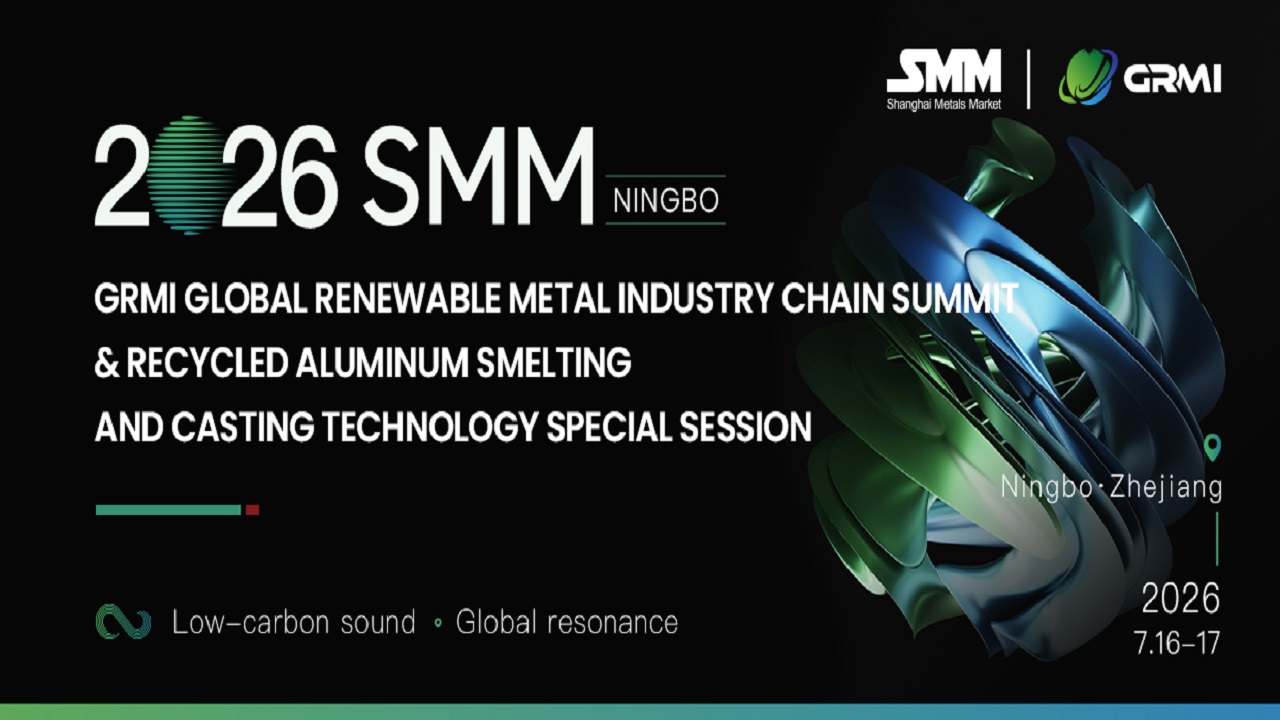 EventsJul 16 - 17, 2026 (GMT+8)The Westin Ningbo, Zhejiang
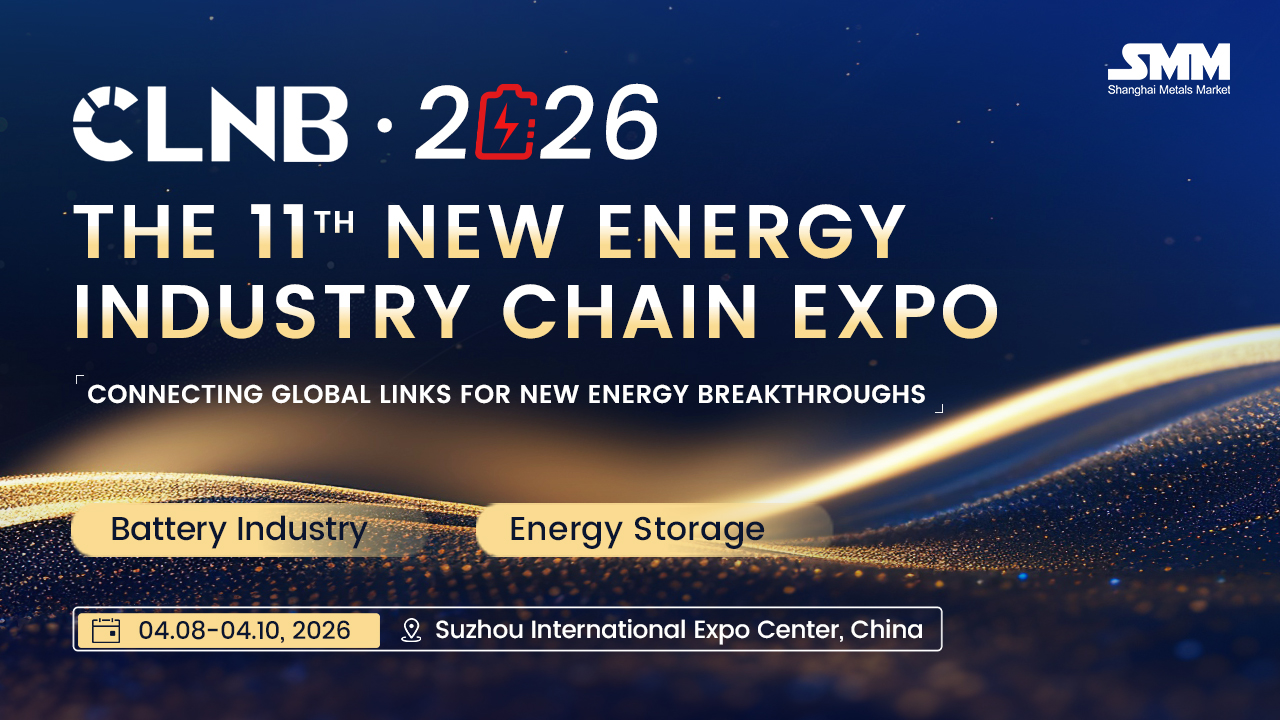 EventsApr 8 - 10, 2026 (GMT+8)Suzhou,China
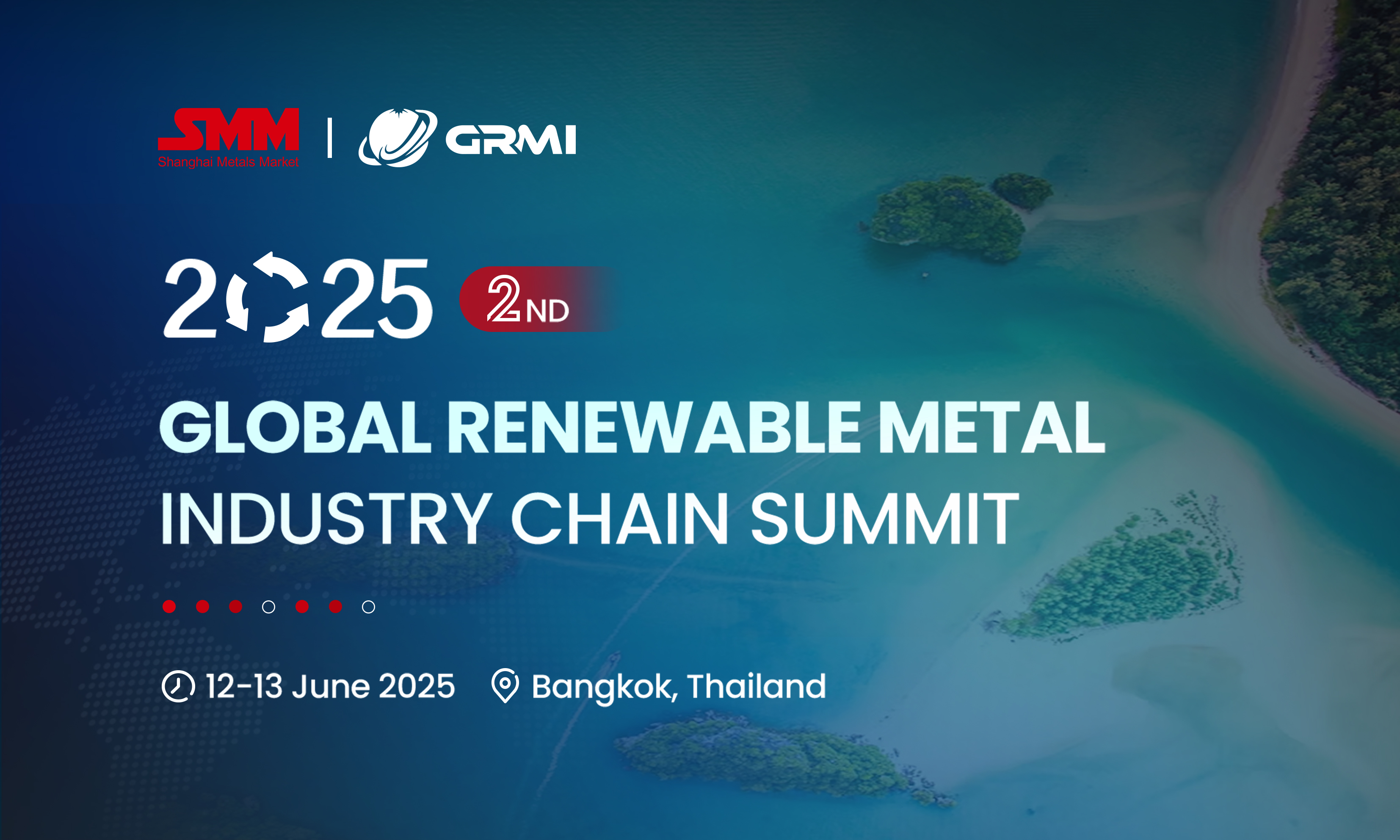 EventsJun 12 - 13, 2025 (GMT+8)Bangkok, Thailand·Hyatt Regency Bangkok Suvarnabhumi Airport