

8620results found for 'industry'
Price
News
- [SMM Analysis] Lithium Is Carrying Zimbabwe's US$5.73B Mining Boom
Zimbabwe's mineral exports hit US$5.73 billion in H1 2026, with lithium emerging as the standout growth driver alongside gold and PGMs. But the broader mineral base is crumbling Q1 2026 output collapsed across chrome, cobalt, copper, nickel and diamond, leaving lithium shouldering an outsized share of the boom. Outlook: Producing and exporting minerals will not make a country rich. It is industry that creates employment and value. Morgan & Co's Kudakwashe Taimo warns the growth is driven more by favourable prices and a few dominant commodities than by broad-based expansion. Zimbabwe's lithium moment is real but unless the country moves up the value chain into battery-grade processing and downstream manufacturing, it risks exporting tomorrow's strategic advantage as raw ore today.
Aug 19, 2026 22:56 - [SMM Analysis] Lithium's High-Price Window May Be Closing on African Producers as Market Tilts Toward 2027 Surplus
Global lithium prices are projected to soften through the second half of 2026 as supply growth continues to outpace demand, with the market seen shifting into a modest surplus as early as 2027 following a slight deficit this year. The pullback comes as Africa's rapidly expanding output adds meaningfully to global supply, raising questions over whether governments and producers across Mali, the DRC, Ghana and Zimbabwe will capture the revenue levels their new-mine projections were originally built around. Chinese battery-grade lithium carbonate remains well below the cycle's 2022 peak, when prices topped $80,000/t before collapsing through 2023 and beginning to recover in 2025. A rally pushed futures above 200,000 yuan (roughly $29,400/t) in mid-May 2026, but prices have since retreated: CIF Asia carbonate assessments stood at $18,160/t as of August 10, down from $19,250/t at end-July, while spodumene assessments slipped to $2,000/t from $2,069/t over the same period. Global lithium production is forecast to grow 13.2% in 2026 versus demand growth of just 5.8%, a sharp deceleration from 18.5% demand growth in 2025 a gap industry analysts say is driving the market from an estimated 3% supply deficit this year toward a slight surplus in 2027. Africa's contribution to that supply build is substantial. According to the International Energy Agency, the continent's lithium mine production rose 44% in 2025, lifting its share of global supply to 14%. Existing output from Mali and Zimbabwe has this year been joined by new volumes from the DRC's Manono project, where Zijin has begun exporting lithium, with Ghana's Ewoyaa project also expected to add regional supply going forward. Zimbabwe's Q1 2026 figures illustrate the price sensitivity facing African producers directly: lithium export volumes rose about 7% year-on-year, to 240,826 tonnes from 224,610 tonnes, while export value more than doubled to $178.6 million from $84.2 million a dynamic that could reverse in force as prices soften into H2. Unlike cobalt, where the DRC's dominance of over 70% of global supply has given it real pricing leverage through export restrictions, African lithium producers currently lack comparable market power individually or collectively to influence global prices directly. That leaves beneficiation as the primary lever available to capture additional value ahead of export a strategy already underway in Zimbabwe, which plans to ban concentrate exports from January 2027 and has begun shipping its first lithium sulphate volumes. SMM View: The timing is notable Zimbabwe's beneficiation push and concentrate export ban arrive just as the global lithium market is expected to swing back into surplus, meaning downstream capacity built on higher price assumptions may need to prove its economics in a softer pricing environment. For Mali, the DRC and Ghana, where new capacity is either ramping or approaching first production, the coming months will be a key test of whether revenue projections underpinning these projects still hold as prices normalize lower. SMM will continue monitoring African spodumene and lithium salts supply growth against the shifting global demand backdrop, alongside downstream processing progress across Zimbabwe's beneficiation pipeline.
Aug 19, 2026 22:36  SMM Visits Progress Galvaniser to Discuss Hot-Dip Galvanizing Industry Development and Green Upgrade
Recently, an SMM delegation, including Jianhua Ye, Big‑Data Director, and Daisy Dai, Senior Overseas Sales Manager of Lead‑Zinc Division, paid an on‑site visit to Progress Galvaniser for industry‑focused exchanges, and was warmly welcomed by Lim Chin Keong, Council Member of the Singapore Chinese Chamber of Commerce & Industry, Managing Director of Progress Galvanizing Pte Ltd. The two sides held in‑depth discussions on core topics including technological upgrades for the hot‑dip galvanising sector, green and low‑carbon production, supply‑demand landscape of overseas markets, coordinated development of industrial chains, cutting‑edge industry insights and corporate development experience. Company Profile Established in 1986, Progress Galvaniser boasts more than three decades of dedicated presence within the hot‑dip galvanising industry. It caters to metal anti‑corrosion requirements for sectors spanning construction, marine engineering and offshore equipment. Upholding a customer‑centric mindset, the company thoroughly explores market demands and prioritises long‑term value delivery for its clients. It also actively undertakes social responsibilities and supports local community development, with sustained long‑term, large‑scale growth strategies formulated in alignment with industry trends and its inherent core strengths. To further consolidate its technological edge, optimise production workflows and bolster overall competitiveness, Progress Galvaniser invested in a factory in 2026 which uses the best technology in the world. Built by the Austrian company, Koerner and the German crane experts, Scheffer, the hot-dip galvanizing plant utilizes state-of-the-art technology, and is the first of its kind in South East Asia. Equipped with state-of-the-art hardware and sophisticated technological systems, the company has fully optimized its production and operational workflows. It has greatly improved working conditions for frontline employees, solidified workplace safety safeguards, and lowered production energy consumption and pollutant emissions. Committed to delivering premium zinc coating products featuring exceptional stability and superior corrosion resistance to global clients, the company is steadily building a modern galvanizing production framework that is safe, efficient and eco-friendly. Backed by a sound management system and robust comprehensive capabilities, Progress Galvaniser has attained a full suite of authoritative qualifications, including ISO 9001 Quality Management System, ISO 45001:2018 Occupational Health and Safety Management System, ISO 50001:2018 Energy Management System, and bizSAFE STAR certification. These accreditations fully validate the company's proven expertise in product quality assurance, safe production operation, energy conservation management and standardized compliance practices. Always embracing a forward-looking development mindset, the company closely keeps pace with global hot-dip galvanizing industry dynamics, including technological innovations, evolving environmental regulations and shifting market demands. It proactively iterates and refines its production standards, management mechanisms and service protocols, sustaining strong market competitiveness amid continuous industrial upgrading and evolution. This visit has deepened SMM's understanding of Progress Galvaniser’s technological strengths. Going forward, SMM will further expand its engagement with Chinese and overseas lead & zinc industry chains by conducting field trips, industry research and technical exchanges. SMM will actively connect high‑quality industry chain participants at home and abroad to share industry data, jointly pursue technological innovation and unlock new market opportunities. SMM aims to support the sector in overcoming development bottlenecks and accelerating green transition, so as to foster coordinated, win‑win, high‑quality and sustainable development across the global lead‑zinc and hot‑dip galvanising industrial chain.
Aug 19, 2026 17:45- [SMM News] India's Steel Consumption Nearly Doubles in a Decade to 152 Million mt
[India] According to Pondrik Sandeep, Secretary of India's Ministry of Steel, India's steel consumption rose from 77 million mt in fiscal 2014-15 to 152 million mt in fiscal 2024-25. Speaking at the India AI Impact Summit 2026 in New Delhi, Pondrik said India's crude steel capacity is expected to reach 300 million mt in fiscal 2030-31 and further increase to 400 million mt in fiscal 2035-36. The summit also brought together steel producers, iron ore miners, and AI technology providers to discuss AI applications in the steel industry chain and potential cooperation opportunities.
Aug 19, 2026 17:34 - India gold market update: Recovery taking shape
19 August, 2026 Highlights International and domestic gold prices 1 gained ground in August, partially reversing June’s sharp correction after a period of stability in July Jewellery demand reportedly strengthened: consumers responded to lower and more stable prices, while retailers and manufacturers replenished inventories ahead of the festive season Investment demand remained steady; gold ETFs continue to attract inflows, bar and coin demand held up, albeit softer than the heightened levels seen earlier in the year Activity in the futures market picked up in July, lifting trading volumes and turnover Gold imports rebounded in July, signalling firmer demand conditions. Looking ahead Demand conditions are improving, raising expectations of a stronger festive season. While elevated prices may continue to influence jewellery purchases, investment demand remains supportive. Correction gives way to recovery Following a sharp price correction in June, gold prices stabilised during July before recovering in early August, reaching their highest levels in over two months. International gold price (LBMA Gold PM) rose 9% in the first two weeks of August to US$4,391/oz, while domestic prices gained nearly 7% to INR151,744/10g. 2 The appreciation of the INR against the US dollar partially offset the rise in the international price, limiting gains in domestic prices. Shifting monetary policy expectations, a weaker US dollar, and renewed inflows into gold ETFs supported gold prices, contributing to the recent recovery in the gold market. Chart 1: Gold regains ground Month-end LBMA Gold Price PM and MCX spot gold price changes and movement* *As of 14 August, 2026. Source: Bloomberg, World Gold Council Domestic gold prices remain below import parity, 3 indicating local supply availability. Market feedback suggests that the exchange of old gold for new jewellery has increased market supply and kept prices at a discount to the landed cost. While discounts narrowed meaningfully, from around US$100/oz in mid-May and early June, to about US$45/oz in mid-August, they remained above July’s average US$34/oz. Chart 2: Improving market balance trims discounts NCDEX gold premium/discount relative to the official domestic price* *As of 14 August 2026. Source: NCDEX, World Gold Council Buyers return Jewellery demand has reportedly strengthened, as consumers viewed recent price action as a buying opportunity. Industry feedback suggests that deferred purchases returned to the market, resulting in higher footfall and a recovery in demand beyond essential wedding-related purchases. Manufacturers have reportedly begun receiving higher order flows, and inventory replenishment by jewellers has picked up ahead of the festive season, suggesting growing confidence in seasonal demand. Old gold exchange remains elevated and continues to play an important role in facilitating purchases. Physical investment demand, while moderating from earlier highs, remained supportive during the period of price correction. Lower prices continued to attract investors seeking strategic exposure to gold, while the recent rebound appears to have revived interest. Continued inflows into gold ETFs Indian gold ETFs continued to attract investor interest in July, albeit at a slower pace than in June. As per data from the Association of Mutual Funds of India (AMFI), net inflows totalled INR15.6bn (US$163mn) during the month, 55% lower m/m, while holdings increased by 1t to 120t, in line with our initial estimate . Total assets under management (AUM) rose 2% m/m to INR1,733bn(US$18.1bn). And positive flows are continuing; the first two weeks of August saw an estimated net inflow of INR11.79bn(US$124mn). Investor participation also grew; a further 57k new folios (accounts) were added during July, taking the total number of accounts to 12.53mn. Chart 3: Steady ETF demand Gold ETF flows in INRbn, and total holdings in tonnes* *As of end July 2026. Source: AMFI, ICRA Analytics, CMIE, World Gold Council Futures activity picks up Following a softer April-June period, gold futures trading picked up in July, indicating greater trader participation and hedging activity as gold prices stabilised and began to recover. Average daily trading volumes on the Multi Commodity Exchange of India (MCX India) rose to 14.9t, up from an average 13.5t over the previous three months, while average daily turnover increased 9% m/m to INR214bn(US$2.2bn). Despite the improvement, activity remained below the earlier elevated levels: average daily trading volumes were 59% lower than January’s peak and 8% below July 2025 levels. Turnover, however, was 35% higher y/y, reflecting the impact of higher gold prices on traded value. Chart 4: Futures trading edges higher Gold futures trading on MCX; volume and turnover Source: MCX India, World Gold Council Imports rebound Gold imports rebounded in July after two consecutive months of weakness, suggesting an improvement in demand and inventory replenishment by manufacturers and retailers ahead of the festive season. Import value rose to US$4.16bn, more than double June’s US$1.97bn, while import volumes are estimated to have increased to 40-45t, up from 20t in June. While recycled gold – primarily from the exchange of old gold jewellery for new – continues to supplement supply, the recovery in imports points to stronger physical demand compared with recent months. Despite the increase, gold's share of total merchandise imports remained relatively modest at 5%, compared with the average 11% during January-March. Chart 5: Imports rise Monthly gold imports in tonnes and US$bn* *Includes World Gold Council estimates. Source: Ministry of Commerce and Industry, CMIE, World Gold Council Footnotes 1 LBMA Gold Price PM and MCX spot gold price as of 14 August 2026. 2 LBMA Gold Price PM and MCX spot gold price as of 14 August 2026. 3 Import parity or landed price is the international gold price (LBMA Gold Price AM) adjusted for import tax. Source: https://www.gold.org/goldhub/gold-focus/2026/08/india-gold-market-update-recovery-taking-shape
Aug 19, 2026 17:06 - Hydro Energi and Varberg Energi Sign 18-Month Hybrid Power Agreement for Stable Renewable Supply
[SMM Aluminum Express News] Hydro Energi and Sweden’s Varberg Energi have signed an 18-month pilot hybrid power purchase agreement combining wind and solar generation with energy storage to provide a more stable renewable electricity supply for industrial use. The agreement covers a total of 10 GWh of electricity in Sweden’s SE3 price area, with deliveries having started in July 2026. The pilot is designed to test whether different renewable generation sources and energy storage can be combined to reduce the variability associated with intermittent wind and solar power. Hydro said the arrangement will serve as a proof of concept, with the potential for similar hybrid supply structures to be used more broadly to provide industry with long-term, competitive and sustainable electricity. The companies will also exchange operational knowledge on how generation and storage technologies can be optimised for industrial demand.
Aug 19, 2026 16:57
Announcements
SMM will launch the SMM Electrolytic Manganese (99.9%) price assessment on August 20, 2026, to enhance market transparency and meet the growing demand for high-purity manganese in various industries.
PriceAug 17, 2026 16:37SMM has conducted extensive market research and plans to officially launch the following price assessments on August 24, 2026。
PriceAug 17, 2026 14:53As Saudi Arabia continues to accelerate its energy transition, utility-scale solar projects, primarily large ground-mounted power plants, are progressing steadily. Local photovoltaic module procuremen
PriceAug 17, 2026 14:48
Events
 Events22nd SMM AICE 2027 Aluminum Industry Conference and ExpoApr 15 - 17, 2027 (GMT+8)Suzhou International Expo Center, China
 EventsMar 17 - 19, 2027 (GMT+8)Howard Johnson Agile Plaza, Chengdu, China
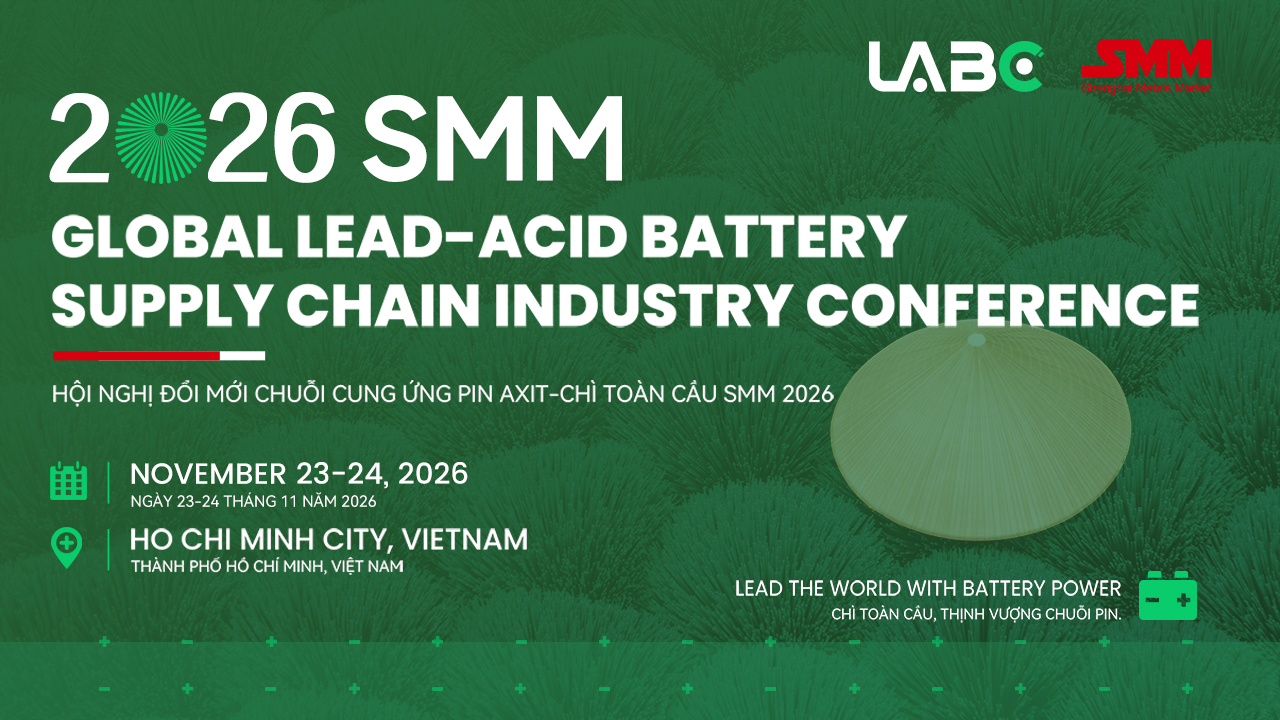 EventsNov 23 - 24, 2026 (GMT+8)Holiday Inn & Suites Saigon Airport, Ho Chi Minh City, Vietnam