

354results found for 'geopolitical conflicts'
Price
News
- H1 Review of Aluminum: Geopolitical Conflict Triggers Production Cuts, High Profits Accelerate New Projects and Restarts
SMM, July 7: In the first half of 2026, geopolitical conflicts in the Middle East emerged as one of the decisive factors affecting electrolytic aluminum prices. Prior to the Middle East events, expectations of a US dollar rate-cut cycle were bullish for non-ferrous metal prices, and overseas electrolytic aluminum prices generally maintained a firm trend in January. However, high aluminum prices suppressed demand, compounded by the impact of the domestic Spring Festival holiday, leading to larger-than-expected domestic aluminum ingot inventory accumulation. In February, domestic and overseas aluminum prices fell in tandem. On February 28, the US-Israel coalition launched a military strike against Iran, officially marking the beginning of the Middle East geopolitical conflict's impact on aluminum prices. Middle East Geopolitical Conflict Triggers Production Cuts; Supply Gap Expectations Drive Up LME Aluminum Prices Affected by the US-Iran conflict, some aluminum smelters in the Middle East experienced production cuts. Combined with the Mozambique aluminum smelter entering shutdown in March, the market expected overseas electrolytic aluminum fundamentals to face a significant supply gap. Boosted by this, overseas aluminum prices continued to climb, with the LME 3M aluminum price reaching a near three-year high of $3,787.5/tonne on June 2. The timeline of production cuts at Middle East and Mozambique aluminum smelters is as follows. In addition, power and other infrastructure in Iran was damaged, making it difficult for local aluminum smelters to sustain production. However, with no official announcements yet, SMM has made its own production cut assessment. As of mid-April, SMM estimated that the total capacity affected by production cuts in the Middle East and Mozambique could reach approximately 3.5–4.0 million tonnes. Under the impact of significant production cuts, overseas electrolytic aluminum fundamentals shifted to a deficit, with total LME aluminum ingot inventory and Japanese port aluminum ingot inventory continuing to decline. As of end-June 2026, LME global aluminum ingot inventory stood at 302,000 tonnes, down 207,000 tonnes from end-2025. As of end-May, Japanese major port electrolytic aluminum inventory was 239,000 tonnes, down 78,000 tonnes from end-2025. Amid expectations of supply tightening, ex-China aluminum premiums strengthened. As of end-June, SMM Japan MJP aluminum ingot spot premium recorded $380/mt, up 123.5% from the end of last year, and SMM Japan Q3 MJP aluminum ingot premium recorded $395/mt, up $309/mt from Q4 2025, a jump of 359.3%. SMM Europe P1020A aluminum ingot duty-paid price recorded $547.5/mt, up 62.2% from the end of last year, while SMM Europe P1020A aluminum ingot duty-unpaid price recorded $470/mt, up 64.9% YoY. SMM US Midwest DDP aluminum premium recorded 110.5¢/lb, equivalent to around $2,435/mt, up 18.2% from the start of the year, an absolute increase of approximately $374.7/mt. Although supply tightened and aluminum ingot destocking took place, downstream purchasing enthusiasm was subdued by high prices, with actual transactions in Asia persistently at a discount to the Japan MJP aluminum ingot premium. Indonesia saw a concentration of new project startups; as new projects continued to ramp up production, supply increased, and since Q2, Indonesia aluminum ingot FOB prices showed a trend of pulling back slightly. As of end-June, SMM FOB Indonesia P0610A average price recorded $270/mt, up 92.9% from the end of last year, but down 8.8% from this year's high of $296/mt. SMM FOB Indonesia P1020A average price recorded $266/mt, up 97.0% YoY, but down 8.6% from this year's high of $291/mt. Aluminum premiums in other regions maintained an overall uptrend. As of end-June, SMM CIF South Korea P1020A average price recorded $342/mt, up 132.7% from the end of last year; SMM FCA South Korea P1020A average price recorded $362/mt, up 119.4% YoY; and SMM CIF Thailand P1020A average price recorded $328/mt, up 120.9% YoY. High Profits Accelerate Electrolytic Aluminum Restarts and New Project Commissioning Under high aluminum prices, electrolytic aluminum companies enjoyed substantial profits. These high profits stimulated some idled capacity to accelerate restarts and also catalyzed more new electrolytic aluminum projects, accelerating their commissioning. In the first half of the year, three electrolytic aluminum smelters resumed idled capacity to varying degrees, and two additional smelters announced plans to restart production in 2026. Details are as follows: San Ciprián smelter in Spain safely completed restart on April 8, with total capacity of approximately 230,000 tonnes/year, representing an increase of approximately 150,000–200,000 tonnes/year compared to 2025 operating capacity. Mount Holly in the United States began restart in April, with plans to reach full capacity by end-June, involving 50,000 tonnes/year of capacity. Grundartangi smelter in Iceland began restart in April, expected to complete restart by end-July, involving 210,000 tonnes/year of capacity. Magnitude 7 Metals planned to restart potline No. 1 cells at its New Madrid aluminum smelter in the United States, with plans to add 75,000 tonnes/year of primary aluminum capacity by end-2026. Norsk Hydro indicated that the Slovalco smelter in Slovakia planned to restart partial primary aluminum production in Q4 2026, involving 75,000 tonnes/year of capacity. Regarding new projects, according to SMM estimates, total planned commissioning capacity for overseas electrolytic aluminum in 2026 is approximately 2.3 million tonnes, of which approximately 700,000 tonnes have been commissioned, with the remaining 1.6 million tonnes expected to be commissioned in the second half of 2026. For details, please follow the "SMM Overseas Electrolytic Aluminum Project Monthly Review" series. Overall, although the Middle East and Mozambique experienced large-scale production cuts in the first half of the year, the acceleration of restarts and new project commissioning partially offset the supply reduction. According to SMM estimates, total overseas electrolytic aluminum production in H1 2026 was 14.397 million tonnes, down 4.1% year-on-year, and total overseas demand was 13.612 million tonnes, down 3.1% year-on-year. Since overseas electrolytic aluminum had a net inflow of approximately 1.234 million tonnes into the domestic market in H1, the overseas electrolytic aluminum deficit in H1 is estimated at approximately 450,000 tonnes. H2 Outlook: Middle East Restarts Combined with New Project Ramp-up Increase Supply, Putting Pressure on Aluminum Prices In June–July, the Middle East geopolitical situation showed no clear signals of further deterioration, and news of restarts emerged from Middle East aluminum smelters that had undergone production cuts. On July 2, EGA announced that its Al Taweelah plant had made progress in restart efforts: anode removal work for all electrolytic cells had been completed; cell cleaning was approximately 90% complete; and over 20% of solidified aluminum blocks inside cells had been cleared. On May 26, the first electrolytic cell was successfully restarted; as of July 2, 89 cells were in operation (out of a total of 1,262 cells), equivalent to approximately 110,000 tonnes of capacity. In addition, Aluminum Bahrain and Qatalum were also expected to gradually begin restarts. With Middle East restarts combined with continued ramp-up of new projects, the global electrolytic aluminum balance is expected to shift toward a surplus by Q4 2026.
Jul 7, 2026 16:48 - [SMM Analysis] Surging Demand in H1 2026 Drove Industry Expansion, and Rising Anode Prices and Volumes Opened a Recovery Window
[SMM Analysis: Surging Demand in H1 2026 Drives Industry Expansion, Anode Volume and Price Both Rise, Welcoming Recovery Opportunities] SMM July 3: In H1 2026, a surge in downstream demand drove steady improvement in the anode industry’s prosperity, significantly releasing overall market vitality.
Jul 3, 2026 13:21 - [SMM Analysis] Hydrogen Energy Incorporated into Primary Energy Data Classification: Policy Dividends Materialized, Industrial Landscape Ushered in Restructuring.
On June 30, 2026, the National Energy Administration issued the Guide to Data Classification and Grading for the Energy Industry (2026 Edition), under which hydrogen energy was officially classified as a first-level energy data category, positioned alongside traditional fossil fuels such as coal, crude oil, and natural gas. This marks the end of the domestic hydrogen industry's single demonstration phase and its full entry into a development cycle characterized by large-scale, standardized systems. This top-level data system adjustment reshapes hydrogen energy's national strategic positioning, and by leveraging a unified data management framework to link the entire chain of green hydrogen cost reduction, storage and transportation infrastructure, and diversified applications, the industry is expected to usher in a new expansion cycle. I. Policy Iteration: The Strategic Status of Hydrogen Energy Achieves a Hierarchical Leap (A) Core Basis for the Document's Issuance The Guide serves as a supporting detailed rule for the implementation of the Data Security Law and the Administrative Measures for Energy Industry Data Security (Trial), delineating a total of 12 first-level energy data categories, including coal, oil and gas, and hydrogen energy. For the first time, hydrogen energy has been incorporated into the basic energy data sequence, integrating the hydrogen energy industry into the national unified energy security regulatory system. (B) Policy Evolution Trajectory In 2022, the Medium and Long-Term Plan for the Development of the Hydrogen Energy Industry (2021-2035) legally affirmed the energy attribute of hydrogen energy for the first time, setting the goal of diversified commercial applications by 2035. With the implementation of this 2026 data classification document, hydrogen energy has completed its identity transition from a "demonstration and pilot industry" to a "national basic energy category." Industrial development has shifted from being driven purely by policy subsidies to a new phase where policy guidance, scenario validation, and market operations run in parallel. (C) Three Supporting Logics of the Top-Level Strategy Energy Security: Global geopolitical conflicts have intensified fluctuations in oil and gas imports. In 2025, China's dependence on foreign crude oil was 72.3%, and that on foreign natural gas was 43.8%. Hydrogen energy, produced from renewable resources such as wind, solar, and hydropower, can substantially reduce dependence on imported fossil energy while simultaneously fulfilling the carbon peaking and neutrality targets. Correction of Domestic Supply-Demand Mismatch: In 2024, China's total hydrogen production stood at 37.28 million mt, firmly ranking first in the world. Domestic planned green hydrogen capacity accounts for 52% of the global total planned green hydrogen capacity, yet the average annual operating rate of commissioned green hydrogen facilities is only 23.6%, with substantial electrolyzer capacity remaining idle. Unified data standards will compel the industry to shift from blindly expanding hydrogen production capacity toward demand-side development oriented to matching downstream consumption scenarios. Breakthrough in Global Hydrogen Competition: The EU will implement its Hydrogen Strategy Act in 2026, and the US allocates over $9 billion annually in hydrogen industry subsidies. Europe and the United States are accelerating their efforts to seize the discourse power in hydrogen standards and trade. By perfecting its local standard system through hydrogen energy data classification management, China aims to shore up its industrial digital shortcomings and enhance the international competitiveness of its hydrogen energy projects and equipment exports. II. Industrial Empowerment Value of the First-Level Hydrogen Data Classification System (A) Establishing a Bottom Line for Whole-Chain Data Compliance and Security The Guide uniformly categorizes all energy data into three control levels: general, important, and core, covering the entire process of hydrogen production, storage, transportation, refueling, and utilization. It specifies mandatory control rules: Geographic infrastructure data for hydrogen refueling stations, hydrogen production bases, and pipeline networks with coordinate accuracy ≤100 meters is classified as important data, with strict limits on external disclosure. Real-time operational control commands for water electrolysis hydrogen production units and sensor data from high-pressure storage and transportation equipment are classified as core data, with unencrypted external transmission prohibited. Electricity load data from wind- and solar-power integrated new energy plants supporting electrolytic hydrogen production is protected under a tiered scheme, with electricity consumption data from special-grade green electricity hydrogen projects implementing the highest protection standards. All enterprises are required to establish full-life-cycle data ledgers, mandatorily use commercial encryption technology, and simultaneously implement the protection requirements for Classified Protection of Cybersecurity 2.0 and critical information infrastructure, in order to avert risks such as the leakage of monitoring data from coal chemical and hydrogen plants or cyber attacks on industrial control systems. (B) Restoring Industry Investment Confidence and Reducing Uncertainty in Market-Oriented Development By year-end 2025, a total of 627 wind- and solar-power water electrolysis hydrogen projects had been filed nationwide, with a planned total investment exceeding 860 billion yuan. However, only 148 projects actually commenced construction, yielding a comprehensive construction start rate of 23.6%. The core pain point of the industry's sluggish investment was the absence of a unified statistical scope, cost accounting method, and operational supervision standard for hydrogen energy, causing capital to remain on the long-term sidelines. This policy improves the investment environment in three aspects: The National Energy Administration concurrently released unified hydrogen energy data statistical specifications, eliminating the need for enterprises to build their own differentiated data systems and reducing per-project digital compliance costs by 30%-45%. It is also aligned with 19 current draft national hydrogen standards for public comment, achieving bidirectional unification of data standards with equipment, storage and transportation, and refueling technology standards, thereby boosting the export recognition of domestically produced electrolyzers and hydrogen storage vessels. Standardized data furnishes financial institutions with a unified basis for cost estimation and project revenue assessment, substantially diminishing investment risks arising from policy changes. Supporting policies simultaneously tightened industry assessment: In April 2026, the National Energy Administration clarified dynamic elimination mechanisms for nine major hydrogen pilot regions. Projects are assessed monthly on economic viability based on operational data after commissioning; those without a stable profit model for six consecutive months are directly withdrawn, marking the industry's complete departure from the era of extensive subsidies. (III) Enabling Data Interoperability Across the Industry Chain to Revitalize Idle Hydrogen Capacity The Guidelines categorize a secondary-level hydrogen data catalog, covering seven segments: planning, engineering construction, hydrogen production, tube trailer storage and transportation, hydrogen refueling, transportation/industrial consumption, and technological R&D, thereby establishing a framework for data interoperability across the entire industry chain. Benchmark practice: Rongcheng New Energy built China’s first system for capitalizing hydrogen entire industry chain data assets. Its hydrogen big data platform aggregates data from all dimensions including hydrogen production units, tube trailers, hydrogen refueling stations, heavy truck operations, and equipment maintenance, accumulating a total of 21.08 billion real-time operational data entries. Leveraging cross-segment data synergy, the enterprise reduced its overall hydrogen production, storage, and transportation costs by 12.7% and lowered equipment idle rate by 18%. Meanwhile, the policy mandates that enterprises holding important or core hydrogen data undergo at least one security risk assessment per year. Cross-border data transfers of hydrogen technology and capacity data, as well as cross-enterprise data flows, must be preceded by a specialized risk review. This not only controls cross-border data security but also delineates a clear compliance pathway for domestic enterprises’ hydrogen project cooperation outside China, facilitating the export of green hydrogen equipment and complete hydrogen production processes. III. Conclusion Elevating hydrogen to a first-level energy data category is a landmark policy move that incorporates hydrogen into the management of the fundamental energy system. On one hand, through three-tier data security controls, it fills the gaps in digital regulation of hydrogen and mitigates cybersecurity risks in the industry. On the other hand, it unifies industry standards for statistics, operations, and cost data, alleviating three core pain points: idle green hydrogen capacity, investment wait-and-see attitude, and fragmentation of the industry chain. Against the backdrop of intensifying global hydrogen competition and China's dual goals of energy supply security and carbon reduction, data standardization will accelerate the large-scale deployment of green hydrogen, the comprehensive layout of storage and transportation pipeline networks, and propel hydrogen from a niche demonstration track to a core emerging industry that supports China's energy transition and participates in global energy competition.
Jul 2, 2026 20:45 - "Midea Addresses European Sales Surge and Analyzes Upstream-Downstream 'Temperature Gap' Amid Industry Shifts"
"The heatwave has significantly driven sales growth, especially the PortaSplit air conditioner, which has sold out in some sales channels."
Jun 29, 2026 16:17 - The Transformation and Development Path of the Antimony Industry amid Centennial Changes [Minor Metal Conference]
June 26, at the 2026 SMM (14th) Minor Metal Industry Conference—Antimony Industry Forum, hosted by SMM Information & Technology Co., Ltd. (SMM) and with title sponsorship from Guangxi Yusheng Germanium High-tech Co., Ltd., , Luo Chengcai, General Manager of Hunan Hsikwangshan Twinkling Star Antimony Import & Export Co., Ltd., shared with participants the “Path of Transformation and Development for the Antimony Industry Amid Century-Long Changes.” I. Reshaping the Antimony Industry Landscape Amid Century-Long Changes Policy-driven: Export Controls Trigger Profound Market Fragmentation ►Markets outside China: Rapid Capacity Expansion Driven by High Prices Mine supply growing rapidly: The Santar mine in Myanmar has become a key variable, with monthly production reaching 1,000 mt of metal content and strong supply resilience. Smelting capacity deployment accelerates: Southeast Asian countries such as Thailand, Myanmar, and Vietnam are rapidly boosting smelting capacity, with total ex-China capacity already reaching about 40,000 mt/year. Policy-driven: Supply-demand imbalance in the Chinese market Supply side extremely loose: In 2026, imports in the first four months alone have already matched the total for the full year 2025, creating unprecedented supply pressure on the market. Demand side highly competitive: Prices have fallen sharply. Geopolitical shocks: The Middle East war has caused irreversible damage ►Flame retardant industry: Short-term pain Bromine prices surged from 30,000 to 130,000/mt, petrochemical raw material prices jumped over 50%, and poor cost pass-through led to widespread industry losses, with production cuts of around 30%. ►Polyester industry: Under pressure from both costs and production Affected by wild swings in upstream petrochemical raw material prices, the industry's production costs have climbed sharply; with weak end-use demand, it was forced to cut production by about 30%, sharply increasing operating pressure. ►PV glass: Short-term cooling but long-term positive outlook Affected by the cancellation of module export tax rebates and uncertainties in the Indian market, short-term demand has weakened; however, the broader trend of global energy transition remains unchanged, and long-term growth potential persists. II. Opportunities Amid Crisis: New Opportunities for Transformation and Development Solid fundamentals: Consolidation and optimization in traditional sectors ►High-performance flame retardant materials Irreplaceability: Still cannot be effectively replaced in engineering plastics such as ABS and XPS. Market growth: China's annual demand for flame retardants reaches 1.5 million mt, with bromine-antimony flame retardants accounting for 35%, and demand is steadily increasing. ►Polyester industry Core catalyst: Over 90% of polyester units use antimony-based catalysts, securing a solid position. New growth areas: Industrial textiles are growing rapidly in sectors such as medical and new energy, with an average annual growth rate exceeding 10%. ►PV Glass Core Refining Agent: Holding over 80% market share, it delivers high efficiency with controllable costs. Strong Momentum Outside China: Driven by the global energy transition, demand in markets outside China remains robust, with countries such as India and Indonesia building plants on a large scale. Summary: The steady demand structure across the three traditional pillar sectors—flame retardants, polyester, and PV—combined with the continued expansion of emerging markets outside China, forms a solid and reliable foundation for the antimony industry. New Growth Driver: Condensed Matter Batteries, the biggest growth engine going forward ►Technical Pathway: Enterprises such as CATL are planning antimony-based sodium-ion batteries, in which the passenger vehicle segment will use a calcium-antimony composite material as the negative electrode. ►Demand Estimate: CATL has planned 60 GWh of capacity, with 24 GWh allocated to passenger vehicles. Calculated at 1,200 mt of antimony per GWh, annual demand could reach as much as 30,000 mt at full production. This represents a massive potential market. New Growth Driver: Rapid Growth in High-Value Applications ►AI Computing Power: The explosive growth of AI servers and data centers has driven antimony consumption in the semiconductor sector to over 2,000 mt. ►Military Sector: High-purity antimony is a critical material for infrared detection and missile guidance, commanding a price premium of 3 to 5 times. Against a backdrop of geopolitical conflicts, military-related orders surged 80% YoY. ►Lead-Acid Batteries: Used as a lead-antimony alloy in positive electrode grids, antimony significantly enhances battery performance. China's antimony consumption in this segment stands at approximately 13,000–15,000 mt, with global consumption at around 22,000 mt, providing a stable foundation. III. Value Normalization: Future Trends and Strategic Outlook Supply Side: Resource Constraints and Policy Regulation Become the New Normal ►Non-renewable resources and a tight supply are long-term trends China's domestic reserves are depleting and grades are declining, with production falling year by year. Incremental supply from outside China is limited and unstable. ►Domestic production restrictions and resource consolidation are the overriding trends The global static reserve-to-production ratio for antimony is less than 10 years, highlighting its strategic value. Strengthening environmental protection, implementing production restrictions, and promoting resource consolidation are the inevitable path for the nation. Market Mechanisms: Moving Toward Stability and Harmonious Coexistence Conclusions and Outlook • The antimony industry stands at a new historical starting point. Short-term market fluctuations and price pains are the necessary "drastic remedies" during the process of industrial restructuring. • We firmly believe that with the tightening of the supply side, the explosion of emerging demand, and the strategic emphasis at the national level, antimony's strategic value will be fully realized and will eventually return to its intrinsic worth in the tug-of-war between sellers and buyers. • Let us join hands and work together to propel the antimony industry toward a new era of stable, balanced, and high-quality development. The antimony industry is bound to have a bright future!
Jun 29, 2026 08:23 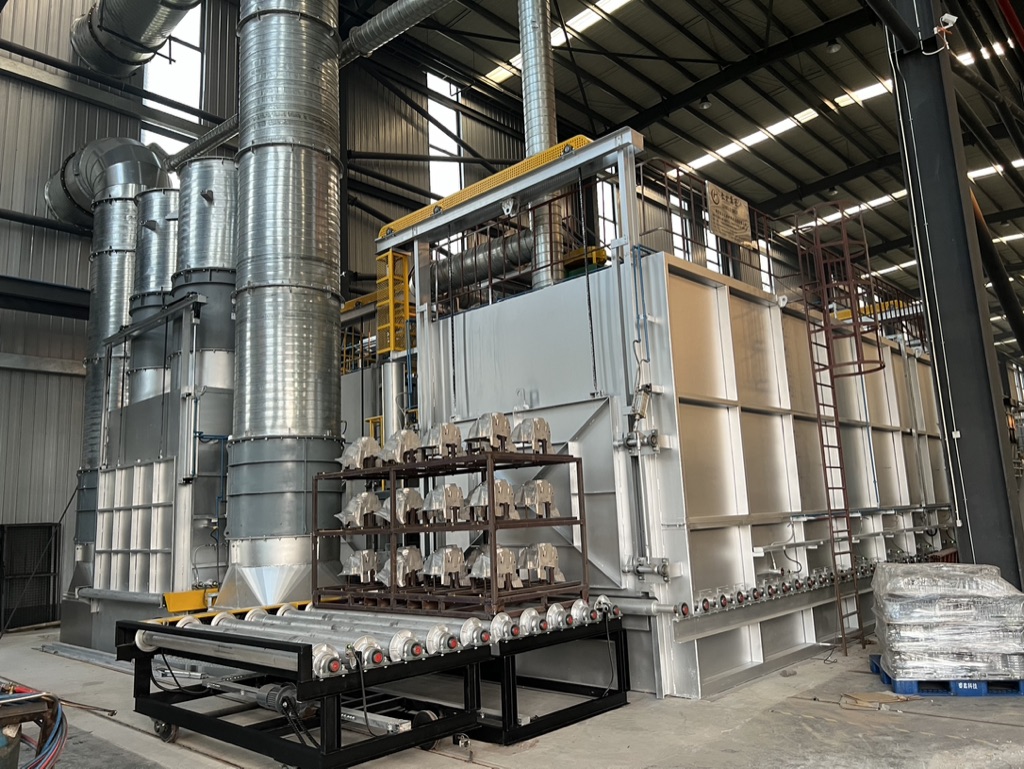 Southeast Asia 6063 Aluminum Billet Market Price System Accelerates Segmentation【SMM Analysis】
With the continued expansion of aluminum processing and downstream industries in Southeast Asia, regional aluminum billet production, consumption and trade markets have attracted growing attention. Malaysia, Thailand and Vietnam are not only important aluminum billet production and consumption hubs in Southeast Asia, but also play a key role in regional aluminum billet trade flows. Markets such as Indonesia, the Philippines and Cambodia, meanwhile, are still at a stage where local processing capacity development and demand for imported aluminum billet are growing simultaneously. Since March 2026, the escalation of geopolitical conflicts in the Middle East has caused significant disruption to the global aluminum supply chain. On the one hand, uncertainty over the supply of primary aluminum and aluminum processed products from the Middle East has increased, pushing up procurement interest in primary aluminum, aluminum billet and secondary aluminum resources across Asian markets outside China. On the other hand, fluctuations in crude oil prices and ocean freight costs have further lifted regional aluminum processing and trading costs. Against this backdrop, LME aluminum prices, Asian regional premiums and Southeast Asian local aluminum billet processing fees have all fluctuated to varying degrees. At the same time, changes in the SHFE/LME price ratio have periodically affected the export arbitrage window for Chinese aluminum processed products. When overseas aluminum prices are stronger than domestic prices and export margins improve, Chinese aluminum processed products and some processing-trade resources show greater willingness to flow into the Southeast Asian market, creating certain disruptions to local billet supply-demand dynamics and quotations. When the price spread narrows, however, regional pricing returns to a framework driven jointly by local supply, imports from the Middle East and other overseas resources. Trade Flows From the perspective of export destinations, the flow of Southeast Asian products under HS760120 is relatively concentrated. In 2025, the top ten export destinations for Southeast Asian HS760120 products totaled around 1.2695 million mt, accounting for approximately 93.3% of total Southeast Asian exports. China was the largest destination, with full-year exports of around 602,100 mt, accounting for approximately 44.3%. Japan, Vietnam and India followed, with around 149,300 mt, 143,500 mt and 111,700 mt respectively, accounting for approximately 11.0%, 10.5% and 8.2%. It should be noted that HS760120 includes primary aluminum alloy ingots, secondary aluminum alloy ingots, other aluminum alloy billets and some cast aluminum alloy products. Therefore, this data mainly serves as a reference for observing trade flows of unwrought aluminum alloys and aluminum alloy billets in Southeast Asia, and cannot be directly equated with 6063 aluminum billet export volumes. Entering 2026, affected by the escalation of the Middle East conflict, uncertainty in the global supply chain for primary aluminum and aluminum processed products increased, and trade flows of aluminum raw materials and aluminum billets in Asia saw certain adjustments. Data shows that total Southeast Asian HS760120 exports fell to around 88,800 mt in February 2026, before rebounding to around 110,700 mt in March and further increasing to around 116,600 mt in April. From February to April, cumulative growth reached approximately 31.2%. In terms of destination changes, China remained the largest export destination, although exports to China declined in April compared with March. India, South Korea, Taiwan, China and Japan showed more obvious increases from March to April. Among them, exports to India rose from around 8,200 mt in February to around 15,700 mt in April; exports to South Korea increased from around 2,400 mt in February to around 10,000 mt in April; exports to Taiwan, China climbed from around 1,500 mt in February to around 4,100 mt in April; while exports to Japan recovered to around 13,700 mt in April. Overall, the rebound in Southeast Asian HS760120 exports from February to April 2026 reflected, on the one hand, the gradual recovery of regional trade after the Chinese New Year holiday. On the other hand, it may also have been related to Asian buyers increasing procurement of Southeast Asian regional resources and supplementing alternative supply sources after the Middle East conflict raised supply risks for overseas primary aluminum, aluminum billet and secondary aluminum. Considering that China, India, Japan, South Korea and Taiwan, China are all important aluminum processing and consumption markets in Asia, the increase in Southeast Asian product flows to these markets indicates that regional unwrought aluminum alloys and aluminum alloy billets have played a certain supplementary and balancing role in trade during periods of supply chain disruption. For the 6063 aluminum billet market, this trend cannot be directly equated with changes in 6063 aluminum billet exports, but it can serve as an important reference for assessing the circulation activity of aluminum billets and aluminum alloy raw materials in Southeast Asia, regional substitution demand and fluctuations in processing fees. Market and Price Analysis With the continued expansion of aluminum processing and downstream enterprises in Southeast Asia, the situation of 6063 aluminum billet differs across countries due to variations in processing levels and downstream demand. Overall, Malaysia and Thailand are the main aluminum billet producing countries in the region and also have certain local consumption capacity. Vietnam’s aluminum processing capacity is growing rapidly, but some local quotations are still mainly for non-homogenized cast billets. Markets such as Cambodia and the Philippines remain at a stage where local processing capacity development coexists with demand for imported aluminum billet. In terms of homogenization status, mainstream 6063 aluminum billet quotations in Malaysia and Thailand usually already include homogenization treatment, and the relevant homogenization cost is mostly included in the aluminum billet processing fee quoted by producers. A small number of non-homogenized 6063 aluminum billet quotations also exist in the Thai market, which can be used to observe the basic processing cost of cast billets. The situation in Vietnam is different. As some enterprises mainly quote non-homogenized cast billets, the apparent processing fee for 6063 aluminum billet is usually around $50-100/mt lower than homogenized quotations in Malaysia and Thailand. Aluminum billet homogenization is an important heat-treatment process in the production of 6063 aluminum billet. It usually refers to placing cast aluminum billets into a homogenizing furnace for heating, holding and cooling treatment, so that the internal composition distribution of the billet becomes more uniform and microstructural segregation formed during casting is improved. For 6063 aluminum billet, homogenization helps improve stability in the subsequent extrusion process, reduce extrusion cracking, surface defects and performance fluctuations, and improve the surface quality and yield of extruded profiles. Therefore, in the aluminum extrusion value chain, homogenized aluminum billet generally has higher use value than non-homogenized cast billet. According to SMM market research, since March 2026, under the influence of factors such as the escalation of Middle East geopolitical conflicts, tighter supply of overseas primary aluminum and aluminum billet resources, and fluctuations in energy and ocean freight costs, 6063 aluminum billet processing fees in major Southeast Asian countries rose to varying degrees. Among them, processing fees for homogenized 6063 aluminum billet in Malaysia and Thailand once increased from the previous $200-250/mt to $250-300/mt, with some high-end quotations even exceeding $300/mt during the peak period. As the Middle East situation eased periodically in mid-June, 6063 aluminum billet processing fees in Malaysia and Thailand declined. At present, mainstream 6063 aluminum billet processing fees in Malaysia have stabilized around $250/mt, and mainstream processing fees for homogenized aluminum billet in Thailand have also stabilized around $250/mt. However, due to differences in raw material structure, product status and quotation basis among enterprises, processing fees still show a wide range. In Thailand, some 6063 aluminum billet processing fees have fallen to as low as around $100-150/mt. In Vietnam, from March to June, 6063 aluminum billet processing fees rose from the previous $150-200/mt to $200-250/mt, before falling back to around $200/mt in mid-June. In addition, from the perspective of the imported aluminum billet arrival market, from May to June, SMM learned that CIF Thailand and Malaysia 6063 aluminum billet premiums/discounts were mostly around a premium of $100/mt, while some low-priced resources even fell to a discount of around $100/mt. These resources were mainly 6063 aluminum billets processed in China under processing trade and then re-exported to the Southeast Asian market. Amid cost advantages and an increase in cargo inflows at certain stages, these resources exerted some impact on the local aluminum billet market in Southeast Asia. From March to April, affected by Middle East geopolitical conflicts, uncertainty over some Middle Eastern aluminum supply increased. Asian buyers in India, Japan, South Korea and Taiwan, China showed higher interest in Southeast Asian aluminum billets and related aluminum alloy resources, driving some Southeast Asian aluminum billet resources to flow out of the region and supporting stronger regional quotations. However, entering May and June, as Chinese aluminum billets flowed into markets such as Thailand and Malaysia through processing trade and re-export channels, competition pressure faced by local Southeast Asian aluminum billet plants increased. SMM research shows that sales pressure for some 6063 aluminum billet producers in Malaysia and Thailand has increased compared with earlier levels, and low-priced imported arrival resources have put certain downward pressure on local ex-works processing fees and the transaction price center. Outlook for Southeast Asian Aluminum Processing Looking ahead, the Southeast Asian 6063 aluminum billet market will continue to evolve around regional processing capacity expansion, import substitution, changes in raw material structure and overseas low-carbon requirements. In the short term, Malaysia, Thailand and Vietnam will remain the core markets for 6063 aluminum billet production and consumption in Southeast Asia. Malaysia and Thailand have relatively mature local billet casting and homogenization capacity, and their pricing systems are closer to a quotation logic based on “LME + regional premium + homogenized processing fee.” Vietnam, meanwhile, still has room for growth in aluminum billet demand as aluminum extrusion and downstream processing capacity improves, but the quotation basis for homogenized and non-homogenized products still needs to be further differentiated. Although local sample coverage in markets such as Indonesia, the Philippines and Cambodia remains limited at present, with the advancement of local aluminum processing projects, future demand for imported aluminum billet, secondary aluminum billet and intra-regional trade flows will remain worth monitoring. In the medium to long term, CBAM and overseas customers’ low-carbon procurement requirements may further drive segmentation in the price system of the Southeast Asian aluminum value chain. For the Southeast Asian aluminum billet market, the impact of CBAM may not necessarily be directly reflected through large-scale exports of aluminum billet itself to Europe, but may instead be transmitted through the export value chain of aluminum profiles, window and door profiles, industrial profiles and other deep-processed products. In the future, when European customers procure aluminum processed products from Southeast Asia, they may pay greater attention to raw material sources, the ratio of primary aluminum, in-house new scrap and aluminum scrap, carbon emission data during production, supply chain traceability and third-party verification capability. Against this backdrop, enterprises with stable homogenization capacity, clear raw material structures, the ability to provide emissions data and low-carbon material options may gain stronger advantages in securing export orders and price negotiations. From the perspective of the price system, CBAM may not immediately drive a one-sided increase in Southeast Asian 6063 aluminum billet processing fees, but it will raise market requirements for differentiating “product status” and “raw material attributes.” In the future, price spreads between liquid aluminum direct-cast billets, remelted aluminum ingot billets and remelted aluminum scrap billets, price spreads between homogenized and non-homogenized aluminum billets, and differences between CIF imported aluminum billet premiums and local ex-works processing fees are all expected to become key areas of market attention. As the aluminum processing industry in Southeast Asia continues to expand, the 6063 aluminum billet market may gradually develop from relatively broad trade quotations in the past toward a more segmented price system differentiated by country, alloy grade, homogenization status, raw material attribute and trade term. SMM Price Points Against the backdrop of regional processing expansion and low-carbon trends, Southeast Asian 6063 aluminum billet processing fees have gradually become one of the key price indicators followed by the market. To help enterprises better track price changes in the Southeast Asian 6063 aluminum billet market, SMM, after market research and improvement of its pricing methodology, will add a series of Southeast Asian 6063 aluminum billet processing fee, calculated reference price and CIF premium/discount price points starting from 3rd July 2026 (Friday) onward for market reference. The Southeast Asian 6063 Aluminum Billet Premium price points will be updated on a weekly basis every Friday at 12:00 noon Kuala Lumpur time, Malaysia, which is the same as Beijing time, GMT+8. Due to differences in settlement methods among enterprises, the full aluminum billet price may vary. For reference, it can be estimated using the following formula: 【LME Official Cash Settlement Price + Quarterly MJP + 6063 Aluminum Billet Processing Fee】. Details of the relevant price points are as follows: Cambodia 6063 Aluminum Billet (Homogenized) Premium, ex-works Cambodia, USD/tonne Malaysia 6063 Aluminum Billet (Homogenized) Premium, ex-works Malaysia, USD/tonne Thailand 6063 Aluminum Billet (Homogenized) Premium, ex-works Thailand, USD/tonne Thailand 6063 Aluminum Billet (Non-homogenized) Premium, ex-works Thailand, USD/tonne Vietnam 6063 Aluminum Billet (Non-homogenized) Premium, ex-works Vietnam, USD/tonne The SMM Southeast Asian 6063 Aluminum Billet price points will be updated on a daily basis every working day at 12:00 noon Kuala Lumpur time, Malaysia, which is the same as Beijing time, GMT+8. The SMM calculated reference price will be derived using the formula: 【LME Official Cash Settlement Price (D-1) + Quarterly MJP + Latest 6063 Aluminum Billet Processing Fee】. Based on this, SMM will publish low-end, high-end and average calculated reference prices. Details of the relevant price points are as follows: SMM Cambodia 6063 Aluminum Billet (Homogenized), ex-works Cambodia, USD/tonne SMM Malaysia 6063 Aluminum Billet (Homogenized), ex-works Malaysia, USD/tonne SMM Thailand 6063 Aluminum Billet (Homogenized), ex-works Thailand, USD/tonne SMM Thailand 6063 Aluminum Billet (Non-homogenized), ex-works Thailand, USD/tonne SMM Vietnam 6063 Aluminum Billet (Non-homogenized), ex-works Vietnam, USD/tonne At the same time, to provide a reference comparison for the Southeast Asian 6063 aluminum billet processing and trading market, SMM will also launch CIF Southeast Asia 6063 Aluminum Billet Premium price points for market reference. The CIF Southeast Asia 6063 aluminum billet premium/discount price points will be updated on a weekly basis every Friday at 12:00 noon Kuala Lumpur time, Malaysia, which is the same as Beijing time, GMT+8. Due to differences in settlement methods among enterprises, the full imported aluminum billet price may vary. For reference, it can be settled using the following formula: 【LME Official Cash Settlement Price + Quarterly MJP + 6063 Aluminum Billet Premium/Discount】. Details of the relevant price points are as follows: CIF Thailand 6063 Aluminum Billet (Non-homogenized) Premium Summary Overall, the Southeast Asian 6063 aluminum billet market is currently at a stage where regional processing capacity expansion, trade flow adjustments and price system segmentation are taking place simultaneously. In the short term, Middle East geopolitical conflicts, changes in overseas primary aluminum and aluminum billet supply, and fluctuations in energy and ocean freight costs will continue to affect Southeast Asian aluminum billet processing fees and import premiums/discounts. At the same time, changes in the SHFE/LME price ratio will also continue to periodically affect the willingness of Chinese aluminum processed products and related aluminum billet resources to flow into the Southeast Asian market. From the perspective of market structure, Malaysia, Thailand and Vietnam remain the core markets for 6063 aluminum billet production, consumption and trade circulation in Southeast Asia. Among them, Malaysia and Thailand have relatively mature pricing systems for homogenized aluminum billet, while Vietnam still requires separate differentiation in price basis due to the relatively high share of non-homogenized cast billet quotations. Going forward, as local processing capacity develops in markets such as Indonesia, the Philippines and Cambodia, changes in regional imported aluminum billet, secondary aluminum billet and local processing fees will also become areas worth continuous tracking. In the medium to long term, CBAM and overseas low-carbon procurement requirements will further increase the importance attached by the Southeast Asian aluminum processing value chain to raw material structure, homogenization capability, carbon emission data and supply chain traceability. Although CBAM may not necessarily drive an immediate one-sided increase in 6063 aluminum billet processing fees, it will prompt the market to more clearly distinguish between different product bases, including liquid aluminum direct-cast billets, remelted aluminum ingot billets, remelted aluminum scrap billets, as well as homogenized and non-homogenized products. Against this backdrop, the launch of SMM Southeast Asia 6063 aluminum billet processing fee, calculated reference price and CIF premium/discount price points will help the market more clearly track changes in regional aluminum billet costs, import substitution space, trade flow adjustments and price differentiation trends under the low-carbon transition.
Jun 26, 2026 14:36
Events
 WebinarMar 24, 16:00 - 23:59 (GMT+8)