

7940results found for 'energy'
Price
News
- Hydro Energi and Varberg Energi Sign 18-Month Hybrid Power Agreement for Stable Renewable Supply
[SMM Aluminum Express News] Hydro Energi and Sweden’s Varberg Energi have signed an 18-month pilot hybrid power purchase agreement combining wind and solar generation with energy storage to provide a more stable renewable electricity supply for industrial use. The agreement covers a total of 10 GWh of electricity in Sweden’s SE3 price area, with deliveries having started in July 2026. The pilot is designed to test whether different renewable generation sources and energy storage can be combined to reduce the variability associated with intermittent wind and solar power. Hydro said the arrangement will serve as a proof of concept, with the potential for similar hybrid supply structures to be used more broadly to provide industry with long-term, competitive and sustainable electricity. The companies will also exchange operational knowledge on how generation and storage technologies can be optimised for industrial demand.
Aug 19, 2026 16:57 - [CPCA Branch: National new energy passenger vehicle retail sales at 399,000 units during Aug 1-16, down 15% YoY]
According to the CPCA Branch, from August 1 to 16, national new energy passenger vehicle retail sales reached 399,000 units, down 15% YoY and up 1% MoM. Year-to-date cumulative retail sales reached 6.067 million units, down 13% YoY. From August 1 to 16, national new energy passenger vehicle wholesale by producers reached 425,000 units, down 3% YoY and up 6% MoM. Year-to-date cumulative wholesale reached 8.673 million units, up 7% YoY.
Aug 19, 2026 16:21 - South Africa’s PGM Mining Communities Face Digital Divide Despite Technology Boom
[SMM Flash] South Africa’s PGM-rich mining communities face a widening digital divide despite supplying minerals increasingly important to the global technology and energy transition. Communities in Marikana and Kroondal in North West continue to experience limited fibre connectivity, unreliable networks and high mobile-data costs. For young people facing high unemployment, inadequate internet access is becoming a barrier to job applications, digital skills development and participation in the broader digital economy. The situation highlights concerns over how the benefits of the digital and energy transitions are distributed across mineral supply chains. While data centres and technology companies expand infrastructure in major cities, PGM-producing communities remain comparatively underserved. Mining companies have introduced initiatives including digital resource centres and free Wi-Fi at schools, but residents say coverage remains inadequate. The disparity raises a broader question over the meaning of a just transition: communities supplying the minerals that support AI, data centres and clean-energy technologies should also have meaningful access to the digital opportunities created by these industries.
Aug 19, 2026 16:13 - Shanghai Yangshan Port completes 8,000 mt green methanol bunkering, setting a new global single-operation record.
Recently, Shanghai Yangshan Port held a green methanol bunkering event. Shanghai Electric, together with Shanghai International Port Group and French CMA CGM Group, completed a batch bunkering of 8,000 mt of green methanol, setting a new world record for the largest single green methanol bunkering volume and marking the project's further progress into the stage of continuous stable production and large-scale delivery. The green methanol used in this bunkering was supplied by Shanghai Electric's Taonan Green Methanol Project. The new breakthrough in bunkering volume reflects that China's green fuel industry is enhancing its coordination capabilities across production, transportation, storage, and port application, and provides practical support for the shipping industry in expanding the use of low-carbon fuels. In June this year, Shanghai, Jilin, and Liaoning jointly launched a green fuel transport corridor, creating a complete logistics chain from production in Taonan, Jilin, through transshipment and storage at Dalian Port in Liaoning, to bunkering at Shanghai Port. The successful bunkering of 8,000 mt of green methanol this time marks the first large-scale validation of the corridor since it became operational. Currently, Shanghai is accelerating the construction of an international shipping green fuel bunkering center, certification center, and trading center. This batch bunkering serves as both a staged demonstration of the construction achievements and a new opportunity to further deepen cooperation between the green fuel supply chain and industry chain. As the main production site for green methanol, Shanghai Electric's Taonan Project relies on the abundant wind energy and biomass resources in Jilin. It employs a complete set of process systems and core equipment independently developed by Shanghai Electric, including pure-oxygen pressurized fluidized bed biomass gasification technology, to build the world's first large-scale plant coupling green electricity with biomass to produce green methanol. Currently, the project has entered the stage of continuous stable production and batch delivery, and can continuously supply green methanol products based on the actual needs of vessels at the Shanghai International Shipping Center. The project's stable supply further verifies the full-chain operational capability of green methanol from the production end, through the transportation end, to the port bunkering end. Looking ahead, Shanghai Electric will continue to strengthen industrial collaboration with partners such as the National Green Development Fund, and promote technological innovation and project construction across the entire chain of green fuel production, storage, transportation, and application. Meanwhile, the company will work with relevant parties to accelerate the construction of the green hydrogen coupled with biomass integrated green methanol-oil project in Taonan, enhancing the large-scale supply capability of green fuels for the shipping and aviation sectors. This event was jointly completed by Shanghai Electric, Shanghai International Port Group, and CMA CGM Group. Representatives from relevant government departments, industry associations, scientific research institutions, financial institutions, and industry chain cooperation partners witnessed the bunkering activity. According to the plan, the second phase of Shanghai Electric's Jilin Taonan green hydrogen coupled with biomass integrated green methanol-oil project will officially start construction on August 20 and is expected to be fully completed and put into operation in 2028. After commissioning, the project will have an annual capacity of 200 kt of green methanol and 10 kt of sustainable aviation fuel, providing more fuel security for the green and low-carbon transition of the shipping and aviation sectors.
Aug 19, 2026 14:56 - HORIBA launched four standard test platforms for China, accelerating R&D validation for hydrogen energy equipment.
Recently, HORIBA has officially launched four standard fuel cell and electrolysis test station models for the Chinese market, covering five mainstream technology routes: PEMFC, SOFC, SOEC, PEMEC and AEMEC. These systems can be used to evaluate the performance, efficiency, and durability of single cells and single electrolysis cells. The simultaneous launch of these four standard models represents a key initiative by HORIBA to accelerate product delivery and respond to the R&D demands of the Chinese hydrogen energy sector. Building on the performance strengths of existing test platforms, these systems adopt standardized designs to shorten deployment lead time, providing stable data support for basic research, performance validation, and advanced studies. Covering five technology routes with four products requires the enterprise to possess comprehensive process expertise, proven engineering solutions, and a large-scale manufacturing system. HORIBA stated that the concentrated launch of standard models is a direct response to Chinese market demand and also demonstrates its R&D and manufacturing capabilities in the fuel cell and electrolysis testing field. These products were developed and manufactured by HORIBA FuelCon in Germany. Founded in 2001, HORIBA FuelCon has been deeply engaged in the fuel cell and electrolysis testing field for over 25 years. Its product range encompasses benchtop, large-scale, and containerized configurations, with power ratings spanning from 100 watts to 5 megawatts. The company has long served major fuel cell and electrolysis enterprises and research institutions worldwide. In September 2022, HORIBA's global hub for new energy business, eHUB, began operations in Barleben, Magdeburg, Germany. The production area was expanded to approximately five times that of the original site, while R&D, manufacturing, and project delivery capabilities were simultaneously enhanced. The launch of these four standard models is a clear reflection of the results achieved through systematic capacity building. While delivery lead times have been significantly reduced, the new products retain the core technical features of HORIBA FuelCon's high-performance test stations and incorporate intelligent engineering strategies and a safety design framework to provide clients with precise, stable, and reliable testing support. The four standard models cover multiple stages from basic research to advanced studies and are suitable for applications such as performance mapping, polarization curve testing, accelerated stress testing, catalyst screening, material research, and co-electrolysis studies, meeting the demands for testing precision and stability across different R&D phases. For clients looking to rapidly launch test projects and shorten equipment deployment lead time, the standard models offer a more efficient and convenient option. For special operating conditions, customized configurations, or complex testing requirements, HORIBA FuelCon continues to provide proven, customised solutions. By offering both standardized products and customised services, HORIBA aims to provide clients at different stages of development and across various application scenarios with testing solutions tailored to their needs. Going forward, the company will continue to leverage its technical expertise, mature product portfolio, production capacity, and service network in fuel cell and electrolysis testing to support the R&D, validation, and industrialisation of hydrogen technologies in China.
Aug 19, 2026 14:55 - Ningxia Coal Industry Achieves New Progress in Green Hydrogen Utilization, Low-Carbon Transition Path for Coal Chemical Industry Accelerates
Recently, China Energy Group Ningxia Coal Industry achieved phased results in the large-scale utilization of green hydrogen and the low-carbon integration with coal chemical production, providing fresh practical reference for the green transformation of the traditional coal chemical industry. As of August 14, 2026, Ningxia Coal Industry had utilized a cumulative 21.3864 million standard m³ of green hydrogen and produced 10,800 mt of green ammonia, equivalent to reducing carbon dioxide emissions by 36,500 mt. These results indicate that China's first industrial demonstration project for coupling a high proportion of green hydrogen with coal-based synthetic ammonia production has achieved phased success. The project introduced green hydrogen produced from renewable energy into the coal chemical production process. Through deep integration of green hydrogen with traditional processes, it explores a technical pathway for the synergistic development of renewable energy and the modern coal chemical industry. The achievement of the project's phased goals also provides real-world application scenarios for solving the challenge of large-scale green hydrogen utilization. Green hydrogen is produced using electricity from renewable energy, resulting in low carbon emissions during production, and serves as a crucial link between the new energy and traditional, energy-intensive industries. Using green hydrogen in ammonia production can not only reduce the demand for hydrogen from fossil fuels but also help lower carbon emissions across the entire life cycle of coal chemical products. In recent years, Ningxia Coal Industry, aligning with the national 'dual carbon' goals, has continuously refined its green development layout, making energy conservation, carbon reduction, and low-carbon transformation a key focus for the enterprise's high-quality development. By promoting upgrades to traditional coal chemical facilities, expanding application scenarios for green hydrogen, and strengthening coal chemical integration, the enterprise has gradually formed an industrial pathway for the synergistic development of green hydrogen, green ammonia, and the coal chemical industry. The green ammonia production exceeding 10,000 mt this time signifies that the application of green hydrogen in large-scale coal chemical scenarios has further moved from demonstration validation towards scaled-up practice. The construction, operation, and utilization experience accumulated from the project can serve as a reference for other coal chemical enterprises in adopting green hydrogen substitution, optimizing their energy mix, and reducing production emissions. As the capacity for hydrogen production from renewable energy continues to increase, the integration of green hydrogen with the coal chemical and synthetic ammonia industries is expected to expand further. The phased results achieved by Ningxia Coal Industry provide a practical sample for exploring green, low-carbon transformation models for energy-intensive industries, and they also open new pathways for the local conversion and utilization of regional new energy resources.
Aug 19, 2026 14:51
Announcements
SMM will launch the SMM Electrolytic Manganese (99.9%) price assessment on August 20, 2026, to enhance market transparency and meet the growing demand for high-purity manganese in various industries.
PriceAug 17, 2026 16:37As Saudi Arabia continues to accelerate its energy transition, utility-scale solar projects, primarily large ground-mounted power plants, are progressing steadily. Local photovoltaic module procuremen
PriceAug 17, 2026 14:48Indonesian Coal Benchmark Price Weekly Data
DataAug 12, 2026 18:59
Events
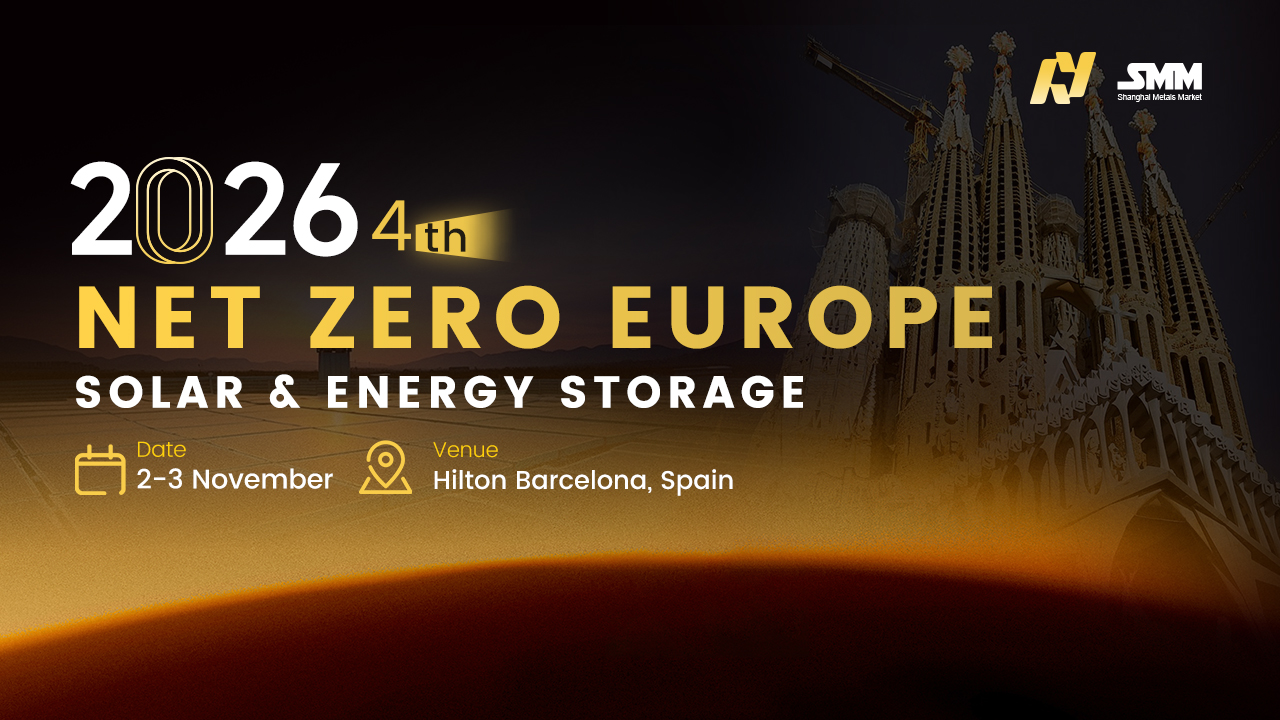 EventsNov 2 - 3, 2026 (GMT+8)Hilton Barcelona, Spain
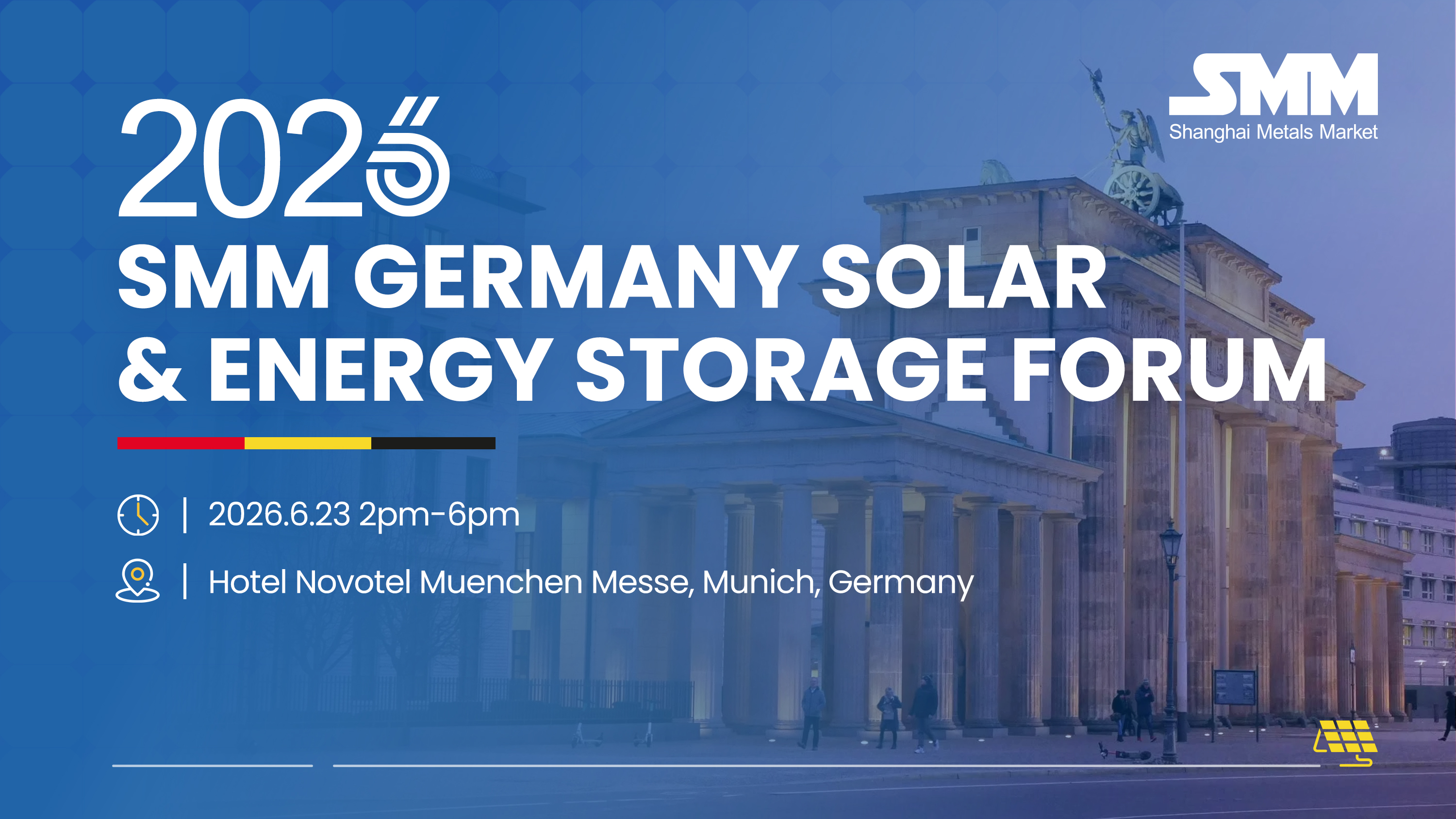 EventsJun 22, 2026 (GMT+8)Munich, Germany
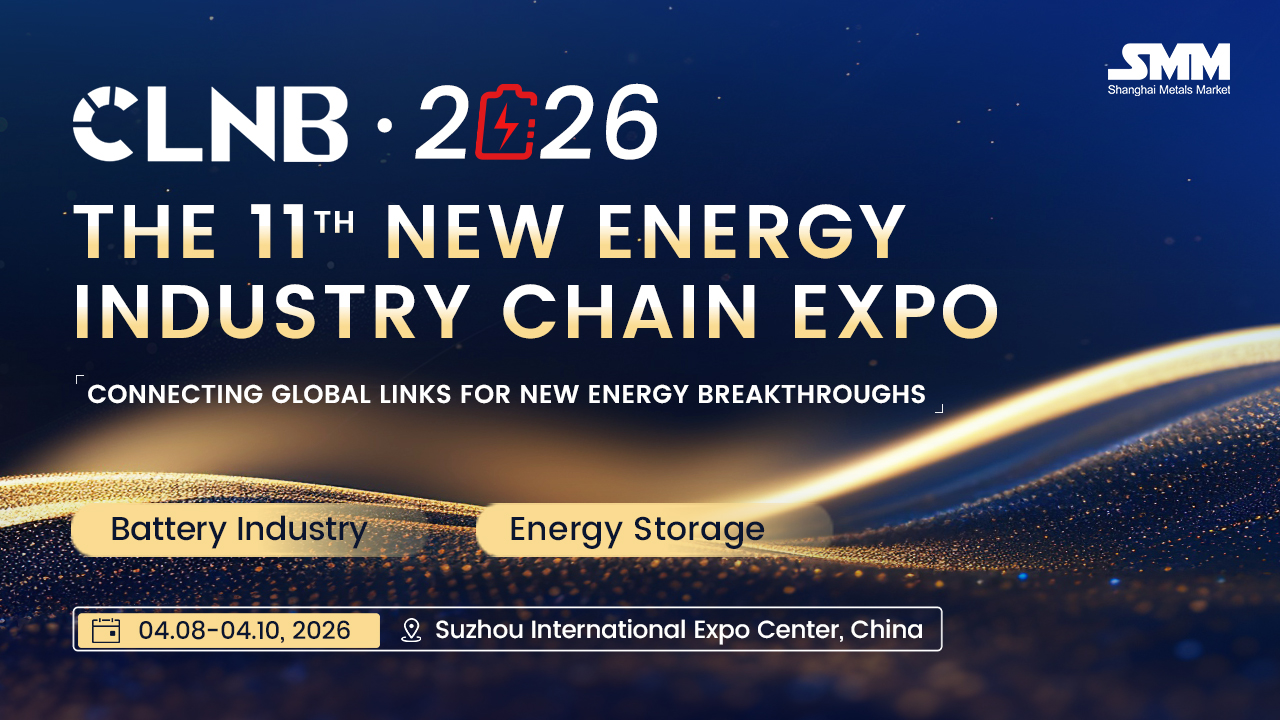 EventsApr 8 - 10, 2026 (GMT+8)Suzhou,China