

Price
News
- Copper Inventory Drops, Prices Fall, Stimulating Downstream Demand
According to data released by the SHFE on March 19, copper warrants saw significant declines across major regions, with total inventory dropping by 12,244 tons from the previous trading day, marking a substantial drawdown. Copper prices continued their downward trend during the day, with the trading range dipping to 94,000-95,800 yuan per ton. The price drop stimulated downstream companies' enthusiasm for buying on dips, pushing the spot premium/discount center upward. Taking advantage of the rebounding premiums, holders actively shipped their warrants, leading to a large outflow of inventory that was subsequently absorbed by downstream consumers. This indicates that current price levels have become increasingly attractive to end-users.
Mar 19, 2026 17:36 - [SMM Analysis] High Inventories: Are Rising Spot Premiums in Multiple Regions an Illusion?
As of March 9, SMM recorded total social inventory of copper cathode in major regions of China at 578,900 mt, up 1,700 mt from last week and up 70,400 mt from February 24, reaching a historical high. Over the same period, spot premiums for SMM #1 copper cathode gradually recovered from premium -260 yuan/mt on February 27 to parity on March 10. Overall, this upswing in spot premiums was mainly driven by the approach of delivery, under which the contango price spread between nearby and next-month contracts stayed around 300 yuan/mt; suppliers held prices firm and withheld sales, while about half of the material was converted into warrants and locked in, jointly tightening circulating supply. Observing the inventory accumulation pace, from the week of March 2 to March 9, inventories in three key regions increased by 14,400 tons, a growth of 2.65%. This marks a significant slowdown compared to the average weekly increase of approximately 45,000 tons during the period from February 5 to February 26. The deceleration in inventory buildup provided room for improvement in premiums. Current inventory accumulation primarily stems from two factors: First, the continued arrival of imported copper. According to SMM research, a substantial volume of imported copper continues to arrive recently, and it is expected that arrivals will not see a significant decline in March. The steady inflow of imported materials provides a continuous supply supplement to the domestic market and is a crucial support for maintaining high total inventory levels. The actual situation of imported arrivals in April remains to be confirmed, requiring close attention to customs data at month-end and changes in port clearance pace. Second, some cargoes are being delivered into bonded/warehouse warrant stocks. According to the electrolytic copper spot purchasing and selling sentiment indices for the Shanghai region recorded by SMM, the purchasing sentiment index rose from 2.08 on February 24 to 2.78 on March 10, while the selling sentiment index increased from 2.09 to 2.90 over the same period. Some downstream players have limited acceptance of current copper prices, maintaining a procurement strategy focused on immediate needs, resulting in selling sentiment slightly outpacing purchasing sentiment. Based on SMM's communications with enterprises: Upstream Producer 1: Recent consumption is relatively good, with daily sales around 2,000 tons. Upstream Producer 2: Currently produced electrolytic copper is primarily for export. Domestic inventories are low, so there's no rush to sell. Unwilling to sell when discounts are excessive. Trader 1: Quotations in the Changzhou market are higher than in Shanghai, mainly because locally available circulating cargoes are mostly warrants. Under the current spread structure, holders have high flexibility in selling – they can choose to sell or hold. Trader 2: The market is not short of supply; there are still a large number of warrants in warehouses awaiting digestion. However, due to the delivery mechanism, the incentive to sell depends on the premium level. Only when the premium exceeds the cost of capital will there be a strong willingness to liquidate. Downstream User 1: Recent orders are relatively robust. When copper prices fell on March 9, we already replenished inventories at the low point. Current raw material inventory can sustain operations until March 15. There are no immediate plans for further procurement; subsequent needs will primarily be met through long-term contract drawdowns. Downstream User 2: The recent spot premium has been quite firm, mainly due to the spread between months. Without such a high monthly spread, the premium would definitely not reach this level. In summary, this round of recovery in spot premiums is driven by multiple factors: First, the approach of delivery and the widening monthly spread strengthened holders' willingness to support prices. With delivery approaching, the Contango spread between months remains around 300 yuan/ton. Holders are underpinning prices, reluctant to sell, and strongly inclined to deliver stocks into warrants. Second, the inventory structure further amplified the tightness of available circulating supply. Taking Jiangsu as an example, out of 118,000 tons of social inventory, 94,000 tons were futures warrants. This portion is locked in delivery warehouses, making it difficult to form effective supply in the short term, leading to a phase of relative tightness in spot market circulating cargoes. According to SMM, some downstream companies in Jiangsu struggled to source materials in the market and opted to procure using the SMM Flat Copper Price average as a benchmark with minor adjustments. Third, the comprehensive resumption of work by downstream enterprises released procurement demand. After the Lantern Festival, downstream processing enterprises in Jiangsu, Zhejiang, and Shanghai entered a full resumption phase. Surveys indicate that companies in the battery materials sector maintain high operating rates. Copper foil processors reported that downstream battery manufacturers sustain high operating rates, with March production schedules already showing characteristics of the peak season. Copper tube companies, supported by peak season stocking from the air conditioning industry, have operating rates exceeding pre-holiday levels. Although the recovery pace in the wire & cable and copper rod sectors is relatively slow, overall procurement demand has significantly improved compared to the first week after the holiday. Fourth, the decline in copper prices activated downstream restocking intentions. Recently, Shanghai copper futures prices retreated somewhat, stimulating downstream enterprises to purchase at dips. Previously suppressed by high copper prices, downstream players mostly maintained a cautious just-in-time procurement strategy, resulting in generally low raw material inventory levels. After the price pullback, some companies took the opportunity to replenish stocks, boosting spot transaction activity.
Mar 10, 2026 17:14 - [SMM Analysis] Copper Stocks Surge in China’s Consumption Hub as Post-Holiday Recovery Falters
Following the Chinese New Year holiday, the electrolytic copper market has entered its traditional post-holiday resumption validation period. The Yangtze River Delta region, as the national core for copper processing and consumption, serves as a bellwether for assessing supply-demand dynamics through the operating rates and raw material procurement pace of its leading enterprises. Our survey indicates that the region is currently characterized by "excessively high inventory accumulation, a divergence in resumption rates, and cautiously recovering procurement sentiment," leading to a downward revision of market expectations for the start of the peak season in March. According to SMM research, as of February 26, 2026, social inventories of electrolytic copper stood at 531,700 metric tons, an increase of 178,100 metric tons from February 12. This pace of inventory buildup significantly exceeds levels seen in previous years. The Yangtze River Delta region contributed the bulk of this increase: inventories in Shanghai rose to 305,800 metric tons, while Jiangsu Province reached 93,100 metric tons, up by 97,500 metric tons and 45,200 metric tons respectively from February 12. This round of inventory accumulation is characterized as "passive delivery into warehouses." As the first trading day after the holiday (February 25) coincided with the last trading day for the SHFE 2602 contract, smelters concentrated their deliverable cargoes into exchange-designated warehouses just before the holiday. This led to an increase of 80,400 metric tons in SHFE copper warrants, bringing the total to 277,100 metric tons, a portion temporarily locked in the form of warrants. Concurrently, with the narrowing of import losses and the emergence of a profit window before the holiday, arrivals of imported copper in March are expected to increase, putting dual pressure on domestic social inventories from both domestic production and imported supply. Based on operational feedback from enterprises, downstream processing sectors in the Yangtze River Delta exhibit significant contrasting dynamics: The battery materials sector maintains robust performance. Copper foil producers either had short production stoppages or operated continuously during the holiday. Downstream battery manufacturers are running at high utilization rates, with some reporting that their March production schedules already display peak-season characteristics. This sustains rigid demand for purchasing electrolytic copper. In contrast, the resumption of operations in the traditional cable and copper processing sectors is sluggish. Performance in traditional copper-consuming segments like wire and cable, copper rod, and copper tube is relatively weak. In the first week after the holiday, leading cable companies saw a decline in new orders. Apart from high copper prices dampening downstream acceptance, the fact that end-user projects have not yet fully commenced is a major constraint. According to enterprise feedback, construction and infrastructure projects typically resume gradually after the Lantern Festival (which falls after the standard holiday), and the market is currently in a lull for new orders. Copper rod processors generally have high finished goods inventory, and some orders from before the holiday are still pending delivery. Consequently, their procurement of electrolytic copper primarily focuses on consuming existing inventory and making ad-hoc spot purchases based on immediate needs, showing a weak willingness to stock up on raw materials. Overall, downstream consumption in the region currently presents a pattern of rigid demand from the battery sector versus pending demand from the cable sector. The transmission of genuine end-user consumption to the electrolytic copper procurement stage will still require time. According to information obtained by SMM through communication with enterprises: Enterprise 1: Normal operations resumed on the 6th day of the first lunar month. The downstream battery industry is operating at a high utilization rate; current copper foil production has increased from 20% to approximately 50% compared to previous levels. However, the wire and cable sector has seen relatively few new orders recently. The main reasons are persistently high copper prices, and, consistent with previous years, end-user projects typically do not fully commence until after the Lantern Festival, leading to a temporary lag in demand transmission. Enterprise 2: The company reached full production capacity immediately after resuming work on the 6th day of the first lunar month, requiring approximately 1,000 tons of electrolytic copper daily. Raw material inventory is maintained at a reasonable level, adopting a cautious procurement strategy of daily spot purchases. However, finished goods inventory is higher than before the holiday, with some pre-holiday orders still pending delivery. Regarding downstream orders, pre-holiday withdrawals were relatively concentrated, while the performance of new orders after the holiday is weak, as some downstream customers have yet to restart operations. Enterprise 3: Production workshops ran continuously during the Chinese New Year. Recently, production has remained stable, with orders from key clients holding steady. Raw material inventory is kept at a low level, and electrolytic copper purchases are made based on order volume. However, the volume of recent spot purchases has decreased compared to the previous period. Enterprise 4: Recently, there has been a decrease in new downstream orders, resulting in sluggish market transactions. Pressure from finished goods inventory is not significant, but some pre-holiday orders are still awaiting delivery. Raw material inventory is maintained within a normal and manageable range. On February 24, the Purchasing Sentiment Index recorded 2.08, remaining in a weak range, indicating low enthusiasm among downstream companies for market inquiries in the first week after the holiday. Subsequently, it recovered day by day to 2.58 on February 26. Over the same period, the Shipment Sentiment Index rose from 2.09 on February 24 to 2.80 on February 26, showing a continuous upward trend and consistently remaining higher than the Purchasing Sentiment Index. H istorical data can be queried in the database. This reflects that, as the resumption of work progresses, some rigid demand has begun to emerge, with certain downstream companies entering the market for inquiries. However, the absolute levels remain low, indicating limited acceptance of current copper prices among downstream users. Their stocking strategy remains predominantly "hand-to-mouth procurement." Holders, under pressure from high inventories, exhibit a strong willingness to liquidate, while market transactions are primarily circulating within the trading sphere, with genuine downstream offtake yet to pick up significantly. Looking ahead, the unexpected inventory accumulation has already triggered a market correction to previous supply-demand expectations. In the short term, social inventories in the Yangtze River Delta region still face pressures from two fronts: first, the arrival of imported copper resources, and second, the need for time to digest high downstream finished goods inventories. Channels for inventory outflow are also obstructed, with LME inventories continuing to climb and maintaining a Contango structure, making it difficult to absorb the domestic surplus. A positive factor on the supply side lies in the concentrated maintenance window for domestic smelters during March-May in the first half of the year, with substantial impacts expected to emerge starting in April. If demand-side support materializes by then, an inventory drawdown cycle could potentially commence between late March and April. However, due to the exceptionally high post-holiday inventory starting point, even entering a destocking phase is unlikely to replicate the high BACK structure and high premiums seen during the same periods in previous years. Overall, the post-holiday resumption in the Yangtze River Delta region is characterized by high inventory levels, cautious procurement, and pending orders. The market is now awaiting the substantive return of end-user orders after the Lantern Festival. The short-term price-driving logic may shift from validation of "expected destocking" to "actual destocking."
Feb 26, 2026 16:39 - [SMM Analysis] 2026 Spring Festival Holiday: Review and Outlook for the Lithium Hydroxide Market
On the eve of the Spring Festival holiday, the lithium hydroxide market showed signs of a moderate price rebound. According to SMM data, on February 13, lithium hydroxide was quoted in a range of 130,000 to 145,000 RMB/ton, with an average price of 137,500 RMB/ton, an increase of 5,000 RMB/ton from February 6 (the previous Friday). As of February 13, the average price for February was provisionally reported at 139,575 RMB/ton. From the supply side, the overall lithium hydroxide supply remained tight in February. Although upstream smelters' willingness to release inventory slightly increased due to fluctuations in lithium carbonate futures prices, the overall sentiment to hold firm on prices remained strong, with quotes generally maintained at or above 140,000 RMB/ton. Pre-holiday macroeconomic policy expectations boosted sentiment in the lithium market. Coupled with the fact that few trading days remain in February, the pattern for the monthly average price has been largely set. Consequently, on the demand side, some material manufacturers increased their inquiries before the holiday to secure raw materials for post-holiday production. However, due to relatively sufficient earlier stockpiling and individual leading ternary material enterprises entering maintenance phases, the raw material shortage situation eased somewhat in the short term. Downstream companies showed limited acceptance of high raw material prices, with procurement intentions largely centered around the monthly average price. Overall, market transactions were still dominated by a tug-of-war between quoted prices and psychological price expectations, with actual trading volumes remaining quite limited. During the Spring Festival holiday, the market operated stably overall, with trading activity cooling down significantly. Affected by the hazardous chemical properties of lithium hydroxide, transportation came to a virtual standstill, and the market entered a seasonal quiet period. On the macro front, on the eve of the Spring Festival, the Chinese government announced the implementation of a zero-tariff policy for 53 African countries with which it has diplomatic relations, effective May 1st. It also promotes the signing of agreements on economic partnership for common development to expand market access for African products. This move will further deepen China-Africa economic and trade cooperation. In the long term, it is expected to broaden import channels for resources, including critical minerals, providing more solid resource support for China's new energy industry chain (such as battery raw materials). Meanwhile, significant movements also occurred in the international market. The U.S. Supreme Court's ruling that certain tariff policies from the Trump administration were illegal drove a broad uptick in overseas markets. It is expected that this trend will continue to reinforce domestic market confidence after the holiday. However, the minutes from the Federal Reserve's January meeting revealed significant divergence among policymakers regarding the future path of interest rates, which could exacerbate global capital market volatility and introduce uncertainty for the post-holiday market. Looking ahead to the post-holiday market: On the supply side, due to fewer production days and planned maintenance at some lithium salt plants, February's lithium hydroxide output is expected to decrease by more than 10% compared to January. On the demand side, as material manufacturers gradually resume production after the holiday, raw material procurement demand is expected to be gradually released, and market trading activity may pick up. However, the pace of the demand recovery still faces certain variables. On one hand, changes in the order structure of downstream battery cell manufacturers and the progress of new production line integration may affect the actual raw material procurement rhythm of material manufacturers. On the other hand, the price trends of upstream lithium ore and lithium carbonate, as well as the upcoming second-quarter contract negotiations, will also disturb the cost transmission and market expectations for lithium hydroxide, thereby exacerbating market uncertainty. Overall, the current lithium hydroxide market is in a phase of stabilizing before the holiday and gathering momentum afterward. The tug-of-war between supply and demand intensifies, intertwined with the influence of macroeconomic policies and the external environment. In the short term, prices are expected to remain volatile and range-bound. Subsequent trends will require close attention to downstream production start-up rates and upstream cost changes.
Feb 23, 2026 20:52 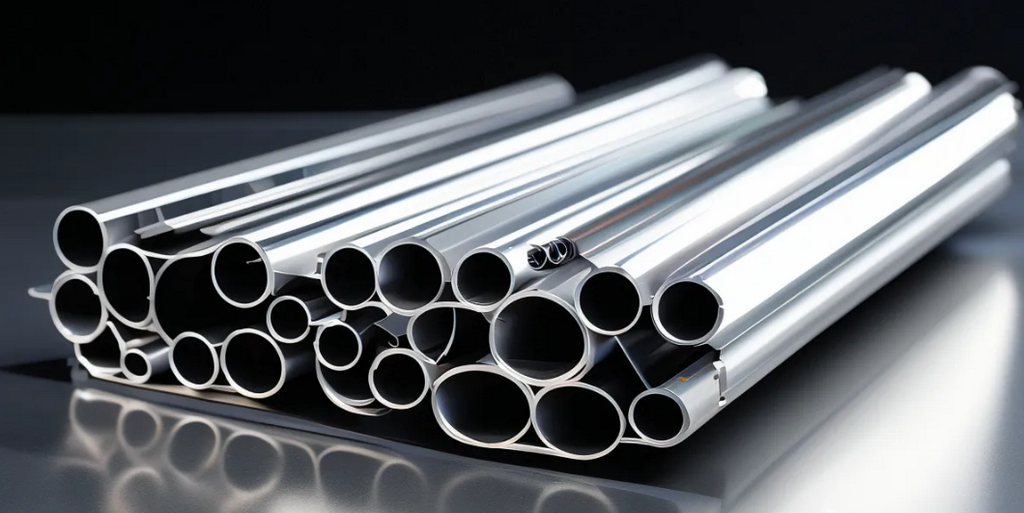 SMM Analysis: Jan Aluminum Billet Output Slumps, Feb Production to Hit 4-Year Low
[SMM Analysis: Primary Aluminum Billets Operation in January Weaker Than Expectations, February Production May Hit a Nearly Four-Year Low] Domestic primary aluminum billets operation in January performed weaker than expectations. According to SMM data...
Feb 13, 2026 23:42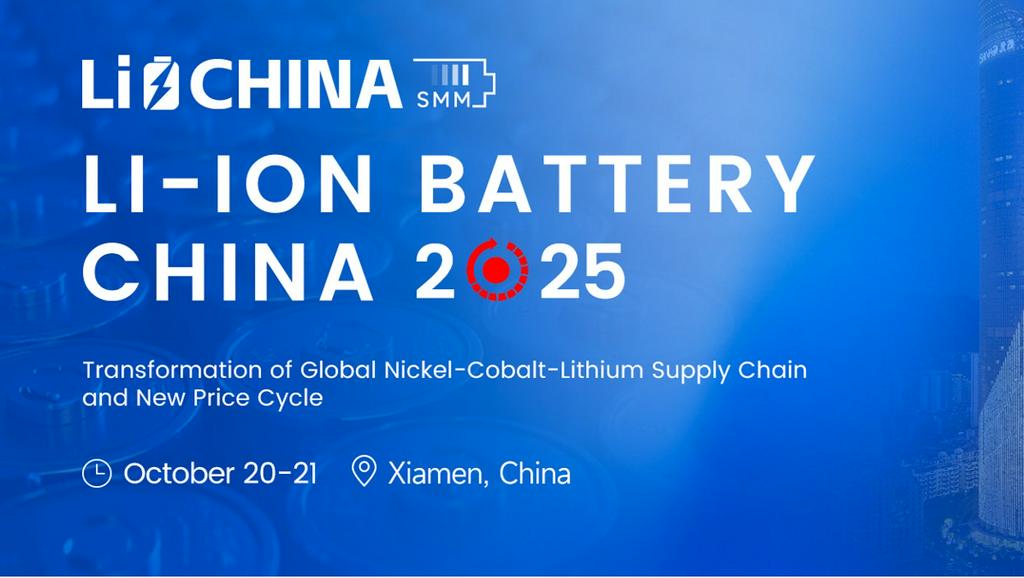 The grant event in lithium battery industry - SMM Li-ION BATTERY China 2025 is coming !
The SMM Lithium Battery Raw Materials Conference 2025 will be held in Xiamen on October 20-21, 2025, focusing on the critical challenges and opportunities in the supply chain of key battery raw materials such as nickel, cobalt, and lithium amid the global energy transition. The conference aims to analyze international policy shifts, supply-demand dynamics, and pricing mechanisms from multiple perspectives, fostering a more stable, transparent, and efficient industry chain. Key Topics Include: 1.Global Market Trends: Examining the impact of geopolitics, trade policies, and supply-demand imbalances on nickel, cobalt, and lithium pricing and supply chains. 2.SMM Pricing System: Interpreting the authoritative price formation mechanism and providing future trend forecasts. 3.Industry Chain Collaboration: Facilitating long-term contract negotiations and one-on-one business matchmaking to enhance upstream-downstream cooperation. 4.Technological Innovation: Exploring cutting-edge advancements in battery materials to support corporate strategic planning. Highlights: 1.Full Industry Chain Participation: Gathering global stakeholders, including resource extraction, refining, R&D, and end-use manufacturers. 2.Authoritative Market Insights: SMM will release in-depth analysis and price benchmarks for nickel, cobalt, and lithium. 3.Efficient Networking: Structured business matchmaking to promote long-term supply chain partnerships. 4.This conference will deliver forward-looking insights, empowering enterprises to navigate resource flows and market transformations while advancing the sustainable development of the global new energy industry chain.
Jun 18, 2025 14:59