

359results found for 'copper concentrate production'
Price
News
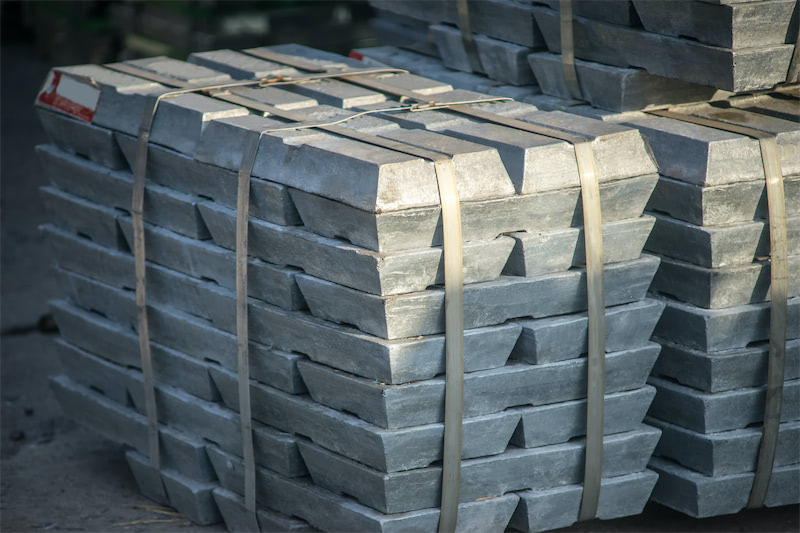 China Zinc/Lead Market Weekly Updates - 2025/6/13
The SMM Imported Zinc Concentrate Index for this week is $53/dmt, with a 5.26% WoW increase. The SMM Imported Lead Concentrate average spot TC for this week is $-45/dmt.
Jun 13, 2025 19:39- Resumption of Underground Mining in the Western Section of the Kakula Mine
According to Ivanhoe Mines: Robert Friedland, Executive Co-Chairman of Ivanhoe Mines (TSX: IVN; OTCQX: IVPAF), Weibao Hao, Co-Chairman, and Marna Cloete, President and Chief Executive Officer, announced today the latest operational updates for the Kamoa-Kakula copper mine project, as well as the preliminary findings of the geotechnical investigation following the seismic event at the Kakula mine announced on May 20, 2025. Mining operations in the western section of the Kakula mine were safely and prudently restarted on June 7, 2025, with equipment and mining crews returning underground to resume production. The short-term mining plan for the western section of the Kakula mine has been updated to incorporate the recommendations summarized in the preliminary investigation report. It is expected that mining operations in the far eastern section of the Kakula mine will also resume as soon as possible, with a focus on development work to open up access to new mining areas east of the existing mining zones. The development work in the new mining areas of the far eastern section of the Kakula mine will be carried out in a spatially isolated manner from the pumping work areas and is expected to be completed in the second quarter of 2026. On June 2, 2025, the company announced that additional pumping equipment had been installed at the Kakula mine to maintain stable water levels. Since the initial announcement on May 18, 2025, the frequency of seismic events has also decreased. Pumping operations are expected to commence in the eastern section of the Kakula mine in August 2025 and be completed in the fourth quarter. The recommendations made by world-class geotechnical experts based on the preliminary investigation findings have been incorporated into the short-term mining plan for the Kakula mine to ensure the safe restart of mining operations. Meanwhile, the management and technical advisors of Kamoa-Kakula are developing and reviewing the medium- and long-term mining plans for the mine. The Phase 1 and Phase 2 beneficiation plants continue to operate at approximately 50% of their combined capacity, processing ore from surface stockpiles. With the resumption of mining operations in the western section of the Kakula mine, ore supply to the beneficiation plants will increase, and the Phase 1 and Phase 2 beneficiation plants will gradually ramp up production over the remainder of 2025, with ore supply supplemented by ore mined from the western section of Kakula. Mining activities at the Kamoa underground mine and the adjacent Phase 3 beneficiation plant continue to operate normally without any disruptions. It is expected that the smelter located on the mine site will commence operations in September 2025 and produce its first copper anodes in October, once copper concentrate production and inventory levels meet the required conditions. Robert Friedland, Executive Co-Chairman of Ivanhoe Mines, commented, "We are grateful and deeply appreciate the swift response of the on-site team in stabilizing the groundwater levels at the Kakula mine and resuming mining operations in the western section. Critical dewatering equipment required to ensure the safety of the entire mine was rapidly deployed, while preparations were actively underway to advance as quickly as possible into the Kakula Far East zone to open up new high-grade mining areas." "Although it is still too early to outline detailed plans for 2026 and 2027, the prospects for the Kamoa-Kakula copper mine and the adjacent Western Foreland exploration project remain bright. Kamoa-Kakula is, and will continue to be, a world-class mine, maintaining its leading position among the world's copper producers for decades to come." President and CEO, Mark Cutifani, commented: "We are working tirelessly to safely and methodically restore full operations at the Kakula mine, with safety as our top priority! We would like to express our sincere gratitude to the mining team, engineering team, and our many long-standing contractors for their outstanding contributions in restoring dewatering capacity and restarting mining operations, all without any lost-time incidents." "The resilience and operational strength demonstrated by our team underscore the extraordinary nature of this world-class copper district – and the bright future it will create for generations to come." Note: Existing underground development as of May 2025. The above figure, based on the 2023 Kamoa-Kakula Integrated Development Plan, shows the average grade estimates (calculated using a cut-off grade of total copper >3%) for vertical blocks in different zones, with a minimum thickness of 3 meters. The groundwater level at the Kakula mine has stabilized; underground mining operations have resumed in the western section of the Kakula mine. Following the seismic event, although the inflow of water into the Kakula mine's underground workings gradually increased, it has now stabilized at approximately 4,000 liters per second. Due to the impact of the seismic event on existing underground dewatering facilities, additional underground dewatering capacity totaling approximately 4,400 liters per second has been installed, helping to stabilize the groundwater level. The new pumping stations are connected to the existing central dewatering infrastructure and then discharge water to the surface through four locations near the bottom of the northern and southern twin declines, as shown in Figure 2. With the stabilization of the water level, mining operations have resumed on the western side of the Kakula mine. Mobile equipment and mining crews, which were evacuated from underground on May 18, 2025, have now returned to the underground workings and conducted their first blast on June 7, 2025. The short-term mining plan has been updated to incorporate recommendations from the preliminary geotechnical investigation report. Based on underground conditions, Kamoa-Kakula's mining crews plan to increase mining volumes on the western side of the Kakula mine to approximately 300,000 mt per month (or 3.6 million mt per year on an annualized basis) in H2 2025. In Q3, mining operations will ramp up the mining capacity in the Kakula West Zone to 3.6 million mt/year, with further adjustments to be made based on underground conditions. In H2 2025, the underground mining team will focus on implementing three major projects: ramping up the mining capacity in the Kakula West Zone, constructing a new mining area in the Far East Zone of the Kakula Mine, and ramping up the mining capacity in the Kamoa Mining Area. Additional operational personnel have been deployed to the Kamoa Mine, located approximately 10 kilometers north of the Kakula Mine, to assist the existing mining team in underground excavation works, as well as in the construction of newly designed box-cut and ramp development at the Kansoko Mine. The new ramp will help increase the mining capacity at Kansoko and further supplement the ore supply required by the Phase 1 and Phase 2 beneficiation plants. Construction of the new mining area in the Far East Zone of the Kakula Mine will be concentrated, with development works set to commence soon, spatially separated from the pumping work area. The Far East Zone of the Kakula Mine will adopt a new mining plan, focusing on development works further east of the existing mining area. The new mining area and the existing mining area will be separated by a safety pillar to prevent the rock mechanics instability in the existing mining area from propagating to the new mining area. The mining team is expected to soon commence construction of two new main access tunnels. The two main tunnels will be constructed simultaneously, advancing eastward from the existing underground infrastructure (see Figure 2). The construction of the new mining area will involve the extraction of ore and waste rock, and is expected to be completed by Q2 2026. The new access tunnels will be isolated from the mining faces currently being dewatered, and dewatering operations will also be conducted separately and independently. Upon completion of dewatering in the East Zone of the Kakula Mine, in-situ geotechnical observations will be conducted in the existing mining area, followed by a comprehensive evaluation by geotechnical experts. The evaluation results will determine the future scope of production resumptions in the existing mining area. Underground water inflow is mainly concentrated in the deepest part of the East Zone of the mine (see Figure 2). The Kamoa-Kakula engineering team has developed a phased plan for dewatering the Kakula Mine. Phase 1 : Install temporary pumping facilities underground to maintain the existing water level stable. Phase 1 was completed on June 2, 2025. Phase 2 : Install large-power pumps and a permanent pumping system that can be operated from the surface to conduct comprehensive dewatering operations throughout the Kakula Mine. Kamoa Copper has ordered five large-power pumping units, each with a dewatering capacity of 650 liters per second. The long-term plan also includes the procurement of additional pumping units, which will be deployed in pairs in the existing shafts to the bottom of the Kakula Mine (see Figure 2). Dewatering is expected to commence in August 2025. As water levels gradually decline, the engineering team will begin repairing the underground pumping, ventilation, and other systems, and complete the geotechnical engineering assessment. It is expected that the dewatering work in the eastern section of the Kakula Mine will be completed in Q4. Preliminary findings from the recent geotechnical investigation into the mine seismicity Following the first mine seismic event on May 18, 2025, the company promptly engaged two renowned and independent geotechnical consulting firms, Beck Engineering from Australia and Open House Management Solutions (hereinafter referred to as "Open House") from South Africa, to conduct an investigation at the Kamoa-Kakula Mine. With the support of Ivanhoe Mines, the two consulting firms worked closely with the Kamoa-Kakula engineering team. The preliminary investigation results indicate that the mine seismicity originated from areas in the eastern section of the Kakula Mine with high ore extraction rates. It is currently believed that the secondary stope, originally planned for Step-2 mining, experienced subsidence-induced yielding deformation, leading to stress redistribution and transmission to the pillars in the area. This, in turn, caused the pillars to yield and deform due to excessive bearing stress. Although backfilling of the mined-out areas could not prevent stress redistribution to the regional pillars, it may have mitigated the effects in some cases. Meanwhile, it cannot be ruled out that adverse geological factors within the area exacerbated the yielding deformation of the pillars. Pillars are unmined ore or rock left in place to support the roof of underground voids; mined-out areas refer to spaces underground where mining has been completed. Backfilling is the operation of filling mined-out areas with a mixture of tailings and cement, which, after consolidation, can achieve the target strength. The geotechnical evaluation has not yet been completed and will be further detailed in the eastern section of the Kakula Mine after the dewatering operations are finished. The preliminary investigation results recommend changes to the short-term mining plan to increase the width of the pillars, thereby providing stronger structural support. The results also suggest adjusting the mining sequence to improve stress distribution and overall stability. Additionally, an enhanced rock mechanics monitoring system will be installed throughout the mine. The management of Kamoa-Kakula, along with Beck Engineering, Open House, and other technical consultants, are making revisions to the short-term, medium-term, and long-term mining plans based on the geotechnical investigation findings. Prior to the mine seismicity, the company was in the process of updating the comprehensive mine life-of-mine development plan, which has now been suspended until Ivanhoe Mines' engineering team and its panel of technical experts complete their review and agree to the relevant changes. After the update work resumes, Ivanhoe Mines will provide updates on the progress of the revised comprehensive development plan. The Phase I and II beneficiation plants are operating at reduced capacities, and production ramp-up will be advanced following the resumption of mining operations in the western section of the Kakula Mine; the Phase III beneficiation plant continues to perform exceptionally well. On June 7, 2025, mining operations in the western section of Kakula were safely and prudently resumed. It is planned to increase the underground mining capacity to 3.6 million mt per year in Q3. Combined with ore from surface stockpiles and supplementary ore from the northern Kamoa Mine, this will be sufficient to support over 80% of the combined designed capacity (9.2 million mt per year) of the Phase I and II beneficiation plants. It is expected that in the second half of the year (H2), the copper grade of raw ore in the Kakula West section will range between 3.0% and 4.0%. Since the suspension of underground operations on May 18, 2025, the Phase I and Phase II beneficiation plants have been operating at approximately 50% of their combined capacity, processing ore from surface stockpiles. The Phase III beneficiation plant adjacent to the Kamoa mine (see Figure 3) has maintained excellent operational performance since the beginning of this year. The plant's current average ore processing capacity is equivalent to an annualized capacity of 6 million mt, which is 30% higher than the designed capacity of 5 million mt per year. As of 2025, the average copper grade of ore processed by the Phase III beneficiation plant has been 2.84%. The mining output from the Kamoa and Kansoko mines has increased over the past two months, exceeding an annualized production of 6.8 million mt. The short-term mining plans for the Kamoa and Kansoko mines have been updated to incorporate recommendations from preliminary geotechnical investigations. The long-term mining plans will be reviewed in conjunction with the overall review of the Kakula mine. 2025 Production Guidance Revision The updated 2025 production guidance for Kamoa-Kakula is based on assumptions and estimates as of June 10, 2025, and involves estimates of known and unknown risks, uncertainties, and other factors that may differ significantly from actual results. The revision of the 2025 production guidance has taken into account the potential impacts of recent seismic events and the resulting disruptions to mining operations at the Kakula mine. Although mining operations have resumed in the Kakula West section, it is currently impossible to accurately predict potential further seismic events, the resulting disruptions, the integrity of underground infrastructure, the ability to ramp up production in underground operations, the ability to complete dewatering work, and the timing of the commissioning of new mining areas in the Far East section. The updated 2025 production guidance is based on the aforementioned factors, and the company's management believes these considerations and assumptions are reasonable given all currently available information. Figure 4 provides detailed information on the revision of the production guidance. All figures are stated on a 100% project equity basis. The reported metal content in concentrate does not account for losses or deductions under smelting agreements. Upon further review, the 2026 copper production target of approximately 600,000 mt has been withdrawn. Ivanhoe Mines will provide further updates on the 2026 production target as more information becomes available. Ivanhoe Mines will provide an update on the 2025 C1 cash cost guidance in its Q2 2025 financial report. The one-step copper smelter at the mine site will commence operations in Q3 Senior management at Kamoa-Kakula has confirmed that the one-step copper smelter at the mine site will begin operations in early September 2025, with the first copper anodes expected to be produced in October. Smelters can operate at a minimum of 50% capacity, which is equivalent to an annualized copper production of approximately 250,000 mt. As of May 31, 2025, there were 33,000 mt of copper in copper concentrates onsite at the mine that had not been sold. It is expected that the first batch of concentrates will be fed into the process approximately four to six weeks after production starts, and it is estimated that there will be a total of approximately 35,000 mt of copper in concentrates in inventory pending sale at that time. In addition, the senior management of Kamoa-Kakula expects that the Inga II hydropower station's Unit 5 turbine (with a designed power of 178 MW) will be commissioned in October 2025, further increasing the hydropower capacity available to the Kamoa-Kakula copper mine through the domestic power grid.
Jun 12, 2025 13:16 - Supply support is evident, copper prices fluctuate at highs
Recently, the copper market has shown stability, with copper prices continuing to fluctuate rangebound near the 5-day moving average.
May 19, 2025 13:56 - The impact of US tariff policies gradually emerged, with insufficient rebound momentum for SHFE copper prices
Since April, the most-traded SHFE copper contract prices have shown a trend of initial decline followed by a rebound, with copper prices gradually recovering after hitting a low of 71,000 yuan/mt. Meanwhile, arbitrage trading in the LME copper and COMEX copper markets has weakened, while domestic copper smelters have increased maintenance activities, leading to a rapid drawdown in social copper inventory and providing support for copper prices. Supply side remains tight. In December 2024, China's copper concentrate production reached 151,800 mt, up 6.89% YoY and 9.51% MoM. In March 2025, China imported 2.3939 million mt of copper concentrates and ore, up 9.69% MoM and 2.73% YoY. This year, China's copper concentrate production has been at a relatively low level, while imports have remained relatively stable, resulting in an overall decline in copper concentrate supply. In late April, Peru's Antamina mine halted operations entirely due to a sudden accident. The mine produced 426,900 mt of copper ore in 2024, accounting for 1.86% of global copper ore production, which will have a certain impact on global copper ore supply. In terms of inventory, as of April 18, the copper concentrate inventory at major domestic ports stood at 706,900 mt, at a moderate level, while the processing fee for imported ore continued to decline, falling to -$34.71/mt, a record low. According to data from relevant institutions, from 2021 to 2025, the global copper concentrate capacity additions have accelerated, but in the next three years, the growth rate of global copper concentrate capacity additions will decline rapidly, potentially exacerbating the global copper concentrate supply tightness in the later period. As of February this year, China's copper scrap production reached 115,800 mt in metal content, up 4.99% MoM and 60.83% YoY. According to March data, China's imports of copper scrap and shredded copper scrap reached 189,700 mt, down 3,631 mt MoM and 13.07% YoY. Among them, imports from the US were 22,500 mt, down 8,900 mt MoM. With the intensifying impact of the "trade war," China's copper scrap imports may decline in the later period, leading to a tight supply-demand structure for copper scrap. In February, China's blister copper production was 911,500 mt, down 2.96% MoM and up 10.74% YoY. Among them, mine-produced blister copper decreased by 26,500 mt from January to 738,700 mt, while scrap-produced blister copper decreased by 1,300 mt to 172,800 mt. In March, China imported 50,200 mt of copper anode, down 11.05% MoM and 47.8% YoY. In March, China's copper cathode production was 1.1221 million mt, up 6.04% MoM and 12.27% YoY. Entering April, due to the tight supply of copper concentrates, some smelters began to reduce the feedstock of copper concentrates, but by increasing the feedstock of copper scrap and anode plates, they maintained stable copper cathode production.Additionally, new smelters have commenced operations in east China, while the capacity utilization rate of smelters in south-west China has increased, leading to a slight decline in the total production of copper cathode. Due to significant losses in the industry, the operating rate of domestic smelters remains relatively low, and import losses have also suppressed the supply of imported copper. Overall, despite an increase in copper cathode production, the overall supply pressure remains relatively small. In terms of subsequent capacity increments, it is projected that China will add 1.17 million mt of new copper refining capacity in 2025, with overseas capacity additions reaching approximately 870,000 mt. Among these, the Kamoa mining area, jointly held by Ivanhoe and Zijin Mining, will contribute the largest overseas capacity increment. Operating rates in downstream sectors rebound In 2025, China's fiscal policy will become more proactive. Specifically, the scale of ultra-long-term special treasury bonds is expected to increase from 1 trillion yuan to 2 trillion yuan, while the scale of new special local government bonds is anticipated to rise from 3.9 trillion yuan to 4.5 trillion to 5 trillion yuan. With the continuous strengthening of fiscal policy, it is expected that infrastructure investment in 2025 will continue to fluctuate at highs in recent years, with investment growth rates projected to stabilize at 5% to 10%. Infrastructure investment will remain one of the main driving forces for industrial product demand in 2025. In December 2024, China's copper semis production reached 2.27 million mt, up 6.2% MoM and 16.53% YoY. The operating rate of enterprises in the copper semis industry stood at 69.02%. Affected by the Chinese New Year holiday, the operating rate of the copper semis industry was low in January and February but gradually rebounded to 67% in March. With the recovery of downstream consumption, the operating rate of downstream processing enterprises in the copper industry continued to rebound. Entering April, copper prices fell sharply, stimulating an increase in downstream orders. It is expected that the operating rate of enterprises in the copper semis industry will continue to rise, but attention should be paid to the impact of US tariff policies on China's copper consumption. Additionally, the YoY data for overall power grid and NEV production both showed slight increases, providing further bullish support for copper cathode demand. Bulls take the initiative in forward contracts In April, the growth rate of COMEX copper inventories accelerated, approaching 130,000 short tons as of April 23. Domestically, as of April 24, social copper inventories stood at 181,700 mt, achieving eight consecutive weeks of weekly destocking, down 195,300 mt from the year's high and 223,000 mt lower than the 404,700 mt recorded in the same period last year. In April, the decline in LME copper inventories slowed down, hovering around 210,000 mt, with the ratio of cancelled warrants dropping from a high of 50% to 37%. As of April 18, both non-commercial long and short positions in COMEX Grade 1 copper decreased from the previous week, with net long positions falling by 4,764 lots to 19,477 lots. Meanwhile, both long and short positions in LME copper investment funds increased, with net long positions rising by 1,479 lots to 29,842 lots.The domestic futures market exhibits a contango structure, with bulls taking the initiative in the deferred contracts, indicating that major funds are optimistic about future prices. From the perspective of the supply-demand balance table, with the arrival of the peak consumption season, downstream demand is rebounding while upstream supply is pulling back. The supply-demand structure is gradually improving, and the probability of a supply-demand gap emerging in Q2 is rising. Against this backdrop, market optimism is heating up, providing certain bullish support for prices. From a macro perspective, based on the economic data released by the US in March, indicators such as the ISM Manufacturing PMI, CPI, and PPI have shown robust performance. The impact of US tariff policies is expected to be reflected in April's data, and subsequent attention should be paid to the progress of negotiations between the US and other countries. On the supply side, the tight supply situation of copper raw materials has intensified, with processing fees for imported copper concentrates continuing to decline, and tariff policies affecting the imports of copper scrap. Currently, the extent of production cuts in copper smelting is relatively small, with April mainly focusing on maintenance. By-products such as sulphuric acid and gold can offset some of the losses incurred by smelters. On the consumption side, as downstream consumption gradually recovers, the operating rates of downstream copper processing enterprises have significantly increased. The shortage of secondary copper raw materials has also stimulated market consumption of copper cathode. However, the impact of US tariff policies is gradually becoming apparent, making it difficult to be optimistic about the subsequent consumption of copper. Overall, the fundamental support for copper is moderate, but US tariff policies still plague the market, which will limit the subsequent rebound height of copper prices. It is expected that SHFE copper prices in May may struggle to break new highs, and caution should be exercised against the risk of prices jumping initially and then pulling back. (Author's affiliation: Huawen Futures)
May 12, 2025 14:58 - Q1 Production of Top 15 Miners Released, Copper Concentrates Supply Not Looking Optimistic [SMM Analysis]
[SMM Analysis: Q1 Production of Top 15 Miners Released, Copper Concentrates Supply Not Looking Optimistic] The copper production of the top 15 miners in Q1 2025 has been released. According to SMM statistics, the Q1 copper production of the top 15 miners was 2,967 kt (metal content), down 0.8% YoY and 12.8% QoQ. However, based on the Q1 production data, the raw material supply this year does not seem optimistic.
May 8, 2025 20:40 - SHFE copper lacks rebound momentum
Impact of US Tariff Policies Gradually Emerges As downstream consumption gradually recovers, the operating rates of copper downstream processing enterprises have significantly increased. However, the impact of US tariff policies is gradually emerging, making it difficult to be optimistic about the subsequent copper consumption. Since April, the most-traded SHFE copper contract has formed a trend of first declining and then rising, with prices gradually rebounding after hitting a low of 71,000 yuan/mt. Meanwhile, arbitrage trading in the LME and COMEX copper markets has weakened, while domestic copper smelter maintenance has increased, and social inventory of copper has rapidly decreased, providing support for copper prices. How much room is there for copper prices to rebound subsequently? Supply Side Remains Tight In December 2024, China's copper concentrate production was 151,800 mt, up 6.89% YoY and 9.51% MoM. In March 2025, China imported 2.3939 million mt of copper concentrates and ore in physical terms, up 9.69% MoM and 2.73% YoY. This year, China's copper concentrate production has been at a relatively low level, while imports have remained relatively stable, resulting in a decrease in the overall supply of copper concentrates. In late April, Peru's Antamina mine fully suspended operations due to a sudden accident. In 2024, the mine's copper production was 426,900 mt, accounting for 1.86% of the global total copper mine production, which will have a certain impact on the global copper ore supply. In terms of inventory, as of April 18, the copper concentrate inventory at domestic mainstream ports was 706,900 mt, at a medium level. Meanwhile, the processing fee for imported ore continued to decline, falling to -$34.71/mt, hitting a record low. In addition, according to data from relevant institutions, the global new copper concentrate capacity additions accelerated from 2021 to 2025. However, in the three years after 2026, the growth rate of global new copper concentrate capacity will rapidly decline, potentially exacerbating the tight supply of global copper concentrates in the later period. As of February this year, China's copper scrap production was 115,800 mt in metal content, up 4.99% MoM and 60.83% YoY. According to March data, China's imports of copper scrap and shredded copper scrap were 189,700 mt in physical terms, down 3,631 mt (-1.88%) MoM and 13.07% YoY. Among them, imports from the US were 22,500 mt in physical terms, down 8,900 mt MoM. With the intensifying impact of Sino-US trade frictions, the volume of imported copper scrap may decline in the later period, leading to a tight supply-demand structure for copper scrap. In February, China's blister copper production was 911,500 mt, down 2.96% MoM and up 10.74% YoY. Among them, mineral-derived blister copper decreased by 26,500 mt from January to 738,700 mt, while scrap-derived blister copper decreased by 1,300 mt to 172,800 mt. In March, China imported 50,200 mt of copper anode, down 11.05% MoM and 47.8% YoY. In March, China's copper cathode production reached 1.1221 million mt, up 6.04% MoM and 12.27% YoY. Entering April, the supply of copper concentrates tightened, prompting some smelters to reduce their feedstock intake of copper concentrates. However, by increasing the intake of copper scrap and anode plates, they managed to maintain stable copper cathode production. Additionally, a new smelter in east China commenced operations, and the capacity utilization rate of smelters in southwest China increased, leading to a slight decline in the total copper cathode production. Due to significant losses in the industry, the operating rate of domestic smelters remained relatively low, while import losses also suppressed the supply of imported copper. Overall, despite the increase in copper cathode production, the overall supply pressure remained relatively small. Looking ahead at capacity increments, it is expected that China will add 1.17 million mt of new copper refining capacity in 2025, with overseas capacity additions reaching around 870,000 mt. Among these, the Kamoa mining area, jointly held by Ivanhoe and Zijin Mining, will contribute the largest increase in overseas capacity. Rebound in downstream operating rates In 2025, China's fiscal policy will become more proactive. Specifically, the scale of ultra-long special treasury bonds is expected to increase from 1 trillion yuan to 2 trillion yuan, while the scale of new special local government bonds is expected to rise from 3.9 trillion yuan to 4.5 trillion-5 trillion yuan. With the continuous strengthening of fiscal policy, it is anticipated that infrastructure investment in 2025 will continue to fluctuate at highs in recent years, with investment growth expected to stabilize at 5%-10%. Infrastructure investment will remain one of the main driving forces for industrial product demand in 2025. In December 2024, China's copper semis production reached 2.27 million mt, up 6.2% MoM and 16.53% YoY. The operating rate of China's copper semis industry in December 2024 was 69.02%. Affected by the Chinese New Year holiday, the operating rate of the copper semis industry was relatively low in January-February 2025 but gradually recovered to 67% in March. With the recovery of downstream consumption, the operating rates of downstream copper processing enterprises continued to rebound. Entering April, copper prices fell sharply, stimulating an increase in downstream orders. It is expected that the operating rate of the copper semis industry may continue to rise, but attention should be paid to the impact of US tariff policies on China's copper consumption. Additionally, the YoY data for overall power grid and NEV production both showed slight increases, providing further bullish support for copper cathode demand. Bulls take the initiative in forward contracts In April, the growth rate of COMEX copper inventories accelerated, approaching 130,000 short tons as of April 23. Domestically, as of April 24, China's social copper inventory stood at 181,700 mt, achieving eight consecutive weeks of weekly destocking. It fell by 195,300 mt from the year's high and was 223,000 mt lower than the 404,700 mt recorded in the same period last year. In April, the decline in LME copper inventories slowed, hovering around 210,000 mt, while the ratio of cancelled warrants dropped from a high of 50% to 37%. As of April 18, both non-commercial long and short positions of COMEX No. 1 copper decreased compared to the previous week, with net long positions dropping by 4,764 lots to 19,477 lots. Meanwhile, LME copper investment fund long and short positions both increased, with net long positions rising by 1,479 lots to 29,842 lots. The domestic futures market exhibited a contango structure, with long positions in far-month contracts dominating, indicating bullish sentiment among major funds regarding future prices. From the supply-demand balance table, as the peak consumption season approaches, downstream demand is rebounding while upstream supply is pulling back, leading to a gradual improvement in the supply-demand structure. The probability of a supply-demand gap in Q2 is increasing. Against this backdrop, market optimism is rising, providing some bullish support for prices. From a macro perspective, the US economic data for March, including ISM Manufacturing PMI, CPI, and PPI, showed steady performance. The impact of US tariff policies is expected to be reflected in April's data, and subsequent attention should be paid to the progress of negotiations between the US and other countries. On the supply side, the tight supply of copper raw materials has intensified, with import concentrate TC continuing to decline, and tariff policies affecting copper scrap imports. However, the current production cuts in copper smelting are relatively small, with April mainly focused on maintenance. By-products such as sulphuric acid and gold can partially offset smelter losses. On the consumption side, as downstream consumption gradually recovers, the operating rate of downstream processing enterprises has significantly increased. The shortage of secondary copper raw materials has also stimulated market consumption of copper cathode. However, the impact of US tariff policies is gradually becoming apparent, making it difficult to be optimistic about future copper consumption. Overall, the fundamentals of copper provide moderate support, but US tariff policies continue to trouble the market, limiting the rebound potential of copper prices. It is expected that SHFE copper prices may struggle to break new highs in May, with caution advised against the risk of jumping initially and then pulling back. (Source: Futures Daily)
May 7, 2025 08:49