

755results found for 'base metal'
News
- Metals Nearly All Rise, SHFE Nickel, Lithium Carbonate, Polysilicon, Comex Silver Up Over 1%, European Container Freight Index Surges Over 3% [SMM Midday Review]
SMM August 4 news: Metals market: As of the midday close, domestic base metals almost all rose. SHFE copper rose 0.91%, SHFE aluminum rose 1%. SHFE lead rose 0.23%. SHFE zinc fell 0.58%. SHFE tin rose 0.81%. SHFE nickel rose 1.55%. In addition, the most-traded cast aluminum futures rose 0.58%, the most-traded alumina futures rose 0.38%. The most-traded lithium carbonate futures rose 1.07%. The most-traded silicon metal futures rose 0.36%. The most-traded polysilicon futures rose 1.4%. Ferrous metals mostly rose. Iron ore was flat at 702.5 yuan/mt, rebar edged up, while hot-rolled coil edged down. Stainless steel rose 2.06%. Coking coal and coke: the most-traded coking coal contract rose 1.91%, and the most-traded coke contract rose 0.85%. Overseas base metals market, as of 11:41, LME metals all rose. LME copper rose 0.77%, LME aluminum rose 0.56%, LME lead rose 0.80%, LME zinc rose 0.61%. LME tin rose 0.77%. LME nickel rose 0.81%. Precious metals: as of 11:41, COMEX gold rose 0.54%, COMEX silver rose 1.87%. Domestic precious metals: SHFE gold rose 0.35%, the most-traded SHFE silver futures rose 1.64%. Additionally, as of the midday close, the most-traded platinum futures edged up, and the most-traded palladium futures fell 0.54%. As of the midday close, the most-traded European freight futures contract rose 3.19% to 1,843 points. As of 11:41, August 4, some futures midday market quotes: Spot and fundamentals Zinc: In Tianjin market, #0 zinc ingot were mainly traded at 24,760-24,950 yuan/mt, Zijin was traded at 24,880-25,010 yuan/mt, and #1 zinc ingot were mainly traded at around 24,760-24,870 yuan/mt. Zijin was quoted at a premium of around 0-30 yuan/mt against the 2609 contract, Huxin was quoted at 26,220 yuan/mt, #0 zinc ingot was quoted at a discount of around 30-120 yuan/mt against the 2609 contract, and Tianjin market was quoted at a discount of around 110 yuan/mt against Shanghai market. Macro front Domestic: [State Administration for Market Regulation: 20 places including Beijing, Shanghai, etc., designated as national trade secret protection innovation pilot sites] The General Office of the State Administration for Market Regulation issued a notice on promoting typical experiences and practices of national trade secret protection innovation pilot sites. Among them, Beijing Haidian District, Beijing Tongzhou District, Tianjin Binhai High-tech Zone, Shanghai Pudong New Area, Shanghai Fengxian District, Jiangsu Nanjing, Jiangsu Wuxi, Jiangsu Suzhou, Zhejiang Hangzhou, Zhejiang Ningbo, Zhejiang Wenzhou, Anhui Hefei, Fujian Xiamen Haicang District, Hubei Wuhan, Hunan Changsha, Guangdong Guangzhou, Guangdong Shenzhen, Guangdong Foshan, Chongqing Jiangjin District, Sichuan Chengdu Wuhou District were identified as the first batch of national trade secret protection innovation pilot sites. ()Market Regulation Administration [PBOC Net Withdraws 559 Billion Yuan from Open Market Today] PBOC conducted 46.5 billion yuan 7-day reverse repo operations, with an operation rate of 1.40%, unchanged from the previous session. Today, 605.5 billion yuan reverse repos matured. [Shenzhen New Home Sales Up Over 30% YoY in July] According to data from Shenzhen's real estate information platform, the city's new commercial housing sales totaled 3,773 units in July, down 35.2% MoM but up 19.3% YoY; among these, residential sales were 2,664 units, down 6.8% MoM but up 32.5% YoY. Looking at a longer period, new home sales from January to July totaled 35,104 units, a slight 0.7% YoY increase; of these, residential sales totaled 21,935 units, down 10.6% YoY, with the decline narrowing compared with H1. (JIN10 APP) On the US dollar: As of 11:41, the US dollar index rose 0.05% to 100.01. The July US manufacturing PMI data showed strong demand, surging output, and accelerated hiring, marking the fastest expansion in over four years, which to some extent offset the interest rate cut expectations driven by declining oil prices, leaving overall market rate hike expectations relatively unchanged. According to CME FedWatch, the market priced in a 64.5% probability of at least a 25-basis-point rate hike by the Fed in September. (Wall Street CN) (JIN10 APP) Data from the Institute for Supply Management (ISM) showed that the US ISM manufacturing PMI registered 55.6 in July, the highest level since May 2022. A reading above 50 indicates sector expansion, and the industry has remained above that threshold for seven consecutive months. The production index rose to 58.5, the highest since the end of 2021, while the employment gauge indicated that manufacturers added workers for the first time since September 2023. New orders — a signal of demand — also rebounded. Manufacturing momentum has been strong this year, with factories benefiting from solid consumer demand, robust business investment, and government spending on national defense. All but one manufacturing industry reported growth in July, including printing, apparel, and electrical equipment. The only sector reporting contraction was chemical products. Fed’s Williams said he remains optimistic that inflationary pressures will gradually ease, but if that does not happen, the Fed will not hesitate to raise interest rates to ensure price pressures return to target. In an interview with Reuters last Friday, Williams said that if energy prices and trade tariffs have peaked and the economy maintains solid momentum, "I think some of the main factors that have pushed up inflation over the past year and a half will no longer play such a large role, and the disinflationary forces we observed earlier should reemerge."He added: "I am watching very closely what happens to core inflation measures over the coming months, whether that is consistent with inflation trending down to 2% and continuing to move lower, so that we achieve that sustained 2% inflation goal over the longer run by 2028." He also stated: "My own forecast is that inflation will come down somewhat in H2 this year and pull back further next year." Williams reiterated that the current monetary policy stance is "well positioned" to bring inflation back to the target. However, he noted: "If we are not on a path to bring inflation down to 2%... then it would be entirely appropriate to take action to get us back on a path to 2% inflation." (Jin10 Data APP) In terms of data: Today, the US June trade balance, US June JOLTS job openings, US June factory orders MoM, and other figures will be released. Items to watch: SpaceX announces Q2 2026 results; FMS 2026 Flash Memory Summit takes place from August 4-6, with Samsung, SK, and other storage giants in attendance. In terms of crude oil: As of 11:41, both crude benchmarks were up, with WTI rising 0.73% and Brent gaining 1.16%. With the outlook for US-Iran negotiations uncertain and market concerns over supply disruptions persisting, oil prices rebounded after the previous session's plunge. Shipping tracking data shows that six empty Saudi-flagged supertankers changed course in the Gulf of Aden in recent days, heading toward southern Africa. One of them is destined for Gibraltar. On August 3, the six tankers were sailing in formation in the high seas off the coast of Somalia. (Jin10 Data APP) Spot market at a glance: ► ► ► ► ► ► ► ► ► ► ► ► ► ►
Aug 4, 2026 14:12 - ISM 55.6 Reinforces September Rate Hike, SHFE Tin Price Sees Intensified Tug-of-War at Highs [SMM Tin Morning Brief]
[SMM Tin Morning Brief: ISM 55.6 Strengthens September Rate Hike, Intensifying Tug-of-War in SHFE Tin Prices at High Levels]
Aug 4, 2026 08:50 - Crude oil slumped, base metals saw SHFE outperforming LME, stainless steel surged more than 3%, LME aluminum, SHFE nickel, and COMEX silver led gains [Overnight Market]
SMM August 4 News: In the metals market: Overnight, base metals on the domestic market generally rose. SHFE copper gained 0.43%. SHFE aluminum added 0.61%. SHFE lead fell 1.17%, SHFE zinc dropped 0.82%, and SHFE tin rose 0.44%. SHFE nickel climbed 1.13%. Additionally, the most-traded alumina futures contract fell 0.08%, and the most-traded cast aluminum contract edged up 0.24%. Overnight, ferrous metals mostly declined. Stainless steel surged 3.09%, iron ore fell 0.71%, and rebar slipped 0.4%. Hot-rolled coil fell 0.56%. In coking coal and coke: the most-traded coking coal contract rose 0.55%, while the most-traded coke contract fell 0.46%. Overnight on the overseas metals market, LME base metals showed mixed performance. LME copper gained 0.33%. LME aluminum rose 1%. LME lead fell 0.72%. LME zinc dipped 0.16%. LME tin inched up 0.03%. LME nickel slipped 0.26%. Overnight in the precious metals segment : COMEX gold rose 0.09%, while COMEX silver gained 1.05%. Overnight, the most-traded SHFE gold contract fell 0.11%, while the most-traded SHFE silver contract added 0.34%. As of 7:17 a.m. on August 4, overnight closing prices: Macro Front Domestic side: [Li Qiang Signs State Council Decree to Promulgate Revised Regulations on the Protection of Layout-Designs of Integrated Circuits] Premier Li Qiang recently signed a State Council decree to promulgate the revised Regulations on the Protection of Layout-Designs of Integrated Circuits, effective October 15, 2026. The Regulations aim to protect exclusive rights to integrated circuit layout-designs, encourage technological innovation in integrated circuits, and promote scientific and technological development. The Regulations consist of six chapters and 54 articles, with the main revisions as follows. First, clarify the overall requirements. The protection of integrated circuit layout-designs shall implement the strategic deployment of the Party and the state on intellectual property rights, expand the scope of protection, and emphasize good faith. Second, improve the application and examination procedures. Regulate fraudulent applications, refine material requirements, improve rejection and revocation procedures, and add procedures for restoration of rights. Third, strengthen protection of exclusive rights. Clarify standards for defining the scope of rights and increase compensation for infringement. Fourth, promote the utilization of layout-designs. Strengthen public services, specify reward and remuneration measures, improve requirements for transfer, licensing, and pledge, and regulate the exercise of co-owners' rights. (Xinhua News Agency) [NDRC and National Energy Administration Issue the 15th Five-Year Plan for New-Type Power System Construction] The National Development and Reform Commission (NDRC) and the National Energy Administration issued the 15th Five-Year Plan for New-Type Power System Construction. It proposes that by 2030, the new-type power system will be initially established: a green and low-carbon power supply pattern will have basically taken shape, with non-fossil energy accounting for 50% of power generation; power supply capability will be continuously enhanced, complementarity and mutual support among power systems will be greatly improved, and security and resilience will be significantly strengthened, keeping power supply adequacy at a reasonable level to effectively meet the electricity needs of socioeconomic development and people's aspirations for a better life; a safe, reliable, green, low-carbon, strong, resilient, intelligent, and flexible new-type power grid will be initially built, giving full play to its role as a resource allocation platform and service functions, achieving high-level consumption of over 2.8 billion kW of new energy, and establishing a charging infrastructure network capable of supporting more than 110 million EVs. The institutional mechanisms for the new-type power system will be further improved, and a unified national power market system will be basically established. The plan proposes promoting wide-load high-efficiency retrofits for existing coal-fired power units, controlling the increase in coal consumption under low-load operating conditions to within 25%. It also calls for promoting full-load denitrification retrofits for coal-fired units based on local conditions. Implement a batch of cross-generation upgrade projects for 600,000-kW-level units. In areas with suitable conditions, build a number of zero-carbon and low-carbon fuel co-firing and carbon capture, utilization, and storage projects. Formulate policies for the integrated development of coal power and new energy, support the priority implementation of a batch of coal power-new energy integration projects in areas where conditions permit, carry out retrofits to enhance coal power's regulating capability, and promote the coupling and integration of coal power and new energy systems to achieve integrated regulation and delivery and reduce coal-fired power generation. [SHFE Issues Notice on Launching Spread Orders] To meet market needs and improve market operation efficiency, the Shanghai Futures Exchange will launch spread orders starting from August 24, 2026 (i.e., the night continuous trading session on August 21, 2026). Initially, spread orders will be applicable to copper, gold, rebar, and natural rubber futures. Subsequent plans to extend to other products and introduce cross-product spread combinations will be notified separately by the exchange. Spread orders are supported only for futures products, with a minimum order size of 1 lot and a maximum of 500 lots. [Shanghai International Energy Exchange Issues Notice on Launching Spread Orders] To meet market needs and improve market operation efficiency, the Shanghai International Energy Exchange will launch spread orders starting from August 24, 2026 (i.e., the night continuous trading session on August 21, 2026). Initially, spread orders will be applicable to crude oil futures. Subsequent plans to extend to other products and introduce cross-product spread combinations will be notified separately by INE. Spread orders are supported only for futures products, with a minimum order size of 1 lot and a maximum of 500 lots. (Shanghai International Energy Exchange) [CISA: In the Next Stage, Strictly Implement the Steel Export License Management System] In H1 2026, steel exports saw an overall decline in volume and stable prices, while steel billet exports surged significantly. Overseas, 12 original anti-dumping investigations were initiated against Chinese steel, and trade friction pressure remained unabated. In H2, external constraints tightened: the EU's new steel safeguard measures reduced quotas and introduced the "melted and poured" origin rule, and coupled with global geopolitical disruptions, the export environment became more complex. In the next stage, strictly implement the steel export license management system, adhere to the orientation of "promoting high-end products, stabilizing peripheral markets, and strict supervision," strengthen industry self-discipline, optimize the export structure, deepen cultivation of peripheral and emerging markets, actively respond to trade frictions, proactively adapt to international rules, and drive the transformation of exports toward high-end and green development to achieve steady and orderly progress. (CISA) US Dollar: Overnight, the US dollar index rose 0.19% to 99.97. In July, the US manufacturing sector grew at its fastest pace in more than four years, driven by sustained strong demand, surging production, and increased hiring. The ISM Manufacturing PMI came in at 55.6 in July, the highest since May 2022. A reading above 50 indicates expansion, and the sector has now been above that level for seven consecutive months. The Production Index climbed to 58.5, the highest since the end of 2021, while the employment gauge signaled that manufacturers added workers for the first time since September 2023. New order growth — a signal of demand — also rebounded. Manufacturing has been robust this year, with factories benefiting from solid consumer demand, firm business investment, and government spending on national defense. All but one manufacturing industry reported growth in July, including printing, apparel, and electrical equipment. The only industry reporting contraction was chemical products. According to CME FedWatch, the probability that the Fed will keep rates unchanged in September is 32.8%, while the probability of a cumulative 25bp rate hike is 67.2%. For the October meeting, the probability of holding rates steady is 23.3%, while the probability of a cumulative 25bp hike is 57.3% and a cumulative 50bp hike is 19.3%. Fed's Williams said he remains optimistic that inflation pressures will gradually ease, but if that does not happen, the Fed will not hesitate to raise rates to ensure price pressures return to target. In an interview with Reuters last Friday, Williams said that if energy prices and trade tariffs have peaked and the economy remains on a solid footing, "I think some of the main factors that had been pushing up inflation over the last year and a half or so will fade, and some of the disinflationary forces that we had observed earlier should reassert themselves." He added, "I'm watching very carefully the next few months' readings on core inflation to see if they are consistent with inflation moving toward 2% and continuing to trend lower, to give us confidence that we can achieve our 2% inflation goal durably by 2028." He also said, "My own forecast is that inflation will come down in the second half of this year and come down further next year." Williams reiterated that the current policy stance is "well positioned" to bring inflation back to target. But he noted, "If we are not on a path to bring inflation down to 2% ... then taking action to get us back to that 2% path would be entirely appropriate." (Jin10 Data APP) Other Currencies: Data from the Bank of Japan's accounts suggest that Japan likely spent about $34 billion on Friday to intervene in the foreign exchange market to support the yen, building on the coordinated action with the US on Thursday. Based on a comparison of BOJ account data released Monday with money broker forecasts, the estimated intervention was about 5.33 trillion yen (approximately $34 billion). Finance Minister Satsuki Katayama confirmed earlier Monday that Japan had stepped into the market on Friday. The continued yen-buying by Japanese authorities underscores their determination to counter bearish bets against the yen. The US Treasury joined the effort last week to shore up the yen, marking the closest coordination on exchange rate policy in 15 years. Analysis of the BOJ accounts does not reflect the scale of US intervention in the market, but US involvement may have reduced the amount of funds Japan needed to achieve the same exchange rate effect. (Jin10 Data APP) Macro: Today, data such as the US Trade Balance for June, US JOLTS Job Openings for June, and US Factory Orders MoM for June will be released. Attention should be paid to: SpaceX's Q2 2026 earnings release; the FMS 2026 Flash Memory Summit to be held August 4-6, with storage giants such as Samsung and SK hynix in attendance. Crude Oil: Overnight, both crude oil futures plunged, with WTI tumbling 5.44% and Brent falling 4.81%. Last Sunday, Trump said publicly that the US and Iran would start talks on Monday, adding that "after the Hormuz agreement comes the nuclear deal." Iran earlier Monday denied the claim of talks with the US. During afternoon US stock trading, Trump again said negotiations with Iran were still ongoing. He said the US is currently in dialogue with Iran at its request, a process supported by Saudi Arabia, the UAE, Qatar, and other countries, and stressed that this will be Iran's "last chance to sign a good deal." Signals are currently mixed, and the market has turned to a wait-and-see mode. Substantive risks in the Strait of Hormuz have yet to dissipate. The UK Maritime Trade Operations reported an explosion near a tanker off the coast of Oman on Sunday. This waterway, which in peacetime carries about one-fifth of global crude oil and LNG shipments, already saw an LNG carrier attacked late last week. On the futures curve, Brent is in a pronounced backwardation structure, reflecting still-tight physical market supply. (Wall Street Insights)
Aug 4, 2026 08:36 - Crude Oil Plunges, Metals Broadly Decline; Iron Ore, LME and SHFE Nickel, and SHFE Lead Lead Losses; Polysilicon Surges Over 7% [SMM Midday Review]
SMM, August 3: Metal market, as of the midday close, domestic base metals showed mixed performance. SHFE copper rose 0.13%, SHFE aluminum fell 0.4%. SHFE lead fell 1.25%. SHFE zinc rose 1.02%. SHFE tin rose 0.36%. SHFE nickel fell 1.91%. Additionally, the most-traded cast aluminum futures contract fell 0.21%, the most-traded alumina contract fell 0.34%. The most-traded lithium carbonate contract fell 1.02%. The most-traded silicon metal contract rose 0.86%. The most-traded polysilicon futures contract rose 7.11%. Ferrous metals all declined. Iron ore fell 2.44%, rebar fell 0.86%, HRC fell 0.71%. Stainless steel fell 1.16%. Coking coal and coke: the most-traded coking coal contract fell 1.04%, and the most-traded coke contract fell 1.37%. Overseas base metals, as of 11:48, LME metals mostly fell. LME copper rose 0.17%, LME aluminum fell 0.3%, LME lead fell 0.16%, LME zinc rose 0.78%. LME tin fell 0.27%. LME nickel fell 1.42%. Precious metals, as of 11:48, COMEX gold rose 0.27%, COMEX silver rose 0.92%. Domestic precious metals: SHFE gold fell 0.57%, the most-traded SHFE silver contract fell 0.48%. Additionally, as of the midday close, the most-traded platinum futures contract rose 0.52%, while the most-traded palladium futures contract fell 0.21%. As of the midday close, the most-traded European container shipping freight rate futures contract rose 2.94% to 1,801 points. As of 11:48 on August 3, selected futures midday quotes: Spot and Fundamentals Copper: Today, spot #1 copper cathode in Guangdong against the front-month contract: high-quality copper was quoted at 100 yuan/mt, down 20 yuan/mt from the previous trading day; standard-quality copper was quoted at a premium of 10 yuan/mt, down 30 yuan/mt from the previous trading day; SX-EW copper was quoted at a discount of 50 yuan/mt, down 30 yuan/mt from the previous trading day. The average price of #1 copper cathode in Guangdong was 105,815 yuan/mt, up 25 yuan/mt from the previous trading day, while SX-EW copper averaged 105,695 yuan/mt, up 5 yuan/mt. Spot market: After the weekend, Guangdong inventory ended a three-session decline... Macro Front China: [China's July RatingDog manufacturing PMI recorded 50.9, marking the eighth consecutive month in expansion territory] China’s July RatingDog manufacturing PMI recorded 50.9, down 0.8 percentage points from June, extending its expansion streak to an eighth consecutive month and tying with the longest expansion run in five years. Overall, manufacturing expansion continued in July, but the pace slowed. New orders continued to grow, cost pressure further eased, and new export orders returned to expansion, releasing a positive signal. However, purchasing activity declined somewhat, and the inventory of input goods accumulated earlier by enterprises kept rising, which are risk points to monitor going forward. (RatingDog) [The CSRC and Hong Kong SFC Jointly Announce New Measures to Deepen Pragmatic Cooperation and Close Collaborative Development Between the Two Markets] The China Securities Regulatory Commission (CSRC) and the Securities and Futures Commission (SFC) of Hong Kong jointly announced a series of new measures to further deepen pragmatic cooperation and close collaborative development between the two markets. Covering multiple areas including listing and financing, index cooperation, futures products, exchange-traded funds (ETFs), internationalization of financial institutions, green finance, and professional qualification facilitation, the specific measures include: continuing to support eligible domestic enterprises to list and raise funds in Hong Kong; supporting index companies in both markets to strengthen cooperation and launch more indices based on Chinese assets, enhancing the international influence of Chinese indices and assets; deepening cooperation in futures markets and supporting Hong Kong in launching more RMB-denominated and settled futures products; supporting institutions in both markets to launch more ETF products based on the two markets and aligned with China’s modern industrial system, and implementing a fast-track registration mechanism for regular equity ETF products, among others. (Jin10 Data APP) [Hong Kong Exchange Officially Launches 5-Year RMB Government Bond Futures] Hong Kong Exchanges and Clearing Limited (HKEX) today (August 3) officially launched the 5-year RMB government bond futures. As the only government bond futures contract product in the offshore market, it aims to meet the growing interest rate risk management and trading needs of overseas investors. The launch of the 5-year government bond futures is an important step in promoting Hong Kong as an offshore RMB hub and risk management center. (CCTV News) [The PBOC's Open Market Operations Resulted in a Net Withdrawal of 562.5 Billion Yuan Today] The PBOC conducted 63 billion yuan in 7-day reverse repo operations and 300 billion yuan in overnight reverse repo operations today. With 325.5 billion yuan in 7-day reverse repos and 600 billion yuan in overnight reverse repos maturing today, the net withdrawal for the day was 562.5 billion yuan. 》 On August 3, the central parity rate of the yuan in the interbank foreign exchange market was 6.7898 per US dollar. US Dollar: As of 11:48, the US dollar index was down 0.05% at 99.75. According to the CME FedWatch Tool: the probability that the Fed will keep interest rates unchanged at the September meeting is 26.4%, while the chance of a cumulative 25bp rate hike stands at 73.6%. For the October meeting, the probability of keeping rates unchanged is 19.9%, with a 62.1% probability of a cumulative 25bp hike and a 17.9% chance of a cumulative 50bp hike. According to the New York Times, Fed Chairman Warsh is reportedly considering reducing the number of regularly scheduled interest-rate decision meetings of the Federal Reserve, a move that could cause significant shockwaves and would mark the most significant change in the Fed's operations in recent years. Currently, the 12-member Federal Open Market Committee (FOMC) meets eight times a year to vote on whether to raise, lower, or maintain borrowing costs. According to four people familiar with the matter, Warsh raised the idea of adjusting the meeting frequency at this week's Fed meeting. According to the sources, at this week's meeting, Warsh discussed the legal basis the Fed must adhere to regarding the minimum number of meetings required annually, as well as the timetable for such adjustments. It was said that Warsh asked officials to provide him with their views, rather than holding a full discussion on the meeting schedule at this week's meeting. (Jin10 Data APP) Other currencies: Japan's Ministry of Finance said the intervention was aimed at addressing recent excessive, disorderly movements in the yen. It will not hesitate to conduct further foreign exchange intervention with the United States, and plans to use the Fed's Foreign and International Monetary Authorities (FIMA) Repo Facility in the future. JPMorgan said that the U.S. Treasury Department's liquidity resources available to support further coordinated currency intervention with Japan are limited, but its firepower could be significantly expanded if officials take more unconventional measures. Strategists including Junya Tanase wrote in a report that as of June, the Treasury's Exchange Stabilization Fund held around €13 billion in euro-denominated assets and $25.5 billion in assets, which pales in comparison to Japan's intervention scale of roughly $35 billion to $60 billion between 2022 and 2026. JPMorgan noted that the Treasury could significantly boost its firepower by converting its holdings of International Monetary Fund Special Drawing Rights (SDRs) into dollars, and by swapping foreign currency assets into dollars. In that scenario, the Treasury could theoretically mobilize up to around $187 billion, and the participation of the Fed could effectively double the scale of any intervention. However, they wrote: "We do not think the Treasury has unlimited capacity to intervene, as the Exchange Stabilization Fund's resources are finite and new funds might require congressional appropriation." (Jin10 Data APP) Data: Today will see the release of Switzerland July CPI m/m, France July manufacturing PMI final, Germany July manufacturing PMI final, Eurozone July manufacturing PMI final, UK July manufacturing PMI final, US July S&P Global manufacturing PMI final, US July ISM manufacturing PMI, US June construction spending m/m, and other data. Crude oil: As of 11:48, oil prices on both exchanges fell sharply, with WTI down 5.52% and Brent down 4.9%. Oil prices tumbled sharply in early Asian trading on Monday, following Trump’s announcement that the US and Iran would resume negotiations on Monday, significantly raising market expectations for the reopening of the Strait of Hormuz. (Wall Street CN) The decline in oil prices was driven by two major factors. First, the news of the US-Iran negotiations resuming directly boosted expectations for the restoration of shipping in the Strait of Hormuz. Second, major OPEC+ members again slightly raised production quotas, further intensifying supply-side pressure. Iranian Foreign Minister Abbas Araghchi stated on Telegram on Sunday that negotiations between Iran and Oman are in their final stage, with both sides discussing new shipping routes for the Strait of Hormuz. However, Iranian Foreign Ministry Spokesperson Esmail Baghaei added in an interview with Iran’s state television that the relevant negotiations do not concern the opening or closing of the strait. (Wall Street CN) Spot Market Overview: ► ► ► ► ► ► ► ► ► ► ► ► ►
Aug 3, 2026 14:17 - Yinman accident adds supply weight, the most-traded SHFE tin contract maintains 427,000 and consolidates at highs [SMM Tin Morning Update]
[SMM Tin Morning Update: Yinman Accident Adds Supply Weight, the Most-Traded SHFE Tin Contract Maintains 427,000 Consolidating at Highs]
Aug 3, 2026 08:56 - US Dollar Monthly Line Falls, Crude Oil Monthly Lines Surge Over 24%, LME Outperforms SHFE, Copper, Aluminum, and Gold Monthly Lines Close Positive [Overnight Market]
SMM August 1 News: In the metals market: On the overnight session last Friday, base metals on the domestic market showed mixed performance. SHFE copper fell 0.18%, with a monthly gain of 2.9% in July. SHFE aluminum was flat at 23,665 yuan/mt, with a monthly gain of 4.63% in July. SHFE lead fell 1.41%, SHFE zinc edged up 0.64%, and SHFE tin rose 0.72%. SHFE nickel fell 0.24%. In addition, the most-traded alumina futures edged up 0.04%, while the most-traded foundry aluminum contract edged up 0.02%. On the overnight session last Friday, ferrous metals mostly fell. Stainless steel rose 0.17%, iron ore fell 2.85%, rebar fell 0.83%, and HRC fell 0.74%. In the coking coal and coke sector, the most-traded coking coal contract fell 1.38%, and the most-traded coke contract fell 1.51%. On the overseas market during the overnight session last Friday, LME base metals generally rose. LME copper edged up 0.03%, with a monthly gain of 3.16% in July. LME aluminum rose 0.06%, with a monthly gain of 2.9% in July. LME lead fell 0.69%. LME zinc rose 0.84%. LME tin rose 0.26%. LME nickel fell 0.35%. In the precious metals market during the overnight session last Friday: COMEX gold fell 1.49%, with its weekly chart posting a second consecutive gain, up 0.68% for the week, and its July monthly chart rising 1.49%. COMEX silver fell 2.1%, with its weekly chart declining 1.92% for the week, and its monthly chart posting a second consecutive loss, down 3.58% in July. In the overnight session last Friday, the most-traded SHFE gold contract rose 0.89%, with its weekly chart posting a second consecutive gain, up 0.55% for the week, and its July monthly chart rising 1.52%. The most-traded SHFE silver contract fell 1.01%, ending a two-week winning streak but still up 0.98% for the week, and its July monthly chart rising 1.21%. As of 8:16 AM on August 1, closing prices from the overnight session last Friday: Macro Front China: [State Council Executive Meeting: Studying and Implementing General Secretary Xi Jinping’s Key Speech on the H1 Economic Situation and Efforts for H2 Economic Work] The meeting stressed the need to align thinking and understanding with the CPC Central Committee’s scientific assessment of the economic situation, take more concrete measures to consistently steer the economy toward new, superior, and sounder development, and strive for a good start to the 15th Five-Year Plan period. It called for effectively enhancing the implementation efficiency of macro policies, making full and good use of all existing policies, and promptly devising and rolling out pragmatic and effective incremental policies. It also emphasized the need to effectively expand domestic demand, launch a set of robust measures in sectors with great potential and strong driving force, accelerate the execution of major projects designated in the 15th Five-Year Plan, and solidly advance the planning and construction of the “Six-Network” infrastructure. Efforts must be continuously made to strengthen internal drivers of development, and more concrete and effective measures should be introduced in building a unified national market and improving the business environment. We must persistently guard against and defuse risks in key areas, do a solid job in disaster prevention, mitigation, and relief, as well as work safety, strengthen support for people in difficulty, and secure the bottom line of people’s livelihood. (CCTV) [Ministry of Industry and Information Technology Visits Selected Automobile Producers for Supervision and Inspection] To further regulate competition order in the automotive industry and enhance production conformity and quality and safety levels of automotive products, the Equipment Industry Department I of the Ministry of Industry and Information Technology conducted supervision and inspection on vehicle product safety assurance capabilities and production conformity at Chery Automobile Co., Ltd., NIO Technology (Anhui) Co., Ltd., and Anhui Jianghuai Automobile Group Corp., Ltd. from the 30th to the 31st. It is learned that going forward, the Ministry of Industry and Information Technology will, together with relevant departments, further carry out actions to improve production conformity and quality of road motor vehicle products, strengthen entry review and testing verification management for “aggressive” innovative designs of automotive products, urge automobile and motorcycle producers to thoroughly identify product safety risks and hazards, strengthen product testing, verification, and safety assessment, standardize marketing and promotional practices, uphold product safety bottom lines, and effectively protect consumers’ lawful rights and interests. (Xinhua News Agency) [CSRC Approves Registration of Coke Options] Recently, the CSRC approved the registration of coke options on the Dalian Commodity Exchange. The CSRC will urge the Dalian Commodity Exchange to make all preparations to ensure the smooth launch and stable operation of coke options. On the US dollar: Last Friday, the overnight US dollar index fell 0.2% to 99.78. On the weekly chart, the dollar index declined by 1.65% for the week. On the monthly chart, the dollar index declined by 1.37% for the month. According to a New York Times report, Fed Chairman Warsh is reportedly considering reducing the number of regularly scheduled interest-rate-setting meetings of the Federal Reserve, a move that could cause huge shockwaves and would mark the most significant change in how the Fed operates in recent years. Currently, the Fed’s 12-member Federal Open Market Committee (FOMC) meets eight times a year to vote on whether to raise, lower, or maintain borrowing costs. According to four people familiar with the matter, Warsh proposed adjustments to the meeting frequency at this week’s Fed meeting. According to the people, at this week’s meeting, Warsh discussed the legal basis the Fed must follow regarding the minimum number of meetings it is required to hold each year and a timetable for such adjustments. According to sources, Walsh asked officials to provide him with their individual views, rather than holding a full discussion on the meeting agenda during this week’s session. (Jin10 Data APP) Fed Chairman Walsh kept interest rates unchanged this week, but three officials dissented, arguing for an immediate rate hike to address persistent inflation risks. Katharine Neiss, Deputy Head of Global Economics at PGIM Credit, said Walsh’s press conference performance was "weaker than expectations," and she expects the US Fed’s "hawkish pivot" to materialize in September, when three consecutive rate hikes could be delivered. Elias Haddad of Brown Brothers Harriman noted: The support for the US dollar from the resilience in US economic activity was offset by Walsh’s failure to translate his hawkish inflation rhetoric into credible policy action, raising the risk of the Fed falling behind the curve. According to the CME FedWatch Tool, markets are currently pricing in a 65% probability of a September rate hike, a pullback from 82% a week ago. (Wall Street Insight) Three Fed policymakers said their dissenting votes in favor of a rate hike this week stemmed from stubborn inflationary pressures, signaling rising internal pressure on Fed Chairman Walsh to act. In statements released Friday morning, Hammack and Kashkari said they are concerned that, while the current round of price increases may have originated from short-term factors such as President Trump’s tariff policies and the Iran war, the inflation picture now warrants action by the US Fed. Logan joined them, stating that even if inflation has cooled somewhat, it is unlikely to fully pull back to the Fed’s 2% target without a rate increase; without any policy restraint, inflation could continue to exceed the target until an unexpected shock hits. Kashkari said that if inflation remains stubborn, he could support a series of rate hikes—not just a single move—to prevent it from becoming further entrenched. "A series of smaller policy adjustments may be preferable to waiting for developments and ultimately having to take more forceful action," he said. Hammack said the pace of price increases could continue to accelerate if the Fed does not tighten policy. "Inflation has been stubbornly above 2% for more than five years, and I am not confident it will fall back to our target on its own," she said. (Jin10 Data APP) Fed’s Barkin said it is an "open question" whether the US Fed has set interest rates at a level sufficiently restrictive to curb inflation, adding that he is unsure whether he would have voted in favor, like the three other regional Fed presidents who dissented in favor of a hike this week. In an interview on Friday, Barkin said: 'I think there is a strong case for tightening policy and taking back some of last year's rate cuts.' He noted that given the slowdown in June inflation data, 'I think one could also argue... there is time before the next meeting to judge whether the current policy stance is appropriate.' Barkin will not vote on interest rate decisions until next year. Additionally, Barkin was sceptical that the labour market has significantly strengthened. He said, 'It doesn't feel like the labour market is very tight.' He also pointed out that price increases are not transmitting evenly through the economy, making it difficult to gauge how much inflation remains. (Jin10 Data APP) On the macro front: This week will see the release of data including China July RatingDog Manufacturing PMI, Switzerland July CPI MoM, France July Manufacturing PMI Final, Germany July Manufacturing PMI Final, Eurozone July Manufacturing PMI Final, UK July Manufacturing PMI Final, US July S&P Global Manufacturing PMI Final, US July ISM Manufacturing PMI, US June Construction Spending MoM, US June Trade Balance, US June JOLTS Job Openings, US June Factory Orders MoM, China July RatingDog Services PMI, France June Industrial Production MoM, France July Services PMI Final, Germany July Services PMI Final, Eurozone July Services PMI Final, UK July Services PMI Final, Eurozone June PPI MoM, US July ADP Employment Change, US July S&P Global Services PMI Final, US July ISM Non-Manufacturing PMI, Switzerland July Seasonally Adjusted Unemployment Rate, Eurozone June Retail Sales MoM, US July Challenger Job Cuts, US Initial Jobless Claims for the week ending August 1, US July Global Supply Chain Pressure Index, US June Wholesale Sales MoM, France Q2 ILO Unemployment Rate, Germany June Seasonally Adjusted Industrial Production MoM, Germany June Seasonally Adjusted Trade Balance, UK July Halifax Seasonally Adjusted House Price Index MoM, France June Trade Balance, Switzerland July Consumer Confidence Index, Canada July Employment Change, US July Unemployment Rate, US July Seasonally Adjusted Nonfarm Payrolls, US July Average Hourly Earnings YoY, US July Average Hourly Earnings MoM, US July NY Fed 1-Year Inflation Expectations, China July Trade Balance in USD terms, China July Foreign Exchange Reserves, China July Trade Balance, China July CPI YoY, and China July PPI YoY. In addition, attention this week should also be paid to: SpaceX will report its Q2 2026 results; 2028 FOMC voter, St. Louis Fed President Musalem will speak on the US economy and monetary policy; 2027 FOMC voter, Richmond Fed President Barkin will deliver a speech. Crude Oil: Both oil futures surged in the overnight session last Friday, with WTI up 3.84% and Brent up 4.79%. For the week, WTI futures fell 2.81%, while Brent futures slipped 0.7%. For the month, WTI futures soared 24.89% and Brent futures jumped 24.8%. A decline in ship transits through the Strait of Hormuz heightened market concerns over global crude oil shipments. Uncertainty persists over when Middle Eastern crude oil supply will return to normal. The US-Iran ceasefire agreement reached in June had completely broken down by early July. From mid to late July, the Strait of Hormuz, the world’s most critical energy trade choke point, remained severely disrupted, with intermittent blockades at times. Meanwhile, Ukraine’s long-range drone strikes on Russian refineries destroyed around 30% to 45% of Russia’s operational refining capacity, pushing European diesel refining margins above $60/bbl and driving global refined product prices near wartime highs. (Wall Street CN) Data released by the international shipping information platform “MarineTraffic” on July 31 showed that the number of ships transiting the Strait of Hormuz on the 30th fell to 5 from 22 the previous day, a decline of 77%. The platform’s data indicated that all 5 ships passed through the Strait of Hormuz via the lane on the Iranian side. (Jin10 Data App) According to CBS News, citing multiple sources, the US and Israel are planning to carry out “one of the most intense bombing campaigns to date” against Iran’s energy infrastructure, potentially targeting power plants and refineries, with the operation possibly lasting through the weekend. Iranian media reported on August 1, citing an Iranian official, that Iran considers a US-Israeli attack on its infrastructure to be a “reckless act” and has developed a comprehensive plan to respond to “any possible reckless actions by the US.” (Jin10 Data App) According to Iran’s Tasnim News Agency, the Yemeni Houthi group said that in implementing a “blockade for blockade” strategy, after imposing maritime restrictions on Saudi oil tankers, it had forced 8 Saudi tankers to change course and reroute around the Cape of Good Hope. (Jin10 Data App) Additionally, data from the Intercontinental Exchange (ICE) showed that for the week ended July 28, speculative net long positions in Brent crude fell by 6,948 contracts to 185,083 contracts. Speculative net long positions in diesel rose by 2,654 contracts to 87,194 contracts. (Jin10 Data App) Recommended Reads:
Aug 3, 2026 08:22
Announcements
SMM has updated its data classification for China's aluminum semis import data.
DataMay 28, 2026 19:27
Events
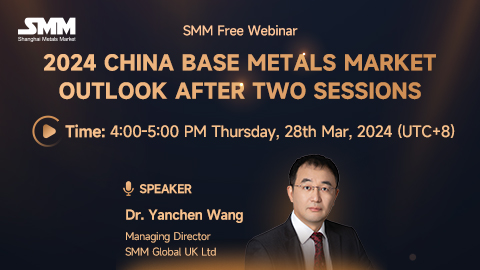 WebinarMar 28, 16:00 - 23:59 (GMT+8)
 WebinarJul 21, 00:00 - 23:59 (GMT+8)