

839results found for 'Steel Trade'
News
- [SMM Analysis] Twin Barriers Force a Trade Reset: A Full Anatomy of the Scramble for the EU's 18.35 Mt Steel Quota
The EU's temporary steel safeguard expired at end-June 2026 and a permanent TRQ took its place — duty-free volume nearly halved to about 18.35 Mt, the out-of-quota duty doubled to 50%, and a first-ever "melt and pour" origin rule. Using the official allocations, this piece breaks the quota down category by category and country by country: HRC alone claims about 5.2 million tonnes, Türkiye takes the largest share, Taiwan, China is squeezed hardest — and CBAM stacks a second barrier on top.
Aug 20, 2026 11:00 - [SMM Stainless Steel Daily Review] SS futures weakened, and spot stainless steel trading was mediocre, awaiting peak season verification.
[SMM Stainless Steel Daily Review] SS Futures Weaken, Spot Stainless Steel Transactions Mediocre, Awaiting Peak Season Validation SMM, August 19 – SS futures maintained a subdued consolidation trend. Dragged lower by the broad decline in nonferrous metals, SS prices pulled back in tandem. As of the close, the most-traded SS contract settled at 14,260 yuan/mt. In the spot market, although SS futures pulled back somewhat, the overall decline was relatively small. Stainless steel traders mostly held their offers steady, with only occasional small discounts. Overall transactions remained sluggish, showing no signs of recovery ahead of the “September-October peak season.” The Most-Traded SS Futures Contract. At 10:15 a.m., SS2610 was at 14,260 yuan/mt, up 25 yuan/mt from the previous trading day. Spot premiums for 304/2B in Wuxi were in the 410-610 yuan/mt range. In the spot market, the average price of Wuxi cold-rolled 201/2B coil was steady; for cold-rolled 304/2B coil with mill edge, Wuxi average price was flat, Foshan average price was flat; the price of Wuxi cold-rolled 316L/2B coil fell by 100 yuan/mt; for hot-rolled 316L/NO.1 coil, Wuxi quotation was flat; cold-rolled 430/2B coil in both Wuxi and Foshan was flat. This week, stainless steel futures were continuously disturbed by macro sentiment, maintaining an overall weak pullback trend. During the week, news on Indonesia’s RKAB nickel ore approval repeatedly disrupted industry expectations. Coupled with the hawkish tone of the US Fed’s policy stance and the unresolved US-Iran geopolitical conflict, macro uncertainty stayed high. Multiple bearish factors dragged SS futures down continuously throughout the week, with bearish sentiment dominating the market and futures movement...
Aug 19, 2026 15:34 - [Vietnam] Sacombank cuts lending rates by 2% to support import-export businesses, including steel traders
Sacombank has announced a 2% annual interest-rate reduction for new and existing import-export customers from August 13 to December 31, 2026, shortly after the Prime Minister’s meeting with the State Bank of Vietnam (SBV) and the country’s credit institution system on the same morning. The preferential package, backed by a nearly VND 100 trillion portfolio, aims to support import-export businesses, including steel importers and exporters, by reducing financing costs and promoting trade activities. Sacombank is also offering preferential loans at 8.5%-9%/year to priority sectors, business households and FDI enterprises.
Aug 13, 2026 15:46 - [SMM Steel] Steel Prices Steady as Exchange Rates Hold; Malaysia Reviews AD Duties on Coated Steel from Vietnam, China
[Vietnam] Vietnam’s domestic steel market remained relatively stable, with construction steel prices holding at around 533 USD/tonne as exchange rates and market conditions were largely unchanged. HRC prices stood at around 515–522 USD/tonne CFR Ho Chi Minh City following Formosa Hà Tĩnh’s latest price announcement, while subdued demand continued to weigh on the market. Meanwhile, Malaysia’s Ministry of Investment, Trade and Industry (MITI) initiated an expiry review of anti-dumping duties on pre-painted steel coils from China and Vietnam, with a final determination expected within 180 days. The review could affect regional coated steel trade flows and supplier competitiveness.
Aug 11, 2026 15:27 - UK Anti-Dumping Duty on Chinese and Russian Cold-Rolled Steel Expires
The United Kingdom's anti-dumping duty on certain cold-rolled flat steel products originating from China and Russia expired on August 5, 2026, according to a notice from the UK's Integrated Online Tariff service. The expiry removes a trade-defence measure that had applied to imports of these products, potentially opening the door to renewed import flows from the two origins absent a review or extension. The move stands in contrast to the European Union's parallel tightening of steel trade defences during the same period, highlighting a divergence in post-Brexit UK trade policy from the EU's approach on certain product lines. No announcement of a renewal investigation was noted alongside the expiry notice. UK steel producers and downstream buyers are expected to monitor import volumes in the products' categories in the coming months for any material shift. The development is procedural in nature but carries commercial significance for UK cold-rolled coil market participants.
Aug 10, 2026 13:13 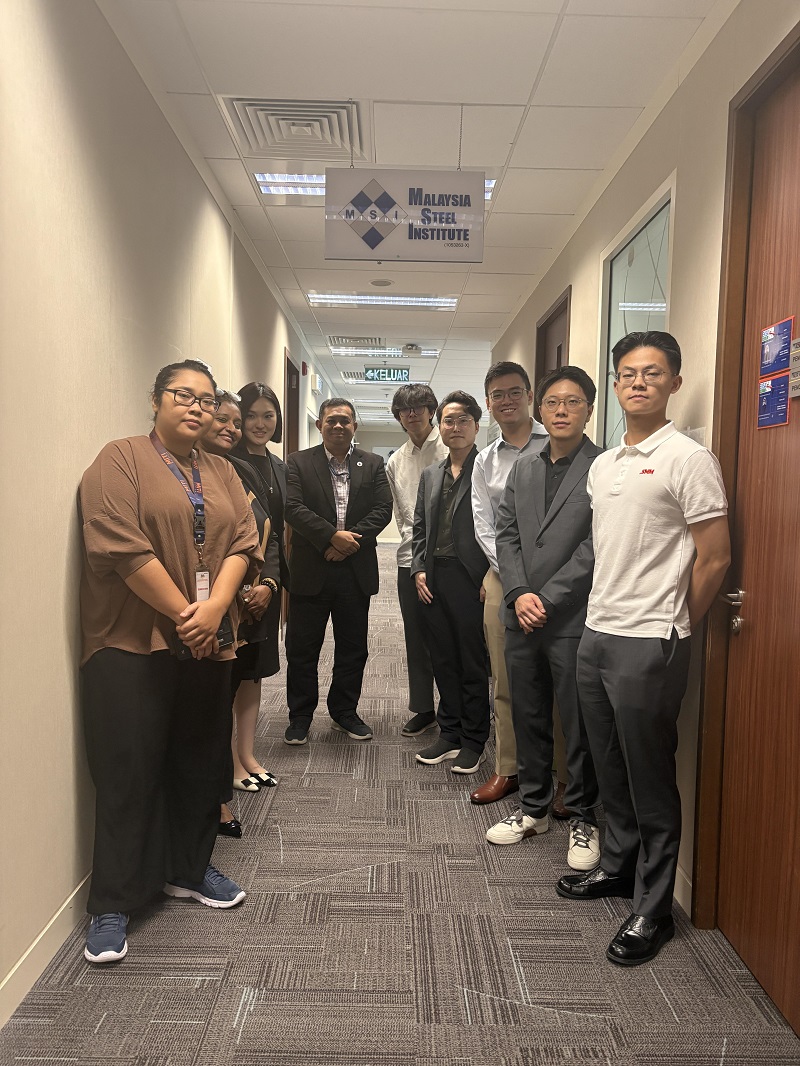 SMM Visits Malaysian Steel Institute (MSI) to Deepen Cooperation on the Southeast Asian Ferrous Metal Industry Chain
Kuala Lumpur, Aug 5 – At a time when the global ferrous metals sector is undergoing constant restructuring, ASEAN has emerged as a pivotal growth hub for the steel industry, fuelled by robust end-market demand, fast-expanding production capacity and shifting cross-border trade dynamics. Regional infrastructure upgrades, local capacity iteration, and trade policy adjustments are collectively driving ongoing changes in the supply-demand structure, pricing system, and supply chain of the ASEAN steel market. The industry urgently needs a specialized, international dialogue platform to address development pain points and unlock global business opportunities. Against this industry background, a delegation from Shanghai Metals Market (SMM) paid a special visit to the Malaysia Steel Institute (MSI) on August 4, and was warmly welcomed by MSI's team including CEO Ts. Dr. Nurl Muiz, Industry Relations and Liaison Shalini and Data Analyst Shamimi, etc. Both sides introduced their respective development overviews, and engaged in in-depth exchanges on cooperation directions, industry data services, exhibition synergy, and other topics, sorted out areas of cooperation alignment, seeking a long-term and mutually beneficial industry cooperation model. MSI presented its institutional positioning and core functions to SMM. As an industrial service organization under the jurisdiction of Malaysia's Ministry of International Trade and Industry (MITI), MSI serves as a key communication bridge between the Malaysian government and the steel industry. Built on a government-enterprise collaboration model, it has been deeply involved in the domestic steel industry for many years, responsible for public services such as industry standard setting, technology R&D, talent cultivation, and detection and testing, undertaking the function of coordinating the steady development of Malaysia's steel industry. Leveraging long-term industry surveys, MSI conducts in-depth market intelligence research on the Southeast Asian steel market, helping member enterprises enhance market competitiveness through data analysis services. The local government is actively advancing the green steel industry development agenda and increasing the green transformation of the steel sector, but enterprise awareness and industry supporting systems on the market side are lagging behind the policy promotion pace. In response, MSI hopes to connect with professional industry platforms to address the industry's development shortcomings, and hopes to rely on SMM's entire industry chain service capabilities to obtain targeted industry development solutions and implementation suggestions, thereby helping the local green steel industry and the entire ferrous metals industry chain achieve steady upgrades. MSI understands and affirms SMM's data service capabilities in the global steel industry, and intends to leverage SMM's industry chain data to improve regular monitoring of steel capacity, production, supply and demand, etc. in Southeast Asia. MSI has long maintained cooperation with multiple international industry organizations. This engagement with SMM aims to jointly enhance the research standards of Malaysia's steel industry and promote high-quality development of the industry. Exhibition-conference synergy is one of the key cooperation directions in this visit. In order to further penetrate the ASEAN metals market, deliver bilateral cooperation outcomes, and build a higher-standard cross-border industry exchange and cooperation bridge, SMM will host the 2026 SMM ASEAN Ferrous Metals Summit from November 26-27, 2026 in Kuala Lumpur, Malaysia. The summit focuses on the development trends of the entire ferrous metals industry chain in ASEAN, covering core categories such as steel, iron ore, and coke. It will delve deeply into key industry topics such as steel demand transformation driven by regional infrastructure upgrades, mineral resource development and utilization, cross-border trade and circulation, industrial green transformation, and market price trend forecasts. The summit will bring together mines, steel enterprises, traders, logistics institutions, financial platforms, and industry research experts globally, leveraging SMM's mature industrial data system and market analysis capabilities to provide authoritative market interpretations and efficient upstream-downstream matchmaking channels for participants. MSI expressed that it will provide promotional support for SMM's relevant industry summits, including official channel promotion, invitation of local quality enterprises, and industry resource matchmaking. Both sides reached a preliminary cooperation consensus in terms of exhibition collaboration, brand synergy, and resource sharing. The in-depth engagement with MSI and the cooperation consensus reached will also lay a solid foundation for the successful implementation of this summit, deepening regional industry penetration in the ASEAN region, and releasing regional industrial cooperation value. About the 2026 SMM ASEAN Ferrous Metals Summit This event is the premium platform in the ASEAN ferrous metals market that converge 400+ decision-makers from mines, mills, trading houses, processors, equipment and technology providers, and logistics operators at the same table — precisely when the regional order is being rewritten. Conference Highlights 1. ASEAN Steel Market Outlook An in-depth analysis of regional steel demand, with consumption expected to reach 87.9 million mt in 2026, driven primarily by Vietnam, Indonesia, and the Philippines. 2. China—ASEAN Trade and Supply Chain Restructuring Exploring shifting flows of HRC, billet, slab, and other steel products amid changing supply patterns, trade remedies, and regional market dynamics. 3. Capacity Expansion and Production Transition Examining ASEAN’s evolving steelmaking landscape, including BF-BOF capacity growth, EAF development, overseas investment, and new regional production hubs. 4. Trade Policies and Market Access Assessing anti-dumping measures, tariffs, RCEP-related opportunities, and regulatory changes reshaping steel trade across ASEAN. 5. High-Growth Demand and Product Opportunities Identifying opportunities from infrastructure, construction, automotive, and advanced steel applications, with a focus on Indonesia, Vietnam, and other emerging markets. 6. Executive Networking and Regional Cooperation Connecting leading producers, traders, buyers, investors, associations, policymakers, and industry experts across ASEAN, China, and global markets. Senior Speakers 2026 Scenes from Past Conferences Conference Agenda Contact: Horin Dong WhatsApp: +8618721310824 Email: horindong@smm.cn Scan the QR code for conference details and more discount information About SMM SMM has long been deeply engaged in global commodity industry services, continuously deepening cooperative ties with government and enterprise institutions and industry associations across various countries, and steadily expanding its global industrial service network. Leveraging a mature collaborative model with Indonesian government, enterprises, and associations, SMM has established a comprehensive closed-loop ecosystem for sharing overseas exhibition and conference information, continuously iterating and upgrading its industrial big data system to achieve efficient global market information exchange and joint resource building and sharing. SMM organizes 50+ professional events each year, including industry summits, industry forums, and field trips. Of these, 40 are deeply rooted in the Chinese market, nearly 10 are precisely positioned in core Southeast Asian markets, and a small number cover Europe and Africa. Overseas events have earned global industry recognition thanks to authoritative industry guest lineups, solid industry survey data, and precise supply-demand matchmaking services. SMM has organized a series of high-end summits in Indonesia in cooperation with local authorities such as the Ministry of Foreign Affairs and the Indonesia Nickel Miners Association (APNI), gathering 300+ industry elites, and were complemented by professional field trip activities along the overseas industry chain, comprehensively empowering regional industry exchanges and trade matchmaking.
Aug 5, 2026 17:04
Announcements
In recent years, continued adjustments to European steel trade protection measures have made stainless steel import quotas an increasingly important factor.
DataJul 22, 2026 16:25SMM launches new export price assessments for carbon steel slabs in the Black Sea and Brazil, effective from 14 July 2026, to enhance market transparency and reduce trade risks.
PriceJul 2, 2026 14:25SMM will launch new import and export price assessments for billets in the Black Sea, Philippines, and Turkey, effective from 13 July 2026, to better reflect market dynamics and support global trade.
PriceJul 2, 2026 14:22