

4819results found for 'Sales'
Price
News
- [Southern Steel Expands Southwest Market Reach with Rach Gia Contractor Seminar, Strengthening Distribution Network]
Southern Steel (SSCV) held a contractor and distributor seminar in Rach Gia, reaffirming its strategy to strengthen customer ties and expand its presence in Vietnam’s Southwest region. The company highlighted Rach Gia, Phu Quoc and An Giang as key growth markets, while reinforcing its focus on stable supply, enhanced sales support and a stronger distribution ecosystem to capture rising construction demand.
Aug 3, 2026 18:47 - [SMM Nickel Market Flash] Harita Nickel: H1 Revenue Growth Volume-Driven as New Mine and RKEF Lines Ramp Up
In its official H1 2026 release, PT Trimegah Bangun Persada (Harita Nickel, IDX: NCKL) said its Rp17.1tn revenue was supported by operational discipline and capacity optimization amid a still-challenging global nickel market. CFO Suparsin Darmo Liwan said nickel ore sales volumes rose YoY, helped by the new PT Gane Tambang Sentosa (GTS) mine running since Q3 2025 and added lines at the KPS pyrometallurgy plant. Ferronickel sales rose notably on higher KPS RKEF output, while HPAL (MHP) sales were stable, shaped by delivery scheduling. Harita is also building a 50 MW HPAL waste-heat plant (Q4 2026) and a 40 MW solar plant (99% built).
Aug 3, 2026 17:21 - SMM Daily Review: Spot Lithium Carbonate Fell Steadily on August 3
[SMM Daily Comment: Spot Lithium Carbonate Fell Steadily on Aug 3] The SMM spot price of battery-grade lithium carbonate fell steadily today from the previous working day. The lithium carbonate 2609 contract opened low at 137,500 yuan/mt today, then fluctuated lower and dipped quickly, hitting a low of 135,600 yuan/mt; subsequently, bulls stepped in to push prices to a choppy rebound, and the morning session saw fluctuations around the average price line; near midday, bulls concentrated their strength, prices quickly surged past 140,000 yuan/mt and shot up to 140,800 yuan/mt; in the afternoon, faced with bearish selling pressure and profit-taking, prices consolidated and pulled back, and near the close, moved sideways in the 138,800-139,000 yuan range, finally settling down 1.15% at 138,900 yuan/mt, with open interest decreasing by 3,474 lots. In the spot market, coinciding with the first working day of the month, downstream material plants gradually received long-term contract and customer-supplied shipments. Spot order purchases were cautious, only purchasing as needed when prices were relatively low; upstream lithium chemical plants continued to hold prices firm for spot sales, mainly relying on long-term contracts and additional contract volumes to ensure supply at the beginning of the month. Overall, market inquiries and actual transaction activity decreased.
Aug 3, 2026 16:57 - Da'ao Metallurgy Invites You to the 2026 SMM Recycled Metal Industry Summit and Melting & Casting Technology Session
Relying on the dual carbon strategy and the development trend of the circular economy, China's recycled metal industry leads the world in scale while facing numerous development challenges. To help enterprises seize policy and market opportunities and solve industry development problems, SMM will grandly host the 2026 SMM Recycled Metal Industry Summit and Melting & Casting Technology Special Session on August 17–18, 2026 in Ningbo, Zhejiang . Chongqing Da'ao Metallurgical Technology Co., Ltd. – Luoyang Da'ao Metallurgical Materials Co., Ltd. sincerely invites you to witness and participate in building an international platform for exchange, cooperation, resource sharing, and collaborative innovation, contributing to the construction and improvement of the global resource recycling system and supporting the transition to a global green economy. Click to register immediately. All for high-quality casting Company's Main Business Scope Processing and sales of casting machines, graphite slab crystallisers, fully oil-sealed aluminum slab crystallisers, round bar crystallisers, aluminum (cast steel) dummy bar heads, aluminum liquid distribution bags, and other casting tooling and auxiliary materials; sales of aluminum (copper) plate/sheet, strip, and foil products; and providing non-ferrous metal processing enterprises with production technology solutions, solving technical problems, technical skill training, new product development and upgrading, and other services. Aluminum fully oil-sealed crystalliser Large-size hard alloy crystalliser Graphite adjustable crystalliser Aluminum liquid distribution bag The company has a practical research team deeply engaged in aluminum and aluminum alloy melting and casting production technology research and operation, consistently leading the forefront of related technology exploration. It has in-depth understanding of imported casting equipment and systems such as Wagstaff, Novelis, Alme, and Hydro, and has established long-term cooperative relationships with multiple domestic professional research institutions and large-scale aluminum processing enterprises. Combined with the characteristics of traditional Chinese casting methods, it has developed a variety of proprietary branded slab crystallisers and round billet crystallisers for semi-continuous casting of aluminum and aluminum alloys. Contact Information 023-47676366 0379-65116688 Huang He: Phone 13637961666 Email: Company Website: Company Address: Building 12, Shuangfu Intelligent Manufacturing Park, No. 895, Attachment 27, North Section of Nanbei Avenue, Jiangjin District, Chongqing (Zhongtianyuan) No. 1, Gaoxin Fenghua Road, Luoyang Area, China (Henan) Pilot Free Trade Zone SMM Meeting Contact Guan Changkui 18715173598 Email:
Aug 3, 2026 16:46 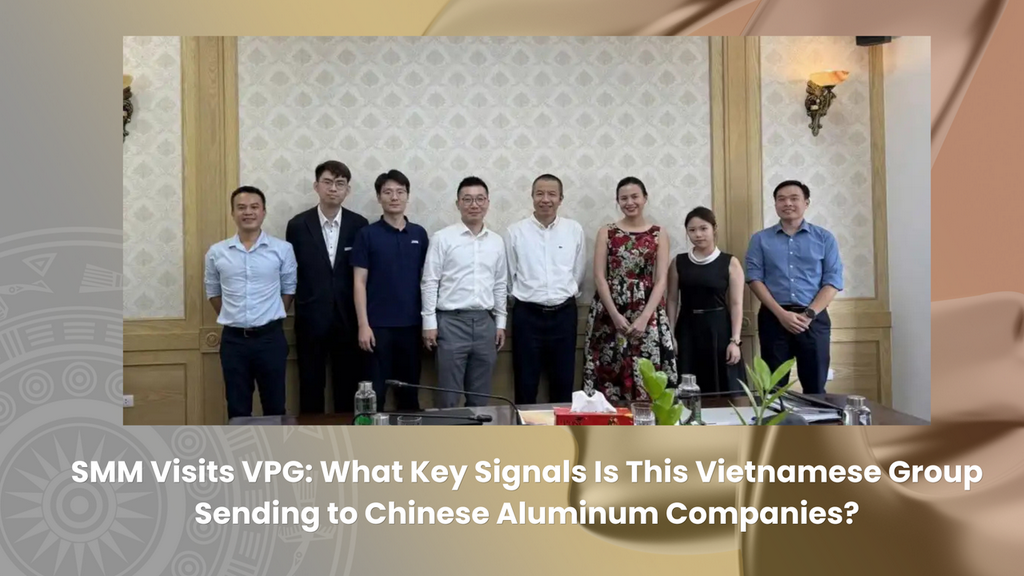 SMM Visits VPG: What Key Signals Is This Vietnamese Group Sending to Chinese Aluminum Companies?
On July 23, 2026, a delegation from Shanghai Metals Market Information Technology Co., Ltd. (SMM) visited VPG (Viet Phuong Group). The delegation included: Logan Lu, CEO of SMM Cason Lou, Director of Aluminum Processing, Marketing Department Lexi Chen, Key Account Manager for Overseas Information Sales Khai Yuen Chin, Senior Overseas Aluminum Analyst The two sides held in-depth discussions on bauxite resource development in Southeast Asia, alumina project development, regional logistics networks, and the development of a Vietnam-based aluminum pricing system. SMM noted that as the global aluminum value chain continues to restructure, China’s alumina market is expected to see sustained demand for overseas resources. Given resource availability and cost considerations, high-quality overseas alumina resources—particularly those from Vietnam and other Southeast Asian markets—are expected to gain greater market potential and competitive advantages. VPG shared updates on the progress of its current projects and said it is actively advancing mineral processing and alumina projects, with Southeast Asia and other international markets set to become key areas of future development. Since 2008, VPG has been engaged in bauxite exploration and development in Sekong Province, Laos, and is currently advancing an integrated industrial project covering bauxite mining, mineral processing, and alumina production. Both sides agreed that establishing an open, transparent, and regionally representative local aluminum pricing system would help improve information transparency and strengthen the international influence of Southeast Asia’s aluminum value chain. They also expressed expectations for deeper cooperation in market research, pricing services, and industry exchanges. What Signals Does SMM’s Visit to VPG Send to Chinese Companies? 01 Vietnam Is Becoming an Important Hub Connecting the Global Aluminum Value Chain In recent years, an increasing number of international companies have viewed Vietnam as an important gateway connecting Southeast Asian resources with global markets. Supported by its established port infrastructure, rapidly expanding manufacturing sector, and growing international trade network, Vietnam is not only benefiting from the relocation of global manufacturing capacity but is also emerging as an important regional hub for the aluminum value chain. For Chinese companies seeking opportunities in Southeast Asia, Vietnam is gradually evolving from an “investment destination” into a “supply chain partner.” 02 Vietnam’s Rapid Market Growth Is Creating New Export Opportunities With free trade agreements such as the EU-Vietnam Free Trade Agreement (EVFTA) taking effect, Vietnam has become a strategic sourcing hub for aluminum products used in the solar industry, including aluminum profiles and PV module frames, with export growth exceeding 20%. EVFTA tariff benefits for EU buyers, together with US Section 301 tariffs, have also encouraged some international buyers to shift sourcing toward Vietnam. Meanwhile, Vietnam aims for electric vehicles to account for 50% of urban vehicles by 2030. As electric vehicles use nearly 30% more aluminum than conventional vehicles, growing EV adoption could generate significant additional aluminum demand. This widening demand gap is expected to create substantial opportunities for aluminum suppliers and exporters. Against this backdrop, SMM AICE is expanding internationally by bringing its conference to Vietnam. The event aims to establish an authoritative platform connecting Chinese aluminum companies with Vietnam and the broader Southeast Asian market, promoting the transition of China-Vietnam aluminum cooperation from “resource complementarity” toward “full-value-chain cooperation and mutual growth.” 03 Future Competition Will Be About Information, Not Just Opportunities Vietnam’s market continues to develop rapidly. At the same time, market rules, policies, cost structures, and pricing mechanisms are constantly evolving. For Chinese companies, identifying projects alone is no longer enough. Timely access to local policies, industry development trends, supply chain changes, and market pricing information is becoming increasingly important. This is also why SMM continues to deepen its presence in the Vietnamese market. Recently, SMM AICE has been conducting intensive visits across Vietnam and the broader Southeast Asian industrial value chain, maintaining close communication with government authorities, industry associations, mining companies, alumina producers, aluminum processors, and other market participants. Through more transparent market intelligence and pricing systems, SMM aims to help global companies better understand market dynamics and reduce decision-making risks. To help more aluminum companies seize emerging opportunities and establish an early presence in the Vietnamese market, SMM AICE Vietnam is coming to Vietnam with a major industry gathering. VPG — Viet Phuong Group Founded in 1996, VPG (Viet Phuong Group) is a well-established diversified investment group in Vietnam, with businesses spanning mining, energy, infrastructure, finance, real estate, and other sectors. Mining is one of the group’s key strategic businesses, with projects involving mineral resources including bauxite, rare earths, and quartz sand. In the aluminum sector, VPG has been engaged in bauxite exploration and development in Sekong Province, Laos, since 2008. The group is currently advancing an integrated project covering bauxite mining, mineral processing, and alumina production. Leveraging Vietnam’s established port infrastructure and regional logistics network, VPG plans to export alumina products to China and other global markets through the Laos–Vietnam cross-border logistics corridor, further integrating into Southeast Asia’s aluminum supply chain. In recent years, the company has continued to advance project development, international cooperation, and market expansion, with the ambition of building a regional aluminum industry platform spanning resource development, alumina production, and international trade. Join the Conversation at SMM AICE 2026 Connect with aluminum producers, processors, traders, manufacturers, certification organisations, industry associations and decision-makers from across Southeast Asia and the global market. Explore aluminum pricing, primary aluminum supply, processing technologies, low-carbon development, CBAM compliance and new opportunities for regional cooperation. ? Ho Chi Minh City, Vietnam ? November 19–20, 2026 Register now: bit.ly/AICE26 and secure your Super Early Bird Pass and save up to USD 200. Register before August 31, 2026.
Aug 3, 2026 16:42- Under High Copper Prices, Few Transactions for Tax-Excluded Copper Scrap [SMM Secondary Copper Daily Review]
SMM August 3 The futures closing price at 11:30 today was 105,830 yuan/mt, up 170 yuan/mt from the previous trading day. The average spot premiums were 280 yuan/mt, up 20 yuan/mt from the previous trading day. Secondary copper raw material prices rose 100 yuan/mt from the previous trading day today. The secondary copper raw material sales sentiment index increased to 2.52, and the procurement sentiment index rose to 2.01. The price difference between copper cathode and copper scrap was 3,455 yuan/mt, down 1,068 yuan/mt from the previous trading day. The price difference between copper cathode rod and secondary copper rod was 1,630 yuan/mt. According to SMM survey, copper prices surged in late trading, transactions in the secondary copper raw material market were very few throughout the day. Under high copper prices, demand for tax-unpaid copper scrap remained unable to trade on a large scale due to policy issues, while tax-paid copper scrap remained the market's "hot commodity." Scrap utilization enterprises indicated that restrictions on "reverse invoicing" are expected to be gradually lifted in the Jiangxi region, and some enterprises have already resumed production.
Aug 3, 2026 16:14
Announcements
SMM will launch a weekly Copper grade A cathode premium, FCA Zambia, on July 31, 2026, to enhance price transparency and provide a reliable reference for global copper trade.
PriceJul 22, 2026 16:36- Price【SMM Announcement】SMM Global Copper Scrap Price Assessments Shift from Weekly to Daily Publication
SMM has decided to change the publication frequency of the following global copper scrap price assessments from weekly to daily, effective August 3, 2026 to more promptly reflect price movements.
PriceJul 21, 2026 16:44 SMM plans to officially launch the Thailand Zamak3 Premium.
PriceJun 18, 2026 17:39