

636results found for 'Processing fee'
Price
News
- [SMM Cobalt & Lithium Morning Meeting Minutes] Lithium Chemicals Remained Relatively Strong as Industry Chain Divergence Intensified; Peak-Season Demand Support Gradually Strengthened
This week, operations across the industry chain continued to diverge. The lithium segment remained relatively strong: an upward shift in the price center of lithium carbonate drove ore prices and lithium hydroxide higher, but salt plants became less willing to accept high-priced ore, and further gains were still constrained by margins. Lithium carbonate futures retreated from highs, while spot inquiries and transactions improved somewhat; downstream demand was still dominated by just-in-time procurement. Some metal salts and intermediate product markets remained weak, with more low-priced supply and muted actual transactions; nickel sulphate held steady, but spot orders were under pressure. Ternary cathode precursor prices were weak due to softer raw materials, while ternary cathode material continued to rebound, supported by a rebound in lithium chemicals and stockpiling ahead of the peak season. LFP supply and demand remained in a tight balance; tight raw materials, declining inventory, and rising processing fees strengthened cathode enterprises’ bargaining power. The anode, separator, and electrolyte segments were broadly stable, while supply bottlenecks persisted in parts of the sodium-ion battery chain. On the recycling side, demand for LFP electrode was active, while transactions in high-metal-content black mass were cautious; going forward, focus will be on whether peak-season demand materializes and how raw material price pass-through evolves.
Aug 18, 2026 09:53 - [SMM Analysis] The Lithium Battery Consumption Tax Is Here—Who Will Foot the Bill?
Starting September 1, lithium-ion batteries will officially bid farewell to more than a decade of consumer tax exemption. The Ministry of Finance, the General Administration of Customs, and the State Taxation Administration previously issued a joint announcement, clarifying that a consumption tax will be reinstated on products such as lithium-ion batteries at a rate of 2%, and will be further raised to 4% starting September 1, 2027; meanwhile, cutting-edge technology routes such as sodium-ion batteries, solid-state batteries, and fuel cells will continue to be exempt through the end of 2028. After the news was released, the market’s first reaction was cost pass-through: if batteries are taxed, will NEVs become more expensive? Battery prices are highly likely to rise, and most of the incremental cost will also flow into the vehicle manufacturing stage, but that does not mean NEVs will therefore see broad-based price increases. Cost Increases May Not Necessarily Be Passed Through to Vehicle Prices From the tax calculation rules, this consumption tax will be levied as a one-off at the battery production stage, and the announcement has already made arrangements to avoid double taxation: where externally purchased, tax-paid battery cells are used for continuous production of battery packs, a credit is allowed for the tax already paid based on the quantity drawn for use in the current period; where self-produced battery cells are used for continuous production of battery packs, no tax is levied at the transfer stage either. Therefore, regardless of whether battery cells are self-produced or purchased externally, and regardless of who completes the Pack, the tax burden is ultimately levied once based on the taxable price at the battery pack ex-factory stage. Per-vehicle estimates should be calculated directly on a battery pack basis, rather than on a battery cell basis. Based on this approach, a rough estimate is that, using the price of a 100Ah LFP battery cell as a reference, for a mainstream BEV model equipped with a 60kWh battery pack, the 2% tax burden corresponding to the battery cell portion alone is about 400–500 yuan, which can be viewed as the lower bound; calculated on a battery pack ex-factory basis, the actual per-vehicle increment is mainly in the range of several hundred yuan to around 1,000 yuan. After the tax rate rises to 4% in 2027, the corresponding amount will double. The conclusion is that, compared with fluctuations in raw material prices such as lithium and nickel in recent years, the per-vehicle cost increment brought by this tax is not particularly significant; compared with sales promotions offered by automakers that often amount to several thousand yuan or even tens of thousands of yuan, its magnitude is likewise limited. Therefore, the consumption tax will raise vehicle costs, but is not enough to, on its own, constitute a reason for broad-based NEV price increases. The Tax Burden Is Highly Likely to Be Passed Downstream and Remain at the Automaker Level Where the tax burden ultimately settles depends on the bargaining power of each party across the industry chain. Considering upstream material supply and demand, the concentration of the battery industry, and communications with automakers, this tax is highly unlikely to remain with battery enterprises over the long term, and will instead move downstream along the industry chain into vehicle costs. First, there is limited room to shift it upstream For LFP, while the industry’s nominal capacity is not low, high-quality capacity such as high compaction density remains relatively tight, top-tier players have full order books, and processing fees are in a rising phase . Hunan Yuneng previously announced that it would raise processing fees across its full range of LFP products, and stated that incremental capacity would be difficult to meet all order growth. Under this supply-demand relationship, it is difficult for battery enterprises to demand that cathode material producers cut prices in reverse and jointly bear the consumption tax. The situation for ternary cathode material is somewhat different, but the conclusion is similar. Overall capacity for ternary cathode is in surplus, processing fees have long remained at low levels, and enterprises’ profit headroom has already been largely exhausted . Even if battery producers have some procurement bargaining power, upstream players lack sufficient profit buffers to fully absorb the 2% tax burden. Therefore, the cathode material side can at most share a small portion, and is unlikely to be the main segment under pressure. If the tax burden cannot move upstream, the next question is whether battery enterprises can pass it downstream. Previously, the market often cited “power battery overcapacity” as a reason to believe battery producers lack bargaining power versus automakers. But this judgment overlooks the highly concentrated structure of the power battery market. At present, the combined share of the Top 5 enterprises in China’s power battery installations has reached about 80% , indicating strong bargaining power. Although some second- and third-tier battery producers have weaker bargaining power and may ultimately bear most or even all of the tax burden, their corresponding market share is limited and cannot represent where the tax burden will settle for most industry installations. For external suppliers such as CATL, technical certification, car model fit, supply stability, and switching costs together constitute bargaining power; for vertically integrated enterprises such as BYD, when the battery segment transfers taxable batteries to the vehicle segment, the tax liability is triggered, and the consumption tax will be directly reflected as the group’s internal vehicle manufacturing cost. Based on information from enterprises, all parties are still negotiating the specific sharing ratio, but the direction of battery enterprises’ request to pass the burden downstream has already become relatively clear. Therefore, a more accurate conclusion is not that “all battery producers can pass the tax burden on,” but rather that the allocation of the tax burden will diverge significantly: top-tier players have the ability to pass most of the cost through to automakers, while second- and third-tier producers may be forced to bear a higher proportion themselves. Given that power battery installations are highly concentrated among top-tier players, on an industry-wide weighted basis, it is more likely that most of the tax burden will ultimately enter vehicle costs. Another often overlooked factor is exports. Under the current consumption tax regime, exported taxable consumer goods are exempt from consumption tax, and the scope of this announcement is also limited to domestic production and sales, toll processing, and imports; power batteries exported directly are not included in the tax base. For battery enterprises, the effective tax burden should therefore be assessed based on the domestic sales portion: taking CATL as an example, its overseas revenue share in 2025 had already exceeded 30%, and this part of the business is unaffected. The higher the export share, the lighter the effective tax burden and the thicker the profit buffer. This further reinforces the judgment that tax burden allocation will diverge—top-tier players not only hold bargaining power in the Chinese market, but their export mix is also diluting the tax base; those truly facing the full 2% tax base are precisely the second- and third-tier producers that rely mainly on domestic sales. Given the Current Competitive Landscape, Vehicle Prices Are Unlikely to Rise As mentioned earlier, the incremental tax burden for a mainstream BEV model is still only several hundred yuan to around 1,000 yuan. Compared with sales promotions that automakers often provide in the range of several thousand yuan or even tens of thousands of yuan, this magnitude is not enough to change pricing on its own. More importantly, the current NEV market has a dense set of substitute car models, and consumers are highly price-sensitive; if any automaker is the first to publicly raise prices, it may pay the price in sales and market share . Recently, automakers in China have still been offering end-user concessions of several thousand to tens of thousands of yuan through cash subsidies, trade-in benefits, and financing programs. Therefore, this cost is more likely to be absorbed by automakers through compressing per-vehicle margins, annual cost reductions, renegotiating prices for other parts, and adjusting marketing expenses. The eventual outcome may be: battery quotations rise, and vehicle costs also increase, but neither the official guidance price nor the end-user transaction price shows a broad-based increase directly triggered by the consumption tax. SMM New Energy Industry Research Lithium Battery End-User Analyst Fu Linqi 18122430020
Aug 17, 2026 18:24 - Macro Support Combined With Inventory Destocking, Aluminum Prices Drift Higher [SMM Aluminum Morning Meeting Minutes]
[Macro Support Combined With Inventory Destocking: Aluminum Prices Consolidate on a Strong Note] Overall, aluminum prices are expected to consolidate on a strong note in the short term, but upside room will be somewhat capped by expectations of production resumptions.
Aug 17, 2026 09:11 - China’s August Refined Copper Output Forecast to Fall Again as Feedstock Shortage Deepens
China’s refined copper output is expected to decline year on year for a second consecutive month in August as persistent shortages of copper concentrate and other smelter feedstocks continue to weigh on operating rates. State-backed research house Antaike forecasts August refined copper production at around 1.05 million tonnes among surveyed producers representing 81.97% of China’s total smelting capacity, down 2.83% year on year. July output from the same group is estimated at a similar 1.05 million tonnes, representing a 3.18% annual decline and falling short of an earlier forecast of 1.07 million tonnes. The expected contraction reflects increasingly tight availability of raw materials. Copper concentrate supply has remained under pressure for an extended period, prompting smelters to lower capacity utilisation as competition for feedstock intensifies. The strain is also visible in treatment charges. Processing fees for imported copper concentrate have remained negative for 19 consecutive months, while charges fell to a record low of around minus $175.7/t on August 7, compared with minus $38.4/t during the same period a year earlier. The deepening negative charges highlight the severity of competition among smelters for available concentrate. At the same time, tighter domestic tax-invoice regulations have constrained the supply of VAT-compliant recycled copper, reducing another important source of smelter feedstock and adding further pressure to refined output. The expected second consecutive annual decline in refined production suggests that prolonged concentrate tightness is increasingly translating into constraints on finished copper supply. With China accounting for a dominant share of global smelting capacity, continued feedstock shortages could further tighten refined copper availability and increase the market’s sensitivity to additional disruptions in concentrate supply.
Aug 17, 2026 05:21 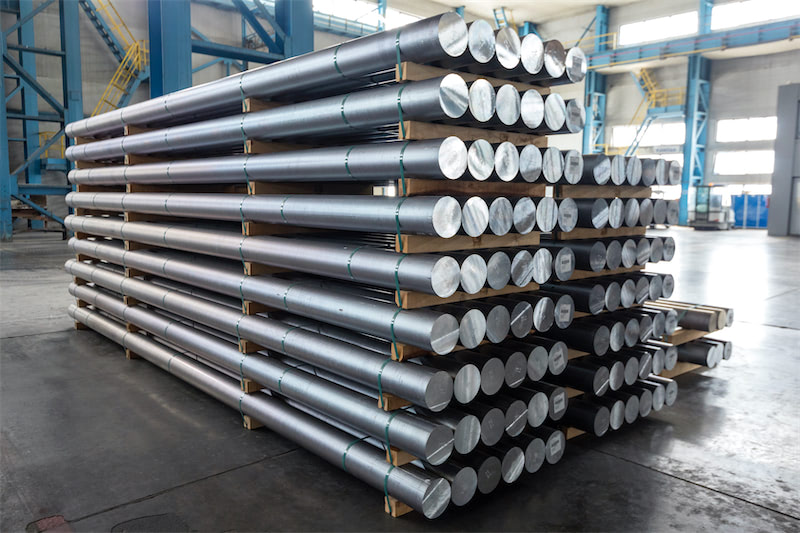 China Aluminum Billet Supply: July Extended the Inertia-Driven Uptrend; Expectations of a Retreat from Highs in August
SMM Aluminum Billet Market: In July, the operating rate of aluminum billet rose 1.1 percentage points MoM to 58.3%, up sharply by 5.2 percentage points YoY. Benefiting from the strong performance of aluminum billet processing fees in Q2...
Aug 15, 2026 19:09- Magnesium Ingot Weekly Price Rose, Upstream Support Strong, Downstream Follow-up Insufficient, Upside Room Limited [SMM Magnesium Weekly Data]
[Weekly Magnesium Ingot Prices Rise on Strong Upstream Support; Insufficient Downstream Follow-Through Limits Upside Room] This week, mainstream quotations for magnesium ingot in major producing areas were 15,900-16,000 yuan/mt, up 100 yuan/mt WoW, with FOB prices at $2,250-2,350/mt. This round of magnesium ingot price gains was driven by three factors: supply-side maintenance-related production cuts, cost push from coal and ferrosilicon, and concentrated delivery and restocking by traders. However, after the price increase, downstream fear of high prices emerged and transactions returned to mediocre levels; foreign trade remained weak, constrained by exchange rate fluctuations and the uncertain recovery of summer break orders. Upstream dolomite prices were stable, with sufficient supply from multiple channels; downstream magnesium powder and magnesium alloy prices followed the increase, but demand follow-through was insufficient. Magnesium alloy processing fees remained under pressure due to ample inventory, the impact of non-standard supply sources, high-temperature maintenance at die-casting enterprises, plastic substitution in two-wheelers, and other factors. In the short term, cost support is pitted against weak demand, and magnesium prices continue to move sideways.
Aug 14, 2026 18:01
Announcements
The data is planned to be officially launched in September 2026, at which time the new indicator names and IDs will be updated. The existing related data points will be discontinued on July 17, 2026.
DataJul 17, 2026 15:00SMM will launch a new 9-Series NCM Cathode Material (For CE) price effective July 1, 2026, benchmarked against the 900604 and 900505 models to provide price guidance for consumer market.
PriceJun 26, 2026 17:39SMM will introduce Southeast Asian 6063 Aluminum Billet Premiums, SMM Southeast Asian 6063 Aluminum Billet, and CIF Southeast Asia 6063 Aluminum Billet price points starting 3rd July 2026.
PriceJun 26, 2026 13:49