

61results found for 'Photovoltaic Industry'
Price
News
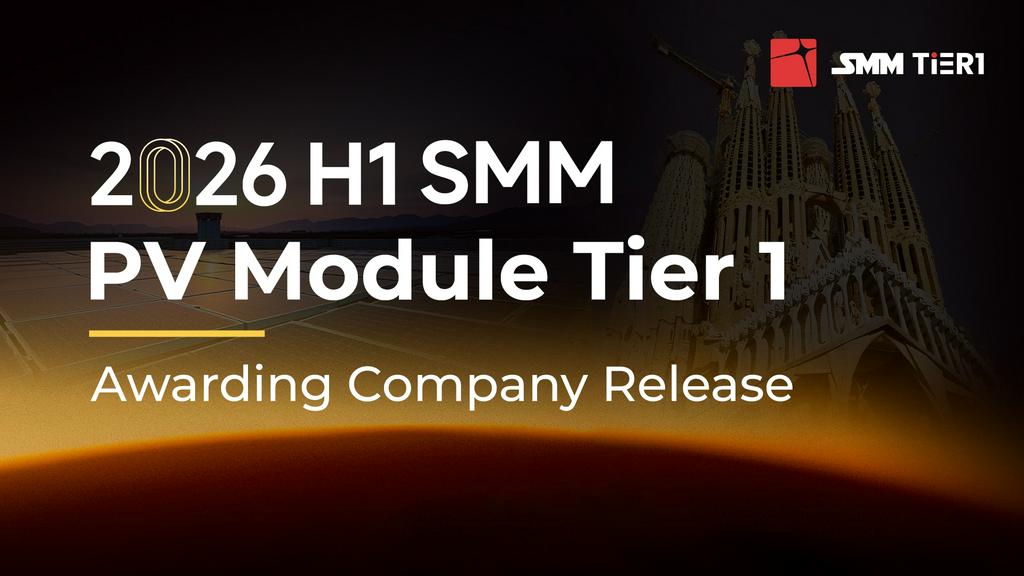 Defining Industry Excellence:SMM Unveils the 2026 PV Module Tier 1 List
As the global photovoltaic (PV) industry enters a new stage of development in 2026, the sector finds itself at a pivotal crossroads defined by both cyclical market adjustment and rapid technological transformation. Having moved beyond an era driven primarily by large-scale capacity expansion, the industry is increasingly focused on improving manufacturing efficiency, accelerating technology upgrades, and strengthening supply chain resilience to support sustainable long-term growth. The continued commercialization of N-type cell technologies, alongside the rapid advancement of Back Contact (BC) products, is reshaping the competitive landscape. At the same time, evolving global trade dynamics and the growing need for localized manufacturing are driving companies to optimize their international strategies and reinforce operational resilience. While short-term supply-demand imbalances continue to present challenges, the long-term outlook for the solar industry remains highly positive, supported by accelerating global decarbonization efforts and ambitious renewable energy targets across major markets. Against this backdrop, companies with strong technological capabilities, reliable manufacturing capacity, and proven execution continue to distinguish themselves as industry leaders. To recognize these outstanding performers, Shanghai Metals Market (SMM) has officially released the 2026 SMM PV Module Tier 1 List , highlighting manufacturers that demonstrate excellence across multiple dimensions of business performance. Built upon SMM's deep industry expertise and comprehensive market research, the Tier 1 evaluation adopts a multi-dimensional assessment framework covering product competitiveness, manufacturing and delivery capability, financial and operational stability, market performance, and long-term sustainability. The objective is to identify enterprises that consistently deliver high-quality products while maintaining resilient operations in an increasingly competitive global market. The companies included in the 2026 SMM PV Module Tier 1 List represent the backbone of today's global photovoltaic industry. Their strong production capabilities, consistent product quality, dependable delivery performance, and commitment to continuous innovation position them as trusted partners for utility-scale, commercial, and distributed solar projects worldwide. More than a recognition of current market leadership, the SMM PV Module Tier 1 List reflects the industry's ongoing transition toward higher standards of quality, innovation, and sustainable development. As technological pathways continue to diversify and international market conditions become increasingly complex, the list serves as an authoritative reference for project developers, investors, EPC contractors, and other industry stakeholders seeking reliable manufacturing partners. Looking ahead, SMM remains committed to supporting the healthy development of the global photovoltaic industry by promoting technological innovation, encouraging fair and rational competition, and fostering continuous improvements in product quality, manufacturing efficiency, and project value. Together with industry partners, SMM believes the solar sector will continue to play a vital role in accelerating the global transition toward a cleaner, more sustainable energy future.
Aug 5, 2026 15:49- Jiangxi Ningheda New Materials Co., Ltd. cordially invites you to the 2026 SMM (16th) Tin Industry Chain Conference
"Tin" Leads the Future: Industrial Transformation and Value Reshaping in the New Cycle – Conference Background Currently, the global tin industry stands at a historic turning point, where traditional cyclical logic has been thoroughly shattered and its strategic value has been fully highlighted. In 2026, the tin market exhibits an unprecedentedly complex pattern and profound transformation: I. Deep Restructuring of the Supply-Demand Pattern and an Unprecedented Increase in Strategic Attributes The global static reserve-production ratio of tin resources is only 14 years, with scarcity becoming increasingly pronounced. The supply side is under "triple pressure": repeated disruptions in Myanmar’s production resumptions, continued tightening of Indonesian policies, and elevated geopolitical risks in the DRC; resource constraints have already become a new norm. Meanwhile, the demand structure is undergoing a fundamental shift, and tin has emerged as a strategic resource linking traditional manufacturing with a digital future. II. Price System Breaks Through Historical Records, Reshaping of the Industrial Ecology In early 2026, SHFE tin prices broke through 470,000 yuan/mt, reaching an all-time high. This price breakthrough not only reflects a supply-demand imbalance but also signals a reassessment of the tin industry's value. Traditional trade models, risk management systems, and supply chain collaboration methods are in urgent need of innovative breakthroughs. III. Technology-Driven and Green Transition Foster a New Symbiotic Ecosystem Digital and smart technologies are deeply empowering the tin industry chain. The global green transition demands an upgrade toward low-carbon practices and a circular economy, making recycled tin recovery and green smelting processes essential paths. All segments of the industry chain must shift from competition to collaboration, building an open, resilient, and innovative symbiotic system. In this context, from August 19 to 21, 2026, in Changsha, Hunan, the 2026 SMM (16th) Tin Industry Chain Conference will bring together global industry elites for in-depth discussions. Jiangxi Ningheda New Materials Co., Ltd. will attend this grand event, discussing industry development trends with industry peers and jointly pushing the tin industry to new heights. Click to sign up now, witness and participate in this extraordinary and far-reaching industry event, and create a brilliant new chapter together! Founded in 2017, Jiangxi Ningheda New Materials Co., Ltd. is located at No. 966 Tiangong South Avenue, High-Tech Industrial Park, Fengxin County, Yichun City, Jiangxi Province, and is a holding subsidiary of Jiangxi Ningxin New Materials Co., Ltd. (hereinafter referred to as Ningxin New Materials). Founded in 2007, Jiangxi Ningxin New Materials Co., Ltd. is an enterprise specializing in the R&D, production, and sales of special graphite. The company owns a complete set of special graphite production equipment, with process technology at an advanced level in China, and its market share holds a leading position in the special graphite industry. On November 8, 2016, Ningxin New Materials was successfully listed on the New Third Board (stock abbreviation: Ningxin New Materials, stock code: 920719). In 2020, it was selected as a national-level specialized and new "little giant" enterprise. In May 2023, it was successfully listed on the Beijing Stock Exchange. Jiangxi Ningheda New Material Co., Ltd. is mainly engaged in graphite product machining and graphite product support services. It specializes in providing graphite materials, graphite electrodes and related graphite products for the lithium battery industry, machinery industry, electronic semiconductor and solar photovoltaic industries, as well as corresponding application technical services and technical upgrade solutions for these industries and products. With excellent production technology, strong service awareness, and high market share, Jiangxi Ningheda New Material Co., Ltd. has developed rapidly by leveraging the raw material, capital and management advantages of its parent company Ningxin New Materials. It is committed to extending the special graphite industry chain and contributing to building a comprehensive graphite industry strategy in the future. Established in 2017, located at No. 966 of Tiangong South Avenue, High-tech Industrial Park, Fengxin County, Yichun City, Jiangxi Province, China, Jiangxi Ningheda New Material Co., Ltd. is a subsidiary of Jiangxi Ningxin New Material Co., Ltd. Jiangxi Ningxin New Materials Co., Ltd. was established in 2007. It is an enterprise specializing in the research and development, production and sales of special graphite. With a full set of special graphite production equipment, the process technology has reached advanced level in the domestic market, and its market share in the special graphite industry is far ahead. On November 8, 2016, Ningxin New Materials was successfully listed on the New Third Board (stock abbreviation: Ningxin New Materials, stock code: 920719). In 2020, it was selected as a national-level specialized and new "little giant" enterprise. In May 2023, Ningxin was successfully listed on the Beijing Stock Exchange. Jiangxi Ningheda New Material Co., Ltd. is mainly engaged in graphite product processing and graphite product matching service, providing graphite materials, graphite electrodes and graphite products for the lithium industry, machinery industry, semiconductor and solar photovoltaic industry, along with corresponding product technical services and technical application update programs. With excellent production technology, good customer service, high market share, and relying on the advantages of new materials, capital and management of its parent company (Jiangxi Ningxin New Material Co., Ltd.), Jiangxi Ningheda New Material Co., Ltd. has developed quickly. We devote to the extension of the special graphite industry chain, and make contributions for building the future whole graphite industry strategy. Contact Deng Qin 18179589702 Email: Address: No. 966, Tiangong South Avenue, High-tech Industrial Park, Fengxin County, Yichun City, Jiangxi Province Long press to scan the QR code to register 2026 SMM (16th) Tin Industry Chain Conference
Aug 4, 2026 09:12 - [SMM PV Express] China Photovoltaic Industry Association (CPIA) Recruits Industry Experts for Special Research on Space PV Field
With the rapid development of space technology and commercial spaceflight, space PV, as the core energy source for spacecraft, is becoming a key technology supporting strategic missions such as space exploration, satellite communications, and space solar power stations. Meanwhile, the expansion of emerging scenarios like the low-altitude economy and high-altitude drones is imposing higher demands for high efficiency, light weight, and high reliability of PV systems in extreme environments, driving the extension of space PV toward integrated aerospace applications. As a frontier field of deep integration between PV and aerospace, space PV is an important direction for China to seize the strategic high ground in energy and expand new spaces for PV applications. Developing lower-cost space PV technology to support the future large-scale development of the space PV market requires pooling resources from PV, aerospace, satellite, and other sectors to advance collaboratively. To this end, the China Photovoltaic Industry Association (CPIA) plans to openly solicit experts from across society to jointly carry out policy research, technical breakthroughs, and standard development for the space PV industry.
Jul 20, 2026 11:31 - SNEC ES+ 13th (2027) International Energy Storage and Battery (Shanghai) Conference and Exhibition
SNEC ES+ The 13th (2027) International Energy Storage and Battery (Shanghai) Conference and Exhibition 2027 June 2-4 China · National Exhibition and Convention Center (Shanghai) No. 333 , Songze Avenue, Qingpu District, Shanghai Integrate the Ecosystem, Empower the Future of the Energy Chain Pre face: Co-organized by 25 international institutions and organizations including the Asian Photovoltaic Industry Association (APVIA), the Chinese Renewable Energy Society (CRES), the Renewable Energy Professional Committee of the China Association of Circular Economy (CREIA), the Shanghai Federation of Economic Organizations (SFEO), the Shanghai Science and Technology Exchange Center (SSTEC), and the Shanghai New Energy Industry Association (SNEIA), the “SNEC ES+ The 13th (2027) International Energy Storage and Battery (Shanghai) Conference and Exhibition” will be grandly held in Shanghai, China, from June 2 to 4, 2027. From 15,000 m² at its first edition in 2007, the “SNEC ES+ The 13th (2027) International Energy Storage and Battery (Shanghai) Conference and Exhibition” grew to 360,000+ m² in 2026, attracting more than 2,800 enterprises from 95 countries and regions worldwide, with international exhibitors accounting for 30%, and has become the most influential international, professional, and large-scale energy storage event in China, Asia, and the world. SNEC ES+ The 13th (2027) International Energy Storage and Battery (Shanghai) Conference and Exhibition is the world’s most professional energy storage exhibition. Its exhibits include: international energy storage technologies and smart grids, energy storage technologies, equipment and materials, ESS power stations and EPC projects, grid connection of new energy power generation and intelligent transmission and distribution, power grid dispatching and automated control, smart metering and power consumption management, smart grid information and communications, international NEVs and charging piles, NEVs, power drive systems, key parts for NEVs, automotive design, charging facilities, etc., covering every link of the energy storage industry chain. The SNEC Energy Storage Forum also features a particularly rich variety of formats, covering analysis of future market trends in the energy storage industry, cooperative development strategies, policy orientations of various countries, cutting-edge industry technologies, energy storage finance, etc., and is the best opportunity to showcase achievements to the industry. We look forward to global stakeholders gathering in Shanghai, China, taking an industry-wide perspective and a problem-oriented approach, to jointly assess the energy storage markets in China, Asia, and the world, and to lead the path of innovative industry development together. May we meet in Shanghai in June 2026! Schedule: Move-in: May 30, 2027 13:30-18:00 May 31, 2027 & June 1 9:00-20:00 Exhibition: June 2-3, 2027 09:00-17:00 June 4 09:00-14:00 Move-out: June 4, 2027 14:00-24:00 Organizing Institutions: Approving Authority Shanghai Municipal Commission of Commerce Lead Organizers Asian Photovoltaic Industry Association (APVIA) Chinese Renewable Energy Society (CRES) Renewable Energy Professional Committee of the China Energy Research Society Shanghai Federation of Industrial Economics (SFIE) Shanghai Science and Technology Exchange Center (SSTEC) Shanghai New Energy Industry Association (SNEIA) Co-organizers Global Green Energy Industry Council (GGEIC) New Energy Industry Association Asia Pacific (NEIAAP) China Electric Power Construction Enterprise Association (CEPCA) Photovoltaic Professional Committee of the Chinese Renewable Energy Society (CPVS) Renewable Energy Professional Committee of the China Association of Circular Economy (CREIA) Supporter Solar Photovoltaic Products Sub-Council of China Chamber of Commerce for Import & Export of Machinery & Electronic Products (CCCME) Exhibition Contractors Shanghai Follow Me Technology Co., Ltd. Shanghai Solar Cloud Exhibition Services Co., Ltd. Follow Me Int'l Exhibition USA Inc. Follow me International Exhibition Co., Ltd. Exhibit Scope (Categories): International Energy Storage Technologies and Smart Grids A. Energy storage technologies, equipment and materials: Compressed air energy storage, pumped storage, superconducting electromagnetic energy storage, flywheel energy storage, thermal/cold energy storage, hydrogen storage and other energy storage technologies, equipment and materials applicable to plug-in EVs; various batteries (nickel–metal hydride battery, lithium-ion battery, lithium polymer battery, lead-acid battery, smart battery, sodium-sulfur battery), energy storage power supply, supercapacitors, renewable fuel cell, flow battery and other technologies, equipment and materials B. ESS power stations and EPC projects: BMS battery management system, PCS energy storage inverter, microgrid, EV battery swapping/charging stations and related supporting facilities C. Grid connection of new energy power generation and intelligent transmission and distribution: Grid-tie inverter, light-duty DC equipment, operation monitoring devices, grid connection control systems, flexible transmission equipment, UHV transmission equipment, high-temperature superconducting equipment, high-temperature superconducting cables, distribution automation systems and protection devices, smart switching equipment, transformers, instrument transformers, smart components, digital substations, integrated substation automation, distribution network automation devices, online monitoring for transmission and distribution, fault diagnosis and self-healing devices, power quality monitoring, harmonic mitigation and reactive power compensation, superconducting electrical engineering technology, various new-type wires and cables, composite materials, safety protection D. Power grid dispatching and automated control: Smart power grid dispatching systems, dispatching integrated data platform systems, power grid security and control, intelligent inspection systems, integrated measurement/control/protection and arc suppression and line selection systems, safety and stability control system solutions, power monitoring systems and microcomputer-based relay protection, wide-area dynamic monitoring systems, online monitoring systems for power grid stability, distribution network intelligent reactive power compensation devices, control software, remote control and telemetry devices, large-screen display systems, power system simulation E. Smart metering and power consumption management: Smart meters and chips, remote/centralized meter reading systems, power consumption information acquisition systems, power consumption management information systems, load management terminals, monitoring systems, inspection devices, metering cabinets and components, measuring instruments, sensors, semiconductors F. Smart grid information and communications: Internet of Things technologies, cloud computing technologies, multi-network convergence technologies, transmission technologies and equipment, access equipment, optical fiber and optical cables, industrial Ethernet, data communications and network technologies and related products, in-plant communications equipment, power line carrier equipment, supporting equipment and meters, digital microwave communications equipment, test equipment and instruments, online network monitoring equipment G. Others International NEVs and Charging Piles A. NEVs (passenger vehicles / commercial vehicles): Electric buses and trucks, electric sedans, electric sightseeing vehicles, electric golf carts, electric cleaning vehicles, hybrid buses and sedans, solar EVs, light-duty EVs, hybrid vehicles (micro hybrid, mild hybrid, medium hybrid, full hybrid, and plug-in hybrid), battery EVs, fuel cell vehicles, hydrogen energy, natural gas and other new energy clean fuels, hybrid vehicles and various low-emission, environmentally friendly, energy-saving vehicles; B. Power drive systems: Power battery, battery management system, fuel cell, hybrid systems, drive motors, electric control systems, engines, detection and repair equipment, related testing, monitoring and protection instruments, related technologies; C. Key parts for NEVs: Power capacitors, supercapacitors, flywheels, inverter, electric heat pumps, electric power steering, electric air conditioning, tires, wire connections, electromagnetic technologies, related materials; coatings, transmissions, filters, carburetors, exhaust systems; axles, steering, braking, suspension systems; accessories for auto body; motors and electrical appliances, electronic components, electrical systems, circuits, wheel hub, tires, etc.; D. Automotive design: Complete vehicle design, system control design, etc. E. Charging facilities: Charging stations, charging piles; planning and achievements display of intelligent network projects for charging stations, expansion of gas stations into charging (battery swapping) stations, display of integrated refueling and charging service stations, technology products for solar- and wind-complementary NEV charging stations, power distribution equipment for charging stations, chargers, power monitoring systems, active filter devices, transformers, power distribution cabinets, cables, direct charging equipment, management auxiliary equipment, charging and swapping batteries and battery management systems, parking lot charging facilities, intelligent monitoring, power supply solutions for charging stations F. Others Exhibition Fees: Standard booth (deluxe standard, 3m x 3m ): China enterprises: RMB 23,800/booth Foreign-funded enterprises: US$4,900/booth Basic configuration: one consultation table, two folding chairs, one wastebasket, one 220V/500W power socket, two spotlights, Chinese and English header board, and carpet in the booth. Indoor bare space (minimum rental: 36 m²): China enterprises: RMB 2,380 /m 2 Foreign-funded enterprises: US$490 /m 2 Exhibitor Notes: 1. After confirming participation, the enterprise shall complete the exhibition application form, affix the official seal, and fax or mail it to the Organizing Committee; 2. Upon receipt of the booth reservation fee, the Organizing Committee will allocate booths to exhibitors in accordance with the principle of “first application, first payment, first arrangement”; 3. Payment details for exhibition fees: (1) The above exhibition fees do not include “construction deposit,” “construction management fee,” “facility rental fee,” and other fees; (2) Exhibitors that sign contract are requested to remit the deposit to the Organizing Committee’s account within ten working days from the date of contract signing, and fax the remittance voucher to the Organizing Committee for verification; (3) The remaining exhibition fees shall be remitted to the account designated by the Organizing Committee by December 31, 2026; 4. The placement order of advertisements in the conference booklet shall be based on the order in which advertising fees are received; the deadline for inclusion is March 31, 2027; 5. The Organizing Committee will send the Exhibitor Manual to participating enterprises in April 2027. For inquiries, please contact: Shanghai Follow Me Technology Co., Ltd. SNEC ES+ The 13th (2027) International Energy Storage and Battery (Shanghai) Conference and Exhibition Contact: Manager Wei Tel: +86-13817218765 (WeChat same number) E-mail: weiwei@snec.org.cn
Jun 29, 2026 11:47 - SNEC 20th (2027) International Solar PV and Smart Energy & Energy Storage and Battery (Shanghai) Conference and Exhibition
SNEC 20th (2027) International Solar PV and Smart Energy & Energy Storage and Battery (Shanghai) Conference and Exhibition SNEC 20th (2027) International Photovoltaic Power Generation and Smart Energy Conference & Exhibition 2027 6 2-4 National Exhibition and Convention Center (Shanghai), China Songze Avenue, Qingpu District, Shanghai 333 Multi-Energy Complementarity and Integrated Development of PV, Energy Storage, and Hydrogen Pre- face: Co-organized by 25 international institutions and organizations including the Asian Photovoltaic Industry Association (APVIA), the Chinese Renewable Energy Society (CRES), the Renewable Energy Professional Committee of the China Association of Circular Economy (CREIA), the Shanghai Federation of Economic Organizations (SFEO), the Shanghai Science and Technology Exchange Center (SSTEC), and the Shanghai New Energy Industry Association (SNEIA), the “SNEC 20th (2027) International Solar PV and Smart Energy & Energy Storage and Battery (Shanghai) Conference and Exhibition” (hereinafter referred to as the “SNEC PV Conference and (Shanghai) Exhibition”) is scheduled to be grandly held in Shanghai, China, from June 2-4, 2027. The “SNEC PV Conference and (Shanghai) Exhibition” has grown from 15,000 m² at its first edition in 2007 to 360,000+ m² in 2026, attracting more than 2,800 enterprises from 95 countries and regions worldwide, with international exhibitors accounting for 30%, and has become the most influential international, professional, and large-scale PV event in China, Asia, and the world. The SNEC PV Exhibition is the world’s most professional PV exhibition, featuring exhibits including PV production equipment, materials, solar cells, PV application products and modules, as well as PV projects and systems, energy storage, mobile energy, and more, covering every segment of the PV industry chain. The SNEC PV Forum also offers an exceptionally rich and diverse range of formats, covering analysis of future market trends in the PV industry, strategies for cooperative development, policy directions of various countries, the industry’s most cutting-edge technologies, PV finance, and more, making it the best opportunity to showcase achievements to the industry. We look forward to gathering with relevant industry players from around the world in Shanghai, China, to take an industry-wide, problem-oriented perspective, jointly assess the solar PV power generation markets in China, Asia, and the world, and together lead the path of innovative development for the industry. May we meet in Shanghai in June 2026! Schedule: Move-in: May 30, 2027 13:30-18:00 May 31, 2027 & June 1, 2027 9:00-20:00 Exhibition: June 2-3, 2027 09:00-17:00 June 4 09:00-14:00 Move-out: June 4, 2027 14:00-24:00 Organizing Institutions: Approving Authority Shanghai Municipal Commission of Commerce Lead Organizers Asian Photovoltaic Industry Association (APVIA) Chinese Renewable Energy Society (CRES) Renewable Energy Professional Committee of the China Energy Research Society Shanghai Federation of Industrial Economics (SFIE) Shanghai Science and Technology Exchange Center (SSTEC) Shanghai New Energy Industry Association (SNEIA) Co-organizers Global Green Energy Industry Council (GGEIC) Asia-Pacific New Energy Industry Association (NEIAAP) China Electric Power Construction Enterprise Association (CEPCA) Photovoltaic Professional Committee of the Chinese Renewable Energy Society (CPVS) Renewable Energy Professional Committee of the China Association of Circular Economy (CREIA) Supporter Solar PV Products Sub-Council of China Chamber of Commerce for Import and Export of Machinery and Electronic Products (CCCME) Exhibition Organizers Shanghai Follow Me Technology Co., Ltd. Shanghai Solarun Exhibition Service Co., Ltd. Follow Me Int'l Exhibition USA Inc. Follow me International Exhibition Co., Ltd. Exhibit Scope (Exhibit Categories): Solar PV A. PV Production Equipment: Silicon rod, silicon lumps, and silicon ingot production equipment: complete production lines, casting ingot furnaces, crucibles, growth furnaces, and other related equipment Silicon wafer and wafer production equipment: complete production lines, cutting equipment, cleaning equipment, detection equipment, and other related equipment Battery production equipment: Complete production lines, etching equipment, cleaning equipment, diffusion furnaces, coating equipment/deposition furnaces, screen printing machines, other furnace equipment, testers and sorters, other related equipment Panel/Module production equipment: Complete production lines, testing equipment, glass cleaning equipment, tabbing/welding equipment, lamination equipment, etc. Thin-film panel production equipment: Amorphous silicon cells, CIS/CIGS cells, CdTe thin-film cells, DSSC dye-sensitized cells production technology and research equipment B. Solar Cells: Solar cell producers, module producers, module installers, agents, dealers and distributors, concentrator cells, etc. C. PV-Related Parts: Batteries, chargers, controllers, converters, recorders, inverters, monitors, mounting systems, tracking systems, solar cables, etc. D. PV Raw Materials: Polysilicon, silicon ingots/silicon lumps, silicon wafers, encapsulation glass, encapsulation film, other raw materials E. PV Application Products: Lighting products, power supply systems, portable chargers, water pumps, solar household products and other solar products F. PV Engineering and Systems: PV system integration, solar air conditioning systems, rural PV power generation systems, solar detection and control systems, solar heating system engineering, PV engineering process control, engineering management and software development systems G. System Construction Equipment and Safety Protection: Electrical construction equipment, construction vehicles, engineering machinery, maintenance tools, aerial work platforms/vehicles, scaffolding, electrical safety tools, personal protective equipment H. Others Solar Energy and Green Building: A. Solar Thermal Utilization: Solar central hot water systems, household solar water heaters, solar heat pump water heaters, solar thermal collection systems, solar heating systems, integrated solar thermal and PV products, solar water heater manufacturing equipment, solar water heater raw materials and accessories B. Solar PV and Solar Thermal Power Generation: Grid-connected PV power generation systems, off-grid PV power generation systems, PV-wind hybrid power generation systems, PV transmission and distribution equipment, PV modules and components and equipment, parabolic trough systems, tower systems, dish systems, heat collection tubes, thermal storage equipment and materials, heat exchange technology and products, high-temperature heat transfer technology and products, system control C. Solar Cooling Systems and Equipment: Solar cooling products and systems, air-source products, solar central air conditioning, ground-source heat pump air conditioning D. Solar Lighting and Building Materials: Solar lawn lights, garden lights, solar street lights and other photovoltaic lighting products, solar PV glass, solar roof modules, integrated building-integrated PV (BIPV) solutions, etc. E. LED Technology and Products: LED lighting, LED application products, display products/digital signage, parts, modules, kits, etc. F. Solar Accessories: Solar complementary automatic control devices and instruments, solar pipes and fittings, solar control systems, solar heat pipes, evacuated tube collectors, flat plate collectors, manifold headers, insulation materials, hot and cold water pumps, mounting structures, PV equipment accessories, batteries, and related production equipment and accessory materials International Energy Storage Technology and Smart Grid A. Energy Storage Technology, Equipment and Materials: Compressed air energy storage, pumped hydro storage, superconducting magnetic energy storage, flywheel energy storage, thermal/cold storage, hydrogen storage and other energy storage technologies, equipment and materials applicable to plug-in electric vehicles; various types of batteries (nickel–metal hydride batteries, lithium-ion batteries, lithium polymer batteries, lead-acid batteries, smart batteries, sodium-sulfur batteries), energy storage power supplies, supercapacitors, regenerative fuel cells, flow batteries and other technologies, equipment and materials B. Energy Storage Power Stations and EPC Projects: BMS battery management systems, PCS energy storage inverters, microgrids, EV charging and battery swapping stations and related supporting facilities C. New Energy Generation Grid Connection and Smart Transmission and Distribution: Grid-tie inverters, lightweight DC equipment, operation monitoring devices, grid-connection control systems, flexible transmission equipment, ultra-high voltage transmission equipment, high-temperature superconducting equipment, high-temperature superconducting cables, distribution automation systems and protection devices, intelligent switchgear, transformers, instrument transformers, smart components, digital substations, substation integrated automation, distribution network automation devices, online monitoring of transmission and distribution, fault diagnosis and self-healing devices, power quality monitoring, harmonic control and reactive power compensation, superconducting electrical technology, various new types of wires and cables, composite materials, safety protection D. Grid Dispatching and Automation Control: Smart grid dispatching system, integrated dispatching data platform system, grid security and control, intelligent inspection system, integrated measurement, control, protection and arc suppression line selection system, security and stability control system solutions, electric energy monitoring system and microcomputer-based relay protection, wide-area dynamic monitoring system, online grid stability monitoring system, intelligent reactive power compensation devices for distribution networks, control software, remote control and telemetry devices, large-screen display systems, power system simulation E. Smart Metering and Electricity Consumption Management: Smart meters and chips, remote/centralized meter reading systems, electricity consumption information collection systems, electricity consumption management information systems, load management terminals, monitoring systems, testing devices, metering cabinets and components, measuring instruments, sensors, semiconductors F. Smart Grid Information and Communication: IoT technology, cloud computing technology, multi-network convergence technology, transmission technology and equipment, access equipment, optical fiber cables, industrial Ethernet, data communication and network technology and related products, in-plant communication equipment, power line carrier devices, supporting equipment and instruments, digital microwave communication equipment, testing equipment and instruments, online network monitoring equipment G. Others International New Energy Vehicles and Charging Piles A. New Energy Vehicles (Passenger Vehicles / Commercial Vehicles): Electric buses and trucks, electric cars, electric sightseeing vehicles, electric golf carts, electric cleaning vehicles, hybrid buses and cars, solar EVs, light-duty EVs, hybrid vehicles (micro hybrid, mild hybrid, full hybrid, plug-in hybrid), pure electric vehicles, fuel cell vehicles, hydrogen, natural gas and other new energy clean fuels, hybrid vehicles and various low-emission, environmentally friendly and energy-saving vehicles; B. Powertrain and Drive Systems: Power batteries, battery management systems, fuel cells, hybrid systems, drive motors, electric control systems, engines, testing and repair equipment, relevant testing, monitoring and protection instruments, related technologies; C. Key Parts for New Energy Vehicles: Power capacitors, supercapacitors, flywheels, inverters, electric heat pumps, electric power steering, electric air conditioning, tires, wiring connections, electromagnetic technology, related materials; coatings, gearboxes, filters, carburetors, exhaust systems; axles, steering, braking, suspension systems; auto body accessories; motors and electrical appliances, electronic devices, electrical systems, circuits, wheel hubs, tires, etc.; D. Automotive Design: Complete vehicle design, system control design, etc. E. Charging Facilities: Charging stations, charging piles; smart network project planning and achievement display for charging stations, expansion of gas stations into charging (battery swapping) stations, display of integrated fueling and charging service stations, solar and wind energy complementary new energy vehicle charging station technology and products, charging station power distribution equipment, chargers, power monitoring systems, active power filters, transformers, distribution cabinets, cables, direct charging equipment, management auxiliary equipment, charging and swapping batteries and battery management systems, parking lot charging facilities, intelligent monitoring, charging station power supply solutions F. Others Exhibition Fees: Standard Booth (Premium, 3m x 3m ): Domestic enterprises: RMB 23,800/unit; Foreign-invested enterprises: US$4,900/unit Basic configuration: one information desk, two folding chairs, one wastepaper basket, one 220V/500W power socket, two spotlights, bilingual (Chinese and English) header board, and carpet within the booth. Indoor Bare Space (minimum 36 m²): Domestic enterprises: RMB 2,380/m 2 Foreign-invested enterprises: US$490/m 2 Notes for Exhibitors: 1. After confirming participation, exhibitors should complete the exhibition application form, affix their official seal, and fax or mail it to the organizing committee; 2. Upon receiving booth reservation fees, the organizing committee will allocate booths according to the principle of "first application, first payment, first allocation"; 3. Payment terms for exhibition fees: (1) The above exhibition fees do not include "construction deposit", "construction management fee", "facility rental fee", etc.; (2) Exhibitors who have signed contracts shall remit the deposit to the organizing committee's account within ten working days from the date of signing the contract, and fax the remittance voucher to the committee for verification; (3) The remaining exhibition fees must be remitted to the account designated by the organizing committee before December 31, 2026; 4. The order of advertisements in the conference booklet is based on the sequence of receiving advertising fees, with a deadline for inclusion of March 31, 2027; 5. The organizing committee will send the Exhibitor Manual to exhibitors in April 2027. Welcome to Inquire: Shanghai Fulimi Technology Co., Ltd. SNEC 20th (2027) International Solar PV & Smart Energy & Energy Storage & Battery (Shanghai) Conference & Exhibition Contact: Manager Wei Tel: +86-13817218765 (same as WeChat) E-mail: weiwei@snec.org.cn
Jun 29, 2026 11:22 - [SMM Analysis] Hawkish Fed Pressures Gold & Silver; Long-Term Bullish Outlook Intact
Fed Hawkish Signals Exceed Expectations; Precious Metals Under Short-Term Pressure but Downside Limited June 18 — At 2:00 AM Beijing Time on June 18, the Federal Reserve kept the federal funds rate unchanged at 3.50%-3.75%, marking the fourth consecutive hold. The statement was significantly shortened in length and removed language hinting at further rate cuts. The dot plot showed nine officials expect a rate hike this year, while newly appointed Chairman Warsh did not submit a dot plot and declined to provide forward guidance. Hawkish signals pushed market pricing for a year-end rate hike up to 38 basis points. From a policy perspective, this FOMC meeting delivered hawkish signals that exceeded market expectations. Combined with the return of rate-hike expectations in the dot plot, it signals that the Fed's communication tone has shifted from "pause and watch" to "potential hiking," putting near-term pressure on precious metals. However, the fourth consecutive hold itself was in line with market expectations, and any actual rate hike still requires more data for validation, so the marginal impact of the policy signal itself is relatively limited. More critically, earlier economic data — U.S. May nonfarm payrolls rose by 172,000, beating expectations, with a combined upward revision of 93,000 for March-April — underscores that labor market resilience remains the most significant headwind suppressing rate-cut expectations and is the core bearish factor for precious metals recently. By contrast, May headline CPI matched expectations while core CPI came in slightly below consensus, meaning inflation data did not reinforce the tightening narrative beyond expectations, and its bearish impact is comparatively moderate. On balance, precious metals face dual pressure from hawkish policy signals and labor market resilience, but the elevated rate-hike expectations are still in the pricing-in phase, and the market may not form a systemic downward resonance at current levels. The trading logic will continue to hinge on subsequent nonfarm payrolls, CPI data, and actual communication from Warsh. US-Iran Peace Talks Advance; Geopolitical Risk Premium Unwinds June 18 — The presidents of the United States and Iran have signed an electronic memorandum of understanding (MoU). The official 14-point text largely matches prior media disclosures, and both sides are set to formally sign the agreement in Switzerland on Friday. Trump stated that if follow-up implementation of the MoU falls short of satisfaction, bombing operations would resume, and also revealed discussions with Syrian leaders on striking Hezbollah. Meanwhile, southern Lebanon witnessed multiple Israeli attacks, and Israel's finance minister indicated no withdrawal on Friday or thereafter. The geopolitical situation remains in a complex tug-of-war characterized by "negotiations alongside conflict." In the near term, the signing of the MoU marks a substantive phase in ceasefire negotiations, with market expectations for the reopening of the Strait of Hormuz strengthening, leading to further unwinding of the risk premium. Should the formal agreement be finalized on Friday, structural concerns over crude supply would materially ease, putting downward pressure on the oil price center, which in turn would cool global inflation expectations. From a medium-to-long-term perspective, if sustained oil weakness drives down energy costs, the Fed's monetary policy room would reopen, and market logic could gradually shift from "tightening expectations" toward a "rate-cut cycle," potentially offering new macro support for precious metals. Overall, US-Iran relations are currently in a phase of "peace talks advancing, conflicts unresolved," and market pricing will revolve around Friday's agreement implementation and subsequent execution risks in a repeated back-and-forth manner. Early Hiking Cycle Pressure Does Not Alter Long-Term Logic; Precious Metals' Allocation Value Remains Prominent Historical experience shows that in the early stages of every rate-hiking cycle, precious metals typically come under pressure from rising nominal rates and a stronger dollar, but the trend is not unidirectional downward. As the hiking cycle deepens, growing concerns over recession risks and liquidity stress increasingly highlight gold's role as an inflation hedge and safe-haven asset, with its price center tending to rise in the middle-to-late stages. Therefore, even if the Fed continues on a hawkish path, the pressure on precious metals may not be sustained; liquidity conditions and shifts in macro expectations also influence price dynamics. Of course, our overall bullish long-term logic for precious metals remains unchanged: First, global central banks continue to accumulate gold, with de-dollarization and reserve diversification strategies providing a solid floor for gold prices. Second, the U.S. dollar's credit system faces deep erosion — high interest rates on U.S. Treasuries imply high risk, and over the long run, U.S. debt rollover pressures and fiscal indiscipline are accelerating global de-dollarization. Third, the ever-expanding U.S. government debt stock and deteriorating fiscal sustainability raise the risk of future debt monetization and dollar depreciation. As a non-liability, supra-sovereign hard asset, gold's safe-haven and store-of-value functions hold irreplaceable appeal in the current macro environment. At the same time, geopolitical conflicts continue to simmer without truly subsiding, while global supply chains and energy markets remain volatile, with inflation persistence lingering. These uncertainties will collectively underpin the demand for gold and silver as safe-haven allocation assets, further boosting their strategic value over the medium-to-long term. From the Gold/Silver Ratio Perspective: Silver Under Pressure in the Short Term, but Outperforming Gold in the Medium-to-Long Term Remains Intact Historically, the gold/silver ratio exhibits significant mean-reverting behavior, with its long-term center roughly fluctuating between 60 and 70. However, under extreme macro environments, it can deviate markedly — for instance, the ratio widened sharply after the 2008 financial crisis and approached a historical extreme near 120 during the 2020 pandemic. The underlying dynamic is that during extreme risk-off episodes, the market prioritizes gold as a safe-haven asset, while silver, burdened by its industrial metal characteristics, tends to face systematic selling. Thus, the gold/silver ratio's cyclical movement can be summarized as: widening during crises (silver underperforms) and narrowing during recovery/inflation cycles (silver outperforms). Its essence is a cyclical indicator driven by the alternating dominance of safe-haven attributes versus industrial attributes. In the near term, the gold/silver ratio is more prone to stage-wise upward moves or range-bound drift with an upward bias. On one hand, silver has already posted notable gains, with crowded positioning making it more vulnerable to pullback pressure. On the other hand, the photovoltaic industry — a key pillar of silver industrial demand — is expected to see cell silver consumption decline by 9.51% year-over-year in 2026, and with ongoing silver-reduction progress and evolving cell product structures, annual silver consumption is projected to maintain a roughly 5 percentage-point decline through 2030. Although positive terminal installation expectations may boost cell production volumes, translating to some incremental demand, when converted to silver demand, a roughly 20% decline is anticipated this year. Over the long cycle, 2026 also marks a pivotal turning point in silver's industrial demand structure. The low-voltage electrical equipment sector, as a rigid support segment, exhibits strong irreplaceability in its silver demand. Emerging sectors such as new energy vehicles, PCBs, and SiC chips are rapidly expanding their end-market bases, and despite unchanged unit silver consumption, overall demand continues to grow steadily. Therefore, we maintain our core view that the gold/silver ratio will trend downward in the medium-to-long term — i.e., we are constructive on silver outperforming gold. The driving logic will gradually shift from rates and liquidity toward energy transition and industrial demand. Silver is transforming from a traditional precious metal into a strategically important industrial metal with rising exposure to photovoltaics, AI data centers, and grid upgrades, while supply remains highly inelastic due to its heavy dependence on lead-zinc and copper byproduct production. Once the global economy enters a rate-cutting cycle or real rates decline, silver's industrial elasticity will significantly amplify its upside potential, whereas gold, supported more by central bank buying and safe-haven demand, tends to follow a smoother trajectory.
Jun 18, 2026 18:44
Announcements
SMM will launch the price points for TOPCon module Rotterdam, Portugal and Greece in-warehouse, duty paid price for distributed and utility projects.
PriceMay 11, 2026 16:42
Events
 EventsSep 20 - 22, 2023 (GMT+8)Changzhou·Jiangsu
 WebinarJun 7, 18:00 - 23:59 (GMT+8)