

167results found for 'Macro economy'
Price
News
- [SMM Steel Market Morning Briefing] Global iron ore shipments down 14% MoM, China's steel exports up 8% MoM
As of last week, total global iron ore shipments reached 30.381 million mt, down 14% WoW, and cumulative shipments for the year reached 902.6104 million mt, up 2% YoY; among these, both Australia's and Brazil's shipments experienced notable declines. Over the same period, China's iron ore port arrivals were 25.015 million mt, down 13% WoW, and cumulative port arrivals for the year reached 521.3448 million mt, up 4% YoY...
Jul 13, 2026 07:35 - When Nickel from "Resource Surplus" Meets "Policy Tightening"—2026 H1 Nickel Price In-depth Review and H2 Outlook
I. Key Points In H1 2026, nickel prices exhibited wide fluctuations characterized by a “rebound from lows—consolidation at highs—pullback and consolidation” pattern. The most-traded LME nickel contract surged from $14,000/mt at the beginning of the year to near $20,000 in May, before pulling back to $16,000-17,000 in July; the most-traded SHFE nickel contract climbed from 110,000 yuan/mt to above 150,000 yuan/mt, and then retreated to 125,000-130,000 yuan/mt. The driving logic of this market move was the intertwined resonance of three main themes: a shift in Indonesia’s resource policies, repeated fluctuations in global macro liquidity expectations, and the impact of geopolitical conflicts on raw material costs. The center of nickel prices did rise compared to 2025, but the “shadow of surplus” has not dissipated. In H2 2026, the key variables for tracking nickel prices are as follows: First, the approval results of Indonesia’s RKAB quota revision in July. A significant increase in the quota would substantially narrow the supply deficit and weigh on nickel prices. Second, the Fed’s policy path — whether the hawkish signal from the June dot plot will persist — which affects the US dollar index and the valuation center of commodities. Third, sulphur supply and the situation in the Strait of Hormuz, which determines the cost support strength along the MHP–nickel sulphate–refined nickel chain. Fourth, demand from stainless steel and NEV ternary power batteries. Fifth, the pace of global visible inventory destocking. Sustained destocking would serve as a real support signal, while high inventories would limit price elasticity. Under a neutral scenario, LME nickel prices are expected to trade in the range of $15,500-17,500/mt in H2. II. Macro Environment – Reversal of Liquidity Expectations, Substantial Impact of Geopolitical Costs, and the ‘Dual Strength’ Pattern of the RMB 1. Fed Policy Path: ‘From Dovish to Hawkish’ At the beginning of the year, the market widely expected 50-100 bp of rate cuts in H1 2026, and the US dollar index fell below 97 at one point, creating a relatively loose liquidity environment. However, mid-year, new Fed Chair Kevin Warsh’s hawkish stance surprised the market. The June meeting kept rates unchanged and the dot plot signaled a bias toward rate hikes, leading to a systematic revision of the previously priced “dovish delivery” logic. This directly weighed on the valuation of industrial metals such as nickel, serving as a key macro trigger for the nickel price decline in June. 2. Geopolitical Conflicts Expanded from ‘Safe-Haven Trades’ to ‘Real Cost Shocks’ The Middle East situation (tensions among the US, Israel and Iran, and disturbances in the Strait of Hormuz) not only pushed up energy and safe-haven premiums, but also, through the critical link of sulphur supply, directly raised the production cost of Indonesia’s MHP (each mt of MHP in metal content consumes about 10 mt of sulphur), forming the core driver of the pulse-like surge in nickel prices in May. After a ceasefire agreement was reached between the US and Iran in mid-June, energy and safe-haven premiums receded, leading to a peak and subsequent pullback in commodities, confirming the dual impact of geopolitical variables on nickel prices. 3. China’s Macroeconomy and RMB ‘Dual Strength’ Provide a Unique Offset Against a generally stronger US dollar, the onshore RMB bucked the trend, appreciating from 6.98 to 6.79 (a gain of about 2.9%). The relative strength of the RMB, with the exchange rate declining (USD/CNY fell), caused import costs to drop sharply, opening the import window and generating arbitrage profits. However, as large volumes of imported nickel flowed into the domestic market, the spot supply of nickel plates in China increased, accelerating the pace of inventory buildup and weighing on domestic prices. At the same time, LME nickel inventories decreased, leading to a repair of the SHFE/LME nickel price ratio, and the import window closed again in May. III. Indonesia's Industrial Policy—Systemic Transformation from "Expanding Capacity" to "Controlling the Chain to Raise Prices" In H1 2026, Indonesia's nickel industry policy completed a strategic shift, systematically deploying a policy package centered on "controlling supply, stabilizing prices, and enhancing resource added value," which became the core fundamental variable driving wide fluctuations in nickel prices. 1. Significant tightening of total RKAB quotas and tilted allocation structure At the beginning of the year, Indonesia's ESDM announced that the 2026 nickel ore quota would be drastically cut from 379 million wmt in 2025 to 270 million wmt. The world's largest single nickel mine project, WBN, saw its 2026 quota suffer a "cliff-like" reduction; its quota was exhausted in May, leading to full-scale production cuts and shutdowns, stoking persistent concerns over tight supply in H1. The Indonesian authorities have clarified that July 1 to 31, 2026 will be the mid-year application period for supplementary RKAB quotas, prioritizing compliant miners with integrated domestic downstream smelting capacity (such as supporting NPI or HPAL projects). The mid-year policy game over RKAB quotas is intensifying. 2. HPM pricing formula reform shifts from single nickel pricing to multi-element comprehensive pricing The new formula effective April 15 incorporates associated elements such as iron, cobalt, and chromium into the value component for the first time. Indonesia sought to recapture the undervalued value of associated resources into the pricing system, raising benchmark prices for nickel ore and intermediate products across the cost side. However, this reform met strong opposition from the domestic smelting industry, which argued that it would further squeeze smelting profits amid already surging sulfur and energy costs. 3. Indonesian government officially releases new export control regulations for ferronickel (FeNi) and NPI In July, Indonesia further strengthened export supervision of high-value-added nickel products under Finance Minister Regulation (KMK) No.32/MK/BC/2026 (implementing Trade Minister Regulation No.17/2026). The new regulation targets products under HS Code Ex.7202.60.00, including ferronickel (FeNi) ingots and lumps with nickel content ≥8%, sponge ferronickel (Sponge FeNi) and granular ferronickel (Nugget FeNi) with nickel content ≥4%, as well as low-grade ferronickel products with 2% ≤ Ni <4% and iron content ≥75% (covering some NPI products). Export requires a surveyor's report (LS) and relevant export licenses; from January 1, 2027, export will generally only be allowed through state-owned export enterprises (BUMN Ekspor), with exemptions under specific circumstances. Overall, Indonesia is currently tightening quotas, raising taxes and fees, and imposing export controls to elevate resource value, seeking to keep nickel prices within its officially recognized desired range ($19,000-20,000/mt) over the long term. On the other hand, it must balance stability of the industry chain and foreign investor confidence in actual implementation, thus exhibiting a game-like characteristic of "tight first then loose, adjusting while implementing."The extreme policy uncertainty was one of the core reasons behind the wide fluctuations in nickel prices in H1. IV. Changes in Nickel Intermediate Product Raw Materials: Restructuring of the Cost Transmission Chain 1. MHP and High-Grade Nickel Matte: A Dynamic Game Dominated by "Auxiliary Material Costs" There are three main production routes for nickel sulphate raw materials: MHP (hydrometallurgy): the dominant route with the largest long-term growth, but highly dependent on sulphur; high-grade nickel matte (pyrometallurgy RKEF conversion / oxygen-enriched side-blowing route): an alternative route with low dependence on sulphur and relatively stable cost elasticity; nickel briquette dissolution: the least economical, feasible only within specific price spread windows. The sharp fluctuations in sulphur prices in H1 reshaped the cost structure of the entire nickel industry chain. Producing one mt in metal content of MHP requires approximately 10 mt of sulphur, while tensions in the Strait of Hormuz disrupted Indonesia’s sulphur import channels, forcing Huayou Cobalt’s Huafei Nickel-Cobalt to cut production on some lines starting in May. Sulphur prices surged, with the SMM sulphur CIF Indonesia price peaking at $1,300/mt, and the cost shock was transmitted step by step along the “sulphur—MHP—nickel sulphate—electrodeposited nickel” chain, becoming one of the core drivers behind the rapid nickel price rise in May. The high-grade nickel matte route, relying on pyrometallurgy, is far less dependent on sulphur than MHP. Consequently, during the sulphur price spike, high-grade nickel matte’s cost advantage over MHP widened significantly, creating direct substitution pressure on MHP’s market share. In terms of production trends, Indonesia’s MHP production edged up about 0.02% YoY to 206,000 mt in metal content in January-June 2026. Over the same period, high-grade nickel matte posted the most impressive growth, with production up about 123% YoY to 185,000 mt in metal content, strengthening its position in the competition for nickel sulphate raw materials. In the medium and long term, however, once sulphur supply normalizes and MHP costs pull back, the MHP route, with its scale effects and relatively mature cost curve, will reclaim its dominant share of the nickel sulphate raw material market; after all, MHP projects’ capacity base is far larger than that of high-grade nickel matte, and its cobalt by-product also provides a substantial marginal revenue contribution (about $4,500/mt Ni). 2. Production Capacity Switching Game Between High-Grade Nickel Matte and NPI High-grade nickel matte and NPI share the same RKEF production lines and laterite nickel ore resources, differing only in whether a sulphidation conversion stage is added at the end. The conversion decision is essentially a profit-maximization problem: when the marginal revenue of high-grade nickel matte relative to NPI covers the additional equipment and process losses of sulphidation conversion, lines switch to high-grade nickel matte; otherwise, they tend toward NPI. The conversion profit chart shows that profit for NPI-to-high-grade-nickel-matte conversion appeared only in April-May. After MHP production cuts in May, the monthly nickel sulphate raw material deficit was about 8,000 mt Ni, theoretically requiring increased high-grade nickel matte production to fill. However, due to RKAB quota constraints and the continued decline in NPI feed grade, integrated enterprises prioritized supplying stainless steel, making it difficult for high-grade nickel matte to offset the MHP raw material shortfall. This was a key reason why nickel sulphate prices remained firm even after refined nickel prices fell sharply in May. 5. Refined Nickel Supply-Demand Pattern: High Inventory vs. Structural Tightness Expectations 1. Supply Side: Electrodeposited Nickel Capacity Continues to Expand, Production Hits Repeated Records The most certain trend on the supply side is the sustained release of electrodeposited nickel capacity and production in China and Indonesia. According to SMM data, from January to June 2026, China’s refined nickel production was 215,000 mt, a YoY growth rate of 9%; Indonesia’s refined nickel production was 56,000 mt, a YoY growth rate of 97%. Meanwhile, at the beginning of 2026, China’s refined nickel trade pattern underwent a temporary reversal. Previously, benefiting from the explosion in electrodeposited nickel capacity, China had once been expanding its net exports of refined nickel. However, entering Q1 2026, as the price spread between Chinese and overseas markets opened up and the import arbitrage window was activated, China turned back into a net importer of refined nickel, with net imports exceeding 80,000 mt in January-April. 2. Demand Side: New Energy Recovery, Stainless Steel Support, and Steady Alloy & Special Steel In H1 2026, stainless steel, the largest downstream application of nickel, maintained mild growth. Total stainless steel production in China and Indonesia from January to June was approximately 23 million mt, up about 2% YoY. Steel mills maintained relatively high operating rates throughout H1, with stable apparent consumption. In the new energy (ternary battery) sector, nickel demand saw a strong recovery. From January to June, China’s ternary cathode precursor production was 528,000 mt, up 32% YoY; ternary cathode material production was 493,000 mt, up 40% YoY. Alloy & special steel and electroplating, although accounting for a relatively low share of total primary nickel consumption, played a critical role in refined nickel demand in H1 due to their irreplaceability. From January to June, China’s total refined nickel demand was approximately 140,000 mt, up 9% YoY. Military and aerospace demand strengthened, while high-end manufacturing demand remained steady with moderate growth. 3. Inventory Side: Global Visible Inventory Remains at Historical Highs Despite wild swings in nickel prices in H1, global visible nickel inventory remained at relatively high historical levels. LME nickel inventory fluctuated in the range of 270,000-280,000 mt for an extended period. China’s social inventory and exchange warrants experienced significant buildup. As of July, SMM refined nickel social inventory reached 130,000 mt, with total global inventory hitting a high of 497,000 mt. High visible inventory posed a significant constraint on nickel price rises. In June, after digesting supply disruption narratives, the market refocused on the fundamental reality of “high inventory and lackluster demand,” and nickel prices pulled back from a temporary high to around $16,100/mt. 6. H2 2026 Risk Alerts and Nickel Price Forecasts Based on the logic of H1, nickel price trends in H2 are expected to maintain a fundamental pattern dominated by policy gaming, with macro factors amplifying volatility. The following variables merit close monitoring: 1. The final outcome of the RKAB quota revision approval in Indonesia in July; 2. whether the US Fed's policy path in H2 will continue its hawkish stance; 3. whether sulfur supply can substantially return to normal, and whether there is a risk of repeated disruptions in the Strait of Hormuz situation; 4. whether end-use demand from stainless steel and new energy sectors can show a substantial improvement; 5. the destocking pace of global visible inventory. Based on the above price influencing factors, a scenario analysis for nickel prices is conducted: Bearish scenario (quotas being more accommodative than expected): quota increase ≥30% + sulfur pullback + high inventory pressure → LME nickel $14,000—$16,000/mt. Neutral scenario (highest probability): quota slightly increased but still tight + sulfur consolidates at highs → LME nickel $15,500—$17,500/mt. Bullish scenario (tight quotas + secondary cost surge): quotas continue to tighten + export controls + repeated geopolitical tensions push up sulfur → LME nickel $17,000—$19,000/mt.
Jul 10, 2026 15:56 - Precious metals bucked the trend and surged over 4%, Zhaojin Gold hit the daily limit, SHFE silver rose nearly 2%, and downstream wait-and-see sentiment intensified [SMM Flash]
SMM July 2 News: Fed Chairman Kevin Warsh stated on Wednesday that US inflation upside risks have clearly cooled over the past four weeks, easing market concerns about aggressive rate hikes; he also indicated that no further forward guidance would be released on subsequent interest rate policy, refusing to disclose whether the US Fed needs to consider a rate hike at its next meeting; the US dollar weakened, and precious metals rebounded. As of around 16:09 on July 2, COMEX gold dropped 0.11% to $4,077.9/ounce; SHFE gold main contract rose 1.53% to 890.66 yuan/g; COMEX silver dropped 1.1% to $59.845/ounce; SHFE silver main contract rose 1.91% to 14,650 yuan/kg; silver T+D rose 2.95% to 14,551 yuan/kg. In the precious metals stock market, as of the close on July 2, the precious metals sector rose 4.21%, with individual stocks: Zhaojin Gold and Chifeng Gold hit their daily limit up, while Shanjin International, Xiaocheng Technology, Zhongjin Gold, and Western Gold led the gains. News [Warsh: Inflation Eases Over Past Four Weeks, AI Is Reshaping Economy, Forward Guidance Loses Necessity] On July 1, at the ECB's annual central bank forum in Sintra, Portugal, Warsh again clearly stated that the US Fed would not provide forward guidance on the future interest rate path , hoping that policymakers can engage in thorough discussions based on the latest data at each meeting, rather than previewing the policy direction to the market in advance. He said that US inflation risks had eased over the past four weeks, and the supply expansion brought by AI could profoundly change how the economy operates, with the US at the center of this transformation, but whether AI ultimately leads to inflation or deflation should be judged by the central bank based on data. Warsh said the US Fed is “charting a new path” and will no longer hint at the direction of interest rates in advance as it did in the past. He said: “We will hold our next meeting in four weeks, and I hope we can have a real family-style debate then.” He reiterated that forward guidance is not the right policy in the current economic situation, and the US Fed will continue to base its decisions on the latest economic data in the future, rather than committing to a policy path in advance. This means that the US Fed will rely more on real-time economic data rather than sending policy signals to the market in advance. Spot Market Silver In the spot market: On July 2, the reference average factory price of SMM 1# silver in the morning was 14,558 yuan/kg, up 3.35% from the previous trading day. In the spot market, overall offers remained firm early in the month, but transaction follow-through was slightly weak, and consumption performance fell short of expectations. As silver prices rebounded slightly, downstream wait-and-see sentiment intensified. In Shanghai, morning offers were mainly at TD+5 to +15 yuan/kg. Some smelters quoted on the high side, but actual buying interest was weak, with most deals clustered around TD+10 yuan/kg. In other regions, low-priced cargoes had basically been cleared, while offers in Shenzhen were mostly around TD+5-10 yuan/kg. Today, the market quoted premiums for the SHFE most-traded contract 2608 at a discount of 30 to 20 yuan/kg. Overall, a slight cooling in rate-hike expectations provided some support for precious metals prices. At the start of the month, the spot direction remained unclear. Maintenance at copper plants last month caused a slight disruption on the supply side, and offers generally maintained a slight premium structure. Views From Various Parties Regarding the outlook for precious metals, some institutions’ views are as follows: On July 1, the World Gold Council released the “2026 Mid-Year Outlook for the Global Gold Market.” Looking ahead to H2, gold’s valuation framework indicated that gold will continue to serve as a barometer of the global macro economy, with three main possible scenarios. From current levels, gold prices were broadly in line with market consensus: the market expected the US Fed to raise rates at least once in 2026, most likely in October; the Bank of England, the Bank of Japan, and the European Central Bank were all set to tighten policy; and US Q2 inflation was expected to peak, near $3.9. If there were no major changes in the above environment, gold prices may trade around $4,100/oz within the year, with a fluctuation range of about ±5. If geopolitical or economic conditions deteriorate, or if interest-rate expectations shift, gold is expected to regain its upward momentum; however, only sufficiently strong signals of a global economic slowdown would be likely to drive a breakout to the upside. On the downside, a stronger US dollar, rate hikes exceeding expectations, and a rebound in market risk appetite were the main headwinds for gold prices; if gold prices remain below $4,000/oz, it may trigger further selling. However, based on historical performance, if gold prices fall by more than 10% from current levels, it may trigger “buy-the-dip” demand from long-term investors in multiple regions. State Street Investment Management said that, as the opportunity cost of holding gold and heightened volatility weighed on investor sentiment, bullish gold trades had been weak, and spot gold prices repeatedly tested the $4,000/oz support level. State Street believed that, although gold prices may be more volatile than in 2024-2025, the gold bull-cycle still has upside room, and the US Fed’s hawkish policy shift was expected not to change gold’s post-pandemic structural trend. State Street noted, “Since the US-Iran conflict, China’s retail gold imports have surged, and local premiums have risen in tandem, reflecting tightening fundamentals in China’s gold supply-demand balance.”State Street expects that over the next six to nine months gold prices could rise to the $4,750 to $5,500 per ounce range, with strong support in the $3,750 to $4,000 per ounce area. However, compared with the macro environment from January to February, the probability of gold prices reaching $5,500 to $6,250 per ounce is relatively small. (Zhitong Finance) State Street Investment Management strategists noted in a report that gold prices could reach $5,000 per ounce by early 2027, as the gold bull cycle remains persistent. They believe that as U.S. government debt rises, gold's role as a currency hedge is expected to be supported, while actual demand for gold remains strong. Global gold fund holdings (as a share of global mutual fund and exchange-traded fund assets) currently remain below State Street's target allocation of 3% to 10% for most portfolios. Moreover, they added that a hawkish pivot by the Fed should not alter gold’s structural post-pandemic trend. State Street expects base bullion prices to rise to $4,750 to $5,500 per ounce in the next six to nine months. (Jinshi Data APP) Analysts at Saxo Bank said, "The market has not yet attracted enough buying interest to establish that level as a support level." They also pointed out, "Even though energy prices have pulled back recently, investors still expect the Fed may further tighten monetary policy to combat an inflation rebound, and as a result, gold prices fell 14% in Q2, marking the worst quarterly performance since 2013." (Jinshi Data APP) CICC's latest research report pointed out that gold may have already overpriced rate hike expectations. Fed rate hikes are still not the base case, and the gold market may have overly priced in rate hike expectations, leaving room for a pullback this year. CICC's macro team believes that employment and consumption pressures, along with the expanding financing needs of the U.S. AI economy, may make it difficult for the Fed to materially turn hawkish, and monetary policy may be "hawkish in words but dovish in action." Based on the implied interest rate expectations model from gold prices, it is estimated that the current gold price around $4,000 per ounce has fully priced in three to four rate hikes, exceeding the rate hike expectations priced in by the interest rate futures market. Looking ahead, after the decline in oil prices is further reflected in U.S. short-term inflation data, the gold market's pricing of rate hike expectations may be corrected, and futures market short-term funds may have opportunities to cover short positions. (Jinshi Data APP) Li Xunlei, Deputy Director of the China Chief Economist Forum, pointed out that gold's long-term trend exhibits long bear markets and short bull markets. Since 1971, 30 years have been bear markets and 25 years have been bull markets, but each bull market has seen gains of over fivefold. A bull market typically lasts around 10 years. This gold bull run has now lasted nearly 10 years, with prices tripling during that time, so caution is warranted at this stage. (Jin10 Data App) Deutsche Bank analyst Michael Hsueh said the bank has cut its Q3 gold price forecast by over 20% to $4,300/oz and lowered its Q4 forecast by 17% to $4,800/oz. "Potential investors who would normally provide support are notably absent," he said, pointing to weak demand for exchange-traded funds and reduced buying appetite in some countries. (Jin10 Data App) Macquarie said profit-taking weighed on silver prices last month, and price action is once again driven by macro factors amid rising expectations for US Fed interest rate hikes. Similar to gold, silver prices are expected to move sideways for the rest of the year, then gradually decline into 2027, with inflationary pressures and the likelihood of further US Fed rate hikes limiting upside room. The higher inflation and bond yields, the greater the downward pressure. Silver, in particular, has been more susceptible to a pullback after outperforming gold, driven by bullish sentiment fueled by supply tightens, low inventory, and strong demand. Historically, silver pullbacks tend to be rapid. Macquarie expects silver to trade at $70/oz in Q4 this year and pull back to $65/oz by the end of 2027. (Jin10 Data APP) Recommended reads:
Jul 2, 2026 21:56 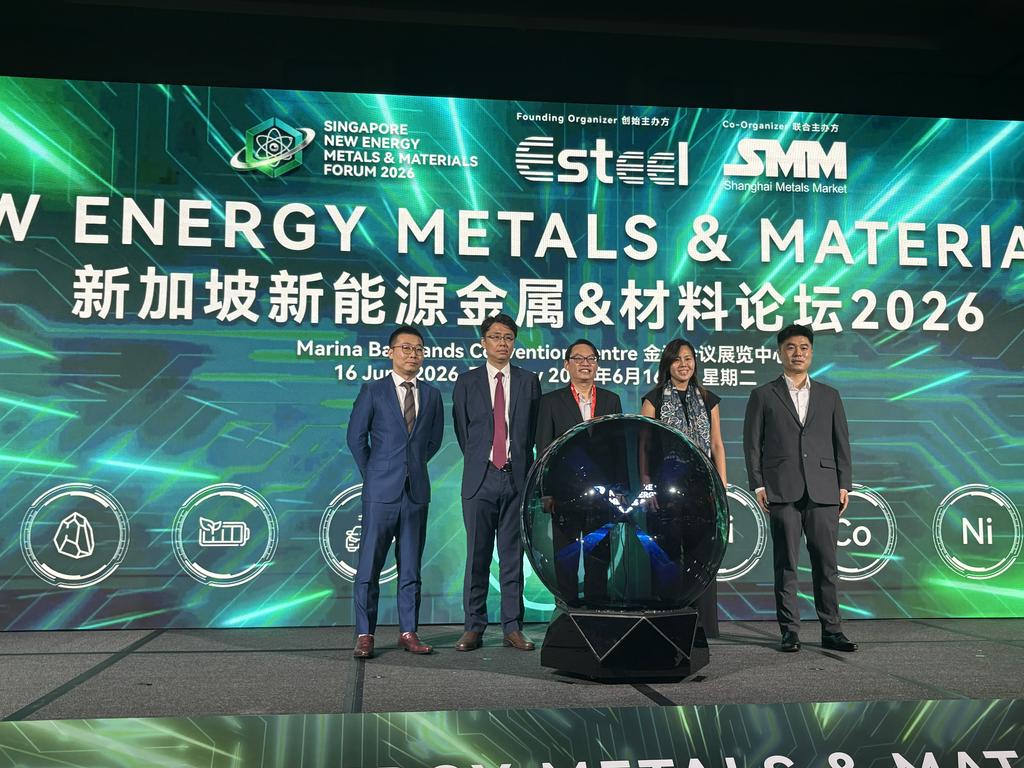 SMM CEO Attends Opening Ceremony of Singapore International Ferrous Week 2026
The Singapore International Ferrous Week (SIFW) 2026 officially kicked off on June 16, 2026. Logan Lu, CEO of Shanghai Metals Market (SMM), attended the opening ceremony as a distinguished guest. Co-hosted by SGX and Green Esteel with support from Enterprise Singapore, the event runs from June 15 to June 19. Its core summit, Singapore Iron & Steel Conference, attracted over 350+ participants including miners and steel mills from Australia, Southeast Asia, Japan and South Korea, serving as Southeast Asia’s flagship ferrous industry exchange platform. SGX CEO Loh Boon Chye delivered a keynote, highlighting trends in iron ore pricing mechanisms and financialization. He noted that physical trade evolution calls for diversified, differentiated pricing benchmarks to streamline risk management. Iron ore has grown into a mainstream investable commodity, included in major global indices; SGX has partnered with SummerHaven to launch tradable iron ore products. Leveraging strengths in physical trade, shipping, financing and risk hedging, Singapore acts as a neutral global commodity hub, the core rationale behind SIFW. Singapore’s Minister of Trade and Industry Alvin Tan likened geopolitical and economic headwinds to kryptonite weighing on the sector, yet underscored steel’s strong resilience. He outlined four growth pillars: tapping robust Asian steel demand led by Southeast Asia and India; utilizing Singapore’s full industrial and financial ecosystem for supply chain and price risk management; advancing AI and digitalization to boost operational efficiency; and accelerating low-carbon steel and maritime decarbonization amid tightening global carbon regulations. The Singapore New Energy Metals & Materials Forum , co-organized by Green Esteel and SMM , was launched alongside this event with the goal to advance low-carbon metal collaboration. Satvinder Singh, Deputy Secretary General of the ASEAN Economic Community, delivered the opening remarks for the forum, focusing on the industry resilience of the global ferrous metals sector amid multiple challenges and echoing the four development strategy recommendations mentioned above: deepening engagement in Asia, basing in Singapore, technology enablement, and green transformation. He also highlighted Singapore’s positioning as a commodities trading hub, as well as local supporting measures for industrial digitalization and the low-carbon transition. On the same day, Logan Lu arranged two important opening events. At 10:30 a.m., he also attended the opening of the inaugural Singapore New Energy Metals & Materials Forum, co-hosted by Green Esteel and SMM, and engaged in in-depth exchanges with enterprises across the industry chain in and outside China on core topics such as ferrous metals, the global supply chain layout for new energy metals, and the industry’s green and low-carbon transformation. The Singapore New Energy Metals & Materials Forum represents a strategic extension into the fast-growing track of new energy metals and new materials. The forum adopts an integrated “Forum + Exhibition” model, bringing together global industry leaders, policy researchers, investment institutions, traders, and technology R&D and manufacturing producers to jointly assess the industry’s future development direction. As the global energy transition continues to accelerate, new energy metals and high-end new materials are a critical foundation for the low-carbon economy and the development of renewable energy. Coupled with multiple variables such as changes in the geopolitical environment, the restructuring of critical minerals supply chains, and adjustments to the global trade system, the industry is facing new opportunities and challenges. Centered on six major themes—global macro economy, supply and demand for critical metals, industry chain integration, supply chain resilience, industry investment, and breakthroughs in new materials technologies—the forum promotes global resource matching and strategic cooperation across the new energy metals industry chain through keynote speeches, panel discussions, business matchmaking, and industry exhibitions, thereby driving the industry’s sustainable development.
Jun 18, 2026 10:29- [SMM Global Steel Company Special] Nucor: 100% EAF, High Profits, and Vertical Integration Mitigating Costs
[SMM Global Steel Enterprise Special Report] A Detailed Analysis of US "Steel King" Nucor: 100% Electric Arc Furnace Forging High Profits, Vertical Integration Mitigating Cost Fluctuations Nucor Corporation is a company incorporated in Delaware in 1958. The company and its subsidiaries are engaged in the manufacture of steel and steel products. It also produces and procures ferrous and non-ferrous metal materials, primarily for use in its steelmaking operations. Most of its operating facilities and clients are located in North America. Its operations include international trading and sales companies responsible for buying and selling steel and steel products manufactured by the company and others. Nucor is also the largest recycler in North America, using steel scrap as the primary raw material for producing steel and steel products. In 2025, it recycled approximately 20 million gross tons of steel scrap. Operating Performance Data source: Nucor Corporation Annual Report、SMM Reasons behind the performance changes: ① Decline in gross profit: The primary reason for the decline in gross profit in 2025 was the compression of profit margins in the steel products segment. Due to lower average selling prices, gross profits from the grating and decking, building systems, and rebar fabrication businesses under this segment all experienced significant declines. ② Steel mill segment growth: In contrast, gross profit in the steel mill segment increased, primarily driven by higher sales and improved steel industry spreads. ③ Investment expenditures: Over the past three years, Nucor invested approximately $9.73 billion in capital expenditures and acquisitions, aiming to expand its product portfolio and enhance operational flexibility. Segments, Major Products, and Marketing Nucor reports its results in three segments: the steel mills segment, the steel products segment, and the raw materials segment. The steel mills segment is Nucor's largest segment, accounting for 62% of the company's sales to external clients for the fiscal year ended 2025. It primarily sells its products to steel service centers, manufacturers, and fabricating enterprises located in the US, Canada, and Mexico. In 2025, the steel mills segment sold approximately 19,848 kt of products to external clients. Data source: Nucor Corporation Annual Report、SMM The Steel Products segment primarily produces high-value-added downstream construction and industrial components, holding leading positions across the U.S. in multiple sub-segments including steel joists, prefabricated metal buildings, and insulated metal panels. It accounted for 29% of the Company's net sales to external clients for the year ended 2025. In 2025, total sales of major products in the Steel Products segment were approximately 1.478 million mt, including approximately 658,000 mt of steel joists and joist girders, approximately 436,000 mt of steel deck, and approximately 384,000 mt of metal building systems. Although physical sales volume (tonnage) was far below that of the Steel Mills segment, the per-mt selling price and profit margin were much higher than those of basic steel, and the segment also ranked first in market share across the U.S. in multiple areas. Data source: Nucor Corporation Annual Report、SMM The Raw Materials segment is the cornerstone of Nucor's vertical integration strategy, primarily operated through its wholly-owned subsidiary The David J. Joseph Company (DJJ), and manages DRI production facilities in Louisiana and Trinidad. By blending DRI with steel scrap, it supports electric arc furnace (EAF) production of higher-grade sheets & plates while ensuring cost advantages and supply security of raw materials. It accounted for 9% of the Company's net sales to external clients for the year ended 2025. In 2025, approximately 20 million gross tons of steel scrap were recycled and processed. Data source: Nucor Corporation Annual Report、SMM Clients and Markets Data source: Nucor Corporation Annual Report、SMM Major Development Projects in Recent Years The vast majority (91%) of Nucor's capital was allocated to internal construction (CapEx), strengthening core competitiveness through technology upgrades (such as electric arc furnaces and micro mills); a small portion was used for strategic acquisitions to achieve "outward expansion" into high-margin downstream areas. Through acquisitions such as SWDP, the company quickly entered high-barrier, high-growth sub-segments including data centers and green energy, making its business structure more resilient to cyclical downturns. Data source: Nucor Corporation Annual Report、SMM Core Logic of Vertical Integration for Cost Reduction: Raw Material Supply Structure Data source: Nucor Corporation Annual Report、SMM Core Risk Factors The greatest risk facing Nucor is a combination of internal and external challenges — internally, cost fluctuations in steel scrap and energy; externally, the impact of low-priced imported steel resulting from global (especially China's) overcapacity. Specifically: 1. Core Industry Risks ① Severe global supply-demand imbalance: Global steel surplus capacity reached 704 million net mt in 2025 (8 times US annual production). It is expected to further increase to 795 million mt by 2027. ② Regional impact: China's annual production has exceeded 1 billion mt in each of the past 8 years, and Chinese steelmakers continue to invest in new capacity in Southeast Asia and Africa. ② Import shock: This surplus leads to a flood of low-priced steel into the US market, creating significant downward pressure on Nucor's product prices, sales, and profit margins. 2. Production Cost Risks ① Steel scrap price sensitivity: Nucor uses 100% electric arc furnaces (EAF), with steel scrap being the largest cost item. Steel scrap prices fluctuate significantly and are beyond Nucor's control. ② Supply chain uncertainty: Although Nucor has achieved a degree of self-sufficiency through its DRI plants and DJJ recycling system, pig iron and iron ore pellets still rely on international procurement, facing geopolitical risks (e.g., Ukraine, Russia, Brazil). 3. Operational Challenges ① Energy-intensive nature: Steelmaking relies on large amounts of electricity (for melting) and natural gas (for heating and DRI production). ② Cost pass-through: Energy prices are affected by demand, the regulatory environment, and transmission infrastructure (pipelines/power grid), and cost surges may erode profits. 4. Compliance and ESG Risks ① Emission reduction pressure: The steel industry faces intense scrutiny due to greenhouse gas (GHG) emissions. ② Policy risk: Although Nucor's emission intensity is far lower than its blast furnace peers, increasingly stringent environmental protection laws and regulations may increase capital expenditures or restrict operations at existing facilities. 5. End-Use Market Risks ① Industry cyclicality: The steel industry is highly correlated with the macro economy. ② End-use market fluctuations: Nucor's largest market is non-residential construction. If this sector (e.g., commercial offices, industrial facilities) contracts due to high interest rates or economic recession, it will directly impact Nucor's performance severely. Copyright and Intellectual Property Statement: This report is independently created or compiled by SMM Information & Technology Co., Ltd. (hereinafter referred to as "SMM"), and SMM legally enjoys complete copyright and related intellectual property rights. The copyright, trademark rights, domain name rights, commercial data information property rights, and other related intellectual property rights of all content contained in this report (including but not limited to information, articles, data, charts, pictures, audio, video, logos, advertisements, trademarks, trade names, domain names, layout designs, etc.) are owned or held by SMM or its related right holders. The above rights are strictly protected by relevant laws and regulations of the People's Republic of China, such as the Copyright Law of the People's Republic of China, the Trademark Law of the People's Republic of China, and the Anti-Unfair Competition Law of the People's Republic of China, as well as applicable international treaties. Without prior written authorization from SMM, no institution or individual may: 1. Use all or part of this report in any form (including but not limited to reprinting, modifying, selling, transferring, displaying, translating, compiling, disseminating); 2. Disclose the content of this report to any third party; 3. License or authorize any third party to use the content of this report; 4. For any unauthorized use, SMM will legally pursue the legal responsibilities of the infringer, demanding that they bear legal responsibilities including but not limited to contractual breach liability, returning unjust enrichment, and compensating for direct and indirect economic losses. Data Source Statement: (Except for publicly available information, other data in this report are derived from publicly available information (including but not limited to industry news, seminars, exhibitions, corporate financial reports, brokerage reports, data from the National Bureau of Statistics, customs import and export data, various data published by major associations and institutions, etc.), market exchanges, and comprehensive analysis and reasonable inferences made by the research team based on SMM's internal database models. This information is for reference only and does not constitute decision-making advice. SMM reserves the final interpretation right of the terms in this statement and the right to adjust and modify the content of the statement according to actual circumstances.
May 19, 2026 15:00 - Tianhe Magnetics: Q1 Net Profit Up 33.41% YoY, Raw Material Prices Remained at High Levels, Prices of Some Sales Orders Raised
The minutes of Tianhe Magnetics' investor briefing held on May 7 showed: 1. What is the trend in the revenue share of the NEV business, and how is the recovery in wind power, consumer electronics, and other segments? Tianhe Magnetics responded: Hello, thank you for your attention! The company's products are widely used in NEVs and parts, wind power, energy-efficient home appliances, consumer electronics, and other fields. Its clients are all industry leaders, and the company has been deeply integrated into the core supply chains of top-tier players in and outside China. During the reporting period, NEVs and parts remained the downstream segment with the highest share; wind power and consumer electronics segments recovered and grew YoY. The company adheres to a diversified strategy, deepens strategic cooperation with clients, strengthens client loyalty, and continues to expand downstream applications to support steady business growth. 2. What is the specific progress of "small-batch delivery" of dedicated magnets for humanoid robots, and what is the expected revenue contribution? Tianhe Magnetics responded: Hello, thank you for your attention! In the humanoid robot field, the company works closely with relevant clients to jointly conduct R&D and trial production of related projects. The specific revenue contribution is directly linked to the promotion and application progress of humanoid robots. 3. Against the backdrop of tightening rare earth export controls, how can the sustainability of the 44% ex-China business be ensured? Tianhe Magnetics responded: Hello, thank you for your attention! The company coordinates and obtains export licenses from the Ministry of Commerce in an orderly manner based on client orders to ensure the smooth and sustained operation of its export business. At the same time, the company actively expands markets outside China, deepens engagement with existing clients and develops new clients, increases efforts in developing zero-heavy-rare-earth products, and scales up product exports to ensure steady growth in ex-China performance. Tianhe Magnetics' Q1 2026 report disclosed on April 28 showed: the company achieved total operating revenue of 594 million yuan, up 13.12% YoY; net profit attributable to the parent company was 47.873 million yuan, up 33.41% YoY. Tianhe Magnetics' Q1 report showed: raw material prices remained at high levels, and selling prices of some sales orders were raised, which in turn affected related profit indicators. Tianhe Magnetics' annual report showed: 2025 was the inaugural year of Tianhe Magnetics' entry into the capital market, and the company embarked on a new phase of high-quality development. Positioned at the forefront of the industry, amid the trend of high-end, intelligent, and green development in the rare earth industry, the company anchored on technological innovation and intelligent management as its core, deepened collaborative partnerships with clients, continuously optimized its supply chain layout, steadily released capacity from IPO-funded projects, and progressively implemented automated production line upgrades and green process improvements. Meanwhile, the company actively expanded its product portfolio and industrial reach into injection-molded magnets, bonded magnets, and magnetic assemblies to provide clients with comprehensive rare earth permanent magnet solutions. In addition, the company accelerated its positioning in emerging sectors such as humanoid robots and the low-altitude economy to build momentum for long-term growth. In 2025, the company achieved operating revenue of 2.346 billion yuan, down 9.47% YoY, total profit of 170.908 million yuan, up 18.81% YoY, and net profit of 161.161 million yuan, up 18.43% YoY. In its annual report, when introducing its main business, products, and application fields, Tianhe Magnetics stated: The company is a leading high performance rare earth permanent magnet material provider in China. With the corporate vision of "being a leader in permanent magnet material innovation," the company is primarily engaged in the R&D, production, and sales of high performance rare earth permanent magnet materials such as sintered NdFeB and sintered SmCo, while extending its industrial reach into injection-molded magnets, bonded magnets, and magnetic assemblies to provide clients with comprehensive rare earth permanent magnet solutions. With independent R&D and technological innovation at its core, and guided by the application scenarios and development needs of downstream cutting-edge fields such as NEVs and auto parts, wind power generation, intelligent manufacturing, and 3C consumer electronics, as well as emerging industries such as humanoid robots and the low-altitude economy, the company effectively leverages the fundamental and pioneering role of rare earth permanent magnets as key strategic materials, continuously advancing the innovation and application of high performance, resource-efficient rare earth permanent magnet materials to drive downstream technological innovation, product upgrades, and industrial transformation. Regarding the company's business plan, Tianhe Magnetics stated in its annual report: 2026 is the second year since Tianhe Magnetics' listing and the opening year of the 15th Five-Year Plan. Standing at a new starting point, the company adopts "innovation" as its annual development theme, upholds the philosophy of "breaking conventions and embracing change," and continues to deepen its presence in the high performance rare earth permanent magnet material field. Leveraging its two rare earth bases in Baotou, the company plans to focus on core technology upgrades and high-end market expansion both in and outside China, seize the strategic opportunities of the global energy transition and intelligent development, and drive "development" through "innovation." Under the leadership of the board of directors, the company plans to further integrate resources, leverage its strengths, and systematically advance various initiatives around its business objectives to ensure high-quality and sustainable development. In 2026, the company plans to focus on the following initiatives: 1. With "innovation" at the core, continuously strengthen R&D investment and drive product and technology upgrades. 2. Pursue new frontiers: focus on expanding new products, new clients, and new markets. 3. Continuously strengthen production and quality management to improve yield and turnover efficiency. 4. Deepen the construction of digital smart factories to continuously enhance production efficiency. 5. Steadily advance IPO-funded and new project construction to expand capacity and support performance growth. (1) Continue to advance IPO-funded project construction. In 2026, the company plans to continue advancing the implementation of IPO-funded projects as planned. Upon full production, the company will reach an annual capacity of 12,300 mt. The company plans to continuously improve manufacturing efficiency through automated production line upgrades, digital management system deployment, and green production process transformation, ensuring capacity alignment across all stages from blank production to finished product inspection, and laying a solid foundation for performance growth. (2) Advance the Tianhe New Materials project construction. The Phase I of the "Tianhe New Materials Rare Earth Zero-Carbon Industrial Park (High Performance Rare Earth Permanent Magnets and Assemblies, Equipment Manufacturing and R&D Project)" invested and constructed by the company's subsidiary Tianhe New Materials has been launched. Upon completion, the project will further expand the business scale and enhance the company's overall profitability, market competitiveness, and risk resilience. 6. Enhance intelligent equipment manufacturing capabilities and cultivate new growth drivers. 7. Management empowerment: continuously strengthen organizational and talent development. 8. Continue to improve ESG efforts and promote sustainable development. 9. Strengthen investor relations and market capitalization management to drive sustained enhancement of company value. When disclosing the risk of raw material price fluctuations, Tianhe Magnetics stated: The main raw materials required for the company's production are rare earth metals, which are relatively expensive and subject to notable fluctuations due to multiple factors including macro economy, trade environment, industrial policies, and market supply and demand. Although rare earth permanent magnet material enterprises can dynamically adjust product selling prices based on factors such as raw material price changes, some existing order prices are locked in, and price adjustments for new orders also involve negotiation cycles, so product price adjustments typically lag behind raw material price fluctuations. If raw material prices continue to swing wildly in the future and the company fails to respond in a timely and effective manner, it may adversely affect business performance. Countermeasures: To address this risk, the company continuously strengthens supply chain management, signs long-term agreements with major suppliers to establish stable partnerships, and implements a scientific raw material reserve strategy to smooth out the impact of price fluctuations. A review of the 2025 price performance of Pr-Nd alloy, a key raw material for NdFeB, showed: the average price of Pr-Nd alloy on December 31, 2025 was 735,000 yuan/mt, up 50.31% compared with its average price of 489,000 yuan/mt on December 31, 2024. The annual daily average price of Pr-Nd alloy in 2025 was 602,181.07 yuan/mt, up 117,476.52 yuan/mt or 24.24% YoY compared with the annual daily average price of 484,704.55 yuan/mt in 2024. A review of the price trend of Pr-Nd alloy in Q1 this year showed: the average price of Pr-Nd alloy on March 31 this year was 880,000 yuan/mt, up 145,000 yuan/mt or 19.73% compared with its average price of 735,000 yuan/mt on December 31, 2025. The daily average price of Pr-Nd alloy in Q1 this year was 913,035.71 yuan/mt, up 385,018.17 yuan/mt or 72.92% compared with the Q1 2025 daily average price of 528,017.54 yuan/mt. On May 8, the price of Pr-Nd alloy was 925,000–930,000 yuan/mt, with an average price of 927,500 yuan/mt, down 0.8% from the previous trading day. Currently, rare earth market prices continue to weaken. Pr-Nd market, downstream purchasing inquiries showed no improvement, and suppliers of oxides maintained a low-price selling strategy to facilitate shipments. However, Pr-Nd oxide futures prices recovered somewhat on the morning of May 8, narrowing the price decline of Pr-Nd oxide. Metal market, constrained by sluggish downstream inquiries, factories showed limited willingness to actively quote, and some suppliers chose to continue lowering their offers. However, as the decline in spot oxide prices narrowed, the actual decline in Pr-Nd alloy prices also narrowed. Nevertheless, downstream wait-and-see sentiment remained strong, and the market trading atmosphere did not see effective improvement. In the short term, Pr-Nd product prices are expected to move sideways amid the tug-of-war between upstream and downstream players.
May 9, 2026 18:27