

4250results found for 'Macro'
Price
News
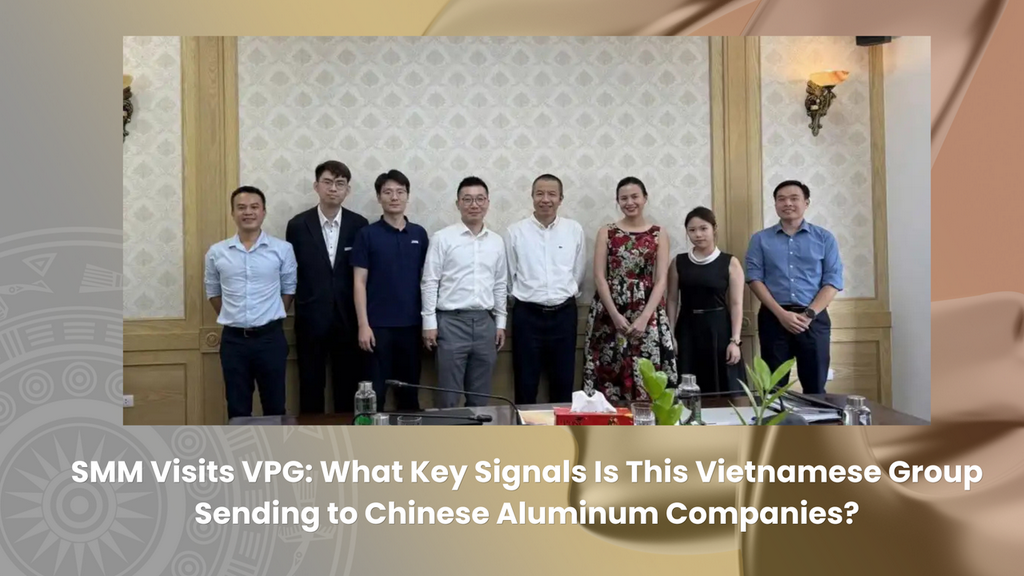 SMM Visits VPG: What Key Signals Is This Vietnamese Group Sending to Chinese Aluminum Companies?
On July 23, 2026, a delegation from Shanghai Metals Market Information Technology Co., Ltd. (SMM) visited VPG (Viet Phuong Group). The delegation included: Logan Lu, CEO of SMM Cason Lou, Director of Aluminum Processing, Marketing Department Lexi Chen, Key Account Manager for Overseas Information Sales Khai Yuen Chin, Senior Overseas Aluminum Analyst The two sides held in-depth discussions on bauxite resource development in Southeast Asia, alumina project development, regional logistics networks, and the development of a Vietnam-based aluminum pricing system. SMM noted that as the global aluminum value chain continues to restructure, China’s alumina market is expected to see sustained demand for overseas resources. Given resource availability and cost considerations, high-quality overseas alumina resources—particularly those from Vietnam and other Southeast Asian markets—are expected to gain greater market potential and competitive advantages. VPG shared updates on the progress of its current projects and said it is actively advancing mineral processing and alumina projects, with Southeast Asia and other international markets set to become key areas of future development. Since 2008, VPG has been engaged in bauxite exploration and development in Sekong Province, Laos, and is currently advancing an integrated industrial project covering bauxite mining, mineral processing, and alumina production. Both sides agreed that establishing an open, transparent, and regionally representative local aluminum pricing system would help improve information transparency and strengthen the international influence of Southeast Asia’s aluminum value chain. They also expressed expectations for deeper cooperation in market research, pricing services, and industry exchanges. What Signals Does SMM’s Visit to VPG Send to Chinese Companies? 01 Vietnam Is Becoming an Important Hub Connecting the Global Aluminum Value Chain In recent years, an increasing number of international companies have viewed Vietnam as an important gateway connecting Southeast Asian resources with global markets. Supported by its established port infrastructure, rapidly expanding manufacturing sector, and growing international trade network, Vietnam is not only benefiting from the relocation of global manufacturing capacity but is also emerging as an important regional hub for the aluminum value chain. For Chinese companies seeking opportunities in Southeast Asia, Vietnam is gradually evolving from an “investment destination” into a “supply chain partner.” 02 Vietnam’s Rapid Market Growth Is Creating New Export Opportunities With free trade agreements such as the EU-Vietnam Free Trade Agreement (EVFTA) taking effect, Vietnam has become a strategic sourcing hub for aluminum products used in the solar industry, including aluminum profiles and PV module frames, with export growth exceeding 20%. EVFTA tariff benefits for EU buyers, together with US Section 301 tariffs, have also encouraged some international buyers to shift sourcing toward Vietnam. Meanwhile, Vietnam aims for electric vehicles to account for 50% of urban vehicles by 2030. As electric vehicles use nearly 30% more aluminum than conventional vehicles, growing EV adoption could generate significant additional aluminum demand. This widening demand gap is expected to create substantial opportunities for aluminum suppliers and exporters. Against this backdrop, SMM AICE is expanding internationally by bringing its conference to Vietnam. The event aims to establish an authoritative platform connecting Chinese aluminum companies with Vietnam and the broader Southeast Asian market, promoting the transition of China-Vietnam aluminum cooperation from “resource complementarity” toward “full-value-chain cooperation and mutual growth.” 03 Future Competition Will Be About Information, Not Just Opportunities Vietnam’s market continues to develop rapidly. At the same time, market rules, policies, cost structures, and pricing mechanisms are constantly evolving. For Chinese companies, identifying projects alone is no longer enough. Timely access to local policies, industry development trends, supply chain changes, and market pricing information is becoming increasingly important. This is also why SMM continues to deepen its presence in the Vietnamese market. Recently, SMM AICE has been conducting intensive visits across Vietnam and the broader Southeast Asian industrial value chain, maintaining close communication with government authorities, industry associations, mining companies, alumina producers, aluminum processors, and other market participants. Through more transparent market intelligence and pricing systems, SMM aims to help global companies better understand market dynamics and reduce decision-making risks. To help more aluminum companies seize emerging opportunities and establish an early presence in the Vietnamese market, SMM AICE Vietnam is coming to Vietnam with a major industry gathering. VPG — Viet Phuong Group Founded in 1996, VPG (Viet Phuong Group) is a well-established diversified investment group in Vietnam, with businesses spanning mining, energy, infrastructure, finance, real estate, and other sectors. Mining is one of the group’s key strategic businesses, with projects involving mineral resources including bauxite, rare earths, and quartz sand. In the aluminum sector, VPG has been engaged in bauxite exploration and development in Sekong Province, Laos, since 2008. The group is currently advancing an integrated project covering bauxite mining, mineral processing, and alumina production. Leveraging Vietnam’s established port infrastructure and regional logistics network, VPG plans to export alumina products to China and other global markets through the Laos–Vietnam cross-border logistics corridor, further integrating into Southeast Asia’s aluminum supply chain. In recent years, the company has continued to advance project development, international cooperation, and market expansion, with the ambition of building a regional aluminum industry platform spanning resource development, alumina production, and international trade. Join the Conversation at SMM AICE 2026 Connect with aluminum producers, processors, traders, manufacturers, certification organisations, industry associations and decision-makers from across Southeast Asia and the global market. Explore aluminum pricing, primary aluminum supply, processing technologies, low-carbon development, CBAM compliance and new opportunities for regional cooperation. ? Ho Chi Minh City, Vietnam ? November 19–20, 2026 Register now: bit.ly/AICE26 and secure your Super Early Bird Pass and save up to USD 200. Register before August 31, 2026.
Aug 3, 2026 16:42- SHFE aluminum opened lower but rebounded, though positions declined significantly; alumina continues to consolidate on a weak note [SMM Aluminum Briefing]
SMM, August 3: The SHFE aluminum 2608 contract opened at 23,400 yuan/mt today, reached a high of 23,665 yuan/mt, hit a low of 23,400 yuan/mt, and closed at 23,625 yuan/mt, down 10 yuan/mt or 0.04% from the previous trading day. Trading volume was 12,000 lots, open interest was 40,300 lots, and daily position change was -5,189 lots. The price stood above the MA5 (23505), MA10 (23357.50), MA20 (23228.50), and MA40 (23362.25), but still below the MA60 (23758.92). The short-term repairing pattern continued, but resistance remained overhead. In the MACD indicator, the DIFF (23.83) was above the DEA (-72.27), and the histogram recorded 192.20, with bullish momentum still releasing. Trading volume was low, and the daily position change of -5,189 lots indicated a significant capital outflow. The session’s low opening and subsequent recovery largely reflected position-squaring repair, and sustained upward momentum still needs to be observed. SMM comment: The indirect technical talks between the US and Iran made progress, with both sides discussing fund returns and strait security, and nuclear issue consultations are about to start. The geopolitical risk premium continued to shrink, disputes over the management of the Strait of Hormuz persisted, and the resumption of navigation through the strait remained uncertain. The US Fed’s hawkish pivot boosted the US dollar index, weighing on non-ferrous metals prices. Under macro headwinds, aluminum prices in China and overseas fell. In the short term, bearish factors dominate, and aluminum prices are expected to continue in the doldrums. The alumina 2609 contract opened at 2,627 yuan/mt today, reached a high of 2,648 yuan/mt, hit a low of 2,621 yuan/mt, and closed at 2,633 yuan/mt, down 2 yuan/mt or 0.08% from the previous trading day. Trading volume was 149,700 lots, open interest was 227,200 lots, and daily position change was -15,651 lots. The price remained below the MA5 (2653.60), MA10 (2682.50), MA20 (2690.55), MA40 (2764.93), and MA60 (2773.88). The moving averages maintained a bearish alignment, and the weak pattern of futures continued. In the MACD indicator, the DIFF (-35.37) was below the DEA (-31.96), and the histogram recorded -6.81, indicating persistent bearish momentum. Trading volume remained at a certain level, but the daily position change of -15,651 lots showed a significant capital outflow. Near-term futures are likely to continue consolidating on a weak note at low levels. SMM comment: According to SMM data, as of last Thursday, China’s total alumina inventory edged down WoW. Looking at the inventory structure, the raw material inventory at aluminum smelters continued to destock slightly, but due to recent large price fluctuations and market division over the outlook, restocking willingness was weak, with end-users mainly taking a wait-and-see approach. In-factory alumina inventory decreased, mainly due to phased maintenance at some northern enterprises, where production constraints led to prioritized consumption of in-factory inventory. This effect is expected to gradually fade after the maintenance ends next week. Port inventory continued building, with overseas port arrivals staying high, and imported resources supplemented spot supply, adding to market pressure. Overall, the oversupply pattern remained unchanged. Before Guinea’s bauxite quota policy is implemented, the market lacks a clear bullish driver. Next week’s inventory is expected to shift from weak destocking to a slight inventory buildup, supply and demand will remain loose, and alumina prices will continue to consolidate on a weak note. [The information provided is for reference only. This article does not constitute direct investment research advice. Clients should make decisions cautiously and not use this as a substitute for independent judgment. Any decision made by clients is not associated with SMM]
Aug 3, 2026 16:30 - SS Futures Pull Back, Stainless Steel Spot Trades Remain Weak [SMM Analysis]
[SMM Analysis] SS Futures Pull Back, Stainless Steel Spot Trades Remain Sluggish According to SMM on August 1, SS futures showed an overall decline and pullback trend. Dragged down by the pullback in SHFE nickel, SS fell in tandem. At the close, the most-traded SS contract settled at 14,470 yuan/mt. In the spot market, SS futures retreated notably. Although NPI prices have been holding up well recently, lending cost support to stainless steel spot prices which fluctuated only slightly, market inquiries and transactions weakened further, and some agents lowered prices to take orders. SS most-traded contract. At 10:15 a.m., SS2609 was at 14,525 yuan/mt, down 185 yuan/mt from the previous trading day. Spot premiums for 304/2B in Wuxi were in the 445-895 yuan/mt range. In the spot market, the average price of cold-rolled 201/2B coil in Wuxi held steady; for cold-rolled 304/2B coil with mill edge, the average price in Wuxi dropped 25 yuan/mt, and in Foshan dropped 25 yuan/mt; cold-rolled 316L/2B coil in Wuxi fell 100 yuan/mt; the quote for hot-rolled 316L/NO.1 coil in Wuxi was unchanged; cold-rolled 430/2B coil in both Wuxi and Foshan was flat. This week, macro sentiment turned bearish and dominated the metals market, leaving stainless steel futures under pressure and consolidating on a subdued note. The US Fed kept rates unchanged this week as expected, but its overall tone was hawkish, broadly weighing on commodity valuations, and the nonferrous metals sector weakened across the board. Dragged down by the transmission of macro headwinds, SS futures followed suit and consolidated on a subdued note, with the center of futures trading shifting lower and overall market sentiment turning cautious. ……
Aug 3, 2026 16:08 - Crude Oil Plunges, Metals Broadly Decline; Iron Ore, LME and SHFE Nickel, and SHFE Lead Lead Losses; Polysilicon Surges Over 7% [SMM Midday Review]
SMM, August 3: Metal market, as of the midday close, domestic base metals showed mixed performance. SHFE copper rose 0.13%, SHFE aluminum fell 0.4%. SHFE lead fell 1.25%. SHFE zinc rose 1.02%. SHFE tin rose 0.36%. SHFE nickel fell 1.91%. Additionally, the most-traded cast aluminum futures contract fell 0.21%, the most-traded alumina contract fell 0.34%. The most-traded lithium carbonate contract fell 1.02%. The most-traded silicon metal contract rose 0.86%. The most-traded polysilicon futures contract rose 7.11%. Ferrous metals all declined. Iron ore fell 2.44%, rebar fell 0.86%, HRC fell 0.71%. Stainless steel fell 1.16%. Coking coal and coke: the most-traded coking coal contract fell 1.04%, and the most-traded coke contract fell 1.37%. Overseas base metals, as of 11:48, LME metals mostly fell. LME copper rose 0.17%, LME aluminum fell 0.3%, LME lead fell 0.16%, LME zinc rose 0.78%. LME tin fell 0.27%. LME nickel fell 1.42%. Precious metals, as of 11:48, COMEX gold rose 0.27%, COMEX silver rose 0.92%. Domestic precious metals: SHFE gold fell 0.57%, the most-traded SHFE silver contract fell 0.48%. Additionally, as of the midday close, the most-traded platinum futures contract rose 0.52%, while the most-traded palladium futures contract fell 0.21%. As of the midday close, the most-traded European container shipping freight rate futures contract rose 2.94% to 1,801 points. As of 11:48 on August 3, selected futures midday quotes: Spot and Fundamentals Copper: Today, spot #1 copper cathode in Guangdong against the front-month contract: high-quality copper was quoted at 100 yuan/mt, down 20 yuan/mt from the previous trading day; standard-quality copper was quoted at a premium of 10 yuan/mt, down 30 yuan/mt from the previous trading day; SX-EW copper was quoted at a discount of 50 yuan/mt, down 30 yuan/mt from the previous trading day. The average price of #1 copper cathode in Guangdong was 105,815 yuan/mt, up 25 yuan/mt from the previous trading day, while SX-EW copper averaged 105,695 yuan/mt, up 5 yuan/mt. Spot market: After the weekend, Guangdong inventory ended a three-session decline... Macro Front China: [China's July RatingDog manufacturing PMI recorded 50.9, marking the eighth consecutive month in expansion territory] China’s July RatingDog manufacturing PMI recorded 50.9, down 0.8 percentage points from June, extending its expansion streak to an eighth consecutive month and tying with the longest expansion run in five years. Overall, manufacturing expansion continued in July, but the pace slowed. New orders continued to grow, cost pressure further eased, and new export orders returned to expansion, releasing a positive signal. However, purchasing activity declined somewhat, and the inventory of input goods accumulated earlier by enterprises kept rising, which are risk points to monitor going forward. (RatingDog) [The CSRC and Hong Kong SFC Jointly Announce New Measures to Deepen Pragmatic Cooperation and Close Collaborative Development Between the Two Markets] The China Securities Regulatory Commission (CSRC) and the Securities and Futures Commission (SFC) of Hong Kong jointly announced a series of new measures to further deepen pragmatic cooperation and close collaborative development between the two markets. Covering multiple areas including listing and financing, index cooperation, futures products, exchange-traded funds (ETFs), internationalization of financial institutions, green finance, and professional qualification facilitation, the specific measures include: continuing to support eligible domestic enterprises to list and raise funds in Hong Kong; supporting index companies in both markets to strengthen cooperation and launch more indices based on Chinese assets, enhancing the international influence of Chinese indices and assets; deepening cooperation in futures markets and supporting Hong Kong in launching more RMB-denominated and settled futures products; supporting institutions in both markets to launch more ETF products based on the two markets and aligned with China’s modern industrial system, and implementing a fast-track registration mechanism for regular equity ETF products, among others. (Jin10 Data APP) [Hong Kong Exchange Officially Launches 5-Year RMB Government Bond Futures] Hong Kong Exchanges and Clearing Limited (HKEX) today (August 3) officially launched the 5-year RMB government bond futures. As the only government bond futures contract product in the offshore market, it aims to meet the growing interest rate risk management and trading needs of overseas investors. The launch of the 5-year government bond futures is an important step in promoting Hong Kong as an offshore RMB hub and risk management center. (CCTV News) [The PBOC's Open Market Operations Resulted in a Net Withdrawal of 562.5 Billion Yuan Today] The PBOC conducted 63 billion yuan in 7-day reverse repo operations and 300 billion yuan in overnight reverse repo operations today. With 325.5 billion yuan in 7-day reverse repos and 600 billion yuan in overnight reverse repos maturing today, the net withdrawal for the day was 562.5 billion yuan. 》 On August 3, the central parity rate of the yuan in the interbank foreign exchange market was 6.7898 per US dollar. US Dollar: As of 11:48, the US dollar index was down 0.05% at 99.75. According to the CME FedWatch Tool: the probability that the Fed will keep interest rates unchanged at the September meeting is 26.4%, while the chance of a cumulative 25bp rate hike stands at 73.6%. For the October meeting, the probability of keeping rates unchanged is 19.9%, with a 62.1% probability of a cumulative 25bp hike and a 17.9% chance of a cumulative 50bp hike. According to the New York Times, Fed Chairman Warsh is reportedly considering reducing the number of regularly scheduled interest-rate decision meetings of the Federal Reserve, a move that could cause significant shockwaves and would mark the most significant change in the Fed's operations in recent years. Currently, the 12-member Federal Open Market Committee (FOMC) meets eight times a year to vote on whether to raise, lower, or maintain borrowing costs. According to four people familiar with the matter, Warsh raised the idea of adjusting the meeting frequency at this week's Fed meeting. According to the sources, at this week's meeting, Warsh discussed the legal basis the Fed must adhere to regarding the minimum number of meetings required annually, as well as the timetable for such adjustments. It was said that Warsh asked officials to provide him with their views, rather than holding a full discussion on the meeting schedule at this week's meeting. (Jin10 Data APP) Other currencies: Japan's Ministry of Finance said the intervention was aimed at addressing recent excessive, disorderly movements in the yen. It will not hesitate to conduct further foreign exchange intervention with the United States, and plans to use the Fed's Foreign and International Monetary Authorities (FIMA) Repo Facility in the future. JPMorgan said that the U.S. Treasury Department's liquidity resources available to support further coordinated currency intervention with Japan are limited, but its firepower could be significantly expanded if officials take more unconventional measures. Strategists including Junya Tanase wrote in a report that as of June, the Treasury's Exchange Stabilization Fund held around €13 billion in euro-denominated assets and $25.5 billion in assets, which pales in comparison to Japan's intervention scale of roughly $35 billion to $60 billion between 2022 and 2026. JPMorgan noted that the Treasury could significantly boost its firepower by converting its holdings of International Monetary Fund Special Drawing Rights (SDRs) into dollars, and by swapping foreign currency assets into dollars. In that scenario, the Treasury could theoretically mobilize up to around $187 billion, and the participation of the Fed could effectively double the scale of any intervention. However, they wrote: "We do not think the Treasury has unlimited capacity to intervene, as the Exchange Stabilization Fund's resources are finite and new funds might require congressional appropriation." (Jin10 Data APP) Data: Today will see the release of Switzerland July CPI m/m, France July manufacturing PMI final, Germany July manufacturing PMI final, Eurozone July manufacturing PMI final, UK July manufacturing PMI final, US July S&P Global manufacturing PMI final, US July ISM manufacturing PMI, US June construction spending m/m, and other data. Crude oil: As of 11:48, oil prices on both exchanges fell sharply, with WTI down 5.52% and Brent down 4.9%. Oil prices tumbled sharply in early Asian trading on Monday, following Trump’s announcement that the US and Iran would resume negotiations on Monday, significantly raising market expectations for the reopening of the Strait of Hormuz. (Wall Street CN) The decline in oil prices was driven by two major factors. First, the news of the US-Iran negotiations resuming directly boosted expectations for the restoration of shipping in the Strait of Hormuz. Second, major OPEC+ members again slightly raised production quotas, further intensifying supply-side pressure. Iranian Foreign Minister Abbas Araghchi stated on Telegram on Sunday that negotiations between Iran and Oman are in their final stage, with both sides discussing new shipping routes for the Strait of Hormuz. However, Iranian Foreign Ministry Spokesperson Esmail Baghaei added in an interview with Iran’s state television that the relevant negotiations do not concern the opening or closing of the strait. (Wall Street CN) Spot Market Overview: ► ► ► ► ► ► ► ► ► ► ► ► ►
Aug 3, 2026 14:17 - Fundamental Support and Geopolitical Easing Signals Intertwine, the Most-Traded SHFE Tin Contract Continues to Consolidate at Highs [SMM Tin Midday Review]
[SMM Tin Midday Review: Fundamentals Support and Geopolitical Easing Signals Intertwine, the Most-Traded SHFE Tin Contract Continues to Consolidate at Highs]
Aug 3, 2026 12:37 - [SMM Nickel Midday Review] On August 3, nickel prices fell sharply, and on Monday afternoon, the US and Iran began negotiations.
SMM Nickel, August 3 News: Macro and Market News: (1) Trump stated that there is already an agreement on the Strait of Hormuz, and an agreement on denuclearization will also be reached, with negotiations scheduled to begin on Monday afternoon; Iranian Foreign Ministry spokesperson Baqaei stated that the situation in the Strait of Hormuz will not return to its pre-conflict state, and the new shipping route agreed upon with Oman will be determined through bilateral negotiations. (2) The People’s Bank of China held a work conference for H2 2026 on August 1, emphasizing continued implementation of an appropriately accommodative monetary policy. Spot Market: On August 3, the average price of SMM #1 refined nickel was 131,400 yuan/mt, down 1,200 yuan/mt from the previous trading day. As for spot premiums, the average premium for Jinchuan #1 refined nickel was 1,150 yuan/mt, down 50 yuan/mt from the previous trading day, and the premium/discount range for mainstream domestic electrodeposited nickel was -300 to 500 yuan/mt. Futures Market: The most-traded SHFE nickel 2609 contract plunged sharply in early trading, falling below 130,000 yuan/mt, and closed the morning session at 129,520 yuan/mt, down 1.91%. With the start of US-Iran negotiations and expectations that the Strait of Hormuz will resume navigation, sulfur cost support is weakening, causing nickel prices to fall sharply. In the short term, the most-traded SHFE nickel contract is expected to trade in the range of 128,000-135,000 yuan/mt.
Aug 3, 2026 11:43
Announcements
To better serve industrial clients and more closely align with the market, SMM is adding a new Blister Copper RC Spot CIF India price...
PriceMay 22, 2026 11:05Indonesia has long been an important source of nickel hydrometallurgy intermediate products supply. In recent years, the global macro landscape has created increasing uncertainties for nickel intermed
DataMay 19, 2026 17:41
Events
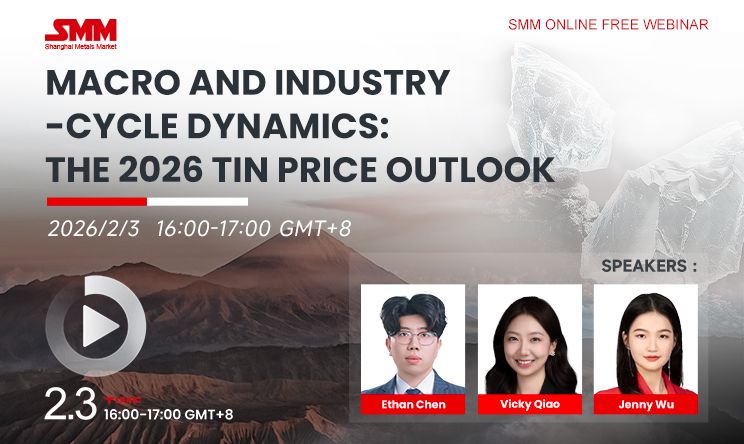 WebinarFeb 3, 16:00 - 23:59 (GMT+8)
 WebinarSep 27, 16:00 - 23:59 (GMT+8)