

10362results found for 'Lead'
Price
News
- Hunan Ruiyi Zihuan Technology Co., Ltd. invites you to the 2026 SMM Global Lead-acid Battery Supply Chain Industry Conference
In 2026, the global lead-acid battery industry maintains steady growth, holding irreplaceable advantages in starting, industrial, and energy storage applications. Secondary lead has become the core raw material supply, and green recycling and compliant manufacturing have become the industry baseline. The global industry chain is accelerating its shift to Southeast Asia, where Vietnam, leveraging its motorcycle and automobile ownership, manufacturing supporting facilities, and trade facilitation advantages, has become a strategic hub for lead smelting, battery production, and recycling. Meanwhile, the lead industry chain faces multiple challenges such as raw material supply-demand balance, international trade compliance, upgrading environmental standards, iteration of advanced lead battery technologies, supply chain security, and cost control. To build a global lead industry exchange and cooperation platform and promote collaborative innovation across the entire chain of lead ore, primary lead, secondary lead, lead-acid batteries, equipment, and auxiliary materials, the 2026 SMM Global Lead-Acid Battery Supply Chain Innovation Conference is set to take place in Ho Chi Minh City. SMM, in partnership with Hunan Ruiyi Resources and Environment Technology Co., Ltd. , invites you to join the conference. The event will focus on industrial policies, market trends, technological upgrades, circular economy, and the joint development of the global supply chain, helping enterprises seize opportunities and achieve win-win collaboration. Click to register now for the conference, and join us in witnessing and participating in this extraordinary and far-reaching industry event, creating a brilliant new chapter together! Hunan Ruiyi Resources and Environment Technology Co., Ltd. is an "industry-academia-research-application" cooperation partner of Central South University. Relying on the Institute of Resource Recycling and Environmental Engineering of Central South University, the company primarily engages in technology development and transformation, technical consulting services, process and plant design, equipment manufacturing, and engineering contracting in fields such as clean and efficient utilization of secondary non-ferrous metal resources, comprehensive recovery and safe disposal of heavy metal and arsenic-containing hazardous waste, and extraction. The company focuses on technology R&D and promotion in the hazardous waste disposal industry. With side-blown furnaces, pure oxygen converters, low-temperature pyrolysis furnaces, electric furnaces, and fuming furnaces as core equipment, it enhances metal recovery rates, saves energy, and reduces emissions in the secondary lead recycling industry, the comprehensive recovery and safe disposal of copper scrap, the vitrification of fly ash and residues from municipal solid waste and hazardous waste incineration, and the comprehensive recovery and safe disposal of heavy metal and arsenic-containing hazardous waste, thereby meeting the growing needs of clients; the company has an R&D and design engineering team centered on professors and senior engineers, bringing together talented professionals from metallurgical production and management, environmental protection, plant design, mechanical manufacturing, automation, electrical engineering, and other fields. It possesses full-chain service capabilities from technical consulting to furnace operation in the areas of secondary lead, copper scrap recycling, secondary zinc, and arsenic-containing hazardous waste disposal. In the R&D and manufacturing of side-blown furnaces and the aforementioned resource recycling fields, it holds over 90 invention patents and utility model patents. RE Technology Co., Ltd. (referred to as RE TECH) is a cooperative high-techcompany (industry-institute-research) affiliated with Central South University, whose metallurgy department is one of the most prestigious in the world. With independent patented oxygen-enriched side-blowing furnace as the core equipment which have widely applied in lead recvcling industry and have won a lot of awards because of its innovative technology, we also have the ability to design the entire plant, and design and fabricate the essential equipment including side-blowing furnace, rotary furnace, blast furnace, convert, electrical furnace, fuming furnace and other equipment. In our role as the leading engineering company in lead recycling, we continue to invest in upgrading equipment and processes to meet the ever-increasing requirement of the industry, including improving metal recovery rates, reducing emissions, and treating materials more efficiently. We are expanding our field from lead to copper, nickel,zinc, tin, antimoney etc. to ensure that nonferrous secondary resources are reused efficiently and cleanly, heavy metals and arsenic-containing hazardouswastes are reecovered and disposed safely. Professors, experts and engineers make up the RE TECH team, whose majors include metallurgy, environmental protection, mechanical, automation, electrical and otherdisciplines. With more than 90 patents, the team is capable of providing consulting, engineering, equipment fabrication, installation, commissioning, and operation services to our respected clients. Contact Tel: 0731-82850226 Email: info@rezh.net Website: http//www.hnrezh.com Address: No. 19 Ziyuan Road, Yuelu District, Changsha, Hunan Province Long press and scan to register now 2026 SMM Global Lead-Acid Battery Supply Chain Industry Conference
Jul 31, 2026 10:47 - US dollar weakness and PCE cooling resonate, silver prices continue to consolidate at lows [SMM daily review]
[SMM Daily Review: Weaker Dollar and Cooling PCE Resonate, Silver Price Continues to Consolidate at Lows] SMM July 31 News: The dollar plunged below 100, PCE cooled, but conditions for a trend shift in rate hikes were not met, and silver prices consolidated. Spot cargo supply and demand were both weak at month-end, transactions were sluggish. Attention is on next month's maintenance and demand recovery.
Jul 31, 2026 10:25 - [SMM Rare Earth Morning Briefing] The upstream-downstream stalemate continues, metal transactions are weak, and the magnetic material sector enters the high-temperature off-season.
[Stalemate Between Upstream and Downstream Persists, Metal Transactions Are Weak, and Magnetic Materials Enter High-Temperature Off-Season] Yesterday, NdFeB blank quotes were slightly lowered, primarily because raw material prices drove down NdFeB prices. In terms of transactions, as July drew to a close, regions across China experienced high temperatures, and motor factories and end-users gradually began their high-temperature holidays. The operating rates of motor factories and end-users weakened significantly, reducing demand for rare earth permanent magnets, which ultimately led to persistently sluggish trading activity in the NdFeB market.
Jul 31, 2026 10:02 - National Bureau of Statistics (NBS): July manufacturing PMI at 49.2%, business climate pulls back somewhat, high-tech manufacturing continues to expand
According to data from the National Bureau of Statistics (NBS), China's PMI for July 2026 I. China's Manufacturing PMI In July, the Manufacturing PMI was 49.2%, down 1.1 percentage points MoM, with the level of prosperity pulling back. By enterprise size, the PMIs for large, medium, and small enterprises were 49.5%, 49.7%, and 47.4%, respectively, down 1.2, 0.8, and 0.8 percentage points MoM, all below the threshold. Examining the sub-indices that constitute the Manufacturing PMI, all five—the Production Index, New Orders Index, Raw Material Inventory Index, Employment Index, and Supplier Delivery Time Index—were below the threshold. The Production Index was 49.9%, down 1.5 percentage points MoM, indicating a slowdown in manufacturing production activity. The New Orders Index was 48.5%, down 2.7 percentage points MoM, indicating a pullback in manufacturing market demand. The Raw Material Inventory Index was 48.3%, down 0.1 percentage points MoM, indicating that the inventory of major raw materials in manufacturing continued to decrease. The Employment Index was 49.0%, up 0.5 percentage points MoM, indicating a slight rebound in the employment climate of manufacturing enterprises. The Supplier Delivery Time Index was 49.5%, down 0.4 percentage points MoM, indicating that the delivery times for raw material suppliers to manufacturers lengthened compared to the previous month. II. China's Non-Manufacturing PMI In July, the Non-Manufacturing Business Activity Index was 49.0%, down 1.2 percentage points MoM, with the non-manufacturing sector's level of prosperity falling from the previous month. By industry, the Business Activity Index for the construction sector was 47.0%, down 2.0 percentage points MoM; that for the service sector was 49.3%, down 1.1 percentage points MoM. Within the service sector, the Business Activity Indices for postal services, telecommunications, broadcasting, television and satellite transmission services, as well as culture, sports, and entertainment, were all in a relatively high prosperity range above 55.0%; while those for capital market services and real estate were below the threshold. The New Orders Index was 44.4%, down 3.6 percentage points MoM, indicating a pullback in the prosperity level of non-manufacturing market demand. By industry, the New Orders Index for the construction sector was 40.1%, down 6.2 percentage points MoM; that for the service sector was 45.2%, down 3.2 percentage points MoM. The Input Price Index was 49.7%, unchanged MoM and still below the threshold, indicating that the overall level of input prices used by non-manufacturing enterprises in their operating activities continued to fall. By industry, the Input Price Index for the construction sector was 48.7%, down 1.7 percentage points MoM; that for the service sector was 49.9%, up 0.3 percentage points MoM. The Selling Price Index was 47.9%, down 0.5 percentage points MoM, indicating that the overall decline in selling prices for non-manufacturing enterprises expanded somewhat. By industry, the Selling Price Index for the construction sector was 47.7%, down 2.1 percentage points MoM; that for the service sector was 47.9%, down 0.3 percentage points MoM. The Employment Index was 45.4%, down 0.4 percentage points MoM, indicating a pullback in the employment climate of non-manufacturing enterprises. By industry, the Employment Index for the construction sector was 40.9%, down 1.4 percentage points MoM; that for the service sector was 46.2%, down 0.2 percentage points MoM. The Business Activity Expectations Index was 55.4%, up 0.1 percentage points MoM, indicating that non-manufacturing enterprises' confidence in market development strengthened. By industry, the Business Activity Expectations Index for the construction sector was 51.8%, up 0.7 percentage points MoM; that for the service sector was 56.0%, unchanged from the previous month. III. China's Composite PMI Output Index In July, the Composite PMI Output Index was 49.3%, down 1.3 percentage points MoM, indicating that the production and business activities of Chinese enterprises slowed down from the previous month. III. China's Composite PMI Output Index In June, the Composite PMI Output Index was 50.6%, up 0.1 percentage points MoM, indicating that the overall expansion of Chinese enterprises' production and business activities slightly accelerated. China's PMI Pulls Back in July —NBS Service Sector Survey Center Chief Statistician Huo Lihui Interprets China's PMI for July 2026 On July 31, 2026, the NBS Service Sector Survey Center and the China Federation of Logistics and Purchasing released China's PMI. Chief Statistician Huo Lihui from the NBS Service Sector Survey Center provided an interpretation. In July, the Manufacturing PMI, Non-Manufacturing Business Activity Index, and Composite PMI Output Index were 49.2%, 49.0%, and 49.3%, respectively, down 1.1, 1.2, and 1.3 percentage points MoM, with the overall level of prosperity pulling back from the previous month. I. Manufacturing PMI Pulls Back, While High-Tech Manufacturing Continues to Expand In July, influenced by factors such as a high base from the earlier rapid growth in manufacturing and some manufacturing sectors entering their traditional off-season, the Manufacturing PMI fell to 49.2%. (1) The equipment manufacturing and high-tech manufacturing sectors continued to play a supportive and leading role. The PMIs for equipment manufacturing and high-tech manufacturing were 51.4% and 53.3%, respectively, significantly higher than the overall manufacturing average, maintaining relatively rapid expansion and driving the sector toward new and high-quality development. The PMIs for the consumer goods and high energy-consuming industries were 47.8% and 47.0%, respectively, down 2.4 and 0.1 percentage points MoM, with their levels of prosperity pulling back. (2) Production and demand grew rapidly in some equipment manufacturing industries. The Manufacturing Production Index and New Orders Index were 49.9% and 48.5%, respectively, down 1.5 and 2.7 percentage points MoM, indicating that both production and market demand among manufacturing enterprises pulled back. By industry, the Production and New Orders Indices for general-purpose equipment and computer, communication, and electronic equipment were both above 53.0%, indicating high market activity and rapid growth in both production and demand. Indices for industries such as non-metallic mineral products, ferrous metal smelting and rolling processing, and automobiles were below the threshold, indicating weak supply-demand momentum. (3) Price indices continued to fall. The Major Raw Material Purchase Price Index and EXW Price Index were 53.2% and 47.8%, respectively. Affected by recent fluctuations in some commodity prices and other factors, these indices have fallen for four consecutive months. Among these, both price indices for the non-ferrous metal smelting and rolling processing industry were below 45.0%. Due to significant price level fluctuations, enterprise purchase willingness weakened, and the Procurement Volume Index fell to 49.4% this month. (4) Market expectations remained stable. The Manufacturing Production and Business Activity Expectations Index was 54.1%, with enterprises generally remaining optimistic about market development. By industry, the Expectations Indices for the food, beverage, and refined tea, and railway, shipbuilding, aerospace, and other equipment sectors rose above 60.0%, as related enterprises showed increased confidence in near-term industry development. II. Non-Manufacturing Business Activity Index Declines, While the Cultural and Tourism Sector Is Relatively Active In July, the Non-Manufacturing Business Activity Index was 49.0%, down 1.2 percentage points MoM, with the level of prosperity in the non-manufacturing sector pulling back from the previous month. (1) The cultural and tourism sector's prosperity rebounded. The Service Sector Business Activity Index was 49.3%, down 1.1 percentage points MoM, with market activity in the service sector pulling back. By industry, driven by summer consumption, residents' leisure, entertainment, and travel activities increased, leading to a clear MoM rebound in the Business Activity Indices for air transportation, accommodation, culture, sports, and entertainment. The total business volume of related enterprises grew rapidly. The indices for wholesale trade and monetary and financial services declined significantly, representing the main unfavourable factors behind the pullback in service sector prosperity this month. Indices for capital market services and real estate were below the threshold. The Service Sector Business Activity Expectations Index was 56.0%, unchanged from the previous month, with enterprises' confidence in near-term market development remaining relatively stable. (2) The construction sector's level of prosperity declined. Affected by unfavourable factors such as recent high temperatures, heavy rains, flooding, and other natural disasters in some regions, the construction progress slowed down, and the Business Activity Index was 47.0%, down 2.0 percentage points MoM. The Construction Business Activity Expectations Index was 51.8%, up 0.7 percentage points MoM, indicating that enterprises' confidence in near-term industry development strengthened somewhat. III. Composite PMI Output Index Below the Threshold In July, the Composite PMI Output Index was 49.3%, down 1.3 percentage points MoM, with the production and business activities of Chinese enterprises slowing down from the previous month. The Manufacturing Production Index and Non-Manufacturing Business Activity Index, which constitute the Composite PMI Output Index, were 49.9% and 49.0%, respectively.
Jul 31, 2026 09:49 - Expectations for US Fed interest rate hikes ease marginally, aluminum's continuous destocking underpins the market [SMM Aluminum Morning Briefing]
[Marginal Easing in Expectations for US Fed Rate Hikes, Continued Aluminum Destocking Underpins Market] Based on a comprehensive assessment, the macro front has improved recently; marginal constraints from rate hike expectations on the nonferrous metals sector continue to ease; the proportion of liquid aluminum in China keeps rising; the Middle East geopolitical risk premium continues to accumulate, while aluminum ingot destocking continues in China, collectively underpinning aluminum prices; and market confidence has strengthened markedly in the short term. However, the continuous rollout of long-term aluminum capacity outside China, weak traditional end-use demand in China, coupled with recurring expectations for US Fed rate hikes overseas and disturbances from uncertainties in the Middle East geopolitical situation, still exert some pressure on the upside room for aluminum prices. In the short term, aluminum prices consolidate on a strong note.
Jul 31, 2026 09:32 - [SMM Analysis] Xiaomi Pengcheng Launches Large-Battery SUVs, Reshaping Ternary Battery Demand
On the evening of July 30, Xiaomi Auto held its second technology conference, officially unveiling the new "Kunlun Technology Architecture" and introducing two extended-range SUVs from the Pengcheng series—the flagship seven-seat N90 Max (presale price 299,900 yuan) and the five-seat N70 Max (presale price 259,900 yuan). This marks Xiaomi Auto's formal entry into the extended-range segment, forming a dual-line product landscape alongside the pure electric SU7/YU7 series. Both new models are set to be officially launched and delivered in September, with the entry-level N70 expected to reach the 200,000 yuan price range. Based on the information released at the conference, the Pengcheng series demonstrates a clear "large-battery extended-range" approach in battery configuration. The N70 Max offers a CLTC pure electric driving range of up to 505 km, while the N90 Max delivers a combined range of 1,705 km. Its 76 kWh battery capacity places it in the top tier among extended-range models. Lei Jun emphasized at the conference that 70% of Xiaomi car owners drive no more than 400 km per week, meaning that the 505 km pure electric range allows most users to treat the vehicle as a full EV in daily use, with the range extender intervening only during long-distance trips. In terms of power, both models are equipped with a 1.5T four-cylinder range extender paired with dual-motor all-wheel drive. The N90 Max accelerates from 0 to 100 km/h in 5.9 seconds, while the N70 Max takes just 5.5 seconds. WLTC fuel consumption under battery depletion is 6.26 L/100 km and 6.1 L/100 km, respectively, balancing performance and efficiency. This product definition aligns closely with the "large-battery" trend in the 2026 extended-range market—60 kWh-plus has become standard for mid-to-high-end extended-range vehicles, and some models have already exceeded 80 kWh. The large-battery strategy directly boosts demand for ternary lithium batteries in the extended-range segment, creating new shipment growth opportunities for battery suppliers. Additionally, the "Dragon Armor Battery" system Xiaomi simultaneously introduced warrants continued attention. Defined in-house by Xiaomi, with leading design and development and full-process quality control, the system requires a battery cell cycle life of 2,000 cycles, and its bottom anti-scratch design can withstand an impact energy of 500 J. It also requires no fire or explosion under 55°C full-charge thermal runaway conditions. Combined with the armored cage-style auto body (2,200 MPa ultra-high-strength steel) and an emergency flotation function, Xiaomi offers a solution that exceeds competitors in the safety dimension. Although the Dragon Armor Battery currently still relies on externally purchased battery cells, Xiaomi's deep involvement in battery pack design and quality control reflects an industry trend of automakers gaining greater influence in the battery segment. The potential impact on the battery supply chain landscape is worth monitoring. Overall, the launch of Xiaomi Pengcheng not only represents an improvement in Xiaomi’s product lineup but also reflects the accelerated arrival of the "large battery" trend in the extended-range vehicle segment. As official deliveries ramp up in September, the boost effect of large-battery EREV models on ternary batteries will gradually materialize, and the shipment performance of the relevant supply chain will become an important tracking indicator for the lithium battery industry chain.
Jul 31, 2026 09:25
Announcements
SMM (Shanghai Metals Market) will officially launch the SMM Global Spodumene Shipment Volume Data on August 7, 2026.
DataJul 28, 2026 19:16Shanghai, July 23– Since joining the International Lithium Association (ILiA) in November 2022, Shanghai Metals Market (SMM) has maintained its membership for four consecutive years, serving as a long
Jul 23, 2026 10:14SMM will launch a new 9-Series NCM Cathode Material (For CE) price effective July 1, 2026, benchmarked against the 900604 and 900505 models to provide price guidance for consumer market.
PriceJun 26, 2026 17:39
Events
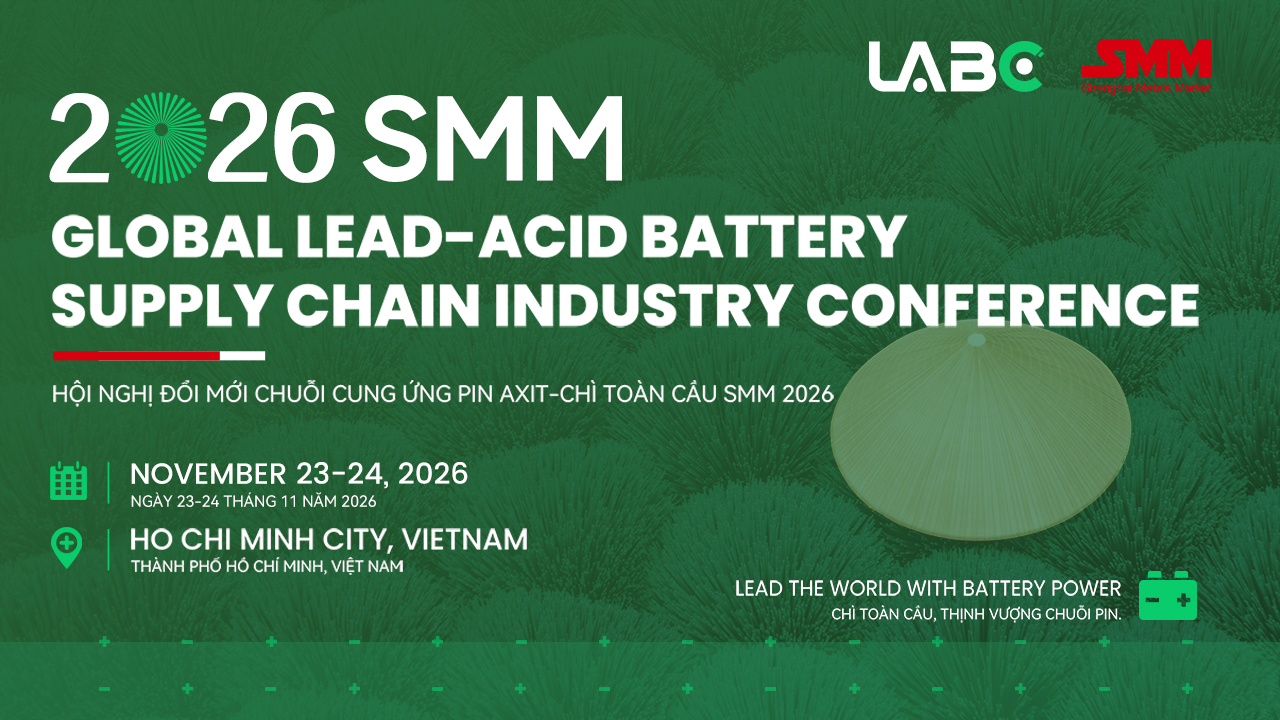 EventsNov 23 - 24, 2026 (GMT+8)Ho Chi Minh City, Vietnam
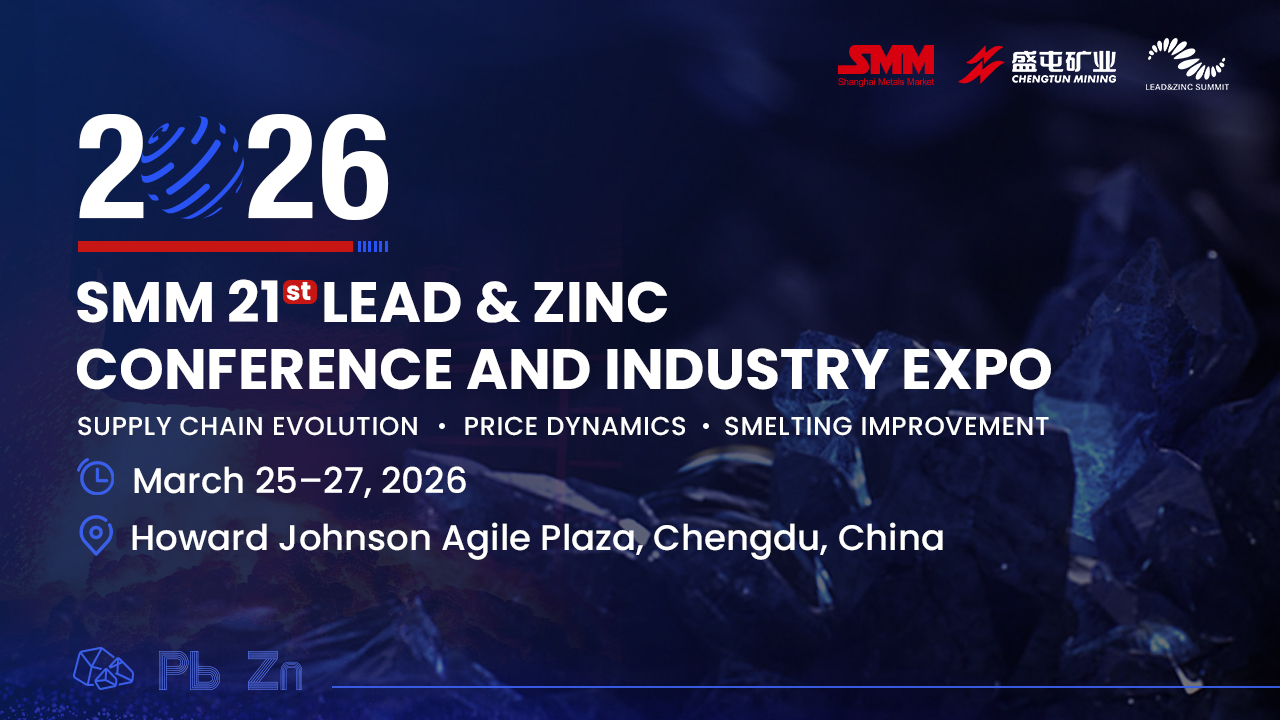 EventsMar 25 - 27, 2026 (GMT+8)Howard Johnson Agile Plaza, Chengdu, China
 WebinarDec 4, 13:30 - Dec 5, 23:59 (GMT+8)