

3109results found for 'Indonesia'
Price
News
- Overseas Alumina Supply Rebounds in July; Middle East Restart and Indonesia Policy Uncertainty Loom
SMM 7.31 News: According to SMM statistics, overseas metallurgical-grade alumina production in July 2026 fell approximately 1.0% year-on-year but rose 25.0% month-on-month. Overseas alumina supply showed significant recovery in July, as capacity previously constrained by Middle East tensions, hurricanes, and unplanned outages improved to varying degrees. Middle Eastern producers gradually resumed operations, Atlantic-region capacity affected by disruptions also recovered, and an Indian producer continued its slow ramp-up. By company and region: Jamaica is emerging from its 2025 trough. The government expects bauxite and alumina export revenues to rise 24% year-on-year to $760 million in 2026, driven by post-hurricane Melissa reconstruction efforts, though still below the $803.4 million recorded in 2024. In Q1 2026, Jamaica's alumina production fell 30.3% year-on-year to 267,060 mt, with bauxite output down 26.4% to 415,143 mt, while exports also contracted. The low-base rebound in July provided some modest support to overseas supply. In Southeast Asia, the Indonesian President's Office recently called for enhanced regulatory oversight, as exports of certain alumina products containing rare earth elements have faced obstacles. Indonesia has yet to issue regulations specifying permissible rare earth content in export products, and this policy uncertainty could pose disruptions to subsequent outbound shipments. In the Middle East, Emirates Global Aluminium (EGA) restarted its Al Taweelah alumina refinery on July 10, with production expected to reach 50% of capacity within days, and the company aims to achieve full technical capability by year-end. The refinery produced 2.4 million mt of alumina in 2025. However, the restart timeline for Aluminium Bahrain (Alba) remains unclear, while Qatalum continues to operate at only 60% of capacity. Geopolitical risks in the region persist. Additionally, South32's FY2026 production report showed Brazilian alumina output rose 5.3% year-on-year to 1.4 million mt. The company reiterated its binding agreement to sell its aluminum business to Alcoa for approximately $5.6 billion, with the transaction expected to close in the second half of 2027. Looking ahead to August, overseas metallurgical-grade alumina supply is expected to continue its recovery, with overall availability trending looser. The Middle East restart, improved Indonesian raw material access, and capacity restoration in India and the Atlantic region will contribute incremental supply. However, the Middle East conflict remains unresolved, while Indonesia's rare earth regulatory policies and quota issues, along with European sanctions uncertainty, could still disrupt the supply recovery. Supply-side uncertainties persist.
Jul 31, 2026 20:23 - Semiconductor market bucks the trend! Minor metals sector up nearly 3%, with Yunnan Tin and Yunnan Germanium leading the gains [SMM Flash]
SMM, July 31 – Sentiment on A-share semiconductor industry chain futures recovered, and the improved industry chain prosperity transmitted upstream, driving a sharp rally in the strategic minor metal sector. As of the close on July 31, the minor metal sector had risen 2.96%. Among individual stocks, Yunnan Tin and Yunnan Germanium both surged over 8%, while Orient Tantalum, Zhongxi Nonferrous, Xiamen Tungsten, Haotong Technology, Western Metal Materials, Zhangyuan Tungsten, Huaxi Nonferrous, and Shenghe Resources led the gains. This round of minor metal strength was driven by the resonance of multiple industrial dynamics. On one hand, the semiconductor and AI computing track regained heat, with expectations for demand expansion in high-speed optical modules, AI servers, and other fields improving. Germanium and tantalum, as core raw materials for semiconductor optoelectronic devices and high-end tantalum capacitors, are seeing steadily strengthened demand support from downstream emerging industries. On the other hand, germanium and tantalum are strategic dispersed metals with concentrated global supply. Coupled with overseas geopolitical disruptions and expectations of supply tightening from domestic resource controls, while the ongoing localisation of related high-end semiconductor materials continued to advance, this further boosted market allocation sentiment and pushed the sector higher. News [Yunnan Germanium: Subsidiary Signs Major Indium Phosphide Wafer Supply Order Worth RMB 570–855 Million, H1 Net Profit Expected to Increase YoY] Yunnan Germanium announced on July 24 that its controlled subsidiary Yunnan Xinyao recently signed a supply agreement with a client for the sale of indium phosphide wafers (substrates). The total estimated contract value ranges from RMB 570.08 million to RMB 855.12 million (tax inclusive), accounting for 53.48% to 80.23% of the company’s audited revenue for 2025. The contract term runs from August 1, 2026, to December 31, 2027. Regarding the contract’s impact on the listed company, Yunnan Germanium stated that if the contract is fulfilled smoothly, it is expected to have a positive impact on the company’s operating results for the performance years. The specific amount and reporting periods affected will depend on the actual performance of the contract and will be based on the company’s audited revenue. [Orient Tantalum: Domestic Demand for High-Value-Added Products Such as Superalloys and Semiconductor Tantalum Targets Is Gradually Rising] Orient Tantalum stated during an institutional survey on July 23 that, with the continuous development of China’s high-tech and new infrastructure sectors, domestic demand for high-value-added products such as superalloys, semiconductor tantalum targets, and high-purity niobium materials is gradually rising. In recent years, the company has vigorously promoted technical transformation and capacity expansion projects, organized production rationally, and gradually released new capacity. Under the guidance of the strategy for autonomous and controllable industry chains, the localisation substitution process has evolved from breakthroughs in individual products to systematic solutions, laying a solid foundation for the growth of tantalum, niobium, and their alloy products. [Yunnan Tin: Expects H1 2026 Net Profit of 1.47–1.57 Billion Yuan, Up 38.43%–47.85% YoY] Yunnan Tin disclosed an earnings forecast on the evening of July 14, expecting attributable net profit in H1 2026 to be 1.47 billion to 1.57 billion yuan, up 38.43%–47.85% YoY; and recurring net profit is expected to be 1.88 billion to 1.98 billion yuan, up 44.23%–51.91% YoY. Spot Market Tin Overnight, some US chip stocks rebounded, and the Philadelphia Semiconductor Index surged, boosting the performance of tin, known as the “computing metal.” SHFE tin opened higher on July 31, lifting spot prices. In the tin spot market: On July 31, the average price of SMM 1# tin was 425,850 yuan/mt, up 1.51% from the previous trading day. As tin prices rose, spot market trading was sluggish. Fundamentals: (1) Supply: Tight ore and ingot supply, low inventory, amplifying elasticity. Myanmar’s rainy season extends through end-August, with mine flooding and logistics disruptions; Wa State’s June tin ore output was only 6,392 mt in physical content. China’s tin ore imports in July are expected to be basically flat MoM. The slow pace of production resumptions in Wa State has been priced in ahead of time, with no major shutdowns in the near term, but supply contraction expectations during the rainy season have yet to fully materialize. Indonesia’s tin ingot imports in July are expected to show some recovery MoM. (2) Demand: Improved solder operating rates, but acceptance of high prices needs to be tested. The operating rate at solder enterprises was 78.8% in June, up 4.6 percentage points from May; however, after the sharp spot price rally on July 30, downstream users were cautious and stayed on the sidelines, and whether high-priced spot cargoes can be absorbed still requires verification. Stockpiling for new Apple/Huawei models in late August is the next demand trigger point. Institutional Views A research report from Minmetals Securities points out: Germanium accounts for 60% of applications in optical communication and satellite PV fields, making it a metal for “AI computing power + space energy.” With its excellent refractive index tuning capability and radiation resistance, germanium has become a key material for AI data center optical interconnects and low-earth-orbit satellite PV systems. Looking at changes in demand structure, from 2020 to 2026, downstream germanium consumption grew from 160 mt to 240 mt, with optical communication’s share rising to 40% and satellite PV’s share to 20%, together accounting for 60% of total downstream demand. It expects that 90% of the demand growth in 2027 will come from two high-growth sectors: AI hardware and satellite PV. A research report from Caitong Securities shows: As AI computing power demand explodes, the market size of indium phosphide, used as a chip substrate material, will continue to expand. Indium resources are scarce and subject to policy restrictions, and product prices are entering an uptrend. High-purity red phosphorus is a very important semiconductor base material, with high purification technology barriers. Against the backdrop of accelerated AI application deployment driving related infrastructure construction, the indium phosphide substrate industry chain is expected to see dual opportunities from demand growth and domestic substitution. It is recommended to focus on enterprises with resource and technological advantages in the links of indium phosphide, indium, and high-purity red phosphorus. A research report from Datong Securities shows that minor metals have staged an independent rally, with tightened supply combined with strategic attributes leading to a value revaluation. The rare earth sector is preemptively pricing in new regulatory controls, with Myanmar ore imports disrupted, tight spot supply of Pr-Nd oxide driving prices sharply higher; tungsten and antimony ore grades are declining along with environmental protection-driven production restrictions, widening the supply gap, while PV and hard alloy demand remains firm during the off-season, and inventories are at low levels. AI computing power and communications sectors are boosting demand for gallium and germanium, and coupled with export control policies, concentrated stockpiling outside China is widening the price spread between Chinese and overseas markets. Scarce resources are resonating with financial attributes, and the sector continues to be favoured by capital. Recommended Reads:
Jul 31, 2026 20:20 - July Ex-China Alumina Supply Rebounds Significantly, Middle East Restart and Indonesian Policy Changes Draw Attention [SMM Analysis]
SMM, July 31: According to SMM statistics, total overseas production of metallurgical-grade alumina outside China fell approximately 1.0% YoY in July 2026, while rising about 25.0% MoM. July saw a notable recovery-driven increase in alumina supply outside China, as capacity previously constrained by the Middle East situation, hurricanes, and unplanned production cuts was restored to varying degrees. Enterprises in the Middle East gradually resumed production, disrupted capacity in the Atlantic region also recovered step by step, and an Indian enterprise slowly ramped up production. By enterprise and region: Jamaica is emerging from its 2025 trough. The government expects that as post-Hurricane Melissa reconstruction advances, bauxite and alumina export revenue will grow 24% YoY to $760 million in 2026, though this remains below the $803.4 million recorded in 2024. In Q1 2026, Jamaica’s alumina production fell 30.3% YoY to 267,060 mt, bauxite production dropped 26.4% YoY to 415,143 mt, and exports contracted in tandem; against a low base, the recovery in July provided a certain supplement to supply outside China. In Southeast Asia, the Indonesian presidential office recently called for stronger oversight. Exports have been hindered because some alumina contains rare earth elements, yet Indonesia has not introduced regulations on rare earth content. This policy uncertainty could cause disruptions to subsequent exports. In the Middle East, EGA restarted the alumina refinery at its Al Taweelah site on July 10 and expects to restore 50% capacity within a few days, aiming for full technical capability by year-end. The refinery produced 2.4 million mt of alumina in 2025. However, the production resumption at the Bahrain aluminum smelter remains unclear and the Qatar aluminum smelter is still running at 60% capacity, with geopolitical risks yet to recede. Elsewhere, South32’s FY2026 report showed that its Brazilian alumina production grew 5.3% YoY to 1.4 million mt, and the company reaffirmed its plan to sell its aluminum business to Alcoa for about $5.6 billion, with the transaction expected to close in H2 2027. Looking ahead to August, the supply of metallurgical-grade alumina outside China is expected to continue recovering, trending broadly looser. Production resumptions in the Middle East, improving raw material conditions in Indonesia, and capacity restoration in India and the Atlantic region will contribute growth. However, the Middle East conflict is still ongoing, and uncertainties linked to Indonesia’s rare earth regulatory policy and quota issues, along with European sanctions, could still cause disruptions, leaving some supply-side uncertainty in place. (The above information is derived from market data collection and a comprehensive assessment by the SMM research team. The information provided herein is for reference only. This article does not constitute direct investment, research, or decision-making advice. Clients should make decisions prudently and not rely on this article as a substitute for their own independent judgment. Any decision made by a client shall have no connection to Shanghai Metals Market.) Data source: SMM
Jul 31, 2026 20:19 - [SMM Analysis] Importing Lithium Hydroxide: Still Profitable?
I. Import & Export Data: Volumes Are Rising According to customs data, China imported 4,400 tonnes of lithium hydroxide in June 2026, up 12% month-on-month and nearly triple year-on-year. Of this, 1,159 tonnes came from South Korea, accounting for 26% of the month's total imports; Chile ranked second with 993 tonnes; while imports from Indonesia remained low, with 774 tonnes arriving in June. On the export front, China exported 6,018 tonnes of lithium hydroxide in June, up 70% month-on-month, driven primarily by quarter-end shipment concentration and a modest recovery in overseas demand. Of this, 5,032 tonnes were exported to South Korea and 679 tonnes to Japan. Since 2026, China has shifted from a net exporter to a net importer of lithium hydroxide. Cumulative data shows that total imports for January–June reached 31,700 tonnes, a nearly threefold increase from the 8,000 tonnes imported during the same period last year, reflecting a certain degree of resilience in domestic demand. The surge in imports is now an established fact. Behind it lie both the cyclical advantage of domestic demand and prices over overseas markets, as well as traders' strategic moves to establish a foothold ahead of potential exchange listings. Yet regardless of the driving factors, a more practical question emerges — with import volumes climbing to record highs, can importers sustain profitability? Below, we assess the profit margins of imported lithium hydroxide through two pathways: direct resale and carbonation processing. II. Profitability of Direct Resale of Imported Lithium Hydroxide The following profit calculations are based on a comparison between the imported CIF cost (including tariffs, VAT, and port & agency fees) and the domestic SMM battery-grade lithium hydroxide spot price. A phased breakdown is provided below. January–May (First Half) : Import profits were generally substantial, with margins reaching as high as RMB 25,000/tonne or more. During this period, domestic lithium hydroxide prices were on an upward trajectory, while overseas demand remained sluggish and price increases lagged noticeably. Coupled with high overseas inventory levels, foreign holders showed a strong willingness to offload amid the elevated domestic prices, offering certain discounts on actual transactions, which allowed domestic buyers to enjoy margins better than theoretical estimates. June–July : Profitability narrowed significantly. By mid-to-late July, even imports from zero-tariff sources such as South Korea and Australia were hovering around the breakeven point. During this phase, domestic lithium hydroxide prices entered a downward channel, while overseas price declines lagged behind in tandem. At the same time, overseas demand picked up modestly, and holders — having largely cleared their earlier inventories — turned more reluctant to release cargoes, with widespread stockpiling behavior. As a result, the price drop overseas did not keep pace with the decline in China, compressing import margins further toward breakeven. It should also be noted that the above margin calculations implicitly rely on a key assumption: that imported lithium hydroxide can clear customs within a short storage timeframe and be sold at the SMM battery-grade lithium hydroxide (coarse particle) spot price. In practice, however, this assumption may not hold across all scenarios. The realities facing traders when importing lithium hydroxide into the Chinese market are twofold. On the one hand, major domestic cathode material manufacturers have long-standing relationships with leading domestic brands, with well-established supplier qualification systems and process parameters — replacing an imported brand requires a lengthy requalification cycle and faces limited downstream acceptance. On the other hand, lithium hydroxide from different source countries varies in particle size distribution, magnetic material content, and impurity profiles, making it not a straightforward "drop-in" substitute. These factors mean that imported lithium hydroxide often struggles to transact directly at domestic hydroxide spot prices in practice. Instead, it must be sold at a discount — either through an outright price reduction or by pricing reference to the main carbonate futures contract. This implies that actual profits are not as generous as the apparent figures would suggest. III. Profitability of Carbonation Processing of Imported Lithium Hydroxide Core assumptions are as follows: imported material is purchased at a 94%–98% discount to the SMM battery-grade lithium hydroxide spot price, and the carbonation process recovery rate is estimated at 95%–98%. Under these conditions, after the imported lithium hydroxide is carbonated into lithium carbonate, profitable opportunities emerge only in isolated months, with overall margins remaining fairly narrow. Summary Import volumes are growing, and for most of the first half of the year profitable import windows were available (notably in March and May). However, from June onward, apparent profits have narrowed rapidly toward the breakeven point. When further factoring in the discount required for direct resale or the margin compression from carbonation processing, the actual profitability of lithium hydroxide imports in recent months becomes even more limited. For importers aiming to sustain profitability in this space going forward, relying on simple price arbitrage will no longer suffice. Instead, competitive advantages must be built through downstream channel partnerships, quality premiums, and exchange rate risk management. Note: The import margin calculations in this report are based on a specific CIF benchmark. Actual transaction prices may vary by source country, brand, and purchase volume, while discount levels and carbonation costs are market-based estimates and are provided for reference purposes only. Data source: SMM & China Customs
Jul 31, 2026 19:06 - [SMM Stainless Steel Market Flash] India's Jindal Stainless Wins Three Quality Awards at TQM Convention 2026
Jindal Stainless, India's largest stainless producer, said its Jajpur plant in Odisha won three awards at the 2026 Total Quality Management Convention held by the Quality Circle Forum of India's Pune chapter. Two gold awards went to projects optimising manganese recovery in 200-series melting at the AOD shop and reducing RIS defects in 300-series at the hot strip mill, with a silver award for reducing trapezoidity in grades 304 and EN 1.4307. The convention drew 132 teams from close to 30 companies. Jindal held annual melting capacity of 4.2 million tonnes as of March 2026 across 16 facilities globally, including Spain and Indonesia, on FY26 turnover of ₹429.55 billion, about $4.86 billion.
Jul 31, 2026 18:52 - Cobalt Product Price Center Continues to Move Lower, Market Trading Sluggish; Market Stabilization and Recovery in Mid-to-Late August? [Weekly Observation]
SMM reported on July 31: Spot quotes for cobalt-related products continued to decline this week. The spot market demand remained sluggish. Before any concentrated restocking by downstream enterprises, cobalt salt prices showed an overall slow downward trend... SMM compiled the price changes of cobalt-related products this week, as follows: : According to SMM spot quotes, the center of refined cobalt spot quotes continued to shift downward this week. Although it rose by 1,500 yuan/mt on the last trading day, as of July 31, refined cobalt spot quotes were at 338,000-355,000 yuan/mt, with an average of 346,500 yuan/mt, down 3,500 yuan/mt or 1% from 350,000 yuan/mt on July 24. From the supply-demand side, on the supply end, mainstream smelters lowered ex-factory quotes to 355,000 yuan/mt, while other small and medium smelters basically suspended external quotes due to increased loss pressures. After continued destocking in the trade sector, available-for-sale inventories dropped to relatively low levels. Some enterprises, based on bullish expectations for the future, began to slow down their shipment pace, and a few quoting enterprises maintained the spot-futures price spread at a premium of 1,000-10,000 yuan/mt. On the demand side, downstream enterprises were still in the summer break period, with generally weak purchase willingness, only maintaining small-scale rigid restocking. Overall, July-August is the traditional consumption off-season for refined cobalt, with limited demand support. In the short term, prices may continue to be in the doldrums. Cobalt Salt (and ): : According to SMM spot quotes, cobalt sulphate spot quotes continued to fall this week. As of July 31, spot quotes dropped to 81,000-82,000 yuan/mt, with an average of 81,500 yuan/mt, down 1,500 yuan/mt or 1.81% from 83,000 yuan/mt on July 24. SMM learned that the divergence between upstream and downstream for cobalt sulphate further intensified this week, with limited actual trading. On the supply side, primary smelters using intermediate products and MHP, supported by costs, still held firm quotes above 80,000 yuan/mt. Recyclers, leveraging raw material cost advantages, concentrated their quotes in the 76,000-78,000 yuan/mt range, with a few aggressive sellers able to go below 75,000 yuan/mt. The demand side remained sluggish, with downstream enterprises showing insufficient purchase willingness and leaning toward non-standard or old cargo sources to lower procurement costs. Recently, there were transactions of substandard goods and old cargo below 73,000 yuan/mt. Adjusted for quality, the actual price difference from new products was limited. However, in a weak demand environment, this price level was used by downstream as a bargaining benchmark, forcing some recyclers to passively follow suit. Moreover, after the sustained drop in refined cobalt, the cost of producing cobalt sulphate through re-dissolution fell to 72,000-73,000 yuan/mt, further strengthening downstream pressure for lower prices. In the short term, the cobalt salt market shows a slow downward trend. A stabilization and recovery will have to wait for the release of concentrated downstream restocking demand, which is expected to occur no earlier than mid-to-late August . : According to SMM spot quotes, cobalt chloride spot quotes continued to fall this week. After dropping 3,000 yuan/mt on the last trading day, spot quotes fell to 95,000-98,000 yuan/mt, with an average of 96,500 yuan/mt, a decline of 3.02% from 99,500 yuan/mt on July 24. In the spot market, SMM learned that the cobalt chloride market remained sluggish this week, with trading at minimal levels. On the supply side, from a real-time cost perspective, the cost of recycled materials and the re-smelting path for refined cobalt were already significantly lower than current market and actual trading prices. The key factor affecting enterprise pricing was that upstream smelters generally held large-scale inventories, mostly high-cost, and faced with a continuously falling market, it was difficult to lower average costs through low-price procurement. Therefore, high-cost inventory provided some support to quotes, which remained relatively firm. However, at the same time, some enterprises had already begun to gradually lower quotes to promote shipments, trying to spread out earlier losses by accelerating turnover. Yet, downstream absorption capacity was extremely limited, and even price reductions could not lead to volume trading. On the demand side, Co3O4 enterprises themselves had high inventory levels, with no signs of demand growth, and current purchase willingness was very low. Overall, in the short term, cobalt chloride prices still have downside room. : According to SMM spot quotes, Co3O4 spot quotes also showed a downward trend this week. As of July 31, spot quotes fell to 300,000-320,000 yuan/mt, with an average of 310,000 yuan/mt, down 10,000 yuan/mt or 3.13% from 320,000 yuan/mt on July 24. In the spot market, SMM learned that the Co3O4 market was also quiet this week, with low trading volumes. On the supply side, with high inventory levels, enterprises faced the dilemma of thin profits under current raw material cost accounting and the risk of inventory buildup, so they generally kept production at lower levels. Although there were occasional rumors of ultra-low-priced cargo, based on communications with various parties, the existence of some ultra-low-price deals was not denied, but they were not enough to represent the mainstream market. On the demand side, cathode plants had some inquiries, but actual purchases were limited. Current raw material inventories were sufficient to support production, with no urgent restocking needs. Overall, Co3O4 prices also have the potential to further decline in the short term. On the news front, in corporate developments, Chengtun Mining released its H1 2026 report, mentioning that the company achieved revenue of 19.264 billion yuan in H1, up 39.56% YoY; net profit attributable to shareholders of the publicly listed firm was 1.804 billion yuan, up 71.37% YoY. Chengtun Mining stated that during the reporting period, its energy metal business achieved revenue of 14.543 billion yuan, with a gross margin of 27.03%, basically consistent with the previous year. In H1 2026, copper production was 133,200 mt in metal content, cobalt production 3,700 mt in metal content, and nickel production 21,200 mt in metal content. Copper-cobalt segment: ① During the reporting period, the company's DRC copper-cobalt segment achieved stable output, with copper production reaching 132,200 mt in metal content, of which Xiongdi Mining achieved 74,400 mt in metal content. The company addressed the power shortage issue through a multi-type energy combination, building a modern energy system integrating specialization, intensification, and integration, boosting both operational efficiency and scale. ② Dali Sanxin actively advanced mine construction, aiming for trial production in Q4. Currently, land and other related procedures have been completed, well engineering is basically finished, and surface civil engineering construction is being actively promoted. ③ In April 2026, the company disclosed the planned acquisition of a 50% stake in Nkoyi Leopard Mining and Investment Limited, to indirectly obtain a 30% interest in a large specific copper-cobalt mining right. The deal was completed in July 2026, and cooperation on the mine is proceeding normally. During the reporting period, the company actively sought sustainable resource guarantees through exploration in potential areas and pursuing extensive copper resource M&A and cooperation. Furthermore, CNGR also released its H1 2026 performance forecast, expecting net profit attributable to shareholders of the publicly listed firm in H1 2026 to be in the range of 1.25-1.35 billion yuan, up 70.58%-84.23% YoY. Regarding the reasons for the performance change, CNGR stated that during the reporting period, the company seized the high-development opportunities in the global new energy industry and, leveraging its leading position in the battery materials field, achieved total sales of core products such as nickel-based, cobalt-based, phosphorus-based, and sodium-based materials exceeding 250,000 mt. By segment, ternary cathode precursor sales grew over 50% YoY in H1, with stable overall gross margin, further solidifying its industry-leading position; phosphorus-based material sales grew over 25% YoY, with profitability elasticity significantly released, successfully turning losses into profits; and sodium-ion battery precursor material sales maintained a high growth trend, continuing its industry leadership. Additionally, the company's upstream resource layout yielded notable results, with investment income from laterite nickel ore steadily increasing; the Indonesian pyrometallurgy nickel smelting project, with its cost advantages, effectively hedged local policy changes and maintained excellent profitability. Overall, the company's "resource + smelting + materials" entire industry chain integration advantage continued to deepen, with all business segments working synergistically to build a safety margin and anti-cyclical resilience for its operations.
Jul 31, 2026 18:41
Announcements
SMM will soon upgrade and optimize the classification structure of its PV module price assessments.
Jul 28, 2026 18:06SMM is expanding the pig iron production data in the SMM database : adding pig iron production data for 39 countries and regions.
DataJul 15, 2026 14:00Notice on Frequency Adjustment for Price
PriceJul 7, 2026 15:10
Events
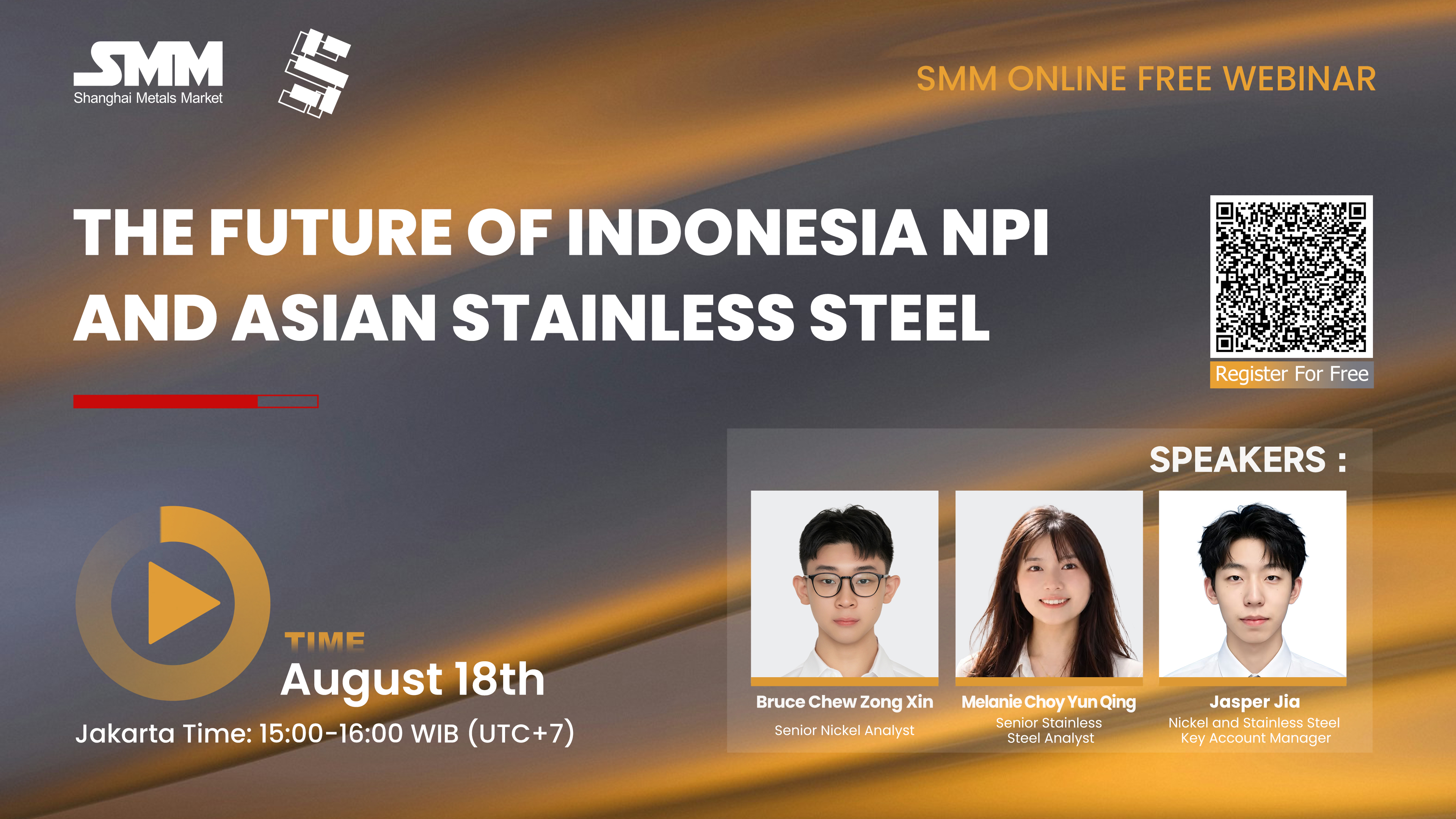 WebinarAug 18, 16:00 - 23:59 (GMT+8)
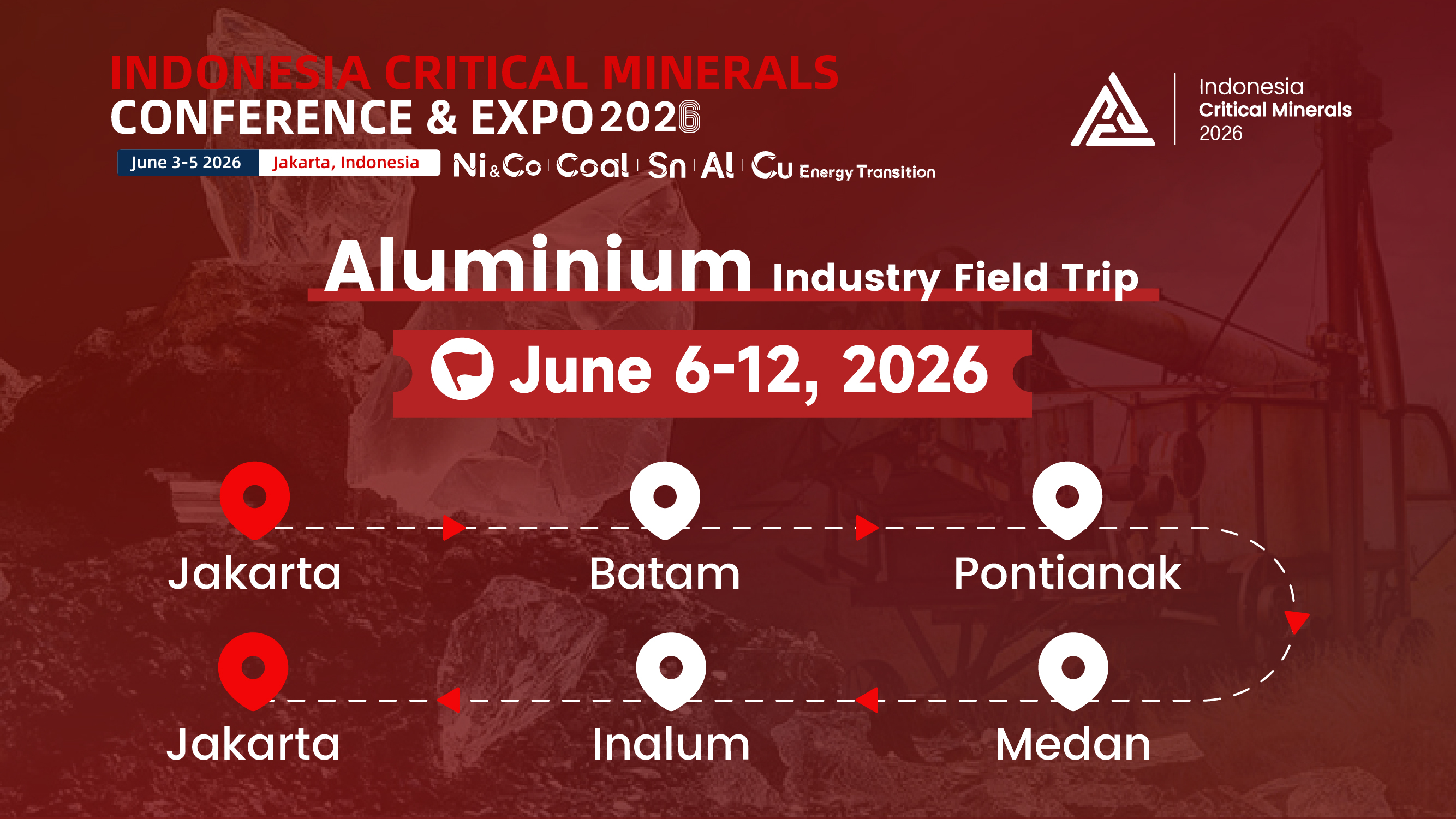 Field TripJun 6 - 12, 2026 (GMT+8)Jakarta
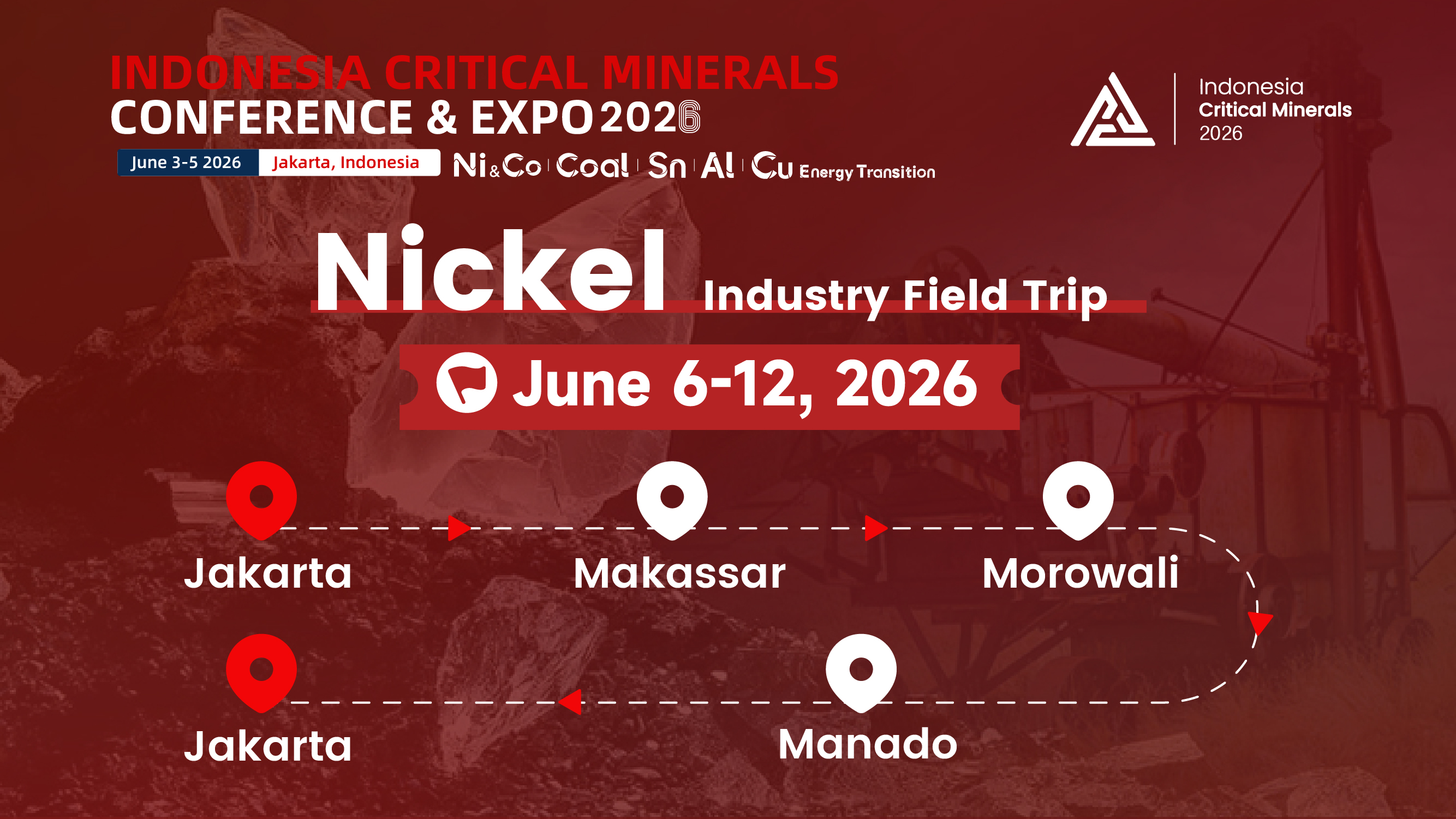 Field TripJun 6 - 12, 2026 (GMT+8)Jakarta