

684results found for 'Germany'
Price
News
- EGA Restarts 89 Reduction Cells at Al Taweelah, Targets Full Ramp-Up in One Year
[SMM Aluminum Express News] EGA has restarted 89 of its 1,262 reduction cells at the Al Taweelah smelter since the first cell resumed operations on 26 May, with full ramp-up expected to take up to one year. Anode removal is complete, bath cleaning is around 90% finished, and more than 20% of frozen metal has been removed. The Al Taweelah casthouse resumed casting on 4 May, initially remelting recovered frozen metal before processing hot metal from restarted cells. The recycling plant restarted commissioning in April and is targeting full ramp-up within six months, while the alumina refinery is expected to resume production in early Q3. Jebel Ali continues operating at full capacity, and EGA has established alternative export routes outside the Strait of Hormuz while maintaining uninterrupted recycling operations in the US and Germany.
Jul 2, 2026 13:36 - Eku Energy Acquires 1.6GWh Battery Storage Project in Germany
Eku Energy has acquired the 400MW/1,600MWh Dion battery energy storage project in Lower Saxony, Germany. The project is expected to become one of the country's largest battery storage facilities, with a direct connection to the transmission grid and black-start capability. It is currently in an advanced stage of development and is targeted for commissioning by the end of 2029. The BESS will use lithium iron phosphate (LFP) technology.
Jul 2, 2026 09:30 - Metals broadly fell, with lithium carbonate surging over 5%, SHFE zinc rising over 1%, while NY silver and coke dropped over 2%, [SMM Midday Review]
SMM News on July 1: Metals market: As of midday close, domestic base metals mostly fell. SHFE copper fell 0.44%, SHFE aluminum fell 0.86%. SHFE lead fell 1.46%. SHFE zinc rose 1.01%. SHFE tin rose 0.93%. SHFE nickel fell 0.61%. Additionally, the most-traded casting aluminum futures fell 0.64%, the most-traded alumina futures rose 0.11%. The most-traded lithium carbonate futures rose 5.65%. The most-traded silicon metal futures rose 0.6%. The most-traded polysilicon futures rose 3.08%. Ferrous metals all fell. Iron ore fell 1.81%, HRC fell 0.52%. Rebar fell 0.79%, stainless steel fell 0.14%. Coking coal and coke: the most-traded coking coal contract fell 2%, the most-traded coke contract fell 2.33%. Overseas base metals market, as of 11:36, LME metals all fell. LME copper fell 0.91%, LME aluminum fell 1.18%, LME lead fell 0.69%. LME zinc fell 0.69%, LME tin fell 1.53%. LME nickel fell 0.37%. Precious metals, as of 11:36, COMEX gold fell 1.09%, COMEX silver fell 2.74%. Domestic precious metals: SHFE gold fell 0.37%; the most-traded SHFE silver futures rose 0.5%. Additionally, as of midday close, the most-traded platinum futures fell 1.91%, and the most-traded palladium futures fell 1.03%. As of midday close, the most-traded European container shipping futures fell 9.81% to 2,560 points. As of 11:36 on July 1, midday futures quotes for some contracts: Spot and fundamentals Copper: Today, Guangdong #1 copper cathode spot against the front-month contract: high-quality copper reported at a premium of 50 yuan/mt, up 50 yuan/mt from the previous trading day; standard-quality copper reported at parity, up 90 yuan/mt from the previous trading day; SX-EW copper reported at a discount of 60 yuan/mt, up 90 yuan/mt from the previous trading day. The average price of Guangdong #1 copper cathode was 102,220 yuan/mt, up 140 yuan/mt from the previous trading day, and the average price of SX-EW copper was 102,135 yuan/mt, up 160 yuan/mt... Macro front China: [The PBOC net withdrew 1,162.5 billion yuan from the open market today.] The PBOC conducted 100 billion yuan in 7-day reverse repo operations today at an unchanged interest rate of 1.4%. Today, 662.5 billion yuan in 7-day and 600 billion yuan in overnight reverse repos matured. [Shenzhen's June housing transactions hit a near 6-year high.] According to data released by Shenzhen Centaline Research Center today, Shenzhen's new and secondhand home transactions totaled 8,878 units in June, down 11.9% MoM but up 14.2% YoY. The combined new and secondhand home transaction volume hit a new high for the same period since 2021. Among them, first-hand residential (presale + existing) online signings totaled 3,785 units, down 16.7% MoM but up 15.6% YoY; second-hand residential transfers reached 5,093 units, down 8% MoM but up 13.1% YoY. (Jin10 Data APP) US dollar aspect: As of 11:36, the US dollar index rose 0.16% to 101.33. Fed’s Hammack said: The labour market is near full employment, with good growth prospects. Inflation remains too high, and the Fed may need to consider rate hikes. Jason Pride, Chief of Investment Strategy at private wealth management and investment firm Glenmede, and Michael Reynolds, Vice President of Investment Strategy, said investors should expect the US June unemployment rate to remain unchanged at 4.3%, with non-farm payrolls increasing by about 87,000. While this represents a pullback from May’s 172,000, in the current labour market environment of “low hiring, low layoffs,” it still counts as a solid outcome. Although employment fundamentals remain largely intact, the Fed’s focus has shifted to inflation, meaning that the timing of any future easing measures will depend more on inflation pressures than on job growth itself. According to CME’s “FedWatch”: The probability of the Fed keeping rates unchanged in July is 66.3%, and the chance of a cumulative 25bp rate hike is 33.7%. For September, the probability of the Fed keeping rates unchanged is 33.1%, the chance of a cumulative 25bp hike is 50.0%, and the chance of a cumulative 50bp hike is 16.9%. (Jin10 Data APP) Data highlights: Today will see the release of US June Challenger Job Cuts, US June ADP Employment Change, US June S&P Global Manufacturing PMI (final), US June ISM Manufacturing PMI, US May Construction Spending MoM, UK June Nationwide House Price Index MoM, UK June Manufacturing PMI (final), Switzerland May Real Retail Sales YoY, France June Manufacturing PMI (final), Germany June Manufacturing PMI (final), Eurozone June Manufacturing PMI (final), Eurozone June CPI YoY (preliminary), and Eurozone June CPI MoM (preliminary), among others. In addition, Fed Chairman Warsh, ECB President Lagarde, Bank of England Governor Bailey, and Bank of Canada Governor Macklem spoke at the “Policy Panel” session of the ECB’s Global Central Bank Forum. The Davos Technology Summit is held from July 1 to 4, with the theme “Physical AI and Robotics.” It is worth noting that on July 1, the Hong Kong Stock Exchange (China) was closed for the Hong Kong Special Administrative Region Establishment Day, with both northbound and southbound trading suspended. The Toronto Stock Exchange in Canada was closed for Canada Day. Crude oil: As of 11:36, oil prices on both benchmarks edged up, with WTI up 0.42% and Brent up 0.41%. Preliminary vessel tracking data from Kpler and Vortexa showed the UAE lifted exports of crude oil and condensate to a record high in June, shortly after leaving OPEC. Rauball, a senior oil analyst at Kpler, said UAE exports of crude and condensate averaged about 3.7 million barrels per day this month, a record high and well above the pre-Middle East conflict level of 3.1 million to 3.3 million barrels per day. The UAE's previous export peak was 3.44 million barrels per day in April 2020, when Saudi Arabia and Russia triggered a brief oil price war. Emma Li, a senior oil analyst at Vortexa, said crude loadings from Abu Dhabi hit 4 million barrels per day between June 1 and 29, surpassing the pre-conflict level of 3.4 million barrels per day. Exports also rose to a record 3.7 million barrels per day, compared with 3.3 million barrels per day in the first two months of this year. (Jin10 Data APP) Spot Market Overview: ► ► ► ► ► ► ► ► ► ► ► ►
Jul 1, 2026 14:24 - [North Rhine-Westphalia Steel Production Falls 20% Over a Decade]
Steel production in North Rhine-Westphalia (NRW), Germany's industrial heartland, fell to 45.8 million tonnes in 2025, marking a 20.1% decline from 2015 levels and a 6.4% drop compared to 2024. The reported tonnage includes crude steel, semi-finished, rolled, and finished products, containing multiple instances of double counting along the value chain. Despite the sharp volume decline, the average selling value of steel reached €786/tonne ($896/tonne) in 2025, which is 46.5% higher than in 2015 but 4.7% lower than the 2024 average. This steep decade-long volume contraction, juxtaposed with inflated nominal prices, underscores the severe deindustrialization and structural demand loss plaguing Germany's heavy manufacturing sectors.
Jul 1, 2026 10:05 - [SMM Flash News] OMV Petrom Receives Key Modules for 20-MW Green Hydrogen Electrolyser at Petrobrazi
Romanian oil company OMV Petrom has received all four modules for its 20-MW electrolyser under development at the Petrobrazi refinery. The facility, supplied by Germany's Neuman & Esser, is expected to produce around 3,000 mt of green hydrogen annually using renewable electricity, supporting refinery operations including sustainable aviation fuel (SAF) and hydrotreated vegetable oil (HVO) production. The project, backed by approximately EUR 21 million in funding under Romania's National Recovery and Resilience Plan, is part of OMV Petrom's broader plan to develop 55 MW of electrolysis capacity at Petrobrazi.
Jun 30, 2026 20:19 - Siemens Energy partners with German shipyard for first 2GW offshore converter platform project
On June 30, Siemens Energy announced that it had recently secured, together with Neptun Smulders Offshore Renewables (NSORe), a contract from German transmission system operator 50Hertz to provide the grid connection system for the North Sea Connector 2 offshore wind grid connection project in the European North Sea. Once operational, the project will be able to transmit up to 2GW of offshore wind power to the onshore grid. The North Sea Connector 2 converter platform will be built by NSORe, a joint venture between Neptun Werft, part of Germany’s Meyer Werft Group, and Belgian construction company Smulders. Siemens Energy will provide the transmission technology and related equipment for the offshore converter platform, with around 95% of the equipment to be manufactured at Siemens Energy’s plants in Germany.
Jun 30, 2026 18:40
Announcements
- Price[SMM Announcement] Addition of Four New Tungsten Carbide Scrap Price Points in India and Europe
SMM will add new price points for tungsten carbide scrap in Europe and India, effective February 13, to enhance market transparency and facilitate global trade.
PriceFeb 12, 2026 11:27
Events
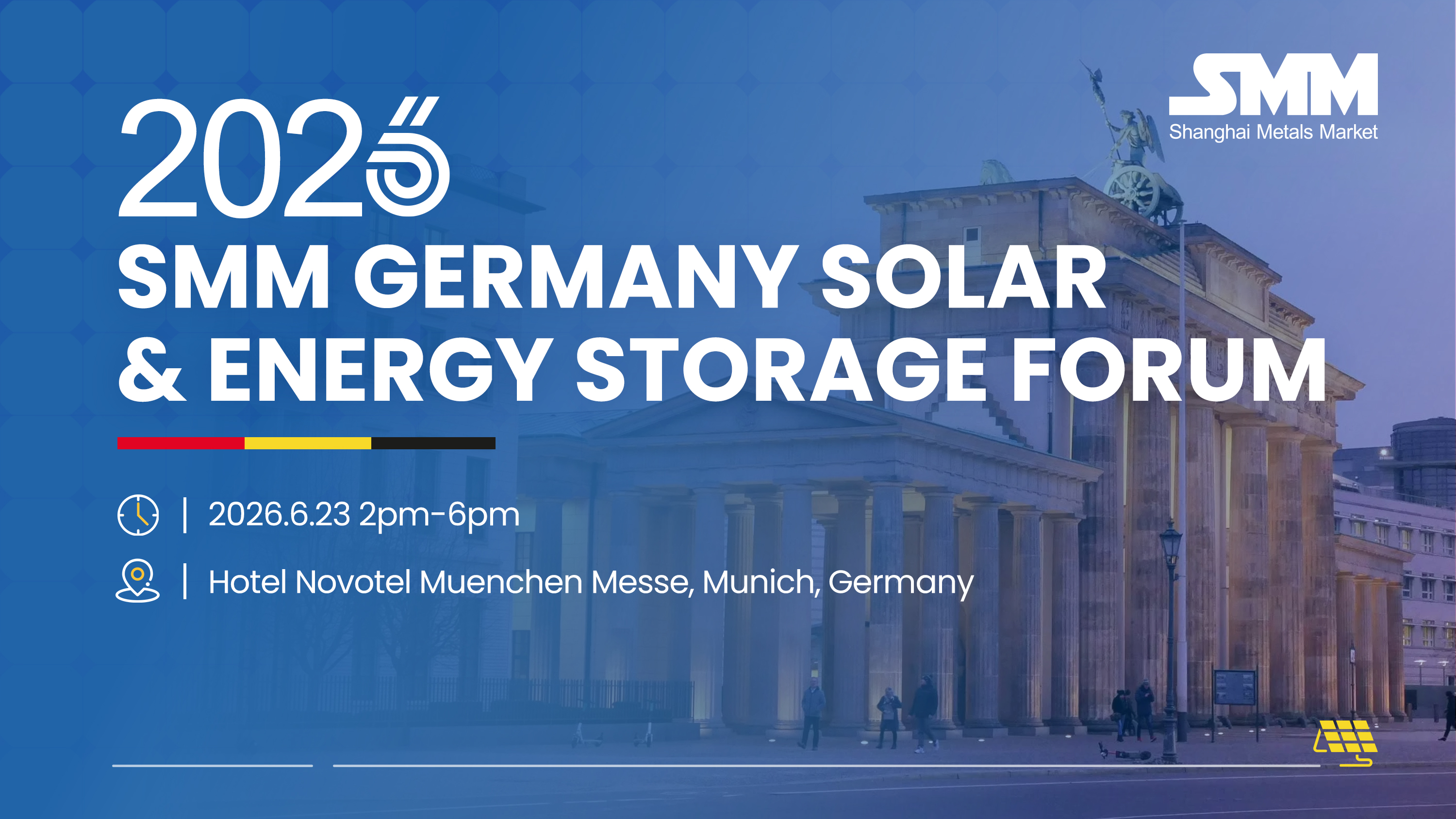 EventsJun 22, 2026 (GMT+8)Munich, Germany
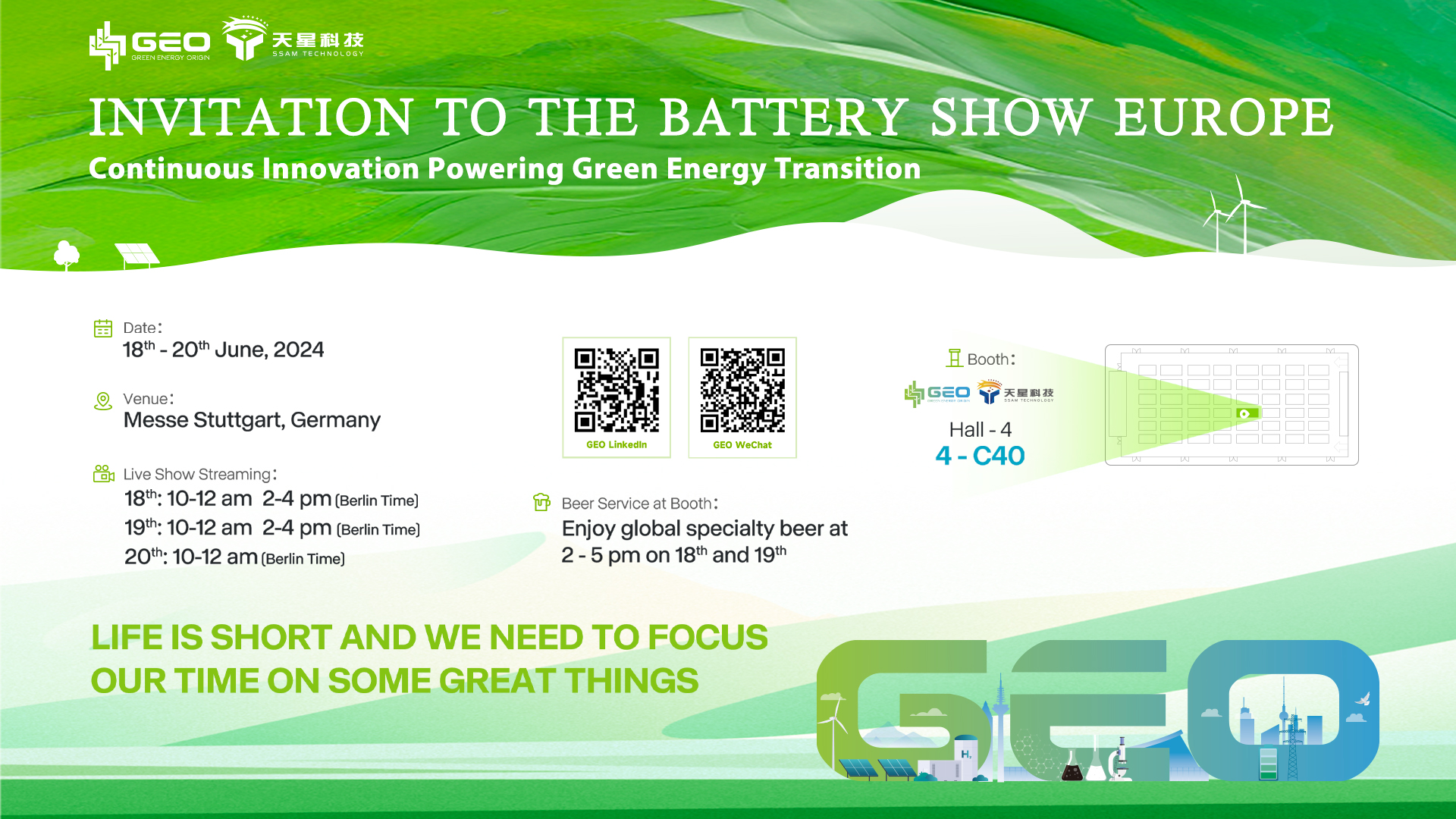 WebinarJun 19, 16:00 - 23:59 (GMT+8)