

246results found for 'Field trip'
Price
News
- FinDreams Battery and Sichuan Meishan Xingmei Investment Group Officially Sign Framework Cooperation Agreement
On June 2, 2026, Yang Dezhi, Party Secretary and Chairman of Meishan Xingmei Investment Group, led a delegation and headed to Pingshan headquarters for a field trip and exchange, and officially signed a strategic cooperation agreement with FinDreams Battery. FinDreams Battery Deputy General Manager Zhao Tong, BYD Energy Storage and New-Type Battery Division General Manager Yin Xueqin, and other leaders attended the event and witnessed the signing ceremony. In the future, both parties will accelerate the implementation of the agreement, deepening cooperation with a focus on the co-construction of heavy truck fast charging and energy replenishment networks, zero-carbon park construction, power battery support, and hard carbon anode resource development.
Jun 5, 2026 17:26 - Yunnan Copper: The Hongnipo copper mine is currently under construction, with annual self-produced copper concentrates expected to contain 69,800 mt of copper
The investor relations activity record of Yunnan Copper for May 26–27, 2026 shows: 1 What is the company's planned copper concentrate production from captive mines this year, and what is the approximate cost level of the mining enterprises? According to the company's 2026 financial budget and production plan, full-year self-produced copper concentrates are expected to contain 69,800 mt of copper metal content. The company's current mining enterprises mainly include Diqing Nonferrous, Liangshan Mining, Yuxi Mining, and Diqing Mining. Due to differences in resource endowment and the life cycle stage of each mine, cost levels vary, with Diqing Nonferrous, Liangshan Mining, and Yuxi Mining having relatively lower costs. Meanwhile, the company strives to maintain overall cost stability through measures such as lean operations and increasing mining volumes. 2 What is the progress of the Hongnipo copper mine construction project of Liangshan Mining? The Hongnipo copper mine is currently under construction, with cumulative verified resource reserves of 16.06 million mt of ore, an average copper grade of 1.42%, and copper metal content of 592,900 mt. The project is progressing in an orderly manner as planned and is expected to be completed and ready for commissioning in 2026. 3 Will the mine resources under the company's major shareholder be injected into the publicly listed firm? Asset injection involves complex systematic work that requires comprehensive consideration of development strategy, asset conditions, regulatory requirements, and shareholder interests. The company will continue to focus on and strive to enhance the quality of the publicly listed firm, and if there are any new relevant arrangements, it will strictly follow prescribed decision-making and disclosure procedures. 4 Has the company set a target for resource self-sufficiency rate? The company regards improving resource self-sufficiency rate as an important long-term strategic task, relying primarily on three paths: commissioning of projects under construction, tapping potential of existing mines, and external resource acquisitions. Regarding projects under construction, the company successfully completed the acquisition of 40% equity in Liangshan Mining in December 2025, and the Hongnipo project is expected to be completed and ready for commissioning in 2026. Regarding tapping potential of existing mines, the company leverages its major mines to continuously intensify deep and peripheral exploration efforts, steadily advancing resource succession and reserve additions. Regarding external resource acquisitions, while managing existing mines and smelters well, the company actively monitors quality mineral resource projects and prudently conducts field trips and evaluations based on strategic positioning and market demand. 5 What proportion can the company's copper smelting TC long-term contracts approximately reach? The company follows the principles of marketization and maximization of comprehensive benefits in externally purchasing raw materials. As one of the larger copper concentrate purchasers in China, the company has long maintained good, stable, long-term cooperative relationships with major suppliers, and actively negotiates with copper concentrate suppliers to stabilize long-term contract supply and ensure orderly production. 6 What were the company's sulphuric acid selling price and production in Q1 2026? According to the company's 2026 production plan, planned annual sulphuric acid production is 5.76 million mt. In Q1 2026, sulphuric acid production progressed in an orderly manner as planned. Price side, as a by-product of copper smelting, sulphuric acid selling prices are influenced by multiple factors including regional market supply and demand, transportation conditions, and industry prosperity. Since the beginning of this year, driven by robust downstream demand and tight supply in some producing areas, sulphuric acid selling prices have stayed high. The company seized market opportunities, reasonably arranged production and sales, and made positive contributions to operating performance. Meanwhile, the company will continue to monitor price changes and dynamically optimize production and sales pace. 7 Does the company have further cost reduction plans? The company's mining and smelting enterprises continuously pursue lean cost reduction to build low-cost competitive advantages. For example, the company is comprehensively advancing the "Three-Year Cost Reduction 3.0" initiative, continuously promoting cost reduction and efficiency improvement, and lowering unit production costs through technological upgrades, process optimization, and improved management efficiency. 8 What major capital expenditures are expected in the future? The company's future major capital expenditures will primarily focus on the following strategic directions: first, resource acquisition—continuously strengthening exploration and acquisition of quality copper mineral resources in and outside China to enhance resource security capabilities; second, intelligent manufacturing—advancing automation, digitalization, and intelligent upgrades of mines and smelting plants to improve production efficiency and safety levels; third, green and low-carbon development—increasing investment in environmental protection, energy conservation, and other areas to promote sustainable development. Performance side: Yunnan Copper's Q1 2026 report disclosed on April 24 showed that the company achieved total operating revenue of 52.959 billion yuan, up 49.62% YoY; net profit attributable to the parent was 675 million yuan, up 7.93% YoY. Regarding the reasons for the increase in operating revenue, Yunnan Copper stated that it was mainly due to higher product prices compared to the same period last year and increased sales volumes compared to the same period last year. Yunnan Copper's 2025 annual report showed that in 2025, the company firmly established market entity awareness, strengthened its lean operations system, and solidly carried out production organization, cost control, indicator optimization, marketing value creation, and other work, with main product production reaching record highs and key technical and economic indicators continuously optimized. Full-year production included copper cathode of 1.6411 million mt, gold of 26.04 mt, silver of 735.38 mt, and sulphuric acid of 6.189 million mt, with copper cathode, gold, and silver production all reaching record highs. Full-year operating revenue reached 79.542 billion yuan and net profit attributable to the parent was 1.301 billion yuan, with operating efficiency steadily improving. Cost and technical indicators were continuously optimized, with mine concentrate copper content and smelting copper cathode unit full cost outperforming annual cost reduction targets. Key technical indicators for smelting and mining remained stable with improvement. In 2025, the copper smelting total recovery rate exceeded the target by 0.07 percentage points, and slag flotation tailings copper content was optimized by 0.01 percentage points versus the target, both reaching industry-leading levels. Yunnan Copper announced that in 2025, the company's concentrate copper content production, on a consolidated statement basis, was 69,400 mt, up 26.64% YoY from 2024, mainly because the company issued shares to acquire 40% equity in Liangshan Mining held by Yunnan Copper Group during 2025, and Liangshan Mining was included in the consolidated statements as of December 31, 2025, with its full-year production included in the statistics. Regarding the company's main businesses, Yunnan Copper introduced in its 2025 annual report: The company's main businesses cover copper exploration, mining and beneficiation, smelting, extraction of precious metals and rare scattered metals, sulphur chemicals, and trading. It is an important copper, gold, silver, and sulphur chemical production site in China. The company has established a relatively complete industry chain in copper and related nonferrous metals and is a copper enterprise with deep industry heritage. Main products include copper cathode, gold, silver, industrial sulphuric acid, and rare and scattered metal products such as molybdenum, platinum, palladium, selenium, and tellurium. The company's main products are all produced according to international standardization organization standards, operating effectively under the international ISO9001 quality management system to ensure strict quality control. The company's main product, copper cathode, is widely used in electrical, light industry, machinery manufacturing, construction, national defense, and other fields; gold and silver are used in finance, jewelry, electronic materials, etc.; industrial sulphuric acid is used as raw material for chemical products and in other sectors of the national economy. The company's "Tiefeng" brand copper cathode is registered on the Shanghai Futures Exchange and the London Metal Exchange; "Tiefeng" brand gold is registered on the Shanghai Gold Exchange (SGE) and the Shanghai Futures Exchange; "Tiefeng" brand silver is registered on the Shanghai Gold Exchange (SGE), the Shanghai Futures Exchange, and the London Bullion Market Association. Regarding the company's future development outlook, Yunnan Copper introduced in its 2025 annual report: Yunnan Copper adheres to the guidance of Xi Jinping Thought on Socialism with Chinese Characteristics for a New Era, fully implements the spirit of the 20th National Congress of the Communist Party of China and its successive plenary sessions, and upholds and strengthens the Party's overall leadership. The company actively serves major national strategies, adheres to promoting high-quality development as the theme, fully, accurately, and comprehensively implements the new development philosophy, continuously enhances core functions and improves core competitiveness, and better plays its role in scientific and technological innovation, industrial control, and security support in building a modern industrial system and constructing a new development pattern. The company emphasizes "two guarantees" (important mineral resource guarantee and important metal material guarantee), "two innovations" (scientific and technological innovation and management innovation), "two constructions" (strengthening Party building, especially cadre team building), and "three unwavering commitments" (unwavering in accelerating structural adjustment, unwavering in deepening enterprise reform, and unwavering in international operations and increasing "going global" efforts). The company focuses on "digital-intelligent transformation, expanding resources, refining mines, optimizing smelting, solidifying recycled (copper), and detailing rare scattered (metals)," accelerating the construction of a world-class excellent copper company, and continuously opening new prospects for Yunnan Copper's high-quality development. Guosen Securities' research report commenting on Yunnan Copper on April 11 showed: Quality asset consolidation. Production side, the company's copper ore production was close to 70,000 mt, with major mines maintaining stable production. Copper smelting side, after Southwest Copper reached full production, the company's 2025 copper cathode production was 1.64 million mt, up 440,000 mt or 36% YoY. During the reporting period, the company purchased 40% equity in Liangshan Mining through share issuance to its major shareholder, achieving consolidation. Liangshan Mining is a quality asset, with its mines featuring open-pit mining, abundant reserves, higher grade than the publicly listed firm's existing copper mines, and lower costs than the publicly listed firm's existing copper mines. In H2 2025, profitability of major subsidiaries generally declined. Although copper, gold, and silver prices rose significantly in H2 2025, the company's mining operations saw profit decline QoQ. Smelting operations also declined significantly in H2 2025, which was related to the sharp drop in copper concentrate TCs. As sulphuric acid prices are expected to stay high, the company's smelting business profitability is expected to improve. Gross profit by product side, the company produces over 6 million mt of sulphuric acid annually. Benefiting from sulphuric acid price increases, sulphuric acid business gross profit in 2025 was 2.03 billion yuan, up 1.5 billion yuan YoY, representing a performance highlight. Since early 2026, sulphuric acid prices have continued to rise, and this is expected to further boost earnings. Leveraging the copper industry's high-prosperity cycle in recent years, the company's asset quality has improved, and during the reporting period it achieved consolidation of Liangshan Mining, a quality asset. As the sole copper publicly listed platform under Chalco Group, injection of other quality assets from the major shareholder is anticipated. Although the copper smelting business is under pressure in the short term, the government has issued policies to strictly control new copper smelting capacity, and the company benefits from global copper smelting capacity rationalization, with a favorable long-term industry landscape. Maintain "Outperform" rating.
May 28, 2026 15:35 - Sixth Stop of SMM Japan Field Trip Post 2026 3rd GRMI: KINKI SANGYO
On May 12, the 2026 SMM (3rd) Global Renewable Metal Industry Chain Summit & Battery Recycling Forum , organized by Shanghai Metals Market (SMM), drew to a successful close at the Sheraton Grande Tokyo Bay Hotel in Tokyo, Japan! Following the event, SMM arranged an overseas field trip for delegates. The delegation paid visits to renowned local recycling enterprises in Japan to learn about operational practices and technological advancements in Japan's recycled non-ferrous metal sector. On the afternoon of May 15, the delegation visited KINKI SANGYO CO.,LTD. and received a warm welcome from the firm’s management. Company Profile KINKI SANGYO CO.,LTD. has grown steadily since its founding with the support of numerous partners, always adhering to the core objectives of responding to the needs of the times and driving industrial development. As its business scale has expanded, the company has gradually established a solid industrial foundation in the field of metal resource recycling and built a stable supply system covering both China and ex-China markets. Headquartered in Izumi-Otsu City, Osaka Prefecture, with a sales office in Izumi City, the company maintains high-standard professional operations throughout the entire process—from the procurement and processing of metal scrap to sales and export—and is committed to contributing to industrial development in Japan and the broader Asian region. The company is well aware that sustained corporate growth depends on trustworthy quality and efficient management. To this end, the company has fully implemented and obtained ISO 9001 certification, the quality management system established by the International Organization for Standardization (ISO). Through this system, the company has established rigorous operational procedures and quality control mechanisms, ensuring that product quality remains consistently stable and reliable, and guaranteeing the continuous supply of high-grade metal raw materials that meet the requirements of steelmaking enterprises and other partners. The spirit of continuous improvement advocated by ISO 9001 has also become part of the company culture, with all employees constantly pursuing greater efficiency and superior quality in their daily work, with enhancing client satisfaction as their shared goal. In terms of business philosophy, the company adheres to a "people-oriented" approach, believing that talent is the most fundamental resource of an enterprise. The company encourages employees to continuously enhance their capabilities, closely integrating personal growth, corporate interests, and social value, earning the trust of partners through honest management and steady development. The company actively promotes open cooperation, establishing long-term and stable business relationships with various industries in and outside China, while continuously exploring new market opportunities to build a broader and more solid international network for the future. Looking ahead, KINKI SANGYO CO.,LTD. will continue to leverage its professional expertise, international vision, and rigorous quality management system to continuously strengthen its comprehensive competitiveness, contributing to socioeconomic development, resource recycling, and broader international cooperation. This visit was an important practice of SMM in building an international recycled metals industry exchange platform, creating a bridge for direct dialogue and experience sharing between Chinese and Japanese enterprises. Through on-site observation and face-to-face exchanges, attendees gained in-depth understanding of KINKI SANGYO CO.,LTD.'s technological advantages, operational management experience, and market positioning strategies in the recycled metals sector. They gained particularly valuable insights in areas such as refined processing of scrap metals and collaborative operations across the entire industry chain, providing valuable references for Chinese enterprises to optimize production models and enhance technological capabilities.
May 22, 2026 15:48 - Fifth Stop of SMM Japan Field Trip Post 2026 3rd GRMI: Toyo Trading
On May 12, the 2026 SMM (3rd) Global Renewable Metal Industry Chain Summit & Battery Recycling Forum , organized by Shanghai Metals Market (SMM), drew to a successful close at the Sheraton Grande Tokyo Bay Hotel in Tokyo, Japan! Following the event, SMM arranged an overseas field trip for delegates. The delegation paid visits to renowned local recycling enterprises in Japan to learn about operational practices and technological advancements in Japan's recycled non-ferrous metal sector. On the morning of May 15, the delegation visited Toyo Trading Co., Ltd. and received a warm welcome from the firm’s management. Company Profile Toyo Trading , officially established in 2009, has consistently upheld "resource recycling to promote sustainable development" as its core mission. Steadily cultivating its presence in Japan's metal recycling and trading sector over sixteen years, the Group has built a large-scale operation covering the entire industry chain. Today, it has developed an integrated full-chain service capability encompassing "collection — processing — sales — export," with its business footprint spanning all of Japan. The Group now owns over 20 specialized subsidiaries, each focusing on specific segments such as copper scrap and aluminum scrap recycling, refining, processing, and international trade. Meanwhile, the Group has assembled 300 professionals with extensive industry experience, ensuring efficient operations and consistent service quality across all aspects from supply chain management to international trade negotiations. Annual output includes copper (25,000 mt), aluminum (25,000 mt), iron (100,000 mt), and others (250,000 mt). Annual sales revenue reached 70 billion yen, making it one of the largest and most reputable enterprise groups in Japan's metal recycling industry. Toyo Trading has established a quality management system in strict accordance with international standards and has successfully obtained ISO9001 international quality management system certification. This signifies that the Group has reached internationally advanced levels in quality management, process control, and client service, providing clients with solid quality assurance. Looking ahead, Toyo Trading will continue to build on its core business of metal recycling and trading, further deepening its industry chain layout: on one hand, continuously optimizing its service network and processing technologies to enhance resource recovery efficiency and raw material quality; on the other hand, actively exploring green and low-carbon development pathways to drive the industry's transformation toward a greener, more efficient, and sustainable direction, enabling the infinite circulation of finite resources. Toyo Group will continue to uphold the philosophy of integrity-based management, deepen collaboration with clients and partners, and sincerely welcome business partners from around the world to discuss cooperation, pursue mutual development, achieve win-win collaboration, protect the planet, and co-create a sustainable future. This visit was an important practice of SMM's efforts to build an international recycled metals industry exchange platform, serving as a bridge for direct dialogue and experience sharing between Chinese and Japanese enterprises. Through on-site observation and face-to-face exchanges, attendees gained in-depth understanding of Toyo Trading's technological advantages, operational management experience, and market layout strategies in the recycled metals sector. They particularly benefited from insights into refined processing of scrap metals and collaborative operations across the entire industry chain, providing valuable references for Chinese enterprises to optimize production models and enhance technological capabilities.
May 22, 2026 15:44 - Fourth Stop of SMM Japan Field Trip Post 2026 3rd GRMI: Uchida Corporation
On May 12, the 2026 SMM (3rd) Global Renewable Metal Industry Chain Summit & Battery Recycling Forum , organized by Shanghai Metals Market (SMM), drew to a successful close at the Sheraton Grande Tokyo Bay Hotel in Tokyo, Japan! Following the event, SMM arranged an overseas field trip for delegates. The delegation paid visits to renowned local recycling enterprises in Japan to learn about operational practices and technological advancements in Japan's recycled non-ferrous metal sector. On the afternoon of May 14, the delegation visited Uchida Corporation and received a warm welcome from the firm’s management. Company Profile Uchida Corporation was established in 2013 and is headquartered in Itami City. The company specializes in the recycling and processing of non-ferrous metals and special metals such as copper, aluminum, and stainless steel. It owns two recycling plants and one copper wire nodules processing plant, with a monthly processing capacity exceeding 1 kt. The company upholds the development philosophy of efficiency and environmental protection, deeply cultivating the field of secondary resource recycling and utilization, and is committed to creating long-term sustainable value for its clients. The enterprise adheres to the principle of "an honest work attitude and a spirit of continuous challenge," linking resources to industry and connecting the future with expertise. It continues to set new benchmarks for industry development, aspiring to build a high-quality enterprise that dares to take on challenges, grows steadily, and develops for the long term. This visit was an important practice of SMM's efforts to build an international exchange platform for the secondary metals industry, creating a bridge for direct dialogue and experience sharing between Chinese and Japanese enterprises. Through on-site observation and face-to-face exchanges, the attendees gained in-depth understanding of Uchida Corporation's technological advantages, operational management experience, and market positioning strategies in the secondary metals sector. They gained particularly valuable insights in areas such as refined processing of scrap metals and collaborative operations across the entire industry chain, providing valuable references for enterprises in China to optimize production models and enhance technological capabilities.
May 22, 2026 15:40 - Third Stop of SMM Japan Field Trip Post 2026 3rd GRMI: Kankyu Boeki
On May 12, the 2026 SMM (3rd) Global Renewable Metal Industry Chain Summit & Battery Recycling Forum , organized by Shanghai Metals Market (SMM), drew to a successful close at the Sheraton Grande Tokyo Bay Hotel in Tokyo, Japan! Following the event, SMM arranged an overseas field trip for delegates. The delegation paid visits to renowned local recycling enterprises in Japan to learn about operational practices and technological advancements in Japan's recycled non-ferrous metal sector. On the morning of May 14, the delegation visited Kankyu Boeki Co., Ltd. and received a warm welcome from the firm’s management. Company Profile Kankyu Boeki Co., Ltd. is a comprehensive resource recycling group whose core business encompasses the dismantling, shredding, and smelting/refining of secondary non-ferrous metal resources, with integrated services in trading, customs clearance, and logistics. The group has long been deeply engaged in the field of industrial and electronic metals recycling, establishing an integrated industry chain system spanning collection, dismantling and processing, smelting, and product output, providing clients with stable, efficient, and compliant secondary metals solutions. The group's main businesses include dismantling and fine processing of secondary non-ferrous metal resources, copper smelting and blister copper ingot production, shredding, dismantling, and smelting of electronic metal materials, and large-scale processing of industrial miscellaneous items, motors, wires, and mechanical metals. The group has annual processing capacities of industrial miscellaneous items (150,000 mt), motors (50,000 mt), air conditioning radiators (30,000 mt), wires (30,000 mt), aluminum and mixed aluminum (50,000 mt), shredded copper and copper wire nodules (50,000 mt), blister copper ingots (100,000 mt), shredded iron (30,000 mt), and H2 iron (80,000 mt). This visit was an important initiative by SMM to build an international exchange platform for the recycled metals industry, serving as a bridge for direct dialogue and experience sharing between Chinese and Japanese enterprises. Through on-site observation and face-to-face communication, the attendees gained in-depth insights into Kankyu Boeki Co., Ltd.'s technological advantages, operational management experience, and market positioning strategies in the recycled metals sector. The visit was particularly fruitful in areas such as refined processing of scrap metals and collaborative operations across the entire industry chain, providing valuable references for enterprises in China to optimize production models and enhance technological capabilities.
May 22, 2026 15:36
Events
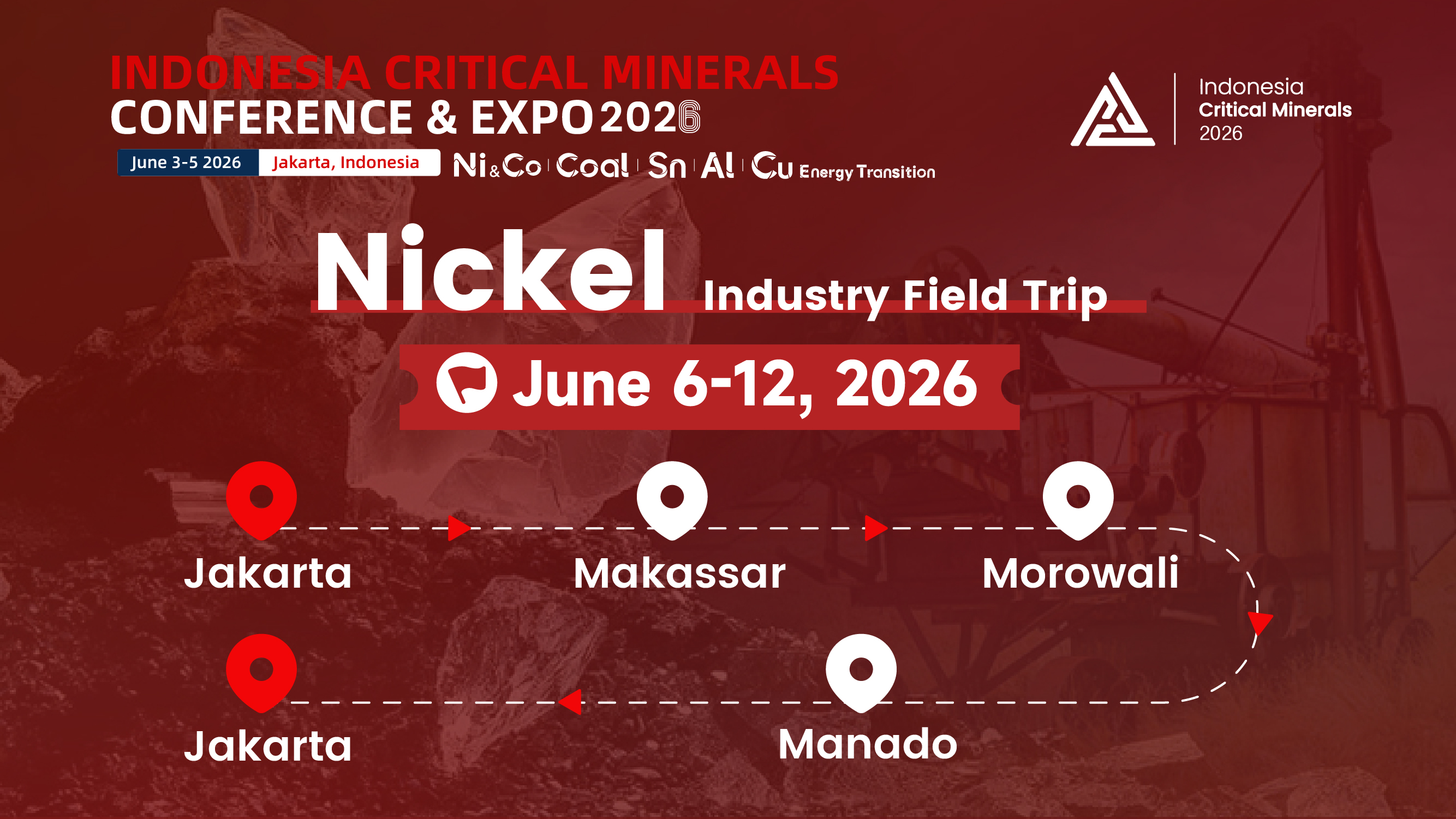 Field TripJun 6 - 12, 2026 (GMT+8)Jakarta
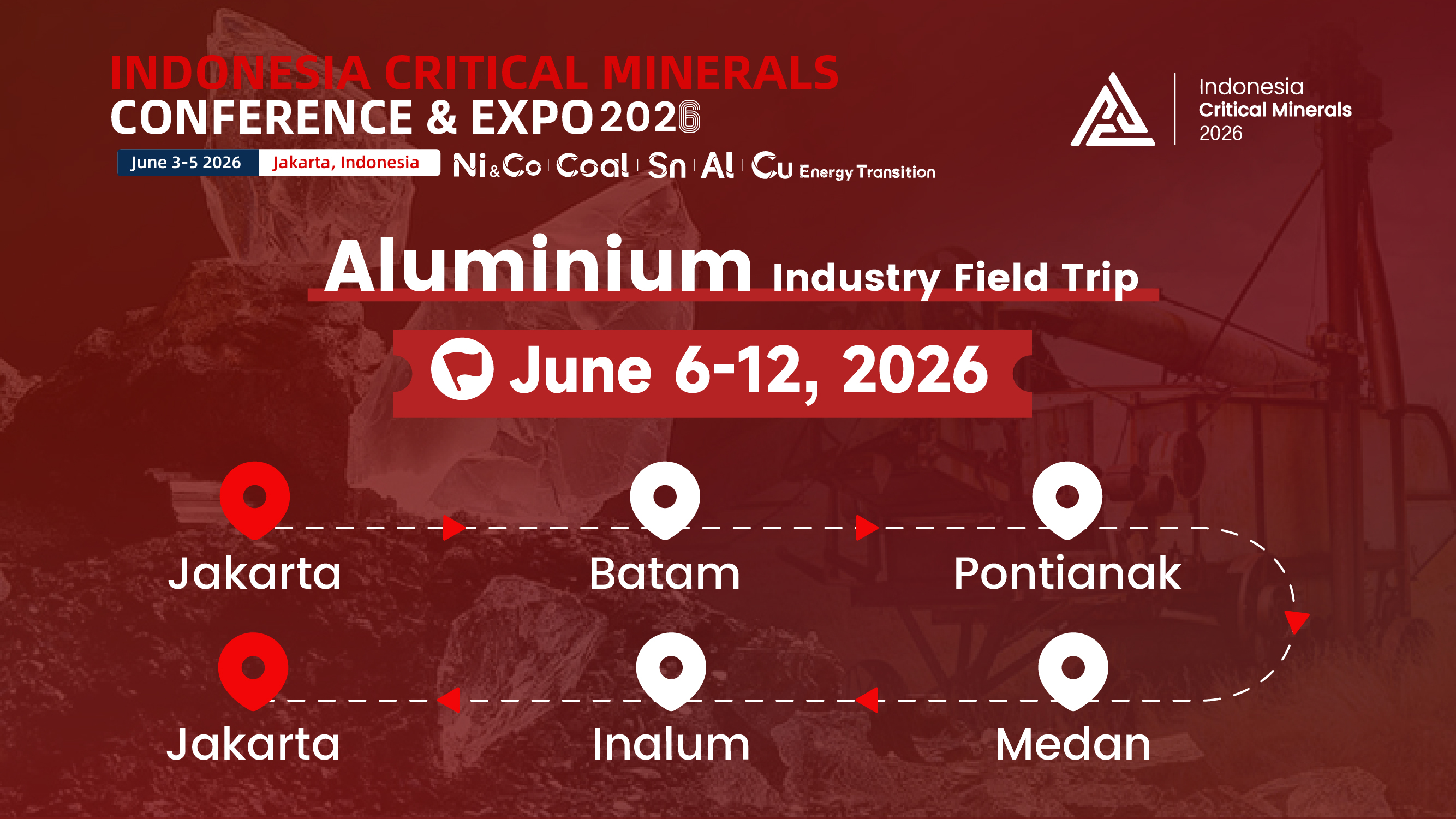 Field TripJun 6 - 12, 2026 (GMT+8)Jakarta
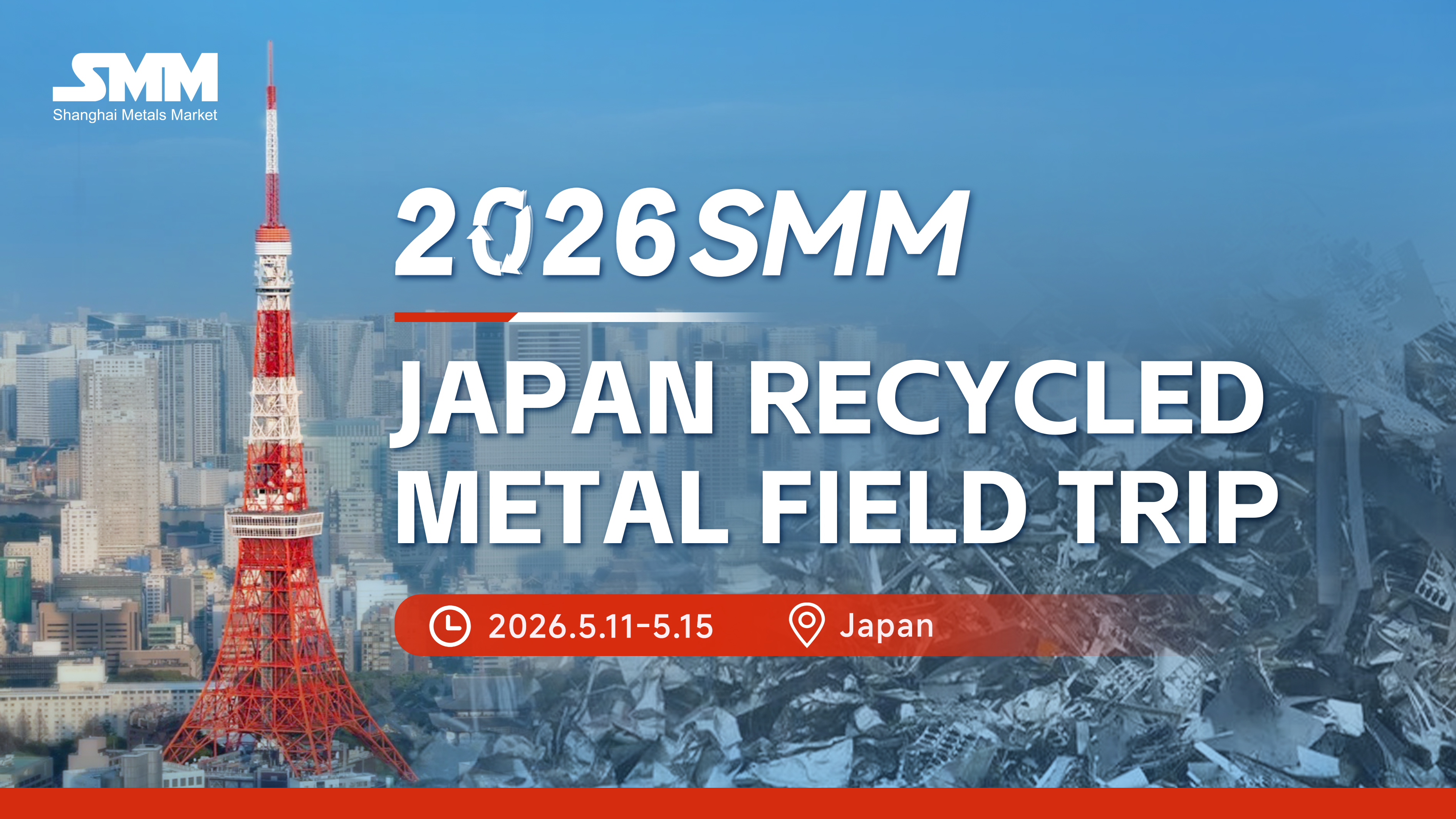 Field TripMay 11 - 15, 2026 (GMT+8)Japan