

1416results found for 'FOB'
News
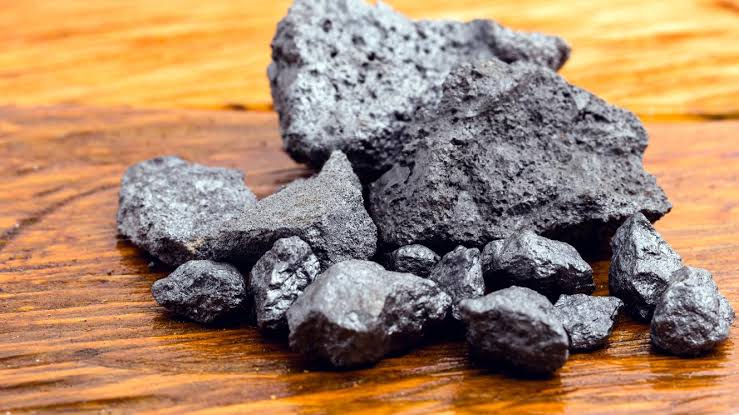 Nigerian Tantalum Concentrate Market: Pricing, Grades and Buyers
[SMM Research] Nigeria remains a key supplier of tantalum concentrate, with exports largely priced on an FOB basis and driven by strong Chinese demand. Concentrate grades vary widely, with higher Ta₂O₅ content commanding significant premiums. Artisanal mining dominates supply, while informal trade continues to limit market transparency. SMM's research indicates that first-hand market intelligence remains essential for assessing pricing, quality and evolving supply chains.
Jul 30, 2026 20:16- 7.30 SMM Global Steel Daily Report
On July 30 China's steel export prices were broadly weaker. Flat-product export prices edged down 2-3 USD/tonne day on day, with HRC transactions at 482-486 USD/tonne; domestically the meeting released no favourable news and futures fell sharply, and while overseas enquiries picked up somewhat, sentiment stayed largely wait-and-see, with price cuts unable to secure large volumes so export offers were lowered only modestly. Billet export offers at Jiangyin port were soft but steady at 450-455 USD/tonne FOB, as ferrous futures broke below the support level the market had expected and traders' willingness to hold prices firm waned, while overseas customers largely prefer buying on rallies rather than on dips. Rebar export prices at Tianjin port slipped 1 USD/tonne to 476-481 USD/tonne on transactions, with offers divided: some mills cut by 2-3 USD/tonne and drew only a few enquiries without concluding deals, while others opted to hold firm and kept prices flat.
Jul 30, 2026 18:30 - Spot Index Weekly Drops 6 Yuan/mt, Futures Weak, Hits Bottom, Price Spread Between Chinese and Overseas Markets Widens to 284 Yuan/mt [SMM Alumina Weekly Review]
SMM July 30 news: Price review: As of Thursday this week, the SMM alumina index stood at 2,707.36 yuan/mt, down 6.01 yuan/mt from the previous Thursday. Among regions, Shandong reported 2,700-2,750 yuan/mt, down 15 yuan/mt from the previous Thursday; Henan reported 2,720-2,780 yuan/mt, down 10 yuan/mt; Shanxi reported 2,720-2,760 yuan/mt, down 15 yuan/mt; Guangxi reported 2,600-2,670 yuan/mt, down 5 yuan/mt; and Guizhou reported 2,760-2,800 yuan/mt, down 10 yuan/mt from the previous Thursday. Markets outside China: As of July 30, 2026, the FOB Western Australia alumina price was $346/mt, with an ocean freight rate of $34.15/mt and a USD/CNY selling rate around 6.78. This translated to a selling price at major Chinese ports of about 2,991.45 yuan/mt, which was 284.09 yuan/mt higher than the alumina index price. One ex-China spot alumina transaction was heard this week, with details as follows: (1) On July 27, 2026, 30,000 mt of alumina was traded ex-China at $332/mt FOB Indonesia, for loading between end-July and early August. China: According to SMM data, as of Thursday this week, total built capacity of metallurgical-grade alumina nationwide was 118.42 million mt/year, with operating capacity at 88.43 million mt/year. The national weekly operating rate fell 0.36 percentage point WoW to 74.68%. Specifically, Shandong’s weekly operating rate edged down 0.02 ppt WoW to 89.29%; Shanxi’s rose 0.26 ppt WoW to 63.72%; Henan’s dropped 4.83 ppt WoW to 53.16%; Guangxi’s increased 2.47 ppt WoW to 81.34%; Guizhou’s decreased 2.53 ppt WoW to 83.47%. In the spot market, three deals were done this week. Gansu procured 20,000 mt of spot alumina, with delivered prices of 2,930 yuan/mt and 2,880 yuan/mt. Qinghai saw a 10,000 mt spot alumina deal at a delivered price of 2,900 yuan/mt. Yunnan purchased 5,000 mt of spot alumina at an EXW price of 2,600 yuan/mt. Alumina prices fell steadily this week, with the overall market deeply bearish and prices still having downside room. This morning, the most-traded futures contract dropped to a low of 2,610 yuan/mt. In the short term, the round 2,600 yuan/mt mark provided some support, but in the long term, futures prices could break below 2,600 yuan/mt. Supply side, alumina production edged down this week, mainly because enterprises in different regions conducted scheduled maintenance, leading to a slight contraction in overall output, though the decline was limited. Inventory performance was mixed: aluminum smelters' raw material inventory rose 7,000 mt WoW to 3.387 million mt, as some smelters deemed current prices had fallen to a relatively low level after the sustained decline in alumina prices and began to buy moderate volumes to restock; alumina refineries' finished product inventories fell 18,000 mt to 1.217 million mt, with destocking taking place as refineries consumed in-factory inventory for downstream deliveries during maintenance. Warrant inventory increased 23,000 mt WoW to 254,000 mt, as some enterprises opted to ship to delivery warehouses. Notably, port inventory surged 111,000 mt to 945,000 mt this week. Although some cargoes entered bonded areas and are not yet flowing into the Chinese market, the overall import volume is still rising, exerting significant pressure on the Chinese market. In markets outside China, Indonesia restricted shipments due to rare earth elements in some alumina, causing short-term disruption to ex-China supply, but the Indonesian alumina traded last week is expected to be unaffected. Additionally, impacted by a hurricane, Jamaica's alumina production stood at 267,100 mt in Q1 2026, down 30.3% YoY, and is expected to gradually recover in Q2 and Q3. Overall ex-China alumina prices are expected to continue to consolidate at highs in the near term. Looking ahead to next week, domestic spot prices will likely extend their decline, as spot premiums over futures still have some room to compress and downward pressure has not been fully released; the futures market will likely consolidate on a weak note, with near-term attention on support at 2,600 yuan/mt, while medium and long-term downside risks remain. On the inventory front, as some alumina refineries complete maintenance and production gradually recovers, the cumulative effect on the supply side will continue to intensify market pressure, and domestic inventory is expected to see further inventory buildup next week. [All data other than public information are processed by SMM based on public information, market communication, and SMM's internal database models. They are for reference only and do not constitute decision-making advice.]
Jul 30, 2026 17:45 - High ocean freight rates, combined with rainy season disruptions, intensify the tug-of-war between sellers and buyers in the bauxite market [SMM Bauxite Weekly Review]
SMM News on July 30: Domestic Bauxite: Supply Disruptions Drive Up Domestic Ore Prices; Alumina Refineries' Long-Term Contract Procurement Prices Rise Overall Affected by coking coal-related incidents in Shanxi, mining activities in major domestic bauxite producing areas like Shanxi and Henan have been somewhat disrupted in the short term, leading to phased changes in ore supply. Meanwhile, alumina prices remain at relatively high levels, and alumina refineries have a moderate tolerance for rising raw material costs, mostly accepting current ore prices passively in the near term. As of today, the EXW price, excluding VAT, at crushing plants for bauxite with an Al/Si ratio of 5.0 and 60% alumina content in Shanxi is approximately 530-550 yuan/mt; in Henan, the EXW price for similar bauxite is around 500-540 yuan/mt; in the Guiyang area, the EXW price, including VAT, for bauxite with an Al/Si ratio of 6.0 and 60% alumina content is 490-540 yuan/mt; and in Guangxi, the EXW price, excluding VAT, for bauxite with an Al/Si ratio of 6.0 and 53% alumina content is 320-335 yuan/mt. Imported Bauxite: Ocean Freight Rates Fluctuate at Highs; August Long-Term Contract Prices Yet to Be Settled; Imported Bauxite Market Remains in a State of Continued Negotiation According to data from July 24, total weekly port departures of bauxite from major ports in Guinea were 3.0697 million mt, up 237,700 mt from the previous week, with shipments edging up slightly. As US-Iran tensions intensify again, oil prices have rebounded, and ocean freight rates from Guinea to China have followed suit with a rising trend, with market quotations reaching around $35/mt, driving up mine costs to varying degrees. Coupled with policy uncertainties in Guinea and weather-related transport disruptions, Guinean mines are tightening control over bauxite shipments. In Australia, as of July 24, total weekly bauxite port departures from major Australian ports were 1.0481 million mt, up 326,800 mt from the previous week, with shipments rising slightly; the future pace of shipments from Australian mines and changes in port departures require further attention. As of July 24, China's bauxite port arrivals stood at 2.7603 million mt, down 1.9029 million mt from the previous week. Continued attention is needed on the impact of high and fluctuating oil prices and ocean freight rates on future arrival pace and landed costs. In terms of prices, Guinean bauxite long-term contract offers for July are in the range of $70-71.5/mt, while August long-term contract prices are still under negotiation. Meanwhile, bauxite inventories at domestic alumina refineries remain at high levels. This week, alumina refinery bauxite inventories were relatively stable, with days of inventories at about 94 days, exerting some downward pressure on ore prices. As for Guinean bauxite, with the rebound in Guinean-to-China transportation costs, mine costs, plus shipment reductions caused by the traditional rainy season and adverse weather, upstream and trader offers remained firm and held steady in the high price range of $70-72/mt. Due to persistently high inventory at domestic alumina refineries and shrinking profits, the intended transaction price dropped to $70/mt or lower. The upstream and downstream bauxite market saw significant price divergence, with transaction activity slowing down, and the tug-of-war continued from the previous week. As of Thursday this week, Guinean bauxite FOB quotes were $38-40/mt, with the average price unchanged from the previous Thursday; CIF prices were reported at $69-73/mt, with the average up $0.5/mt from the previous Thursday; the SMM Imported Bauxite Index stood at $70.87/mt, up $0.51/mt from the previous Thursday. Future bauxite prices will still depend on mine cost conditions, Guinea’s traditional rainy season, and the impact of the Guinean government’s bauxite export quota policy on overall shipments. SMM will continue to closely monitor bauxite market trends and transactions. Overall , the domestic ore market price maintained the current level; meanwhile, inventory at domestic alumina refineries remained high (about 94 days), and buyers and sellers continued to bargain over offers. Uncertainty over Guinea’s quota policy, declining shipments, and the traditional rainy season also exerted some upward pressure on bauxite costs. In the short term, as shipment volumes decline due to both costs and policy factors, imported ore prices are expected to maintain their high-level tug-of-war pattern. Afterwards, close attention should be paid to the implementation of Guinea’s quota policy and the trend in ocean freight rates.
Jul 30, 2026 17:18 - After holding up well, magnesium prices consolidate at highs, while the supply-demand imbalance in the magnesium market remains unresolved [SMM Magnesium Weekly Review]
[SMM Magnesium Weekly Review: Consolidation at Highs After Initial Strength as Supply-Demand Imbalance Persists] The magnesium market held up well early this week before consolidating. At the beginning of the week, supported by positive sentiment, concentrated restocking by traders pushed magnesium ingot prices up to 16,000 yuan/mt. However, after order delivery, downstream users turned cautious and stood on the sidelines, leading to thinner trading and slight softening of some quotes. Overseas summer breaks kept outside China demand sluggish; FOB offers were stable but actual transactions were sluggish. Dolomite delivered prices remained stable with ample supply. Magnesium powder tracked the initial rise and subsequent decline of magnesium ingot, while magnesium alloy operating rates dropped notably due to the off-season and shrinking end-use demand. Overall, the supply-strong, demand-weak pattern remained unchanged, and magnesium prices are likely to continue moving sideways in the near term.
Jul 30, 2026 16:06 - Australian Mineral Resources' Q2 Iron Ore Production and Sales Rise QoQ
On July 29, Australian miner Mineral Resources Limited (MinRes) released its operational report for Q2 2026 (Q4 of Australia's FY2026). The report showed that its iron ore business achieved significant growth in production and sales. In Q2, MinRes’ total iron ore production from the Onslow Iron and Pilbara Hub projects reached 10.8 million mt (100% basis), with total iron ore shipments of 12.3 million mt (100% basis). For the full FY2026, MinRes' attributable iron ore shipments reached 29.543 million mt, a new annual record. Specifically, Onslow Iron project: Production : In Q2 2026, iron ore production was 8.754 million mt, up 12% QoQ and 42% YoY. Shipments: In Q2 2026, iron ore shipments were 9.596 million mt, up 33% QoQ and 66% YoY, a quarterly record. In FY2026 (July 2025-June 2026), attributable iron ore shipments from Onslow Iron were 19.65 million mt, above the previously raised guidance range of 17.7-19.4 million mt; shipments on a 100% basis for the full year were 34.136 million mt. Project cost: In Q2 2026, the FOB unit cost was A$53/wmt ($37/wmt), flat QoQ; for FY2026, the FOB unit cost was A$52/wmt ($36.2/wmt), below the guidance range of A$54-59/wmt. Pilbara Hub iron ore project: Production : In Q2 2026, iron ore production was 2.049 million mt, down 15% QoQ and 25% YoY. Shipments: In Q2 2026, iron ore shipments were 2.701 million mt, up 31% QoQ and 7% YoY. The increase in shipments was mainly driven by the continued ramp-up of the Lamb Creek project, with Iron Valley remaining the main ore source during the quarter, accounting for 74% of shipments; in addition, MinRes shipped some previously stockpiled fines when market conditions were favorable. In FY2026 (July 2025-June 2026), Pilbara Hub's iron ore shipments were 9.894 million mt, at the upper end of the 9-10 million mt guidance range. The intersection works for the mine access road at Lamb Creek with the Great Northern Highway were completed, and wet commissioning of the fixed crushing plant is targeted for Q1 FY2027; after the end of the quarter, the project processed its first ore through the crushing plant. Project cost: In Q4 FY2026 (Q2 2026), the FOB unit cost was A$76/wmt ($52.9/wmt), down 5% QoQ; for FY2026, the FOB unit cost was A$79/wmt ($55.1/wmt), at the upper end of the guidance range of A$75-80/wmt ($52-56/wmt).
Jul 30, 2026 16:02
Announcements
SMM announces the discontinuation of updates and new data for non-oriented silicon steel FOB price points and database, due to strategic adjustments and to maintain price accuracy
PriceJul 29, 2026 11:16SMM plans to add the SMM FOB Middle East Sulfur price point starting from August 7, 2026 (Friday).
PriceJul 29, 2026 09:43SMM will soon upgrade and optimize the classification structure of its PV module price assessments.
Jul 28, 2026 18:06