

2851results found for 'Europe'
Price
News
- US Dollar Weakens on Weekly Chart, Metals Broadly Rise, LME Tin Up Nearly 5%, LME Zinc and COMEX Silver Up Over 2%, Gold, Silver End Week Higher [Overnight Market]
SMM July 4 News: Metal market: Overnight, domestic base metals nearly all rose. SHFE copper rose 0.14%, SHFE aluminum rose 0.6%, SHFE lead rose 0.38%, SHFE zinc rose 0.87%, SHFE tin rose 3.8%. SHFE nickel dipped 0.02%. Additionally, the most-traded alumina futures fell 0.07%, and the benchmark casting aluminum futures rose 0.24%. Overnight, ferrous metals mostly rose. Stainless steel fell 1.85%, iron ore rose 0.27%, rebar rose 0.39%. Hot-rolled coil rose 0.4%. For coking coal and coke: the most-traded coking coal contract rose 1.21%, and the most-traded coke contract rose 1.6%. Overnight, in the overseas market, LME base metals all rose. LME copper rose 0.54%. LME aluminum rose 0.23%, LME lead rose 1.04%. LME zinc rose 2.17%. LME tin rose 4.99%. LME nickel rose 0.4%. Overnight, precious metals: COMEX gold rose 1.49%, with a weekly gain of 2.22%; COMEX silver rose 2.87%, with a weekly positive close and a gain of 5.26%. Overnight, the most-traded SHFE gold contract rose 0.81%, with a weekly gain of 3.5%; the most-traded SHFE silver contract rose 1.61%, with a weekly positive close and a gain of 8.82%. J.P. Morgan stated that gold prices may be constrained in the short term due to weakening demand and are expected to remain range-bound. The main reasons are reduced purchasing power in key demand areas and gold's renewed sensitivity to real interest rate changes, which may cap further price increases. However, the bank maintains a bullish view for the medium and long term. Gold is expected to gradually rebound in H2 2026, with an average price around $4,300 per ounce in Q3, rising to about $4,500 in Q4. Looking ahead to 2027, J.P. Morgan believes gold prices are likely to continue their upward trend, driven by factors including continued central bank purchasing, stronger physical demand, and persistent long-term structural allocation needs. These factors will underpin gold's long-term appeal as a safe-haven and reserve asset. As of 7:41 AM on July 4, overnight closing prices: Macro front Domestic side: [Li Qiang: Take more forceful measures and actions in building a modern industrial system, accelerating high-level technological self-reliance, building a strong domestic market, deepening reforms, and expanding opening-up.] On July 1, Li Qiang, Premier of the State Council and Secretary of the Party Leadership Group, presided over a meeting of the State Council Party Leadership Group to study and implement the spirit of General Secretary Xi Jinping's important speech at the celebration of the 105th anniversary of the founding of the Communist Party of China and Xi Jinping's thoughts on party building. The meeting emphasized the need to strive for new achievements in high-quality development, strengthen initiative and a sense of urgency in work, and take more robust measures and actions in building a modern industrial system, accelerating self-reliance in high-level science and technology, developing a strong domestic market, and deepening reform and expanding opening up. It called for taking solid action, shouldering responsibilities, and striving to carry forward the baton of history, so as to make greater contributions to building a strong country and achieving national rejuvenation. (Xinhua News Agency) [The State Council: Increasing Efforts in Energy Conservation and Carbon Reduction Transformation in Key Industries such as Steel and Non-Ferrous Metals to Achieve Energy Savings of More Than 150 Million mt of Standard Coal] Recently, the State Council issued the “15th Five-Year Plan for Building a Beautiful China,” clarifying the overall requirements, targets and indicators, key tasks, and major projects for comprehensively advancing the building of a Beautiful China during the 15th Five-Year Plan period. The Plan proposes that by 2030, the quality of the ecological environment will be comprehensively improved, and new significant progress will be made in building a Beautiful China. Green production and lifestyles will be essentially in place, the carbon peak target will be met as scheduled, total emissions of major pollutants will continue to decline, comprehensive solid waste management capacity and level will be significantly enhanced, urban and rural living environments will be notably improved, the diversity, stability, and sustainability of ecosystems will be continuously strengthened, nuclear and radiation safety levels will keep rising, national ecological security will be effectively guaranteed, an ecological and environmental governance system adapted to the requirements of building a Beautiful China will be steadily refined, a number of demonstration models for building a Beautiful China will be established, and the people’s sense of gain, happiness, and security from the ecological environment will be continuously enhanced. It also makes an outlook on the 2035 targets and proposes accelerating the formation of the overall layout for building a Beautiful China. (Xinhua News Agency) The Plan mentions increasing efforts in energy conservation and carbon reduction transformation in key industries such as thermal power, steel, non-ferrous metals, petrochemicals, chemicals, and building materials, promoting and popularizing energy-saving and low-carbon technologies, and achieving energy savings of more than 150 million mt of standard coal. With the Beijing-Tianjin-Hebei region and surrounding areas as the focus, industrial coal-fired boilers with a capacity of 65 steam tonnes per hour or below will be gradually phased out. The substitution of clean energy for coal-fired boilers and industrial kilns in industries such as food, textiles, and papermaking will be advanced. [Ministry of Finance and Two Other Departments: Adjusting Vehicle and Vessel Tax Preferential Policies for Energy-Saving Vehicles and NEVs] On July 2, the Ministry of Finance, the State Taxation Administration, and the Ministry of Industry and Information Technology issued an announcement on adjusting vehicle and vessel tax preferential policies for energy-saving vehicles and new energy vehicles. It states that from January 1, 2027, the policy of halving vehicle and vessel tax for energy-saving vehicles will be abolished, and the exemption from vehicle and vessel tax for pure electric commercial vehicles, plug-in hybrid (including extended-range) vehicles, and fuel cell commercial vehicles will be abolished. Vehicles of the above types newly acquired by taxpayers or acquired before the implementation of this announcement shall be subject to vehicle and vessel tax in accordance with the Vehicle and Vessel Tax Law of the People’s Republic of China, its implementation regulations, and other relevant provisions. [Central Bank: To Conduct 1,000 Billion Yuan Outright Reverse Repo on July 6 with 3-Month Term] To keep banking system liquidity ample, on July 6, 2026, the People's Bank of China will conduct 1,000 billion yuan of outright reverse repo operations through fixed quantity, rate tender, and multiple price bidding, with a term of 3 months (91 days). The maturity date is October 5, 2026 (postponed in case of holidays). (Jinshi Data APP) On the dollar front: The overnight US dollar index edged up 0.03% to 100.91. For the week, the US dollar index fell, dropping 0.44% for the week, the largest weekly decline since mid-April. The reason was a significant cooling in the US June employment data, which led the market to lower short-term Fed rate hike expectations, causing the dollar index to fall this week. Against a weaker dollar, the euro rose to $1.1440, up about 0.5% on the week; sterling rose to $1.3352, up about 1.1% on the week, its best performance in nearly three months. The yen rebounded from near a 40-year low, with USD/JPY briefly pulling back to around 161 but remaining at high levels. Japan continued to release signals of foreign exchange intervention, with both finance and cabinet officials stating they are closely monitoring the market and maintaining readiness to intervene. Analysts pointed out that the dollar's trend has been notably influenced by employment data and interest rate expectations. If further economic data continues to weaken, the dollar could still face further pressure, but whether the yen can sustain its rebound still depends on the US-Japan interest rate differential and Japanese policy actions. (Jinshi Data APP) Fed mouthpiece Nick Timiraos said: Trump stated that he believes Fed Chairman Walsh is on the dovish side within the FOMC. The previous day, White House National Economic Council Director Hassett made similar remarks. A week earlier, Treasury Secretary Bessent expressed hope that the Fed would keep an "open attitude" toward inflation and predicted the Fed would ease policy this year. A new era of "forward guidance"... (Jinshi Data APP) BNP Paribas Chief Economist Isabelle Mateos y Lago said: "If the July non-farm payrolls are very strong, close to or above 130,000, then I think the July meeting will be full of suspense. The uncertainty may not be that high now, but in my view, the case for a Fed rate hike still stands." Before the start of the July 4 holiday, short-term interest rate futures markets priced in about a 20% chance of a Fed rate hike at the July 29 meeting, down from 33% before the non-farm payrolls report. The market still expects the US Fed to raise interest rates by 25 basis points this year, but the earliest hike would be in December. On the European Central Bank, Lagarde said: “The baseline expectation remains another rate hike in September. However, it is notable that Governing Council members speaking at the Sintra conference did not rule out the possibility of not implementing this additional hike.” She warned that the normalization of energy supplies could take half a year or longer to take effect, and eurozone inflation could accelerate again. Even so, she sees no pressures on consumer prices beyond energy-affected areas. Allianz Chief Economist Ludovic Subran said: “US non-farm payrolls data is actually weak, but I still think inflation will peak above 3.7%, and AI, fiscal stimulus, and the energy sector are still supporting economic growth. The US Fed may have to raise rates in September. I think this is the real divergence between Europe and the US.” Subran believes that the ECB will not act again after last month's rate hike. “That was an insurance hike, but from the current data, it seems to have passed,” he said, “the traumatic effects of the (Iran) war will take time to manifest, and the economy is still bearing the costs of the war, but the situation is much better now than a few weeks ago.” (Jin10 Data APP) Other currencies: ECB Governing Council member Muller said that the ECB is in a favorable position after last month's rate hike as falling oil prices ease price pressures in the eurozone. Muller said that while it is too early to predict the next two meetings in July and September, officials made clear that “we are not entering a new rate-hiking cycle.” Muller said: “For now, we are in a favorable position. The balance of risks is also at a reasonable level.” Muller added: “Falling oil prices will ease services inflation pressure,” and “we are not yet seeing second-round effects.” (Jin10 Data APP) On the macro front: Next week will see the release of Switzerland's June seasonally adjusted unemployment rate, the Eurozone July Sentix Investor Confidence Index, the Eurozone May PPI m/m, the Eurozone May retail sales m/m, the US June S&P Global Services PMI final, the US June ISM non-manufacturing PMI, the US June Global Supply Chain Pressure Index, Germany's May seasonally adjusted industrial output m/m, the UK June Halifax seasonally adjusted house price index m/m, France's May trade balance, the US ADP employment change for the week ending June 20, the US May trade balance, China's June foreign exchange reserves, Japan's May trade balance, the New Zealand RBNZ interest rate decision due July 8, the US May wholesale sales m/m, China's June CPI y/y, China's June PPI y/y, Germany's May seasonally adjusted trade balance, the US initial jobless claims for the week ending July 4, the US June existing home sales annualized, Germany's June CPI m/m final, France's June CPI m/m final, Switzerland's June consumer confidence index, Canada's June employment change, China's June M2 money supply y/y, among other data releases. In addition, next week attention should also be paid to: 900 billion yuan in outright reverse repos maturing today; speeches by US Fed Governor Waller, ECB Executive Board member Schnabel, ECB Governing Council member Wunsch, and Riksbank Deputy Governor Seim; Turkey hosting the NATO summit through July 8; the Reserve Bank of New Zealand's interest rate decision; RBNZ Governor Bremann's monetary policy press conference; the US Fed's release of its monetary policy meeting minutes; the ECB's release of its June monetary policy meeting minutes; remarks by FOMC permanent voting member and New York Fed President Williams; and remarks by 2026 FOMC voting member and Dallas Fed President Logan. Crude oil: Overnight, both oil futures edged up, with WTI up 0.13% and Brent up 0.19%. On a weekly basis: WTI futures posted a fourth consecutive weekly decline, down 0.65% for the week; Brent futures also fell for a fourth straight week, down 0.91%. The crude oil market was relatively stable, with Brent crude consolidating near $72 per barrel as the market weighed the supply outlook in the Strait of Hormuz and progress in US-Iran negotiations. (Wall Street CN) Data from the Intercontinental Exchange (ICE) show that in the week ended June 30, speculators in Brent crude futures cut their net long positions by 34,704 lots to 55,634 lots. Speculators in diesel futures reduced their net long positions by 2,664 lots to 57,852 lots. (Jin10 Data) Data showed that oil exports from the Gulf region in June increased by more than 3 million barrels per day (b/d) from May, surpassing 10 million b/d, but remained 40% below pre-war levels. The UAE led the recovery in the oil market, allowing millions of barrels of crude stranded in the Gulf to reach international markets, thereby enabling producers to raise output and bring prices down to pre-war levels. According to Kpler, combined exports of crude and condensate from Saudi Arabia, the UAE, Kuwait, Iraq and Iran jumped by more than 3.5 million b/d from May to 10.07 million b/d. Another freight analytics firm, Vortexa, estimated that oil shipments in June were 10.2 million b/d, up from 7 million b/d in May but still well below 16.5 million b/d a year earlier. Based on data from Kpler, Vortexa and LSEG, UAE crude exports hit a record 3.7 to 3.8 million b/d in June, more than 1 million b/d above May's levels. (Jin10 Data) In addition, three sources said that Venezuela's largest refinery, the 645,000 b/d Amuay refinery, resumed operations on Friday after a power outage and is currently processing about 140,000 b/d of crude oil, with the fluid catalytic cracking unit (FCC) also back online. Following two earthquakes last week that caused heavy casualties, multiple refineries in Venezuela were affected by power outages. Sources also said that the El Palito refinery, with a daily processing capacity of 146,000 barrels, has had power restored, but staff have not yet been able to restart the production units. (Jinshi Data APP) A Reuters survey showed that OPEC’s crude oil production rebounded sharply in June, up about 3.3 million barrels per day MoM to 19.43 million barrels per day, a clear rebound from May’s more-than-two-decade low, but still well below quota levels. The recovery in output mainly came from Gulf countries restoring supply, with Kuwait posting the largest increase; Iran, Saudi Arabia, and Iraq also raised output in tandem. Nigeria and Libya likewise made small increases. The UAE exited OPEC on May 1 and is no longer included in the statistics. The report noted that the earlier Iran war and the effective blockade of the Strait of Hormuz had disrupted supply; the US subsequently lifted restrictions on vessels at Iranian ports, helping some output recover. Although OPEC+ had planned to increase production in June, the plan was not fully implemented due to the war. Overall, global crude oil supply was being repaired, but had not yet returned to normal levels. (Jinshi Data APP) Recommended Reading:
Jul 4, 2026 21:57 - Oman Opposes Transit Fees in Strait of Hormuz, Open to Maritime Service Charges Discussions
Oman has made it clear that it opposes the imposition of transit fees on vessels navigating the Strait of Hormuz, yet it remains open to discussing charges related to maritime services. Meanwhile, some major European powers have acknowledged that levying passage fees in the Strait of Hormuz appears to have become an unavoidable prospect. Earlier reports revealed that Oman had put forward a proposal to collect service fees from ships transiting the Strait of Hormuz.
Jul 4, 2026 17:58 - Chinese Automakers Overtake Japan in European Market Share for First Time
The market share of Chinese passenger vehicles in Europe has surpassed Japan's for the first time. The latest statistics from the European Automobile Manufacturers' Association show that in May, five Chinese automakers sold a total of 138,400 units in 31 European countries, up 65% YoY. Over the same period, six Japanese automakers' sales totaled 130,400 units, down 3% YoY.
Jul 4, 2026 17:54 - [SMM Tungsten Analysis] Global Tungsten Markets Diverge in June: China Pulls Back, Europe Holds High
In June, global scrap tungsten markets diverged. India followed China's tungsten price rally, with active trading and higher prices in mid-June before cooling as China softened. Europe saw low-level consolidation due to high speculative inventories, but prices began to edge up in late June as stocks cleared. China's tungsten market experienced a sharp rebound followed by a pullback, and is expected to consolidate in the near term, while medium-to-long-term fundamentals remain solid.
Jul 3, 2026 18:37 - [SMM Analysis] One Year After China Reopened Black Mass Imports: What's Really Changed?
Nearly one year after China reopened qualified black mass imports, the market has evolved differently from initial expectations. While stronger linkages have emerged between China's domestic and overseas markets, water-soluble fluorine remains a key constraint on direct imports. Meanwhile, overseas intermediate processing has gained attention as an alternative supply chain model, reflecting the industry's growing focus on cross-border resource integration and supply chain optimization.
Jul 3, 2026 17:30 - Xuzhou RITMAN Intelligent Technology Co., Ltd. looks forward to seeing you at the 2026 SMM Zinc Conference
2026 is the first year of the 15th Five-Year Plan period. Against a backdrop of intensifying global macro volatility and the in-depth advancement of high-quality development in China, the zinc industry is undergoing profound transformation: tightness on the ore side and the release of smelting capacity are creating structural tension, divergence between domestic and overseas inventories reflects the complex dynamics of supply-demand rebalancing, and technological innovation is becoming a key driving force for resolving conflicts and reshaping the industry pattern. New energy, new-type infrastructure, and other key areas under the 15th Five-Year Plan are injecting new momentum into traditional zinc consumption, while green, low-carbon, and circular economy principles are also accelerating the restructuring of industrial logic, driven by technological innovation. With the support of upstream and downstream enterprises in the zinc industry, industry associations, and all relevant parties, the 2026 SMM Zinc Industry Conference along with the 8th Hot-Dip Galvanizing Industry Development & Technology Innovation Forum, the 14th Zinc Salt, Zinc Oxide & Zinc Secondary Resources Development Forum, and the Cast Zinc Alloy Development Forum will be held on August 6–8 in Qingdao, Shandong Province. Under the theme "Gathering Zinc Momentum · Building the Zinc Industry · Embarking on a New Journey," the conference will be driven by macro perspectives and fundamental analysis as dual engines, closely follow the high-quality development path defined in the 15th Five-Year Plan, and focus on four dimensions: macro policies, supply-demand pattern, global trade, and technological innovation. It aims to drive cost reduction and efficiency gains through technological breakthroughs, address market volatility through collaborative innovation, and jointly chart a new blueprint for the high-quality and sustainable development of the zinc industry. Xuzhou RITMAN Intelligent Technology Co., Ltd. will attend this grand event, discuss industry development trends with industry peers, and jointly advance the zinc industry to new heights. Click to register now and join us in witnessing and participating in this extraordinary and far-reaching industry event to create a brilliant new chapter together! RITMAN is a service-oriented industrial enterprise with over 40 years of deep expertise in coating technology. Guided by the mission of "continuously creating value for clients," it focuses on two core directions—intelligent manufacturing and green low-carbon—and provides global users with integrated one-stop solutions covering process planning, equipment customization, chemical matching, and full lifecycle operation and maintenance. The company’s core business matrix encompasses batch coating equipment, continuous coating equipment, pickling and conversion film equipment, electrophoretic coating equipment, metal surface treatment chemicals, laser processing equipment, and more. To date, RITMAN has delivered over 500 production lines globally, with business covering multiple countries and regions across Asia, Europe, Africa, and the Americas, accumulating proven delivery experience across various industries and operating conditions. Leveraging a nationwide service network and overseas operation centers, it can quickly respond to clients’ localized service needs, ensuring stable line operation and long-term value generation. ◆ Contact Us ◆ Tel: 0516-83152272 Website: www.rmznjs.com Email: info@sinoritman.com Address: No. 35 Chuangye Road, Xuzhou Economic Development Zone, Jiangsu Long press the QR code to register now 2026 SMM Zinc Conference
Jul 3, 2026 17:27
Announcements
To better serve the entire global energy storage supply chain and to help market participants accurately track FOB China price trends for DC‑side battery containers exported to Europe and India,
PriceJun 29, 2026 09:38SMM publishes N-type 210R wafer—Vietnam and Laos FOB price points
PriceJun 18, 2026 11:43Upgrade and Optimization of SMM Stainless Steel Category
PriceJun 15, 2026 16:23
Events
 EventsNov 2 - 3, 2026 (GMT+8)Hilton Barcelona, Spain
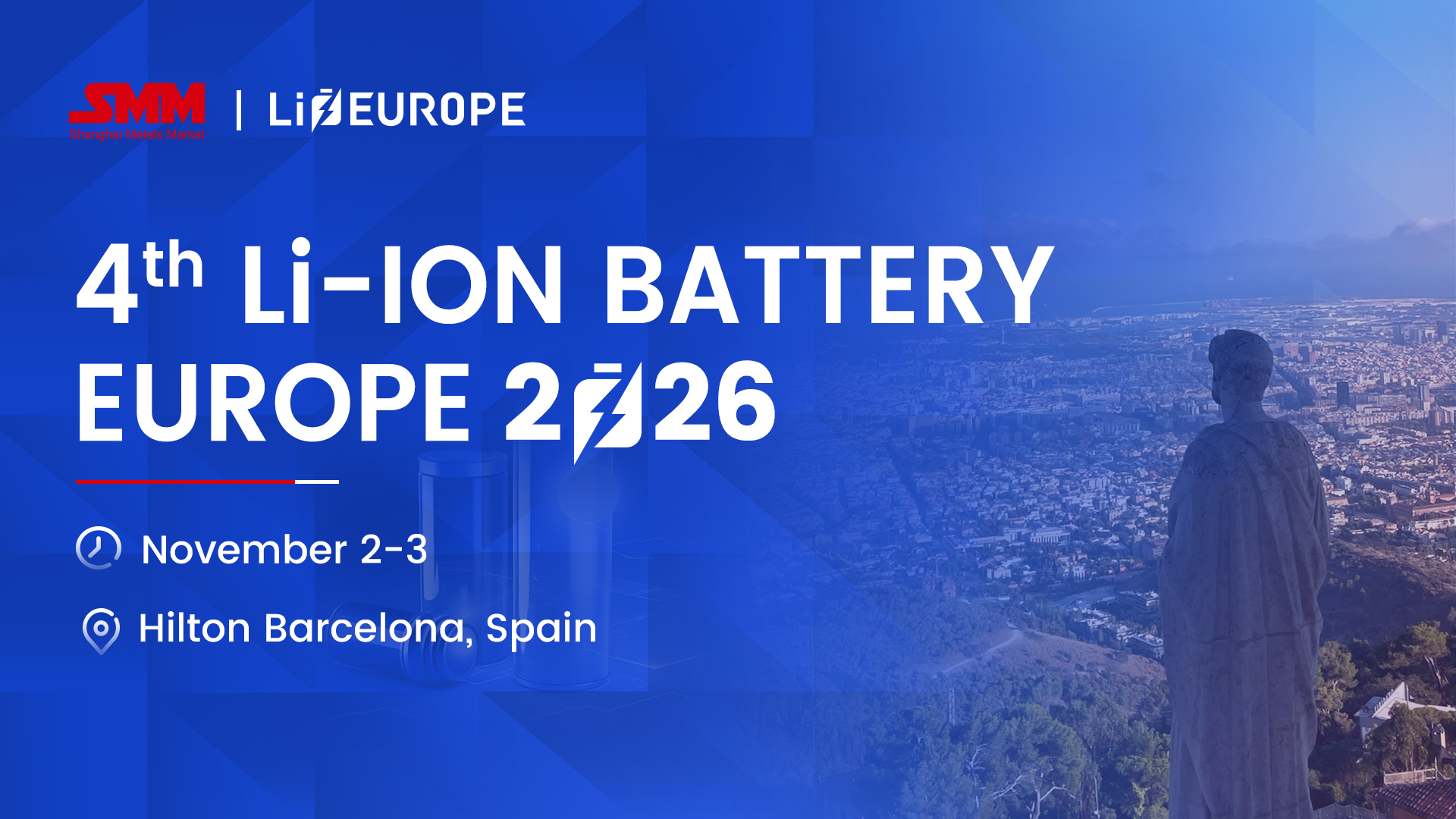 EventsNov 2 - 3, 2026 (GMT+8)Hilton Barcelona, Spain
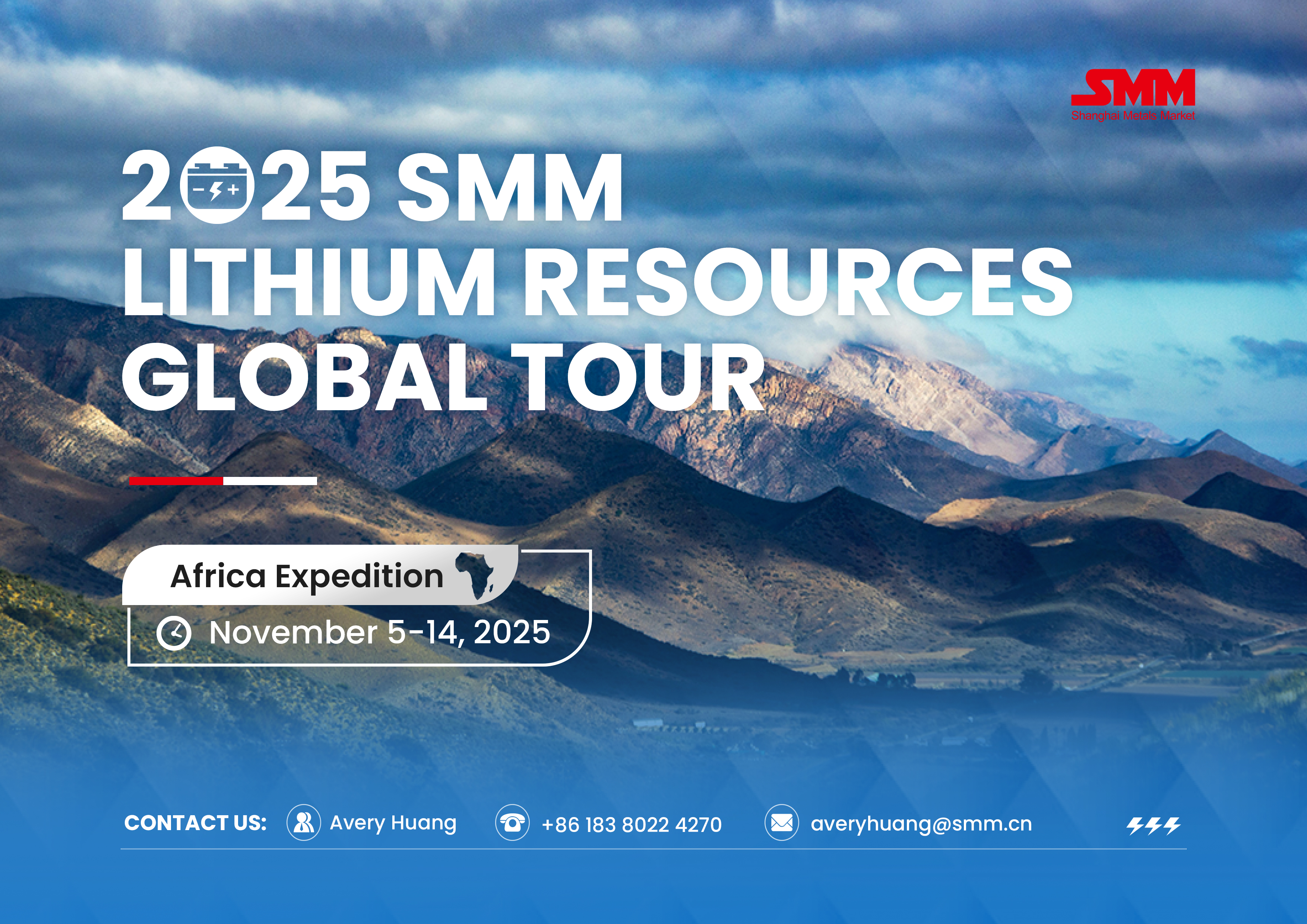 Field TripNov 5 - 14, 2025 (GMT+8) Spain & Morocco & Zimbabwe