

4862results found for 'Concentrate'
Price
News
- South Africa Proposes Adding Lithium and Other Battery Minerals to Automotive Incentive Scheme
South Africa’s International Trade Administration Commission (ITAC) has proposed expanding the country’s automotive incentive framework to include minerals used in electric-vehicle battery manufacturing, supporting deeper localisation of the domestic automotive and battery-material supply chains. Under the proposal, the existing list of eligible standard materials including aluminium, steel and platinum-group metals would be expanded to cover lithium, graphite, cobalt, copper, iron and rare earths. Eligible materials would need to originate from member states of the Southern African Customs Union (SACU) or Southern African Development Community (SADC). The proposed framework would recognise 50% of the value of qualifying EV battery materials as local content, potentially improving producers’ eligibility for automotive-sector incentives. The policy aligns with the South African Automotive Master Plan 2035, which aims to increase vehicle production, local content and investment as the industry transitions toward electric mobility. Stakeholders were given four weeks from the notice date to submit comments, meaning the final scope and implementation schedule remain subject to consultation. SMM comments: The proposal represents a demand-side approach to developing Africa’s battery supply chain, contrasting with Zimbabwe’s supply side policy of restricting concentrate exports to force domestic processing. If implemented, South Africa could emerge as a regional battery material processing or manufacturing hub sourcing feedstock from neighbouring SADC producers, including Zimbabwe and Namibia. However, the near-term impact on regional lithium trade flows is likely to be limited. Major Zimbabwean lithium assets including Arcadia, Bikita and Sabi Star are controlled by Chinese companies with established China-linked processing and offtake arrangements. It also remains unclear whether spodumene concentrate would qualify directly as an eligible battery material or whether further conversion into lithium sulphate, carbonate or hydroxide would be required. The final rules should therefore be monitored alongside Zimbabwe’s planned January 2027 lithium concentrate export deadline, as the two policies could influence future investment and trade flows within Southern Africa.
Jul 30, 2026 22:20 - Full Suspension of Mining, Beneficiation and Tailings Systems at Yinman Mining; Impact on Production of Tin, Silver and Other Metals to Be Assessed
At around 15:30 on July 26, a safety incident occurred during production and construction at the underground Area 3 of Yinman Mining, a wholly-owned subsidiary of Xingye Silver&Tin, resulting in one fatality and no other injuries. On July 28, Xingye Silver&Tin announced for the first time that the underground mining areas of Yinman Mining had been suspended, while the beneficiation plant remained in normal operation. At that time, Yinman Mining had approximately 350,000 mt of surface ore, which was expected to support the beneficiation plant's production for about two and a half months. On July 30, Yinman Mining further received an "On-site Disposition Decision" (Xi) Yingji Xianjue [2026] No. 260 issued by the Xiwu Banner Emergency Management Bureau, requiring the simultaneous suspension of the beneficiation and tailings systems. As of the announcement disclosure, Yinman Mining's mining system, beneficiation and tailings systems had all been suspended. The previous plan to sustain beneficiation production using ore inventory could no longer be implemented, directly impacting mineral product production. Yinman Mining has an existing mining and beneficiation capacity of 1.65 million mt per year and is the core tin-silver mine under Xingye Silver&Tin. Xingye Silver&Tin did not separately disclose Yinman Mining's actual copper metal production in 2025. According to the original project design, Yinman Mining's copper concentrates contain approximately 1,100 mt of copper metal per year; Xingye Silver&Tin's consolidated mine-produced copper output in 2025 was 2,380.89 mt. As Yinman Mining's copper production scale is relatively small, this suspension will have limited impact on China's overall supply of copper concentrates, with the impact expected to be mainly concentrated on products such as tin and silver. Going forward, attention needs to be paid to the progress of accident investigation, tailings system rectification, and production resumption acceptance.
Jul 30, 2026 21:52 - Northam Platinum Joins Sibanye-Stillwater & Bengwenyama in Scaling Up Chrome as PGM Producers Chase a New Revenue Stream
[SMM Express] Recent developments across Northam Platinum, Sibanye-Stillwater and Southern Palladium indicate that South Africa's platinum group metals (PGM) producers are increasingly positioning chrome as a strategic co-product rather than merely a by-product, reflecting a broader shift across the Bushveld Complex. Northam recently reported record chrome concentrate production of 1.69 million mt in FY2026, up 17.4% year-on-year, while Sibanye-Stillwater plans to expand chrome production to 2.3 million mt/y by 2033 and Southern Palladium's Bengwenyama Project has nearly tripled projected chrome output through improved chromite recovery, underscoring chrome's growing contribution to project economics and revenue diversification. The trend is further reinforced by Merafe Resources' H1 2026 Trading Statement, in which the company expects significantly stronger interim earnings despite a 75% year-on-year decline in ferrochrome production, supported by higher commodity prices and increased sales volumes. SMM believes these developments point to a broader structural shift within South Africa's PGM sector, with producers increasingly leveraging chrome to strengthen earnings resilience, diversify revenue streams and enhance the long-term value of UG2 operations across the country's chromium value chain.
Jul 30, 2026 20:45 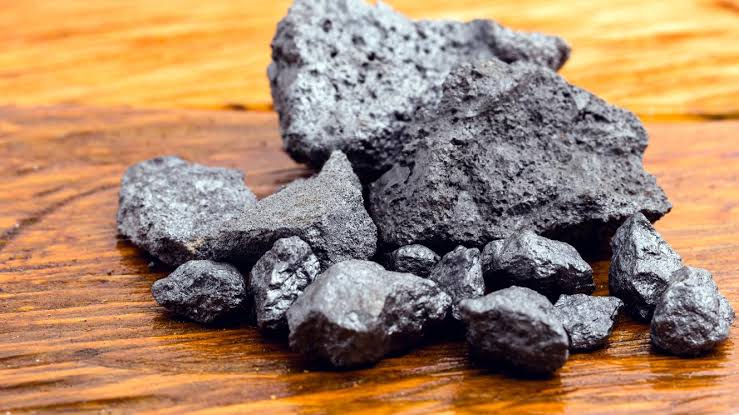 Nigerian Tantalum Concentrate Market: Pricing, Grades and Buyers
[SMM Research] Nigeria remains a key supplier of tantalum concentrate, with exports largely priced on an FOB basis and driven by strong Chinese demand. Concentrate grades vary widely, with higher Ta₂O₅ content commanding significant premiums. Artisanal mining dominates supply, while informal trade continues to limit market transparency. SMM's research indicates that first-hand market intelligence remains essential for assessing pricing, quality and evolving supply chains.
Jul 30, 2026 20:16- Ruthenium-Iridium Titanium Anode Market Expected to More Than Double by 2034
[SMM Express] The global ruthenium-iridium titanium anode market is projected to grow from USD 1.2 billion in 2025 to USD 2.5 billion by 2034, representing a compound annual growth rate (CAGR) of 9.3% over 2026-2034, according to a recent industry market report. Demand is expected to be supported by expanding applications in chlor-alkali production, electrolysis, electroplating, wastewater treatment, fuel cells and battery technologies, as industries seek more durable and energy-efficient electrode materials. Ruthenium-iridium titanium anodes are valued for their corrosion resistance, electrochemical stability and long operating life in aggressive industrial environments. Green hydrogen production is credited to be one of the strongest long-term growth drivers, alongside stricter environmental regulations encouraging advanced water treatment and cleaner chemical manufacturing. Growth in the electronics, semiconductor and energy sectors is also expected to support demand. However, the market continues to face challenges from the high cost and limited availability of ruthenium and iridium, with supply concentrated in a small number of producing countries.
Jul 30, 2026 19:21 - Surge in Port Arrivals Combined with Inventory Buildup at Ports, Significant Pullback in Hot Metal Production, and Iron Ore Most-Traded Contract Hitting a New Low in Over a Year [SMM Commentary]
SMM, July 30: Iron ore futures continued to drift lower during the day session on July 30, closing down again and fully reflecting the dual bearish pressure from macro headwinds and fundamentals. Earlier macro tailwind expectations gradually fizzled out, and combined with a sharp increase in supply and persistently weak downstream demand, iron ore futures faced a double blow. By the close of the day session on July 30, iron ore extended its losing streak to a fifth consecutive trading day, falling 3.31% to 715 yuan/mt, with an intraday low of 712.5 yuan/mt—a new low since early July 2025. Fundamentals Supply: Weather disruptions outside China fade, port arrivals surge, and supply pressure climbs significantly Chart: SMM 35-port Inventory (10kt) Data Source: SMM In terms of supply: According to SMM shipping data, total global iron ore shipments tracked by SMM reached 27.82 million mt last week, down 10% WoW; cumulative shipments were up 1% YoY. Shipments from Australia and Brazil both edged down slightly, while shipments from non-mainstream countries fell WoW, though shipments from India and Peru rebounded notably. Meanwhile, total China iron ore port arrivals tracked by SMM surged to 30.32 million mt last week, up 54% WoW, with cumulative arrivals up 5% YoY. As weather disruptions outside China gradually recede, port arrivals rebounded markedly, and the supply growth weighed on ore prices. Demand: Off-season compounded by environmental protection-driven production restrictions, hot metal output continues to pull back, and raw material demand support weakens In terms of demand: Environmental protection-driven production restrictions and the traditional off-season effect pushed China’s hot metal output down to a low for the year, and iron ore continued to face pressure from downstream demand. According to an SMM survey, on July 29 the operating rate of blast furnaces at 242 steel mills stood at 88.93%, down 0.47 percentage point WoW. Average daily hot metal output at the sampled mills was 2.4087 million mt, down 16,000 mt WoW. The decline in hot metal output this week was mainly due to disruptions from environmental inspections, especially in the Tangshan area of Hebei, where mills arranged concentrated short-term maintenance, leading to a temporary output reduction. Inventory: Port inventories saw a buildup, with a clear pattern of strong supply and weak demand Chart: SMM Ten-Port Inventory Data (10kt) Data Source: SMM In terms of inventory: As of July 30, according to SMM monitoring data, total inventories at the ten ports tracked by SMM stood at 106.92 million mt, up 1.29 million mt WoW, with coarse fines, concentrate, lump ore, and pellets all showing a slight inventory buildup. The inventory buildup at ports further confirmed the current pattern of strong supply and weak demand, continuing to suppress iron ore market prices. Market outlook for iron ore, in the short term, supply-side growth pressure continues to be released, and the pattern of weak demand during the traditional off-season for downstream end-users is unlikely to reverse quickly. Before significant improvement in construction activity and finished steel consumption, iron ore prices will overall remain in the doldrums. Subsequently, focus will be on tracking the strength and rollout pace of end-use demand recovery during the traditional September-October peak season. From a medium and long-term perspective, the iron ore market in H2 2026 will continue to see an oversupply pattern, with fundamentals weakening QoQ and ore prices still having the possibility of hitting bottom further. However, the escalating US-Iran conflict has pushed up energy costs, driving up ocean shipping costs, which will provide bottom support for iron ore prices. Overall, barring any significant macro or fundamental positive news, the oversupplied fundamentals will prevent iron ore from staging a trend reversal rebound, while the downside room is limited, keeping prices in a pattern of consolidating on a subdued note with insufficient upward momentum and cost-based downside support. Institutional Views A research report from Everbright Futures showed: Australian miner MinRes released its Q2 2026 operational report. The report showed that iron ore production at the Onslow Iron project in Q2 reached 8.754 million mt, up 12% QoQ and 42% YoY; shipments reached 9.596 million mt, up 33% QoQ and 66% YoY, setting a quarterly shipment record. Iron ore shipments from the Pilbara Hub project in Q2 were 2.701 million mt, up 31% QoQ and 7% YoY. For FY2026, MinRes's attributable iron ore shipments reached 29.543 million mt, setting an annual record. Combined with Rio Tinto and Vale's quarterly reports having previously confirmed high production and sales from major mines, the medium-term supply ample pattern was further cemented. On the demand side, hot metal output continued its decline, and low steel mill profits dampened raw material purchase willingness. Ore prices are expected to continue to consolidate on a subdued note in the short term. SDIC Futures stated: Supply side, global shipments pulled back MoM and were weaker than the same period last year. BHP and workers have yet to reach an agreement on pay raises, but currently there are no further strike plans; future attention remains on negotiation progress. China's port arrivals fell below the year-to-date average but were still stronger than the same period last year; port inventories stabilized and rebounded after weather disruptions ended. Demand side, apparent steel demand in the off-season was weak; the proportion of profitable steel mills continued to decline from low levels, leading to more production cuts; hot metal output continued to fall, and iron ore demand faced marginal downside pressure. Recurrent external geopolitical conflicts keep oil prices consolidating at relatively high levels, providing some cost support below the futures market. SDIC Futures expects iron ore futures to consolidate. Yide Futures believes that hot metal output is gradually declining, the seasonal supply decline is not significant, supply-demand marginal improvement is insufficient, and inventory pressure remains high. Although 730-710 offers some support, end-use demand has not yet emerged from the off-season, and rebound momentum is insufficient. Recommended reading:
Jul 30, 2026 19:21
Announcements
To better serve industrial clients and more closely align with the market, SMM is adding a new Blister Copper RC Spot CIF India price...
PriceMay 22, 2026 11:05- Data[SMM Announcement] Notice on the Official Launch of SMM Lithium Ore/Concentrate Port Inventory Data
Notice on the Official Launch of SMM Lithium Ore/Concentrate Port Inventory Data
DataMay 18, 2026 18:43 - Price[SMM Announcement] Launch of CIF Premiums by Lead Content for Lead Ingots from Vietnam and Malaysia
[SMM Announcement] Launch of CIF Premiums by Lead Content for Lead Ingots from Vietnam and Malaysia
PriceApr 15, 2026 09:23