

261results found for 'Carbon Border Adjustment Mechanism'
Price
News
![[SMM Analysis] The Sideways Champion: Five Years of Rerouting Indonesia's Stainless Steel](https://imgqn.smm.cn/production/admin/votes/imageszvOhn20260727171758.png) [SMM Analysis] The Sideways Champion: Five Years of Rerouting Indonesia's Stainless Steel
[SMM Analysis] The Sideways Champion: Five Years of Rerouting Indonesia's Stainless SteelTariffs, certification regimes and quotas, not demand, have redrawn Indonesia's 4.7 million-mt export map since 2021: China's share has halved, India has quadrupled, and Europe's door has narrowed to a slab-shaped hole.
Jul 27, 2026 17:14- (SMM Analysis) JSW Steel's Expansion Pipeline Gathers Pace as India Demand Offsets Import Pressures
JSW Steel expects production and sales to strengthen from Q2 FY27 as the expanded Blast Furnace-3 at Vijayanagar ramps up, while reaffirming an aggressive capacity expansion pipeline spanning Dolvi, Odisha, Utkal and Kadapa. Despite the planned BF-3 shutdown, the company reported record first-quarter steel sales of 6.25 million tonnes, supported by resilient domestic demand and a 46% year-on-year increase in exports.
Jul 23, 2026 16:23 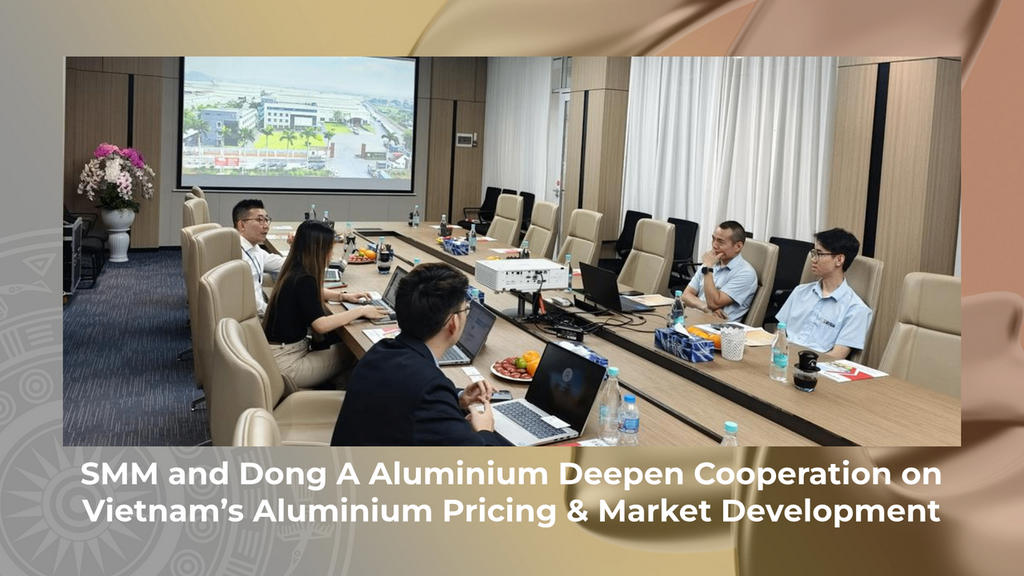 SMM Visits Dong A Aluminum to Jointly Explore Vietnam's Aluminum Pricing and Market Development
On July 22, 2026, a delegation from SMM Information & Technology Co., Ltd. (SMM) visited Dong A Aluminum Company Limited and was warmly received by Deputy General Manager Cao Jiawang and Procurement Manager Chen Jiejun. The two sides held in-depth exchanges on topics including the development of Vietnam's aluminum price system, corporate procurement status and pricing models, trends in the aluminum processing industry, and cooperation for the SMM AICE 2026 Southeast Asia (Vietnam) Aluminum Conference. The SMM delegation included: Logan Lu , CEO of SMM Cason Lou , Director of Aluminium Processing, Marketing Department Lexi Chen , Key Account Manager for Overseas Information Sales Chin Khai Yuen , Senior Overseas Aluminium Analyst They were welcomed by key representatives from Dong A Aluminum, including: Cao Jiawang , Deputy General Manager Chen Jiejun , Procurement Manager Focusing on Procurement Practices: Coexistence of Multiple Pricing Models During the meeting, Dong A Aluminum elaborated on its current procurement status and price usage model. As one of the largest aluminum semis exporters in Vietnam, Dong A Aluminum's procurement system has both international and local characteristics, forming a flexible but complex pricing mechanism. Dong A Aluminum stated that the Vietnamese market currently lacks a locally recognized price reference system with international credibility, and enterprises face challenges such as inconsistent pricing benchmarks and scattered price information in actual operations, hoping that SMM can promote the standardization of Vietnam's aluminum price system. SMM introduced that since July 3, 2026, SMM has officially launched the Vietnam 6063 (non-homogenized) aluminum billet processing fee and SMM Vietnam 6063 (non-homogenized) aluminum billet price point, updated on a daily basis on each trading day. Meanwhile, SMM plans to officially release the SMM Vietnam aluminum price and elaborate on the methodology at the SMM AICE 2026 Southeast Asia (Vietnam) Aluminum Conference to be held in Ho Chi Minh City from November 19 to 20. Dong A Aluminum expressed high attention to this, believing that the launch of SMM Vietnam aluminum price is expected to provide enterprises with a more transparent and authoritative pricing reference, reduce transaction costs, and improve market efficiency. Discussing Industry Trends: Opportunities and Challenges in the Aluminum Processing Industry The two sides also exchanged views on the current status of Vietnam's aluminum processing industry. As a member of a Singapore-based holding group system, Dong A Aluminum has a total investment of over $200 million and an annual comprehensive capacity of 150,000 mt. In 2025, the company's Phase III expansion project was officially completed and put into operation, with six new aluminum extrusion lines installed, bringing the total number of extrusion lines to 25. The company has now established a wide sales network across the country, and its products are popular in multiple international markets such as the US, Australia, Canada, Europe, and Japan. Dong A Aluminum noted that with the commissioning of Vietnam's first aluminum project (Phase I with an annual capacity of 150,000 mt), the Vietnamese aluminum industry chain is accelerating to complete the last link. The increase in local primary aluminum supply will bring new procurement options and cost optimization opportunities for aluminum processing enterprises. At the same time, the imminent implementation of the Carbon Border Adjustment Mechanism (CBAM) and the adjustments to tariff policies in key export markets such as the US have also imposed higher requirements on enterprises' market layout and pricing strategies. The two sides also reached a consensus on cooperation for the SMM AICE 2026 Southeast Asia (Vietnam) Aluminum Industry Conference. Dong A Aluminum indicated that it would actively consider participating in the conference to jointly promote the internationalization of the aluminum market in Vietnam and Southeast Asia. This visit further deepened the communication and mutual trust between SMM and Vietnam's leading aluminum processing enterprises. It provided important first-hand information for market research and data collection on the Vietnamese aluminum pricing system and injected new momentum into the standardization of aluminum pricing in Vietnam. About Dong A Aluminum Dong A Aluminum Co., Ltd. is located in Tan Dan Industrial Park, Le Dai Hanh Ward, Haiphong City, Vietnam. It is an aluminum products producer with high industry reputation and relatively large production scale in Vietnam. The company is a member of a Singapore-based holding group, with a total investment exceeding $200 million and an annual comprehensive capacity of 150,000 mt. It is also one of the largest exporters of aluminum semis in Vietnam. The company owns a modern factory covering an area of nearly 120,000 m², equipped with intelligent and advanced production lines. It has established a fully automated, closed-loop production process covering aluminum ingot storage, melting and casting, extrusion, spraying, anodizing, wood grain treatment, deep processing, and finished product assembly. The company fully applies an intelligent ERP management system to achieve automated management of the entire production and operation process. Currently, the company has 25 extrusion lines with tonnages ranging from 600 mt to 4,500 mt. In 2025, the Phase III expansion project was officially completed and put into operation, successfully entering the list of Vietnam's Top 500 enterprises. With a development direction of becoming a comprehensive aluminum application solution provider, Dong A Aluminum's products are widely used in construction, home furnishings, electronics and power, solar energy, and other fields, and it continues to expand the application of aluminum semis in machinery equipment, precision parts, and the automotive industry. As of now, Dong A Aluminum has established an extensive sales network nationwide, with over 800 dealers, and actively exports to multiple international markets including the US, Australia, Canada, Europe, and Japan. Facing the future, Dong A Aluminum always adheres to the development philosophy of "innovation as the core, quality as the foundation, and service as the commitment," continuously optimizes its production system, upgrades its technological strength, and actively promotes Vietnam's aluminum industry onto the global industrial landscape. Join the Conversation at SMM AICE 2026 Connect with aluminum producers, processors, traders, industry associations, analysts, and decision-makers from across Southeast Asia. Explore the latest market developments, pricing trends, processing technologies, recycling opportunities, and new possibilities for regional cooperation. ? Ho Chi Minh City, Vietnam ? November 19–20, 2026 Register now: bit.ly/AICE26 and secure your Super Early Bird Pass and save up to USD 200. Register before August 31, 2026.
Jul 23, 2026 15:07- SMM AICE Visits Xingfa Aluminum’s Vietnam Base to Advance the Development of a Vietnam Aluminum Pricing System
On July 20, 2026, a delegation from Shanghai Metals Market Information Technology Co., Ltd. (SMM) visited Xingfa International (Vietnam) Co., Ltd. The delegation included: Logan Lu, CEO of SMM Cason Lou, Director of Aluminum Processing, Marketing Department Lexi Chen, Key Account Manager for Overseas Information Sales Khai Yuen Chin, Senior Overseas Aluminum Analyst The delegation received a warm welcome from the management team and department heads at Xingfa Aluminum’s Vietnam base. The two sides held in-depth discussions on the development of an aluminum pricing mechanism in Vietnam, the establishment of international credibility, and coordinated growth across the aluminum industry. Focusing on Vietnam Aluminum Pricing and Exploring a New Market Pricing Mechanism During the meeting, the two sides conducted a detailed analysis of the current pricing landscape in Vietnam’s aluminum market. At present, Vietnam still lacks a locally developed aluminum price benchmark with broad international recognition and credibility. SMM stated that establishing a Vietnam aluminum price reference system widely recognized by the international market would be a crucial step toward improving pricing transparency and facilitating cross-border trade. It will also be one of SMM’s key priorities in the coming period. To support this initiative, SMM will conduct extensive research involving Xingfa Aluminum and other representative aluminum companies in Vietnam. SMM plans to officially launch the SMM Vietnam Aluminum Price and provide a detailed explanation of its pricing methodology at the SMM AICE 2026 Southeast Asia Aluminum Industry Conference, to be held in Ho Chi Minh City on November 19–20. The two sides also exchanged views on emerging industry topics, including the supply-and-demand landscape for primary aluminum in Southeast Asia and the impact of the Carbon Border Adjustment Mechanism (CBAM) on the aluminum industry. CBAM and international carbon certification, in particular, have become major areas of concern for the global aluminum sector. SMM will therefore organize a dedicated session at the conference and invite international experts to provide professional insights and analysis. Deepening Engagement in Southeast Asia as SMM Accelerates Its Expansion in Vietnam Since the beginning of this year, SMM has significantly accelerated the development of its pricing services in Southeast Asia. Since July 3, 2026, SMM has introduced a series of new price assessments for 6063 aluminum billet processing fees in Southeast Asia, as well as CIF Southeast Asia aluminum premiums and discounts. Among them, the Vietnam 6063 non-homogenized aluminum billet processing fee and related price assessment have officially been launched. In addition, the Vietnam Metals Recycling Association visited SMM’s headquarters on July 10. The two sides reached several cooperation agreements concerning services for the recycled metals industry chain. Through continued local cooperation and the integration of international resources, SMM is providing more accurate and authoritative data support for the aluminum value chains in Vietnam and Southeast Asia. During the visit to Xingfa Aluminum, the two sides reached a number of agreements on aluminum price data collection, market promotion, and the organization of industry events. SMM stated that it would invite more international market participants—including representatives from the Middle East, Indonesia and Malaysia, as well as RUSAL and Australian primary aluminum smelters—to contribute to the development of Vietnam’s aluminum pricing system and promote greater regional market integration. The visit further strengthened the strategic cooperation between SMM and Xingfa Aluminum while injecting new momentum into the standardization and internationalization of Vietnam’s aluminum pricing system. Guangdong Xingfa Aluminum Co., Ltd. Founded in 1984, Guangdong Xingfa Aluminum Co., Ltd. (“Xingfa Aluminum”) is one of China’s leading large-scale manufacturers specializing in aluminum extrusion products. In 2011, Guangxin Holdings Group invested in Xingfa Aluminum, pioneering a mixed-ownership model combining state-owned and private capital in China’s aluminum extrusion industry. This marked the beginning of a new phase of sustainable expansion for the company. Xingfa Aluminum currently operates nine major production bases. Its seven modern manufacturing bases in China are located in Sanshui, Foshan; Nanhai, Foshan; Foshan Precision Manufacturing Base; Yichun, Jiangxi; Chengdu, Sichuan; Qinyang, Henan; and Huzhou, Zhejiang. The company also operates overseas production bases in Australia and Vietnam. With the initial formation of its global manufacturing network, Xingfa Aluminum continues to strengthen its advantages in production scale. The company has consistently focused on the research and development, manufacturing, and sale of aluminum extrusion products, covering two core segments: architectural aluminum profiles and industrial aluminum profiles. Architectural aluminum profiles remain one of Xingfa Aluminum’s traditional strengths, with its products widely used in high-end curtain walls, integrated door and window systems, and other building applications. While consolidating its core business, the company has accelerated its expansion into the industrial aluminum profile market. It has developed a range of high-performance products, including battery trays and crash beams for new energy vehicles, as well as aluminum body structures for buses. By strengthening its presence in key segments across the industrial value chain, Xingfa Aluminum’s products are now widely used in rail transit, new energy vehicles, photovoltaics, electronics, and other industries. The company is also extending its advanced aluminum processing technologies into emerging fields such as energy storage and computing infrastructure. In recent years, Xingfa Aluminum has remained committed to strengthening its manufacturing capabilities. As a leading enterprise in Guangdong Province’s high-end aluminum extrusion industry chain, which has an output value of more than RMB 100 billion, the company has played an important role in driving industry development. Xingfa Aluminum continues to focus on breakthroughs in key core technologies and promotes the advancement of its industrial and value chains toward the medium- and high-end markets. The company has received numerous national honors, including National Manufacturing Single-Product Champion Enterprise, National Intellectual Property Demonstration Enterprise, National Technology Innovation Demonstration Enterprise, National Enterprise Technology Center, and National Green Factory. In 2025, Xingfa Aluminum ranked 475th among China’s Top 500 Manufacturing Enterprises, 147th among Guangdong’s Top 500 Enterprises, and 32nd among Guangdong’s Top 500 Manufacturing Enterprises. Join the Conversation at SMM AICE 2026 Connect with aluminum producers, processors, traders, manufacturers, certification organisations, industry associations and decision-makers from across Southeast Asia and the global market. Explore aluminum pricing, primary aluminum supply, processing technologies, low-carbon development, CBAM compliance and new opportunities for regional cooperation. Location: Ho Chi Minh City, Vietnam Date: November 19–20, 2026 Register now: bit.ly/AICE26 and secure your Super Early Bird Pass and save up to USD 200. Register before August 31, 2026.
Jul 23, 2026 10:32 - [SMM Steel Import and Export Data Analysis] June Exports Stay High: Will Steel Exports Face Downward Pressure in July?
On July 14, data from the General Administration of Customs showed that China exported 10.32 million mt of steel in June 2026, down 21,000 mt MoM or 0.2% MoM. Cumulative exports from January to June reached 54.874 million mt, down 5.6% YoY. In June 2026, China imported 441,000 mt of steel, down 10,000 mt MoM or 2.2% MoM. Cumulative imports from January to June were 2.696 million mt, down 11.3% YoY. Table 1: Overview of Steel Imports and Exports, January-June Source: SMM Steel Exports Remained High in June According to SMM's June export production schedule survey, planned HRC export volume for the month stood at 1.05 million mt, slightly lower than actual exports in May, with a relatively limited decline. Meanwhile, SMM export order data showed that steel export orders remained high in mid-April, laying the foundation for high steel exports in May-June. Table 2: China’s Total Steel Exports Source: SMM Steel Imports Stayed Low in June On the import side, steel imports in June were 441,000 mt, down MoM. January-June cumulative imports were 2.696 million mt, down 11.3% YoY. Net steel exports reached 52.178 million mt. Short-Term Steel Export Outlook 1. Global Manufacturing Declined MoM; Domestic New Export Orders Recovered Marginally According to J.P. Morgan global PMI data, the global manufacturing PMI stood at 52.2 in June 2026, still in expansion territory but with momentum slowing for a second consecutive month, mainly due to earlier stockpiling to avoid Middle East shipping risks, while preventive stockpiling demand waned in June. In addition, end-use consumer goods demand in Europe and the US was weak, global export orders fell below the 50 mark, and the ASEAN composite PMI dropped 1 point MoM, with regional sentiment cooling significantly. China's manufacturing new export orders index at 50.1% in June, up 1.5 percentage points MoM, pointed to a marginal recovery in external demand. 2. Supply Outside China Rose MoM; Overall Supply Pressure Intensified Global crude steel production fell 0.3% YoY to 157.9 million mt in May 2026. In China, against a severe backdrop of finished steel destocking falling short of expectations and losses, steel mills proactively brought forward maintenance plans to defensively control output. Excluding China, production in the rest of the world rose 28.8% YoY. The Asian market was unusually resilient, with India's crude steel production recording 14.1 million mt. Meanwhile, Vietnam's production surged 27.2% YoY, driven not by a stress response to trade barriers but by downstream manufacturing entering a concentrated stockpiling phase, coupled with genuine demand from infrastructure projects rushing to meet deadlines ahead of the monsoon season. In contrast, production in the Middle East plunged 19.4% YoY in May, with previous war damage from geopolitical conflicts and wartime energy controls remaining an invisible and heavy ceiling suppressing production resumptions in the region. Production regions in Europe and the US (the US up 9.2% YoY, Germany up 7.3% YoY) maintained relatively active operating rates, supported by new-type data center infrastructure and anticipatory moves to preempt regional trade barriers such as the EU's Carbon Border Adjustment Mechanism (CBAM). It is reported that the Middle East recently started offering billet exports and concluded deals. Meanwhile, increased production in India, Vietnam and others also put some pressure on domestic exports. Figure 1: Global Crude Steel Production by Region Source: SMM 3. Price Advantage Narrowed Significantly; Pressure on Export Orders Intensified As of July 16, 2026, HRC export quotations (FOB) for India, Turkey, and the CIS were $510/mt, $408/mt, and $530/mt, respectively, while China's HRC export quotation (FOB) was $493/mt. Currently, China's HRC export quotations are $17/mt, $115/mt, and $37/mt lower than those countries. China's steel export price advantage narrowed significantly MoM from June. The overseas market remained in the off-season, and low-price export promotion remained the main channel for them to relieve domestic pressure. In China, prices remained relatively firm supported by costs. The price spread between Chinese and overseas markets narrowed markedly, intensifying pressure on export orders. Figure 2: HRC Quotations in Major Global Markets Source: SMM 4. Export Orders Remained at Low Levels in May-June; A Sudden Increase Is Difficult According to SMM's latest steel mill export order schedule, planned HRC exports for this month totaled 1.059 million mt, up 5.2% MoM from actual exports last month. SMM's steel export order data showed that due to the ongoing overseas off-season and consecutive overseas price declines, steel export orders in May-June declined significantly MoM from the previous period. Figure 3: SMM Steel Export Order Volumes Source: SMM 5. Anti-Dumping Cases with Impact Increased in June New anti-dumping related cases in China increased in June, involving products such as steel pipes, coated sheets, cold-rolled, stainless steel, hot-rolled, and medium-thickness plates. Details of the cases and their impact volumes are shown in the table below. Table 3: New Anti-Dumping Cases in June Source: SMM Overall, against the backdrop of the overseas off-season coupled with a narrowing price advantage, the weakness in earlier export orders may gradually be reflected in export data. SMM expects that actual steel exports in July will face some downward pressure. However, as overseas prices continue to pull back and hit bottom, some new procurement demand may be released. Figure 4: Steel Exports and Forecast, 2024-2026 Source: SMM Source Declaration: All data other than publicly available information is processed by SMM based on public information, market communication, and SMM's internal database models, and is for reference only and does not constitute any decision-making advice. Note: This article is original content of this official account. If you need to reprint, whitelist, or cooperate, please contact us. Without permission, no one may reprint, modify, use, sell, transfer, display, translate, compile, disseminate, or otherwise disclose the above content to any third party or permit any third party to use it. Otherwise, Shanghai Metals Market (SMM) will pursue legal liability for infringement, including but not limited to claiming contractual breach of contract liability, disgorgement of unjust enrichment, and compensation for direct and indirect economic losses. Scan to Get Free Information
Jul 17, 2026 14:40 - [Automotive Conference] Lixin New Materials Invites You to the SMM ASCC2026 (8th) Automotive Supply Chain Conference
The global automotive industry is accelerating its low-carbon and smart transformation. China's automotive industry is shifting from scale advantage to leadership in both technology and supply chain. In 2025, China's new energy vehicle penetration rate exceeded 50%, driving upgrades in automotive materials such as aluminum, steel, and magnesium, and triggering a surge in demand for new lightweight materials. With the implementation of the EU Carbon Border Adjustment Mechanism, low-carbon transformation of the industry chain is imminent. Coinciding with the start of the 15th Five-Year Plan and the deepening of dual carbon goals, the industry urgently needs a professional platform to address material technology challenges. Against this backdrop, will be held on September 10-11, 2026 in Shanghai . SMM together with Shandong Lixin New Materials Co., Ltd. cordially invites industry peers to attend, advancing the automotive supply chain toward green, lightweight, intelligent, and global directions. Click to attend. We look forward to meeting you at the conference. Benefit through Casting Excellence, Trust Wins the Future Shandong Lixin New Materials Co., Ltd. — Collaborative Manufacturing Service Provider for the Entire Aluminum Alloy Industry Chain The industrial park is located in Linyi, Shandong Province, covering an area of 230 mu. It has established a green closed-loop industry chain integrating non-ferrous metal resource recycling, direct supply of molten aluminum, die casting manufacturing, precision machining, and mold development . It provides clients with one-stop comprehensive solutions from material to finished product, widely serving automotive lightweight parts, 5G communication structural components, and high-precision manufacturing sectors. Three Core Strengths Cost Reduction and Efficiency Improvement Achieves a “no-landing” direct supply model for molten aluminum, significantly reducing clients' remelting losses and energy costs, and improving manufacturing efficiency at the source. Full-Stack Capabilities Independently controllable processes from mold development, high-pressure die casting to precision machining, meeting stringent quality and delivery requirements for complex parts. Green and Low-Carbon Full-process internal recycling of non-ferrous metal resources, supporting clients' supply chains in achieving carbon reduction targets and building a sustainable future together. Business Segments Main Products Contact Us SMM Conference Contact Lyu Junlei 176 1601 9596 lvjunlei@smm.cn
Jul 17, 2026 10:25