

166results found for 'COVID-19 pandemic'
Price
News
- 【SMM Aluminum Flash News】Saudi finance minister warns of supply shocks, including aluminium, beyond post-COVID levels
Saudi Finance Minister, Mohammed Al-Jadaan, has cautioned that recent global supply chain disruptions are now exceeding the impact seen after the COVID-19 pandemic. He noted that ongoing geopolitical tensions could have wider economic consequences if they continue for an extended period of time. He pointed out that while oil markets often draw the most attention, the pressure is becoming more visible across key industrial sectors such as refined products, fertilisers, steel, aluminium and petrochemicals.
Mar 27, 2026 17:42  The Perfect Storm Behind Silver’s Rise
Silver's performance over the past year has been nothing short of spectacular.
Jan 16, 2026 09:50- Prospects for the Development of the Global Secondary Metal Industry
At the 2025 SMM (2nd) Global Renewable Metal Industry Chain Summit - Main Forum hosted by SMM Information & Technology Co., Ltd., Allen Cui, Director of SMM Nonferrous Consulting, shared insights on the topic of "Prospects for the Development of the Global Secondary Metal Industry."
Jun 17, 2025 14:49 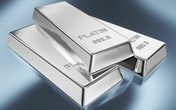 Silver Prices Experience Bull Run, Gold-Silver Ratio Corrects
Recently, silver prices have embarked on an upward trend, attracting market attention.
Jun 13, 2025 09:54- Investment Bank Report: Multiple Indicators Show Weak Momentum in US Oil Production Growth
The Trump administration was ambitious in its energy policies. US Treasury Secretary Bentsen once publicly introduced his "3-3-3 Plan," which aimed to increase the real GDP growth rate to 3%, reduce the annual budget deficit from 7% of GDP to 3%, and boost US domestic oil production by 3 million barrels per day (bpd). However, economists and energy experts have warned that Bentsen's goals have little basis in reality. Despite the Trump administration's policies favoring fossil fuels, US oil production is likely to remain flat or decline, as low oil prices make it unprofitable for oil companies. Commodity experts at Standard Chartered Bank predict that US crude oil supply may decline by 158,000 bpd in 2025 and by 183,000 bpd in 2026, ending the growth momentum of the past four years under the Biden administration. Previously, the Federal Reserve Bank of Dallas noted in a survey that the breakeven point for US shale oil producers is a WTI crude oil price of $65 per barrel. Over the past month, WTI prices have mostly remained below this breakeven point, partly due to the OPEC+ alliance's decision to increase production. What do the data reveal? Standard Chartered Bank analyzed four reasons for its pessimism about US oil production growth from four data dimensions. First, according to the revised monthly data from the US Energy Information Administration (EIA), US crude oil production reached a record high of 13.488 million bpd in March. However, the average daily increase over these three months was only 30,000 bpd, compared to a growth of 270,000 bpd in 2024. The EIA, which is usually seen as optimistic about production growth, also predicts that US crude oil production will increase slightly from 13.2 million bpd in 2024 to 14 million bpd in 2027, an increase that is only about a quarter of what Bentsen promised. Secondly, according to data from energy company Baker Hughes, the number of US oil rigs has decreased by 41 this year and by 50 on a YoY basis. Part of the decline is due to improvements in drilling technology and processes, but Standard Chartered warns that this downward trend has persisted for 30 months. In addition, the number of frac crews has also plummeted to 186, a significant decline from the 300 crews during the peak of the COVID-19 pandemic. Finally, the number of drilled but uncompleted (DUC) wells has also halved from the pandemic peak in June 2020, reaching a low of 4,494 in February this year before stabilizing. The number of frac crews can serve as a supplementary indicator for measuring US shale oil and gas production, while the DUC well count may be a leading indicator of any shifts in completion activity. A decline in the DUC well count suggests that drilling activity is weakening. From a data perspective, it is evident that US energy companies have significantly reduced their investments in drilling to preserve profits and remain accountable to shareholders. The immediate impact of this decision may be a stabilization or decline in US energy production, thereby exerting upward pressure on oil prices.
Jun 13, 2025 09:07 - Wells Fargo's Latest Gold Price Forecast: Wait Patiently for the Decline and Buy, It Will Hit a New High of $3,600 Next Year
According to Wells Fargo's mid-2025 outlook report, precious metals will continue to benefit from geopolitical conflicts and economic uncertainties, with gold prices expected to hit a record high of $3,600 per ounce in 2026. Analysts noted in the report that the significant correction in commodity prices presents attractive opportunities later this year and into 2026. Additionally, they anticipate that improvements in the US economic conditions later in 2025 will drive growth in commodity demand. Wells Fargo recommends that investors pivot to sectors that may benefit from an improving macro environment, such as energy or precious metals, and adjust their portfolios to hedge against policy and geopolitical uncertainties. Exercise patience Wells Fargo emphasized in the report that rapid changes in economic policies over the past few months have disrupted investors and capital markets. Since the 2024 US elections, uncertainty surrounding US economic policies has continued to escalate, primarily due to tariff volatility, with recent uncertainties surpassing those during the COVID-19 pandemic. Analysts highlighted that these uncertainties are expected to continue driving gold prices higher over the next two years, as private investors and global central banks will continue to purchase gold. By 2026, central banks alone are expected to account for 21% of global gold demand. Meanwhile, US short-term interest rates are expected to decline in 2026, and the US dollar is also expected to rebound mildly, which will further strengthen the upward trend in precious metal prices. However, analysts also caution that investor optimism about precious metals' rise has reached levels historically preceding significant corrections, leading them to prefer exercising patience and waiting for price dips before buying. The bank expects gold prices to pull back slightly to a range of $3,000 to $3,200 by the end of this year, with the outlook for gold prices rising to $3,600 per ounce by the end of 2026. Analysts also recommend that investors focus on quality factors rather than speculative assets and diversify their portfolios through commodities like precious metals, which may outperform broader market indices. Chantelle Schieven, Managing Director of Capitalight Research, also believes that due to the resilience of the US economy and labour market, gold prices may stagnate throughout the summer but will oscillate near high levels. However, considering the inflationary impact of tariffs, she expects the US to face stagflation risks over the next two years, which will support gold prices.
Jun 11, 2025 15:08