

721results found for 'Bauxite'
Price
News
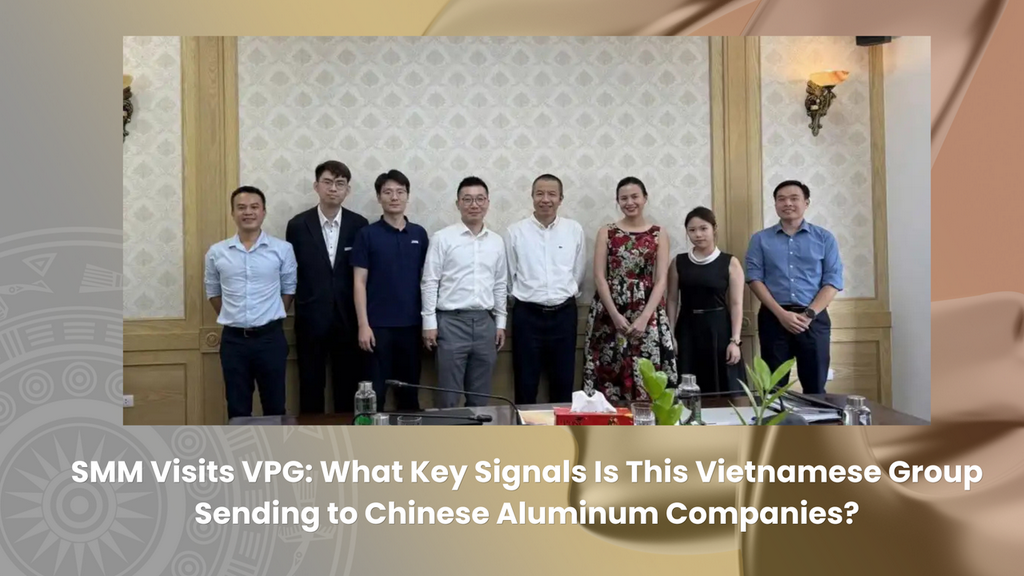 SMM Visits VPG: What Key Signals Is This Vietnamese Group Sending to Chinese Aluminum Companies?
On July 23, 2026, a delegation from Shanghai Metals Market Information Technology Co., Ltd. (SMM) visited VPG (Viet Phuong Group). The delegation included: Logan Lu, CEO of SMM Cason Lou, Director of Aluminum Processing, Marketing Department Lexi Chen, Key Account Manager for Overseas Information Sales Khai Yuen Chin, Senior Overseas Aluminum Analyst The two sides held in-depth discussions on bauxite resource development in Southeast Asia, alumina project development, regional logistics networks, and the development of a Vietnam-based aluminum pricing system. SMM noted that as the global aluminum value chain continues to restructure, China’s alumina market is expected to see sustained demand for overseas resources. Given resource availability and cost considerations, high-quality overseas alumina resources—particularly those from Vietnam and other Southeast Asian markets—are expected to gain greater market potential and competitive advantages. VPG shared updates on the progress of its current projects and said it is actively advancing mineral processing and alumina projects, with Southeast Asia and other international markets set to become key areas of future development. Since 2008, VPG has been engaged in bauxite exploration and development in Sekong Province, Laos, and is currently advancing an integrated industrial project covering bauxite mining, mineral processing, and alumina production. Both sides agreed that establishing an open, transparent, and regionally representative local aluminum pricing system would help improve information transparency and strengthen the international influence of Southeast Asia’s aluminum value chain. They also expressed expectations for deeper cooperation in market research, pricing services, and industry exchanges. What Signals Does SMM’s Visit to VPG Send to Chinese Companies? 01 Vietnam Is Becoming an Important Hub Connecting the Global Aluminum Value Chain In recent years, an increasing number of international companies have viewed Vietnam as an important gateway connecting Southeast Asian resources with global markets. Supported by its established port infrastructure, rapidly expanding manufacturing sector, and growing international trade network, Vietnam is not only benefiting from the relocation of global manufacturing capacity but is also emerging as an important regional hub for the aluminum value chain. For Chinese companies seeking opportunities in Southeast Asia, Vietnam is gradually evolving from an “investment destination” into a “supply chain partner.” 02 Vietnam’s Rapid Market Growth Is Creating New Export Opportunities With free trade agreements such as the EU-Vietnam Free Trade Agreement (EVFTA) taking effect, Vietnam has become a strategic sourcing hub for aluminum products used in the solar industry, including aluminum profiles and PV module frames, with export growth exceeding 20%. EVFTA tariff benefits for EU buyers, together with US Section 301 tariffs, have also encouraged some international buyers to shift sourcing toward Vietnam. Meanwhile, Vietnam aims for electric vehicles to account for 50% of urban vehicles by 2030. As electric vehicles use nearly 30% more aluminum than conventional vehicles, growing EV adoption could generate significant additional aluminum demand. This widening demand gap is expected to create substantial opportunities for aluminum suppliers and exporters. Against this backdrop, SMM AICE is expanding internationally by bringing its conference to Vietnam. The event aims to establish an authoritative platform connecting Chinese aluminum companies with Vietnam and the broader Southeast Asian market, promoting the transition of China-Vietnam aluminum cooperation from “resource complementarity” toward “full-value-chain cooperation and mutual growth.” 03 Future Competition Will Be About Information, Not Just Opportunities Vietnam’s market continues to develop rapidly. At the same time, market rules, policies, cost structures, and pricing mechanisms are constantly evolving. For Chinese companies, identifying projects alone is no longer enough. Timely access to local policies, industry development trends, supply chain changes, and market pricing information is becoming increasingly important. This is also why SMM continues to deepen its presence in the Vietnamese market. Recently, SMM AICE has been conducting intensive visits across Vietnam and the broader Southeast Asian industrial value chain, maintaining close communication with government authorities, industry associations, mining companies, alumina producers, aluminum processors, and other market participants. Through more transparent market intelligence and pricing systems, SMM aims to help global companies better understand market dynamics and reduce decision-making risks. To help more aluminum companies seize emerging opportunities and establish an early presence in the Vietnamese market, SMM AICE Vietnam is coming to Vietnam with a major industry gathering. VPG — Viet Phuong Group Founded in 1996, VPG (Viet Phuong Group) is a well-established diversified investment group in Vietnam, with businesses spanning mining, energy, infrastructure, finance, real estate, and other sectors. Mining is one of the group’s key strategic businesses, with projects involving mineral resources including bauxite, rare earths, and quartz sand. In the aluminum sector, VPG has been engaged in bauxite exploration and development in Sekong Province, Laos, since 2008. The group is currently advancing an integrated project covering bauxite mining, mineral processing, and alumina production. Leveraging Vietnam’s established port infrastructure and regional logistics network, VPG plans to export alumina products to China and other global markets through the Laos–Vietnam cross-border logistics corridor, further integrating into Southeast Asia’s aluminum supply chain. In recent years, the company has continued to advance project development, international cooperation, and market expansion, with the ambition of building a regional aluminum industry platform spanning resource development, alumina production, and international trade. Join the Conversation at SMM AICE 2026 Connect with aluminum producers, processors, traders, manufacturers, certification organisations, industry associations and decision-makers from across Southeast Asia and the global market. Explore aluminum pricing, primary aluminum supply, processing technologies, low-carbon development, CBAM compliance and new opportunities for regional cooperation. ? Ho Chi Minh City, Vietnam ? November 19–20, 2026 Register now: bit.ly/AICE26 and secure your Super Early Bird Pass and save up to USD 200. Register before August 31, 2026.
Aug 3, 2026 16:42- SHFE aluminum opened lower but rebounded, though positions declined significantly; alumina continues to consolidate on a weak note [SMM Aluminum Briefing]
SMM, August 3: The SHFE aluminum 2608 contract opened at 23,400 yuan/mt today, reached a high of 23,665 yuan/mt, hit a low of 23,400 yuan/mt, and closed at 23,625 yuan/mt, down 10 yuan/mt or 0.04% from the previous trading day. Trading volume was 12,000 lots, open interest was 40,300 lots, and daily position change was -5,189 lots. The price stood above the MA5 (23505), MA10 (23357.50), MA20 (23228.50), and MA40 (23362.25), but still below the MA60 (23758.92). The short-term repairing pattern continued, but resistance remained overhead. In the MACD indicator, the DIFF (23.83) was above the DEA (-72.27), and the histogram recorded 192.20, with bullish momentum still releasing. Trading volume was low, and the daily position change of -5,189 lots indicated a significant capital outflow. The session’s low opening and subsequent recovery largely reflected position-squaring repair, and sustained upward momentum still needs to be observed. SMM comment: The indirect technical talks between the US and Iran made progress, with both sides discussing fund returns and strait security, and nuclear issue consultations are about to start. The geopolitical risk premium continued to shrink, disputes over the management of the Strait of Hormuz persisted, and the resumption of navigation through the strait remained uncertain. The US Fed’s hawkish pivot boosted the US dollar index, weighing on non-ferrous metals prices. Under macro headwinds, aluminum prices in China and overseas fell. In the short term, bearish factors dominate, and aluminum prices are expected to continue in the doldrums. The alumina 2609 contract opened at 2,627 yuan/mt today, reached a high of 2,648 yuan/mt, hit a low of 2,621 yuan/mt, and closed at 2,633 yuan/mt, down 2 yuan/mt or 0.08% from the previous trading day. Trading volume was 149,700 lots, open interest was 227,200 lots, and daily position change was -15,651 lots. The price remained below the MA5 (2653.60), MA10 (2682.50), MA20 (2690.55), MA40 (2764.93), and MA60 (2773.88). The moving averages maintained a bearish alignment, and the weak pattern of futures continued. In the MACD indicator, the DIFF (-35.37) was below the DEA (-31.96), and the histogram recorded -6.81, indicating persistent bearish momentum. Trading volume remained at a certain level, but the daily position change of -15,651 lots showed a significant capital outflow. Near-term futures are likely to continue consolidating on a weak note at low levels. SMM comment: According to SMM data, as of last Thursday, China’s total alumina inventory edged down WoW. Looking at the inventory structure, the raw material inventory at aluminum smelters continued to destock slightly, but due to recent large price fluctuations and market division over the outlook, restocking willingness was weak, with end-users mainly taking a wait-and-see approach. In-factory alumina inventory decreased, mainly due to phased maintenance at some northern enterprises, where production constraints led to prioritized consumption of in-factory inventory. This effect is expected to gradually fade after the maintenance ends next week. Port inventory continued building, with overseas port arrivals staying high, and imported resources supplemented spot supply, adding to market pressure. Overall, the oversupply pattern remained unchanged. Before Guinea’s bauxite quota policy is implemented, the market lacks a clear bullish driver. Next week’s inventory is expected to shift from weak destocking to a slight inventory buildup, supply and demand will remain loose, and alumina prices will continue to consolidate on a weak note. [The information provided is for reference only. This article does not constitute direct investment research advice. Clients should make decisions cautiously and not use this as a substitute for independent judgment. Any decision made by clients is not associated with SMM]
Aug 3, 2026 16:30 - CITA Reports 36.9% Sales Growth in H1 2026, Expands Downstream Aluminium Investments Amid Profit Drop
[SMM Aluminum Express News] PT Cita Mineral Investindo (CITA) reported a 36.9% year-on-year increase in net sales to IDR 1.91 trillion in the first half of 2026, driven by stronger bauxite sales, while net cash from operating activities rose 33.1% to IDR 428.0 billion. However, net profit attributable to shareholders fell 62.1% to IDR 625.8 billion, primarily due to lower earnings from its 12.5% stake in PT Well Harvest Winning Alumina Refinery (WHWAR). CITA continued expanding its downstream aluminium investments during the period, injecting an additional IDR 99.1 billion into WHWAR to maintain its 12.5% interest, while retaining a 16% stake in PT Kalimantan Aluminium Industry (KAI). As of 30 June 2026, the company's investments in WHWAR, KAI and related downstream projects accounted for nearly 40% of total assets, highlighting its growing exposure to Indonesia's alumina and aluminium value chain.
Aug 3, 2026 14:36 - [SMM Analysis] Indonesia's Rare Earth Element Detection Disrupts Nickel Product Exports, and Subsequent Regulatory Details Become the Market's Focus
Background: Pangkalpinang Case Triggers Tighter Regulation of Rare Earth Elements in Indonesia’s Mineral Exports Recently, the detection issues surrounding Indonesia’s rare earth elements, or Logam Tanah Jarang (LTJ) , primarily stemmed from stricter government oversight of related mineral product exports following the Pangkalpinang case. The initial case involved an anomalous export of approximately 390 mt of materials containing rare earth elements and implicated PT Putraprima Mineral Mandiri, PT Sucofindo, and the Pangkalpinang Customs Office. It raised a broader regulatory question: when a mineral product contains rare earth or radioactive elements as associated elements, should the product continue to be treated under its primary export commodity classification or be subject to rare earth-related export restrictions. This issue quickly rippled through Indonesia’s broader mineral export chain. High-grade NPI, NPI, MHP, alumina, and tin-related products are not themselves exported as rare earth products, but they may contain trace amounts of associated rare earth elements or radioactive elements. Consequently, with regulatory parameters not yet fully clarified, surveyors and customs tended to be cautious, causing a slowdown in LS report issuance and customs clearance for some shipments. For the nickel industry, the incident quickly became a market focal point, as exports of high-grade NPI, NPI, and MHP were all affected by additional testing requirements. Market feedback indicated that some cargoes experienced short-term port detentions or shipment disruptions, and the impact was not confined to a single enterprise. Some traders also reported that related cargoes faced shipment difficulties during the period of disruption. Why Rare Earth Elements Matter: Indonesia Strengthens Value Controls Over Critical Minerals Before Export Rare earth elements have drawn attention due to their extensive application in high-value-added fields such as EVs, permanent magnet materials, electronic products, new energy, and national defense-related materials. For Indonesia, this issue is not only about export customs clearance but also about resource value control. The Indonesian government is placing increasing emphasis on identifying, regulating, and protecting the value of critical mineral resources before they leave the country. The problem is that rare earth elements often do not exist as standalone products but appear as associated or trace elements in other minerals. If all products containing small amounts of rare earth elements were treated as restricted rare earth exports, normal mineral exports could be disrupted; yet if rare earth content is not identified or regulated at all, Indonesia could lose control over the value of strategic minerals. The commonly recognized 17 rare earth elements include: lanthanum, cerium, praseodymium, neodymium, promethium, samarium, europium, gadolinium, terbium, dysprosium, holmium, erbium, thulium, ytterbium, lutetium, yttrium, and scandium . In recent market discussions, the testing scope mainly involved these 17 rare earth elements, while radioactive elements such as thorium and uranium also became items of inspection concern. Rare earth elements are often not produced as independent products but exist in other minerals in the form of associated elements . This also creates a regulatory gray area. If every export shipment containing trace rare earth elements were treated as rare earth exports, many normal mineral shipments could face delays. But if associated rare earth content is not tested at all, Indonesia risks the loss of strategic mineral value. Therefore, the market’s focus is not merely on whether nickel product exports are disrupted; the larger question is whether Indonesia is entering a new regulatory phase requiring more detailed chemical composition verification for mineral exports. What Happened in the Market: LS Report Delays and Additional Testing Disrupted Mineral Shipments According to SMM’s market understanding, the recent testing requirements temporarily affected the export of some processed mineral products from Indonesia. For nickel products, the impact was mainly reflected in three aspects. Delays in LS report issuance. LS reports are critical documents in the export process, and delays in their issuance directly affect customs clearance and cargo release. According to SMM’s understanding as of July 24, relevant authorities also noted that laboratory testing preparations remained relatively limited, and due to differing interpretations of how to handle rare earth elements during export verification, 102 LS survey reports were still pending. Short-term port detentions for some cargoes. Market feedback indicated that shipments of some NPI and MHP cargoes were affected, and some traders also mentioned that QMB-related cargoes faced shipment difficulties during the disruption. Export enterprises required to organize additional testing. The government required testing of 17 rare earth elements and radioactive elements in certain products, and some enterprises were still awaiting testing results or further clarity from surveyors and customs. Thus, this incident is not a direct export ban on nickel products but a short-term administrative and testing bottleneck arising from unclear regulatory parameters for associated rare earth and radioactive elements. Impact on the Nickel Market: NPI and Other Nickel Product Exports Mainly Affected by Shipment Pace Disruptions For the high-grade NPI and NPI market, the short-term impact was mainly on shipment pace rather than production. Some port cargoes experienced delays due to affected LS reports and customs clearance processes. According to SMM’s latest understanding, LS survey reports were being released in batches, and some high-grade NPI cargoes at ports had begun to be released progressively. As the current disruption primarily occurred in export documentation and customs clearance, the direct impact on NPI production was limited. If LS report issuance and customs clearance continue to normalize, the impact on the overall NPI market is expected to be limited. At this stage, the issue appears more as a short-term export process disruption rather than a confirmed structural restriction on NPI exports. For the MHP market, some cargoes were also affected by the rare earth-related testing requirements. According to market feedback, some MHP shipments faced short-term inability to ship smoothly during the disruption. Similar to NPI, the core issues centered on LS report issuance, testing requirements, and customs clearance, rather than direct restrictions on MHP production. The latest Indonesian government coordination outcome clarified that export procedures should refer to the primary mineral product and its derivative attributes, rather than automatically treating associated rare earth elements or radioactive elements in the product as grounds for export restrictions. Therefore, for MHP, the key lies in whether the product can continue to be classified and exported based on its primary product attributes. Market Feedback and Industry Concerns: Unclear Technical Standards Create Uncertainty for Export Enterprises Market feedback indicated that rare earth-related testing requirements had already caused real disruptions to Indonesia’s mineral product export chain. According to Arif Perdanakusumah, Chairman of FINI (Indonesian Nickel Smelting Association), at least 120 bulk commodity vessels were unable to sail or depart due to the need to test for rare earth content. He noted that this situation caused losses not only for enterprises but also for the government, primarily because there were still no clear regulations providing technical guidance on rare earth content thresholds. Industry associations generally understood that this policy was part of the government’s effort to improve mineral governance, but they also stressed that technical implementation still needed re-examination, particularly given that rare earth elements in many mineral products exist only as associated or trace elements rather than primary products. This distinction is especially important for commodities such as nickel, bauxite, tin, and copper, as enterprises' permits and processing designs are primarily centered on the main minerals, and rare earth elements may merely be naturally occurring by-products or associated elements. The bauxite industry also raised similar concerns. Ronald Sulistyanto, Chairman of ABI (Indonesian Bauxite Association), stated that the rare earth issue should be addressed based on its technical nature and handled by the Ministry of Energy and Mineral Resources, as the ministry possesses the relevant mining and mineral expertise. He emphasized that the key question is whether rare earth elements are primary products or merely associated elements. If they are primary products, relevant export restrictions could apply; but if they are only associated elements, more detailed technical clarification is needed rather than causing widespread export disruptions. Sari Esayanti, Executive Director of IMA (Indonesian Mining Association), also pointed out that most mining enterprises still center on the primary commodities covered by their permits and existing processing designs. In multiple commodities such as tin, bauxite, nickel, and copper, rare earth elements are typically just associated elements. She also stated that most mining enterprises currently lack adequate facilities or technology to identify, separate, or economically utilize rare earth elements. Thus, new interpretations regarding rare earth element declarations or export obligations have created uncertainty for enterprises. From an industry perspective, the most urgent need currently is technical certainty. Enterprises require clearer parameters, testing methods, and declaration mechanisms so that all exporters, surveyors, and customs authorities can adopt uniform standards. Without consistent technical guidance, even if the current bottleneck gradually eases, similar shipment delays could still recur. Latest Government Developments and Resolution Direction: Primary Product Attributes Become the Core Clarification Point The most important development came from the Indonesian government’s coordination letter dated July 31, 2026. According to the document, the Coordinating Ministry for Economic Affairs convened a coordination meeting on July 30 to discuss export obstacles related to the presence of rare earth elements and/or radioactive elements in mineral products and their derivatives. Key points from the government coordination included: Exports of mineral products and their derivatives should still be conducted in accordance with existing trade regulations, including Minister of Trade Regulation No. 23/2023 on Export Policies and Arrangements and Minister of Trade Regulation No. 22/2023 on Prohibited Export Goods, with reference to subsequent amendments. Relevant regulations should be understood as applying to primary mineral products and their derivatives, rather than automatically applying to associated elements within these products. This is the most critical clarification for high-grade NPI, NPI, MHP, alumina, and other processed mineral products. If radioactive elements are present in the product, as long as they fall under naturally occurring radioactive material, i.e., NORM (Naturally Occurring Radioactive Material), exports can still proceed. This helps mitigate the risk of trace radioactive elements automatically causing export obstructions. Export enterprises, surveyors, and customs authorities should refer to the export attributes of the primary mineral product and its derivatives when handling exports. This provides a basis for the gradual resumption of LS report issuance and customs clearance. The Indonesian Attorney General’s Office will concurrently issue a legal opinion, to support the clarification of relevant regulatory interpretations. The government plans to accelerate the revision of relevant regulations, including Minister of Trade Regulation No. 23/2023, Minister of Trade Regulation No. 22/2023, and Minister of Energy and Mineral Resources Regulation No. 25/2018. Relevant discussions are expected to commence on August 3, 2026, targeting completion of revisions within approximately one week. SMM View: Short-Term Export Disruption, but Medium and Long-Term Signal of Tighter Mineral Oversight Released SMM believes that this rare earth testing incident is a short-term disruption but also an important policy signal. In the short term, as LS reports are progressively issued and customs enforcement parameters become clearer, the impact on NPI and MHP exports is expected to gradually ease. If cargo clearance continues to normalize, the impact on the overall nickel market supply-demand pattern is expected to be limited. However, the incident also demonstrates that Indonesia is strengthening its oversight of critical mineral element content, export documentation, and resource value protection. Even if this round of disruption is resolved relatively quickly, export enterprises may still face stricter testing requirements, clearer declaration obligations, and tighter coordinated supervision among agencies such as surveyors, customs, ESDM, and the Ministry of Trade in the future. Subsequent market focus should include: whether all previously delayed LS reports can be fully released. whether future cargoes will need to undergo complete testing for rare earth elements and radioactive elements. whether the government will clarify specific thresholds for rare earth elements, thorium, uranium, and NORM classification. whether the revised regulations can clearly distinguish between primary export products and associated trace elements. whether high-grade NPI, NPI, MHP, alumina, and tin-related products will face different enforcement standards. Overall, this incident should not be interpreted as Indonesia directly banning NPI or MHP exports, but rather as a process of regulatory clarification under the backdrop of strengthened oversight of rare earth and radioactive elements. If the subsequent implementation details are clarified quickly, the market impact will largely remain at the short-term level; if rules remain unclear, similar shipment delays and administrative friction could still recur.
Aug 3, 2026 00:09 - Domestic Ports See 730,000 MT Drop in Bauxite Inventory Last Week
【SMM Port Inventory of Imported Bauxite】According to SMM's statistics on July 31, the total bauxite inventory at ten domestic ports decreased by 730,000 mt from the previous week.
Aug 2, 2026 22:06 - SMM Analysis: Indonesia REE Checks Disrupt Nickel Product Exports; Regulatory Clarification Becomes Key Focus
Background: Pangkalpinang Case Triggered Wider REE Scrutiny Indonesia’s recent rare earth element (REE), or Logam Tanah Jarang (LTJ) , inspection issue appears to have been triggered by stricter government scrutiny following the Pangkalpinang case. The initial case was linked to alleged irregularities involving around 390 tonnes of REE-containing material and involved PT Putraprima Mineral Mandiri, PT Sucofindo, and the Pangkalpinang Customs office. This raised a broader regulatory question: when a mining product contains rare earth elements or radioactive elements as associated content, should it still be treated as its main export product, or should it fall under rare-earth-related export restrictions? This issue quickly affected Indonesia’s wider mineral export chain. Products such as NPI, ferronickel, MHP, alumina, and tin-related products are not exported as rare earth products. However, they may contain trace amounts of associated REE or radioactive elements. As a result, surveyors and customs became more cautious, causing delays in LS issuance and customs clearance for some cargoes. For the nickel industry, the issue became an immediate concern because both NPI/ferronickel and MHP exports were affected by additional testing requirements. Market feedback indicated that some cargoes were temporarily stuck, and the disruption was not limited to one company. Some traders also reported that QMB-related cargoes could not be shipped smoothly during the disruption period. Why REE Matters: Indonesia Moves to Protect Critical Mineral Value Before Export REE matters because rare earth elements are strategic materials used in high-value industries such as electric vehicles, permanent magnets, electronics, renewable energy, and defense-related materials. For Indonesia, the issue is not only about export clearance, but also about resource-value control. The government is increasingly focused on identifying and protecting critical mineral value before it leaves the country. The challenge is that REE often appears not as a standalone product, but as an associated or trace element in other mineral products. If every product containing small REE content is treated as a restricted rare earth export, normal mineral shipments could be delayed. However, if REE content is not monitored at all, Indonesia may lose control over strategic mineral value. The 17 rare earth elements generally include lanthanum, cerium, praseodymium, neodymium, promethium, samarium, europium, gadolinium, terbium, dysprosium, holmium, erbium, thulium, ytterbium, lutetium, yttrium, and scandium . In the recent market discussion, testing was understood to cover these 17 REE elements, while radioactive elements such as thorium and uranium also became part of the inspection concern. The problem is that rare earth elements are often not produced as standalone products. They can appear as associated elements in other mining products. This creates a regulatory grey area. If every exported product containing trace REE must be treated as a rare earth export, then many normal mineral shipments could be delayed. But if associated REE content is not checked at all, Indonesia risks losing control over strategic mineral value. Therefore, the market concern is not only whether nickel exports are blocked. The larger concern is whether Indonesia is entering a new phase where exports of mineral products require more detailed chemical-content verification. What Happened in the Market: LS Delays and Additional Testing Disrupted Mineral Shipments According to SMM’s market understanding, the recent inspection requirement temporarily affected exports of several Indonesian processed mineral products. For nickel products, the impact was mainly reflected in three areas. LS issuance slowed down. The LS report is a key export document, so delays directly affected customs clearance and shipment release. According to SMM’s understanding on July 24, it is reported that around 102 surveyor reports were delayed due to differences in interpretation regarding REE checks during export verification. Some cargoes were temporarily stuck at ports. Market participants reported delays in NPI and MHP shipments, while some traders also mentioned that QMB-related cargoes faced similar obstacles. Exporters had to organize additional testing. The government required checks on 17 REE elements and radioactive elements in certain products. Some companies were still waiting for test results or clarification from surveyors and customs. Therefore, this was not a direct export ban on nickel products. It was mainly a temporary administrative and testing bottleneck caused by unclear implementation standards for associated REE and radioactive elements. Impact on the Nickel Market: NPI and other Nickel Product Exports Affected Mainly Through Shipment Delays For the NPI and ferronickel market, the short-term impact was mainly reflected in shipment timing rather than production. Some port-side cargoes were delayed because LS reports and customs clearance were affected. According to SMM’s latest market understanding, LS reports are currently being issued in batches, and some high-grade NPI cargoes at ports have started to be released. As the current disruption mainly occurred during the export documentation and clearance process, the direct impact on NPI production was limited. If LS issuance and customs clearance continue to normalize, the impact on the overall NPI market is expected to remain limited. At this stage, the issue is more related to temporary export procedure disruption rather than a confirmed structural restriction on NPI exports. For the MHP market, some shipments were also affected by the REE-related inspection requirement. According to market feedback, certain MHP cargoes, were temporarily unable to be shipped smoothly during the disruption period. Similar to NPI, the key issue was mainly related to LS issuance, testing requirements, and customs clearance rather than a direct restriction on MHP production. The government’s latest coordination result clarified that export procedures should refer to the main mining product and its derivatives, rather than automatically treating associated REE or radioactive elements as the basis for export restriction. Market Feedback and Industry Concerns: Lack of Technical Standards Created Uncertainty for Exporters Market feedback shows that the REE-related inspection requirement has created practical disruption for Indonesia’s mineral export chain. According to FINI Chairman Arif Perdanakusumah, at least 120 commodity vessels were unable to sail or leave ports due to the requirement to test rare earth element content. He noted that the situation caused losses not only for companies, but also for the government, mainly because there was still no clear regulation providing technical guidance on REE content limits. Industry associations generally understand that the policy is part of the government’s effort to improve mineral governance. However, they also emphasized that the technical implementation needs to be reviewed, especially because many mining products contain REE only as associated or trace elements rather than as the main product. This distinction is important for commodities such as nickel, bauxite, tin, and copper, where companies are licensed and designed to produce the main commodity, while REE content may naturally appear as a by-product or associated element. The bauxite industry also raised similar concerns. ABI Chairman Ronald Sulistyanto stated that the REE issue should be returned to its core technical framework and handled by the Ministry of Energy and Mineral Resources, as the ministry has the relevant mining and mineral expertise. He stressed that the key question is whether REE is the main product or only an associated element. If it is the main product, then specific export restrictions may apply. However, if it is only an associated element, the issue requires more detailed technical clarification rather than broad export disruption. IMA Executive Director Sari Esayanti also highlighted that most mining companies are currently oriented toward their main licensed commodity and existing processing design. In many commodities such as tin, bauxite, nickel, and copper, REE generally appears as an associated element. She also noted that most mining companies do not yet have sufficient facilities or technology to identify, separate, or economically utilize REE elements. As a result, new interpretations around REE reporting or export obligations have created uncertainty for business players. From the industry’s perspective, the most urgent requirement is technical certainty. Companies need clearer parameters, testing methodology, and reporting mechanisms so that all exporters, surveyors, and customs authorities apply the same standard. Without consistent technical guidance, similar shipment delays could occur again even if the current bottleneck is gradually resolved. Government Update and Resolution The most important update came from the Indonesian government coordination letter dated July 31, 2026. According to the letter, Indonesia’s Coordinating Ministry for Economic Affairs held a coordination meeting on July 30 to discuss export obstacles related to REE and/or radioactive content in mining products and derivatives. Key points from the government coordination result: Exports should continue to follow existing trade regulations , including Minister of Trade Regulation No. 23/2023 on export policies and arrangements, and Minister of Trade Regulation No. 22/2023 on prohibited export goods, as amended by later regulations. The regulation should apply to the main mining product and its derivatives, not automatically to associated elements contained in those products. This is the most important clarification for NPI, ferronickel, MHP, alumina, and other processed mineral products. Products containing radioactive elements may still be exported if the content is classified as Naturally Occurring Radioactive Material, or NORM. This helps reduce the risk that trace radioactive content automatically blocks exports. Exporters, surveyors, and customs should refer to the main product classification when processing exports. This provides a basis for LS issuance and customs clearance to gradually resume. A Legal Opinion from the Attorney General’s Office will be prepared in parallel to support the regulatory clarification. The government plans to accelerate revisions to Minister of Trade Regulation No. 23/2023, Minister of Trade Regulation No. 22/2023, and Minister of ESDM Regulation No. 25/2018. Discussions are expected to start on August 3, 2026, with completion targeted within around one week. SMM View: Short-Term Export Disruption, but a Longer-Term Signal of Stricter Mineral Supervision SMM believes the REE inspection issue is a short-term disruption, but also an important policy signal. In the short term, the impact on NPI and MHP exports should gradually ease as LS reports are issued and customs interpretation becomes clearer. If cargo clearance continues to normalize, the impact on overall nickel supply-demand balance should remain limited. However, the event shows that Indonesia is strengthening supervision over critical mineral content, export documentation, and resource-value protection. Even after the current disruption is resolved, exporters may face stricter testing, clearer reporting requirements, and closer coordination among surveyors, customs, ESDM, the Ministry of Trade, and other agencies. Going forward, the market should monitor: Whether all delayed LS reports can be fully cleared. Whether future shipments will require full REE and radioactive-content testing. Whether the government will set clear thresholds for REE, thorium, uranium, and NORM classification. Whether the revised regulations clearly distinguish main export products from associated trace elements. Whether NPI, ferronickel, MHP, alumina, and tin-related products will face different implementation standards. Overall, this event should not be interpreted as a direct ban on NPI or MHP exports. It is more accurately a regulatory clarification process triggered by Indonesia’s stronger focus on rare earth and radioactive element content in mineral products. If implementation becomes clear quickly, the impact will remain temporary. If rules remain vague, shipment delays and administrative friction could reappear.
Aug 2, 2026 11:23
Announcements
9 domestic bauxite price points will be adjusted: from daily updates to monthly updates (on the first Thursday of each month at 5:00 PM Beijing Time).
PriceApr 14, 2026 15:08SMM will update its Alumina Monthly Cost Model from January 2026, incorporating VAT into bauxite costs and discontinuing certain regional indicators.
DataFeb 3, 2026 15:55Dear users, Since the beginning of this year, Turkish bauxite has served as a vital supplement to domestic high-temperature bauxite resources, with imports growing significantly. By November 2025, cumulative imports had reached 2.9778 million metric tons, a year-on-year increase of 40.24%, making Turkey the third-largest source country for China’s bauxite imports. To more timely and accurately reflect the spot market conditions of Turkish bauxite and assist industry chain enterprises in procurement decisions and risk management, SMM will officially launch the “Bauxite(Al2O3: 54%, SiO2: 6%, Ti: 3%), CFR Turkey, $/dmt” starting December 24, 2025. This price point is designed to provide the market with a referential benchmark for spot transaction evaluation, further enhancing transparency and efficiency in cross-border trade. The specific price point information is as follows: Price Description: Bauxite(Al2O3: 54%, SiO2: 6%, Ti: 3%), CFR Turkey, $/dmt Unit: USD/dry metric tonne Specifications: Al₂O₃ 54%, SiO₂ 6%, mositure content 5% max, TiO₂ below 3%, Fe₂O₃ 20% min, 30% max Quality: Conforming to GB/T 24483 2009 "bauxite", Al₂O₃ 54%, SiO₂ 6%, mositure content 5% max, TiO₂ below 3%, Fe₂O₃ 20% min, 30% max Payment Terms: L/C/TT at sight in USD, or other terms normalized Publication Time: Weekly, Friday, 12pm Beijing time SMM Aluminum Industry Research Team December 24, 2025
PriceDec 24, 2025 10:04