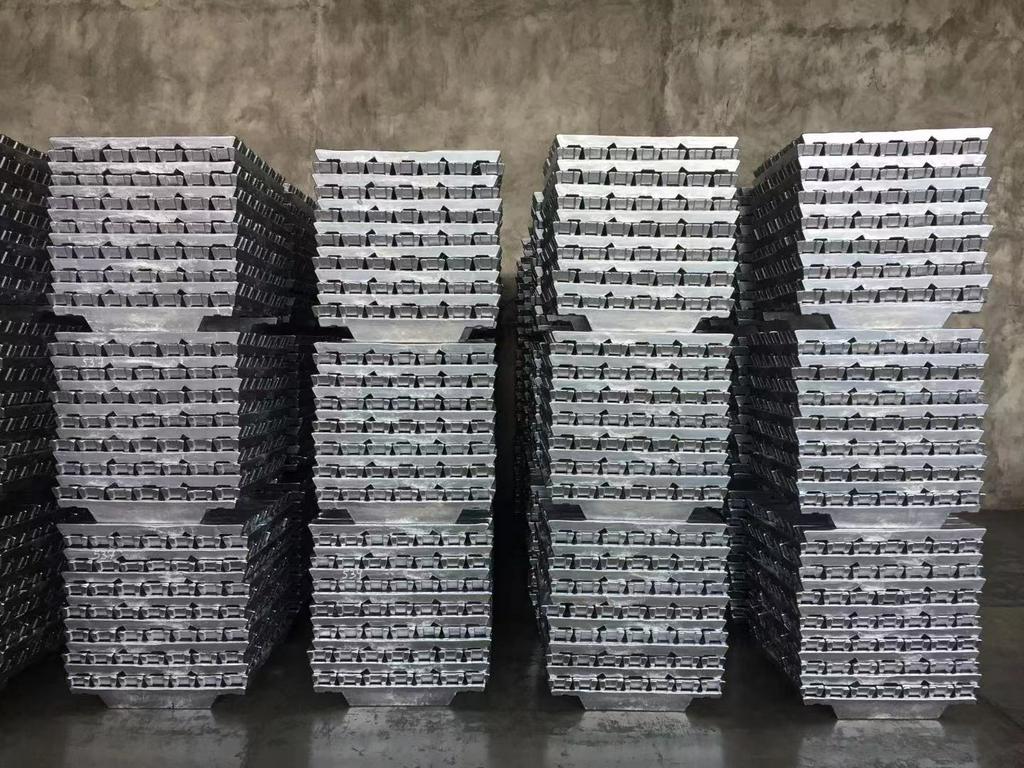
India is rapidly strengthening its position as a major global aluminum hub, supported by abundant bauxite resources, expanding smelting capacity and strong domestic demand growth. As the world’s second-largest primary aluminum producer, India currently operates around 4.3 million tonnes of smelting capacity led by NALCO, Hindalco, Vedanta and BALCO. Domestic aluminum consumption has reached 4.5-5 million tonnes annually, driven by infrastructure, power transmission, transportation and renewable energy development. However, per capita aluminum consumption remains only 3.4 kg, significantly below the global average, indicating substantial long-term growth potential. India holds approximately 4.9 billion tonnes of bauxite resources and aims to expand aluminum production to 37 million tonnes by 2047. Nevertheless, challenges remain, including mining approvals, carbon-intensive coal-based power generation, raw material import dependence, recycling constraints and CBAM-related carbon costs. As China's expansion slows and global supply chains diversify, India is increasingly viewed as one of the most important candidates to become the next major global aluminum production and consumption hub.
Jun 12, 2026 13:41[China Inventory Continued to Decline This Week, Aluminum Prices Moving Sideways with LME Outperforming SHFE in the Short Term] If the US-Iran ceasefire agreement materializes, it would significantly ease Middle East supply concerns, but recurring military frictions leave the peace outlook uncertain, and the short-term geopolitical premium tends to converge but has not fully dissipated. The rigid supply gap outside China supported a relatively strong LME aluminum pattern. China's inventory continued to decline but remained at historically high levels, capping the upside elasticity of SHFE aluminum, and the divergence between LME and SHFE is expected to persist in the short term. Going forward, key areas to watch include whether China's inventory drawdown accelerates, whether the US-Iran agreement can be formally signed, further clarity on the US Fed's interest rate path, and whether China is further tightening regulations on aluminum capacity operations. Overall, aluminum prices are expected to move sideways in the short term with LME outperforming SHFE.
Jun 2, 2026 09:20SMM News, May 29: According to SMM statistics, domestic primary aluminum output in May 2026 (31 days) rose 2.1% year-on-year and 3.8% month-on-month. Although the recovery of domestic end-user demand has been relatively slow, the persistent widening of the primary aluminum supply gap overseas has strongly boosted export demand for domestic aluminum products. This has effectively underpinned domestic molten aluminum consumption and kept apparent consumption in positive growth territory. The proportion of molten aluminum in domestic production edged up moderately, rising by 1.1 percentage points month-on-month to 76.5% in the month. The overall performance was slightly better than expectations at the start of the month, mainly driven by stronger-than-expected export orders. Based on SMM’s calculation of molten aluminum proportion, domestic primary aluminum ingot output in May fell 1.2% year-on-year and 0.9% month-on-month. Capacity Changes : As of late May, SMM recorded domestic operational primary aluminum capacity at approximately 46.209 million metric tons, with no month-on-month change. Output Forecast : In June 2026, buoyed by improving overseas market demand, export orders for domestic aluminum fabricated products are expected to keep recovering, supporting a slight rebound in the molten aluminum proportion. Overall, the molten aluminum proportion is projected to increase by 0.1 percentage point to 76.6%.
May 30, 2026 00:15SMM May 29 News: According to SMM statistics, China's aluminum production in May 2026 (31 days) was up 2.1% YoY and up 3.8% MoM. Although the pace of China's end-use demand recovery remained slow, the widening aluminum supply gap outside China significantly boosted domestic aluminum semis export demand, which in turn provided effective support for liquid aluminum consumption in China, driving apparent consumption to maintain positive growth. The proportion of liquid aluminum in China edged up, with the monthly proportion up 1.1 percentage points MoM to 76.5%, slightly above expectations at the beginning of the month, with the core incremental growth coming from export orders strengthening beyond expectations. Based on SMM's proportion of liquid aluminum calculation data, China's aluminum casting ingot volume in May declined 1.2% YoY and fell 0.9% MoM. Capacity changes: As of month-end May, SMM statistics showed China's existing aluminum capacity at approximately 46.209 million mt, with no MoM change. Production forecast: Entering June 2026, overall, as demand in markets outside China recovers, China's aluminum semis export orders are expected to continue improving, supporting a slight rebound in the proportion of liquid aluminum. Overall, the proportion of liquid aluminum is expected to rise 0.1 percentage points to 76.6%. [Data source statement: Data other than public information is derived from public information, market communication, and SMM's internal database models, processed by SMM for reference only and does not constitute decision-making advice.] Data source: SMM
May 29, 2026 23:57This week, operating rates across sub-sectors of China's aluminum processing industry continued their overall weak trend. The post-Labour Day holiday effect, combined with wild swings in aluminum prices, led to varying degrees of WoW pullback in operating rates across most sectors, with the overall rate recorded at 64.2%. Specifically, aluminum plate/sheet and strip operating rate fell to 72.6%, aluminum foil edged down to 74.7%, aluminum wire and cable recorded 66.6%, primary aluminum alloy rose slightly to 58%, leading secondary aluminum enterprises dropped to 57.0%, and aluminum extrusion operating rate also slipped slightly to 56.1%. Demand side, post-holiday aluminum prices fell by 480 yuan/mt in a single day, causing some traders to incur book losses, with cargo pick-up sentiment generally subdued. Underperforming real estate terminal completions continued to drag on construction extrusions and the air-conditioner foil segment within aluminum foil. PV frame enterprises also reduced their May production schedules, and passenger NEV growth falling short of expectations placed certain constraints on primary aluminum alloy. Overall, the consumption side was gradually showing traditional off-season characteristics. Cost side, high aluminum prices suppressed downstream enterprises' willingness to stockpile, compliant aluminum scrap sources remained tight with prices staying elevated, secondary aluminum industry profits continued to be under pressure, and some enterprises had already fallen into losses. However, aluminum wire and cable export orders continued to climb, with April expected to approach historical highs. Within aluminum extrusion industrial orders, heat sinks and industrial machinery accessories performed relatively well. Within aluminum foil, demand for food packaging foil, pharmaceutical foil, and battery foil remained stable. Automotive aluminum sheets & plates orders also benefited from the YoY and MoM double growth in April passenger NEVs, maintaining a recovery trend. Overall, in the short term, the aluminum processing industry's overall operating rate still faces downward pressure. The demand off-season and cost pressure form a dual suppression, and operating rates across sectors are expected to be under pressure in May. However, strengthening export orders and structural recovery in certain industrial demand segments will provide some bottom support for the industry. Primary aluminum alloy: This week, the primary aluminum alloy operating rate was 58%, showing a slight recovery WoW, but the rebound remained limited. Structurally, aluminum consumption at some enterprises increased, driving the overall operating rate slightly higher. However, most enterprises continued to primarily execute long-term contracts as normal, with overall operations running steadily. Current aluminum prices remained at elevated levels, suppressing downstream enterprises' willingness to stockpile, with most enterprises maintaining low inventory operations. Additionally, passenger NEV growth falling short of expectations also resulted in relatively slow demand growth. Overall, the primary aluminum alloy operating rate is expected to remain at the current level next week. Aluminum plate/sheet and strip: The operating rate of leading aluminum plate/sheet and strip enterprises edged down 0.4 percentage points WoW from pre-holiday levels to 72.6% this week. On the operational front, production lines at leading aluminum plate/sheet and strip enterprises ran normally during the Labour Day holiday with a steady production pace, but initial signs of operational pressure emerged in the industry. Post-holiday, aluminum prices pulled back, with a single-day drop of 480 yuan/mt. Some traders and dealers incurred book losses after purchasing, and sentiment for picking up goods was generally low. By product, domestic end-use demand for can stock packaging remained stable; auto sheets & plates orders benefited from the recovery of passenger NEVs in April with both YoY and MoM growth, still in a recovery trend; 1-series common plates and civilian general aluminum semis saw weak orders due to delayed cargo pick-up for engineering orders and shrinking civilian demand. In the short term, constrained by factors such as wild swings in aluminum prices and pressure on common plate orders, downward pressure on the operating rate of leading aluminum plate/sheet and strip enterprises is gradually increasing in May. Aluminum wire and cable: The operating rate of China's aluminum wire and cable industry registered 66.6% this week, edging down 1 percentage point WoW from pre-holiday levels. Although top-tier enterprises still held some power grid orders, they proactively reduced production loads due to the holiday factor and order losses, resulting in a decline in capacity utilization rate. Currently, domestic power grid end-use demand still dominates consumption, but the concentrated cargo pick-up cycle has passed, providing limited support to the overall industry operating rate. In contrast, export orders for aluminum stranded wire climbed, and Q2 exports are expected to increase significantly this year. April exports are expected to approach or break historical highs, and May exports are expected to increase by 10,000-20,000 mt MoM. Export orders will provide support to industry operations. Aluminum extrusion: The operating rate of China's aluminum extrusion industry was 56.1% this week, down 0.4 percentage points WoW, showing a generally stable but weakening trend. By segment, for architectural extrusion, dragged by domestic real estate terminal completion progress falling short of expectations, engineering orders continued their weak trend this week, and demand growth in the home decoration doors and windows segment was limited, failing to provide effective support, slightly dragging down the overall operating performance of architectural extrusion. For industrial extrusion, downstream tier-one PV module enterprises' May production schedule plans contracted, and PV frame enterprises saw a decline in operating rates. Some Hebei frame enterprises chose to shut down for 5 days during the Labour Day holiday to offset order pullback and ease cost pressure, maintaining a relatively full production schedule after the holiday; some Anhui frame enterprises reported that orders on hand remained generally stable with no significant reduction, resulting in relatively limited drag on operations. Additionally, large Guangdong aluminum extrusion enterprises reported that recent orders for heat sinks, industrial machinery accessories, and other industrial extrusion products performed well, providing support to regional industrial extrusion operations. In the short term, the weakness in architectural extrusion and the structural recovery in industrial extrusion offset each other, and the aluminum extrusion operating rate is expected to show a stable and improving trend. Aluminum foil: This week, the operating rate of leading aluminum foil enterprises fell 0.3 percentage points WoW from pre-holiday levels to 74.7%. Order side, demand for food packaging foil, pharmaceutical foil, and battery foil remained stable, supporting the baseline operating rate. Air-conditioner foil was under pressure, with May orders on hand declining MoM, as demand was dragged down by factors including a sluggish real estate market, tapering of national subsidies, high inventories outside China, and capacity relocation. Both domestic sales and export schedules declined, and weak end-use demand is expected to pull down the overall aluminum foil operating rate. In the short term, demand for packaging foil and battery foil can still support the aluminum foil operating rate at a relatively high level, but the deep weakness in air-conditioner foil will set the stage for an overall pullback in the aluminum foil industry's operating rate in May. Secondary aluminum: This week, the operating rate of leading secondary aluminum enterprises in China fell 0.7 percentage points WoW to 57.0%. During the holiday, sampled major plants maintained normal production, but affected by some downstream enterprises being on holiday and declining orders, enterprises compressed their production pace, and operating levels pulled back slightly. Currently, both demand and raw materials exerted dual pressure on production: on one hand, May gradually entered the traditional consumption off-season, downstream procurement became more cautious, market transaction activity continued to decline, and manufacturers' order performance was poor; on the other hand, finished alloy ingot prices fell more than raw material prices, compliant aluminum scrap sources remained tight with prices fluctuating at highs, industry profits continued to narrow, and some enterprises even fell into losses, with operating rates passively under pressure. After the holiday effect fades next week, the operating rate is expected to recover slightly, but the demand off-season and cost pressure are unlikely to improve significantly in the short term, and the industry's overall operating rate still faces downward expectations. [Data source statement: Data other than public information is derived from public information, market communication, and SMM's internal database models, processed by SMM for reference only and does not constitute decision-making advice.]
May 7, 2026 19:02SMM News, March 31, In Q1 2026, amid macro tailwinds, expectations of a supply gap, and successive geopolitical conflicts in the Middle East, aluminum prices repeatedly hit new highs. The quarterly average SMM A00 aluminum price reached 24,028 yuan/mt, up 17.5% YoY; the quarterly average closing price of the LME aluminum 3M contract at 15:00 Beijing time reached $3,196/mt, up 21.8% YoY. High prices suppressed downstream consumption: At the end of 2025, SMM expected China’s primary aluminum consumption growth in 2026 to be 2.0%; as of February, that growth rate had fallen to 1.1%. As a result, the proportion of liquid aluminum in the aluminum industry declined significantly, and aluminum social inventory hit a nearly three-year high. As of March 31, the inflection point in China’s aluminum social inventory was still unclear, while the absolute inventory level had already entered the upper range of SMM’s previous forecast of 1.35-1.4 million mt. However, affected by geopolitical conflicts in the Middle East, aluminum supply and demand were both weak, fundamental risks increased, and prices saw wild swings. Under the impact of high prices, aluminum ingot inventory may continue to build further. According to SMM, as of the end of March, some aluminum ingots in certain regions were still backlogged at rail platforms and outside warehouses. High prices also accelerated supply growth: As of the end of Q1, average profits in China’s aluminum industry exceeded 8,000 yuan/mt. Stimulated by high profits, China’s aluminum supply growth is expected to exceed expectations. At the end of 2025, SMM expected China’s aluminum supply growth in 2026 to reach 1.7%; as of the end of Q1 2026, SMM expected that growth rate had risen to 1.9%. Outside China, supply growth was also boosted by high prices: 1) A smelter in Spain had originally planned to resume full production by 2026, and according to foreign media reports in March, it had already resumed to 90% of operating load; 2) In October 2025, an Icelandic smelter cut production on one line due to equipment failure. It had originally planned to resume production in September-October 2026, but has now moved the plan forward to start by the end of April; 3) At the end of 2025, expectations were that Indonesia’s operating aluminum capacity would reach 2 million mt by the end of 2026; that expectation has now been raised to 2.2-2.5 million mt. Q2 Outlook: At present, one of the decisive factors for global aluminum fundamentals and price trends is the geopolitical situation in the Middle East. SMM analysis showed that outside China, aluminum capacity that had already cut production or faced substantial production reduction risk exceeded 3 million mt. If subsequent production cuts from this portion of capacity are confirmed, outside China aluminum supply is expected to maintain negative YoY growth for an extended period, and global aluminum fundamentals are expected to face a large gap, with the gap outside China far exceeding that in China. In this case, aluminum prices in and outside China are expected to rise sharply again, with overseas prices expected to outperform domestic prices. China’s net aluminum imports are expected to decline, while exports from downstream aluminum plants are expected to increase. However, if actual production cuts come in below expectations, while consumption sees a marked reduction due to factors such as energy and inflation, the upward move in aluminum prices may face insufficient momentum. At present, geopolitical conflicts in the Middle East are disrupting the global aluminum supply-demand pattern, and SMM will continue to follow related developments.
Mar 31, 2026 21:30Against this backdrop, SMM will begin publishing the US Midwest DDP aluminum premium starting February 27, 2026. Through daily market communication, SMM will introduce ......
PriceFeb 13, 2026 15:04