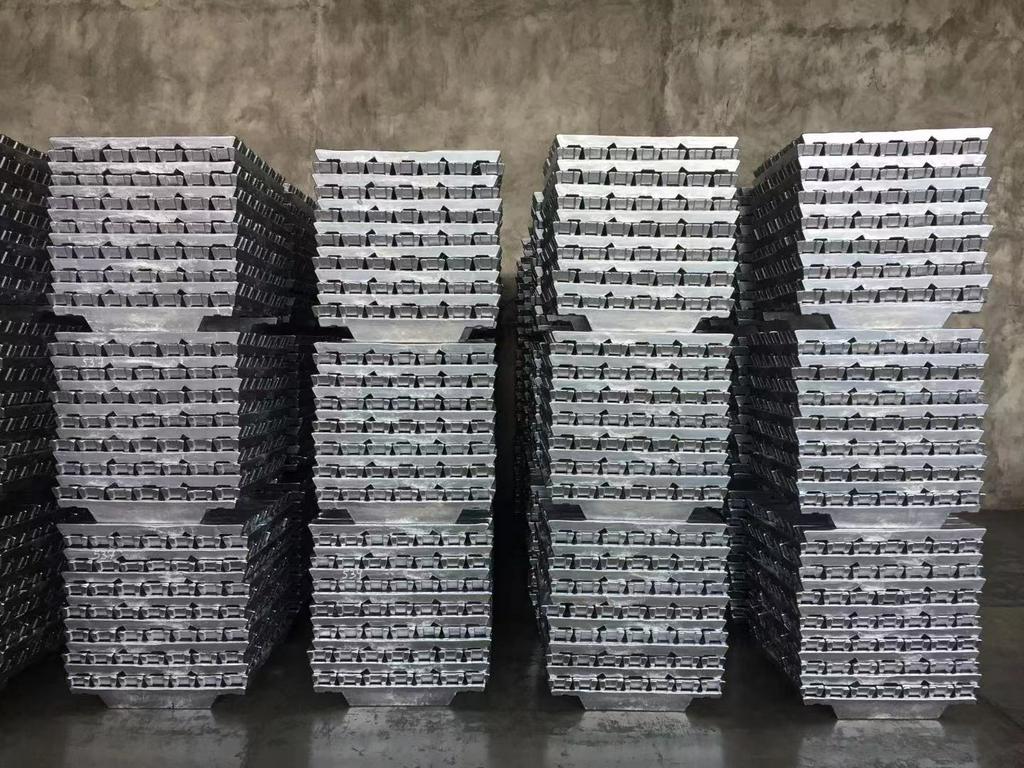
As expectations for the peak-season demand in the “Golden March” gradually begin to materialize, galvanizing operating rates are rising. Can downstream consumption sustain its peak-season performance going forward?
Mar 23, 2026 17:54SMM News: Following our previous analysis of the transportation and wind power sectors, this installment shifts focus to the critical demand drivers in the consumer and construction domains: White Goods , Consumer Electronics , and Real Estate-related applications (Elevators and Power Tools). While these sectors individually consume less magnetic material per unit compared to New Energy Vehicles (NEVs), their sheer aggregate volume makes them indispensable pillars of the Neodymium-Praseodymium (Pr-Nd) market. However, data from early 2026 reveals a troubling trend of stagnation and structural contraction across these traditional strongholds. I. White Goods: The Dual Pressure of Production Slumps and Material Substitution In the white goods sector, Neodymium-Iron-Boron (NdFeB) magnets are primarily utilized in two key applications: compressors for inverter air conditioners and motors for drum and impeller washing machines . 1. Air Conditioners: A Sharp Contraction in Output and Dosage According to data from the National Bureau of Statistics (NBS), China’s cumulative air conditioner production for January-February 2026 stood at 40.118 million units , a staggering 35% year-on-year (YoY) decline compared to the 61.921 million units produced in the same period of 2025. (Reason: This drastic drop is attributed to a combination of factors: firstly, an unusually mild winter across major consumption regions significantly dampened heating demand, leading to a destocking cycle among distributors. Secondly, the real estate sector’s continued downturn has severely curtailed new housing completions, directly reducing the installation of centralized and split AC systems. Lastly, high inventory levels carried over from 2025 forced manufacturers to aggressively cut production schedules in Q1 2026 to avoid capital lock-up.) Looking at the full year, SMM forecasts a marginal growth of 0.96% for 2026, with total annual production projected at 271.095 million units . (Reason: The near-flat growth outlook reflects a mature market saturation where replacement demand, rather than new installations, drives volume. While export markets offer some resilience against domestic weakness, rising trade barriers and logistical costs in key regions like Europe and North America are expected to cap significant expansion.) Applying SMM’s calculation model: Inverter Penetration: 99% NdFeB Motor Penetration: 92% Specific Consumption: Assumed at 100g/unit for 2026. Based on these parameters, the total NdFeB consumption for the air conditioner sector in 2026 is estimated at 24,691 tons , representing a 23% decrease from the 29,163 tons consumed in 2025. The core driver of this decline is twofold: first, the persistently high prices of Pr-Nd since the second half of 2025 have accelerated the industry’s cost-reduction initiatives. Second, there is a clear technological shift towards minimizing rare earth usage. The average single-unit dosage has dropped from 120g/unit in 2025 to 100g/unit in 2026 , as manufacturers optimize motor designs and, in some lower-end models, substitute with ferrite magnets or induction motor technologies where efficiency standards allow. 2. Washing Machines: A Slow Erosion of Demand For January-February 2026, China’s cumulative washing machine production was 18.58 million units , a slight 0.3% YoY decline from the 18.51 million units in the same period of 2025. (Reason: The stability in production volumes masks underlying weakness. The slight dip is primarily due to weak consumer confidence impacting discretionary spending on home appliance upgrades. Furthermore, the export market for washing machines has faced headwinds from sluggish global economic growth and intensified competition from Southeast Asian manufacturing hubs, offsetting modest domestic recovery efforts.) SMM projects a full-year growth rate of 3.1% for 2026. (Reason: This modest recovery is underpinned by government-led "trade-in" subsidy policies aimed at boosting domestic consumption of energy-efficient appliances. Additionally, product innovation in the high-end segment, such as washer-dryer combos and smart features, is expected to stimulate some replacement demand, though the overall ceiling remains low.) Demand Calculation Logic: Drum Washer Penetration: 63% (High-end, 98% use NdFeB) Impeller Washer Penetration: 28% (Mid-range, 50% use NdFeB) Specific Consumption: 290g/unit for drum washers; 240g/unit for impeller washers. Under this model, the total NdFeB demand for washing machines in 2026 is estimated at 27,204.52 tons , a 0.2% decrease from 27,262 tons in 2025. The sector is experiencing a slow but steady erosion of demand. While high-end drum washers rely heavily on efficient NdFeB motors to meet stringent energy labels, the volatility of rare earth prices is prompting manufacturers to cautiously explore alternative motor designs or reduce magnet grades in non-critical applications. Consequently, the industry has adopted a strategy of gradual reduction rather than abrupt substitution, balancing performance requirements with cost control. Outlook: The trajectory for white goods in 2026 is undeniably pessimistic. Both production volumes and technical intensity (dosage per unit) are trending downward, creating a double drag on Pr-Nd demand. II. Consumer Electronics: Volume Resilience vs. Intensity Decline The consumer electronics sector, modeled by SMM, comprises four main segments: Mobile Phones , Tablets , Desktops/Laptops , and Smartwatches . These devices utilize NdFeB primarily for acoustic components (speakers/receivers) and haptic feedback motors, with emerging uses in magnetic charging interfaces. The specific consumption is generally low, ranging from 2-5g/unit , except for desktops which average 15g/unit . Market Performance (Jan-Feb 2026): Mobile Phones: 220 million units (+6.8% YoY). Micro-computer Equipment: 41.956 million units (-31% YoY). Breakdown: 21% Tablets, 27% Desktops, 52% Laptops. Smartwatches: 8.196 million units (+7.8% YoY). (Reason: The divergence in performance is stark. Mobile phone growth is driven by the global rollout of AI-enabled handsets and the replacement cycle for 5G devices, particularly in emerging markets. Conversely, the sharp collapse in micro-computer equipment reflects the post-pandemic normalization of demand; the massive stockpiling of devices during 2020-2022 has led to a prolonged digestion phase. Additionally, extended device lifespans due to improved hardware durability have further suppressed replacement rates for PCs and tablets.) 2026 Full-Year Forecast: SMM anticipates a 1% growth for mobile phones and micro-computers combined, and a 5% growth for smartwatches. (Reason: The muted outlook for computing devices stems from persistent macroeconomic uncertainty and corporate IT budget tightening. For smartwatches, growth is fueled by increasing health-monitoring capabilities and deeper ecosystem integration with smartphones. However, the entire sector faces a cloud of uncertainty due to escalating geopolitical tensions affecting supply chains and rising memory chip prices, which may force OEMs to revise production targets downward later in the year.) Demand Estimation: Mobile Phones: 3,109.8 tons Micro-computers: 2,018.9 tons Smartwatches: 125.06 tons Total 2026 Demand: 5,253.76 tons , a 3% decline from 5,421.19 tons in 2025. The primary driver for this decline is the continuous, albeit slow, reduction in specific consumption. As miniaturization advances and alternative magnetic materials improve, the amount of NdFeB required per device is shrinking. Despite the relatively low single-unit dosage, the massive scale of the consumer electronics industry ensures it remains a significant consumer of NdFeB. Moreover, this sector is characterized by highly standardized supply chains, where major OEMs maintain binding agreements with certified magnet suppliers, making demand relatively stable but resistant to price-driven spikes. III. Real Estate Related: Elevators and Power Tools The final segment covers industries tightly coupled with the real estate cycle: Elevators and Handheld Power Tools . 1. Elevators: Policy Support vs. Structural Headwinds In January-February 2026, elevator production reached 150,000 units , a 7.1% YoY increase . (Reason: This short-term surge is largely attributable to the acceleration of projects that were delayed in late 2025, as developers rushed to meet pre-delivery deadlines before stricter regulatory inspections took effect. Additionally, government mandates for retrofitting old residential communities with elevators in urban renewal zones provided a temporary boost to order books.) However, SMM forecasts a full-year contraction of -3% for 2026. (Reason: The long-term outlook is grim due to the fundamental slowdown in new residential construction starts, which remain at multi-year lows. The debt crisis plaguing major property developers continues to stall new project launches, directly impacting the demand for new elevator installations. While the retrofit market offers some support, it is insufficient to offset the collapse in new building commissions.) Calculation: Energy-saving Elevator Penetration: 90% Specific Consumption: 6 kg/unit (for energy-saving models). Total 2026 Demand: 7,222.6 tons , a 1.3% increase from 7,125.3 tons in 2025. (Reason for Growth: The slight increase in total tonnage despite falling production volumes is entirely driven by the rising penetration of energy-saving elevators. Stricter national energy efficiency standards (GB standards) are forcing manufacturers to adopt permanent magnet synchronous motors (PMSM) over traditional asynchronous motors, thereby increasing the average NdFeB dosage per unit even as the total number of units declines.) 2. Handheld Power Tools: A Direct Casualty of Property Slump Production of handheld power tools in Jan-Feb 2026 was 29.566 million units , down 0.24% YoY . SMM projects a -3% decline for the full year 2026. (Reason: The downturn is inextricably linked to the stagnation in the global and domestic real estate markets. Reduced renovation activities and a slowdown in infrastructure projects have dampened demand for professional-grade tools. Furthermore, high inventory levels in distribution channels across North America and Europe, resulting from over-ordering in 2024, have led to a prolonged period of destocking.) Definition & Scope: According to the National Bureau of Statistics, handheld electric tools refer to portable motor-driven tools operated by hand, including electric drills, grinders, sanders, saws, and screwdrivers . These products are highly sensitive to housing turnover and renovation rates. Demand Calculation: NdFeB Penetration: 60% Specific Consumption: 80g/unit Total 2026 Demand: 9,134 tons , a sharp 13.4% drop from 10,548 tons in 2025. The significant contraction in this sector underscores the deep correlation between the property market and industrial metal demand. As the real estate sector remains in a prolonged adjustment phase, the downstream demand for power tools—and consequently NdFeB—faces sustained pressure. Conclusion The analysis of white goods, consumer electronics, and real estate-related sectors paints a picture of structural weakness for 2026. While niche policy drivers (like energy-saving elevator mandates) provide isolated pockets of growth, the overarching trends are defined by production saturation, inventory destocking, and aggressive material substitution . The combined effect of lower production volumes and reduced single-unit dosages creates a formidable headwind for Pr-Nd prices. In the final installment of this series, we will pivot to the future: examining the burgeoning demand from Low-Altitude Economy (eVTOLs), Robotics (Industrial and Service), and the relentless expansion of Electric Two-Wheelers . These emerging sectors may hold the key to offsetting the declines observed in traditional industries and reshaping the long-term demand curve for rare earth magnets.
Mar 23, 2026 23:33Middle East tensions have sparked a massive steel trade "mismatch." Iran's blocked exports created a 2.3-million-ton billet vacuum in Southeast Asia, while the Red Sea crisis stalled China's flat steel shipments to the Gulf. Consequently, China and India are rapidly absorbing SEA's diverted billet orders. SMM projects that blocked flat steel returning to China's domestic market, combined with surging overseas billet demand, will accelerate the narrowing of the domestic HRC-rebar spread.
Mar 20, 2026 09:51![Analysis of Import and Export Data for Unwrought Aluminum Alloy, January-February 2026[SMM Analysis]](https://imgqn.smm.cn/production/admin/votes/imageskkgTu20240508153005.png)
[SMM Analysis]Analysis of Import and Export Data for Unwrought Aluminum Alloy, January-February 2026
Mar 21, 2026 18:12SMM, March 19: Overnight, LME lead opened at $1,928.5/mt. During the Asian session, LME lead fluctuated upward, hitting a high of $1,938/mt. It then moved in a narrow range of $1,926-1,935/mt as bulls and bears were evenly matched. Entering the European session, bears took the lead, and LME lead began to fluctuate downward, falling to a low of $1,906/mt, before consolidating in a narrow range of $1,906-1,911/mt. Near the close, LME lead edged up slightly to settle at $1,913/mt, down $13/mt, or 0.67%. Overnight, the most-traded SHFE lead 2605 contract opened at 16,590 yuan/mt. Early in the session, SHFE lead prices surged to a high of 16,675 yuan/mt, then fluctuated downward. Although prices rebounded slightly intraday, the rebound was weak, and lead prices again came under pressure and pulled back, fluctuating rangebound within 16,555-16,590 yuan/mt and touching a low of 16,555 yuan/mt during the period. It finally closed at 16,585 yuan/mt, posting a small bearish candlestick, down 65 yuan/mt, or 0.39%. China mine side, lead concentrate TCs remained weak, with some smelters operating at insufficient rates and market supply staying tight. On the imported ore side, the import window opened and expectations for price hikes emerged, but enterprises showed low willingness to pay, limiting additional volumes. Primary lead: inventory at primary lead smelters continued to decline, while suppliers held firm on quotes and showed a clear reluctance to sell. Secondary lead: as losses widened, most secondary lead enterprises stayed on the sidelines and were reluctant to sell, tightening effective supply in the market overall. Downstream battery plants: after restocking demand was met, the procurement pace slowed down, and downstream demand remained weak. Overall, the market still showed a pattern of weak supply and weak demand. In the short term, lead prices are expected to remain in the doldrums, and close attention should be paid to changes in secondary lead operating rates in late March and shifts in downstream purchasing strength.
Mar 19, 2026 08:55Steel production capacity in the ASEAN region is on track to reach 147.2 million tonnes by the end of 2026. Much of this growth is located in Indonesia, Malaysia, and Vietnam, driven by large-scale Chinese investments. However, experts warn of "carbon lock-in" as only 12.8% of these new expansions utilize low-carbon Electric Arc Furnace (EAF) technology.
Feb 26, 2026 18:00In recent years, with the steady development of Malaysia's manufacturing and stainless steel processing industries, the local stainless steel scrap recycling system has become increasingly mature. The number of recyclers, sorting facilities, and reprocessing enterprises has grown significantly, and the proportion of locally recycled scrap in the circular economy continues to rise, providing strong support for regional stainless steel raw material supply. Meanwhile, Malaysia has become one of the main sources of stainless steel scrap imported by India. According to trade statistics, Malaysia exported approximately 107,000 tons of stainless steel scrap to India in 2024, reflecting strong linkage between the two countries in raw material recycling. Large domestic recycling and processing enterprises possess advanced sorting and reprocessing capabilities, enabling them to classify and process regional scrap and steadily supply high-quality materials to major Asian stainless steel producers in Japan, South Korea, and elsewhere. Against the backdrop of a diversified regional raw material structure and growing value of recycled resources, Malaysia's domestic ex-works stainless steel scrap prices have become an important reference indicator for the Southeast Asian stainless steel industry. To meet market demand, enhance price transparency, and help industry participants stay informed of regional price trends, SMM announces that effective October 30, 2025 , it will officially launch: Malaysia 304 SS Scrap,Ex-works Malaysia,USD/tonne Price specifications: Description: Malaysia 304 SS Scrap,Ex-works Malaysia,USD/tonne Quality: Commercial practice standard. Approx. Ni 8%, Cr 18%, non-magnetic, clean scrap, free from oil, coating, and visible impurities. No radioactive or hazardous waste. Definition: Ex-works Malaysia Unit: USD/tonne Quantity: Minimum 10 tonnes Timing: Prompt Publication: 11:30 a.m. Kuala Lumpur time Payment Terms: Cash on same day,other payment terms normalized SMM Nickel & Stainless Steel Industry Research Department October 29, 2025
PriceOct 29, 2025 13:30With the development of the scrap metal industry, companies are paying more attention to scrap aluminum varieties and price points across different geographical regions. To meet market demands and provide more comprehensive spot price information, SMM, after extensive market research and preliminary communication, plans to launch the following price points for local scrap metal prices in Malaysia and Thailand on November 3, 2025: Malaysian Aluminium Scrap – Talon (Aluminium Wire and Cable) Malaysian Aluminium Scrap – UBC (Used Beverage Cans) Thai Aluminium Scrap – Talon (Aluminium Wire and Cable) Thai Aluminium Scrap – UBC (Used Beverage Cans) Introduction to the new SMM Malaysian scrap aluminum price points: SMM, taking into account the local and international demand for overseas aluminium scrap prices primarily in Southeast Asia, and based on overseas policies and market changes, has decided to launch several price points in reflection of the Southeast Asian aluminium scrap markets and trade. The specific details are as follows: Price Point 1: Addition of Malaysian Aluminium Scrap – Talon (Aluminium Wire and Cable) Name and Definition : Malaysian Aluminium Scrap – Talon (Aluminium Wire and Cable), ExWorks Malaysia, including VAT, MYR/tonne Launch Date : November 3, 2025 Updated Frequency : The new price point will be updated before 12:00 PM on the first working day of each week (Kuala Lumpur time) Price Point 2: Addition of Malaysian Aluminium Scrap – UBC (Used Beverage Cans) Name and Definition : Malaysian Aluminium Scrap – UBC (Used Beverage Cans), ExWorks Malaysia, including VAT, MYR/tonne Launch Date : November 3, 2025 Updated Frequency : The new price point will be updated before 12:00 PM on the first working day of each week (Kuala Lumpur time) Price Point 3: Addition of Thai Aluminium Scrap – Talon (Aluminium Wire and Cable) Name and Definition : Thai Aluminium Scrap – Talon (Aluminium Wire and Cable), ExWorks Thailand, including VAT, THB/tonne Launch Date : November 3, 2025 Updated Frequency : The new price point will be updated before 12:00 PM on the first working day of each week (Kuala Lumpur time) Price Point 4: Addition of Thai Aluminium Scrap – UBC (Used Beverage Cans) Name and Definition : Thai Aluminium Scrap – UBC (Used Beverage Cans), ExWorks Thailand, including VAT, THB/tonne Launch Date : November 3, 2025 Updated Frequency : The new price point will be updated before 12:00 PM on the first working day of each week (Kuala Lumpur time) We welcome more companies from both upstream and downstream industries to participate and support SMM in better serving the new energy industry chain. If you have any questions, please feel free to contact Liu Xiaolei at (+86)15021973263 or Chin Khai Yuen at (+60)124247012, or email adrian.chin@metal.com.
PriceOct 27, 2025 17:51With the development of the scrap metal industry, companies are paying more attention to scrap aluminum varieties and price points across different geographical regions. To meet market demands and provide more comprehensive spot price information, SMM, after extensive market research and preliminary communication, have launched the following price points for local scrap metal prices in Malaysia and Thailand on November 3, 2025: Malaysian Aluminium Scrap – Talon (Aluminium Wire and Cable) Malaysian Aluminium Scrap – UBC (Used Beverage Cans) Thai Aluminium Scrap – Talon (Aluminium Wire and Cable) Thai Aluminium Scrap – UBC (Used Beverage Cans) Introduction to the new SMM Malaysian scrap aluminum price points: SMM, taking into account the local and international demand for overseas aluminium scrap prices primarily in Southeast Asia, and based on overseas policies and market changes, has decided to launch several price points in reflection of the Southeast Asian aluminium scrap markets and trade. The specific details are as follows: Price Point 1: Addition of Malaysian Aluminium Scrap – Talon (Aluminium Wire and Cable) Name and Definition : Malaysian Aluminium Scrap – Talon (Aluminium Wire and Cable), ExWorks Malaysia, including VAT, MYR/tonne Launch Date : November 3, 2025 (Launched) Updated Frequency : The new price point will be updated before 12:00 PM on the first working day of each week (Kuala Lumpur time) Price Point 2: Addition of Malaysian Aluminium Scrap – UBC (Used Beverage Cans) Name and Definition : Malaysian Aluminium Scrap – UBC (Used Beverage Cans), ExWorks Malaysia, including VAT, MYR/tonne Launch Date : November 3, 2025 (Launched) Updated Frequency : The new price point will be updated before 12:00 PM on the first working day of each week (Kuala Lumpur time) Price Point 3: Addition of Thai Aluminium Scrap – Talon (Aluminium Wire and Cable) Name and Definition : Thai Aluminium Scrap – Talon (Aluminium Wire and Cable), ExWorks Thailand, including VAT, THB/tonne Launch Date : November 3, 2025 (Launced) Updated Frequency : The new price point will be updated before 12:00 PM on the first working day of each week (Kuala Lumpur time) Price Point 4: Addition of Thai Aluminium Scrap – UBC (Used Beverage Cans) Name and Definition : Thai Aluminium Scrap – UBC (Used Beverage Cans), ExWorks Thailand, including VAT, THB/tonne Launch Date : November 3, 2025 (Launched) Updated Frequency : The new price point will be updated before 12:00 PM on the first working day of each week (Kuala Lumpur time) We welcome more companies from both upstream and downstream industries to participate and support SMM in better serving the new energy industry chain. If you have any questions, please feel free to contact Liu Xiaolei at (+86)15021973263 or Chin Khai Yuen at (+60)124247012, or email adrian.chin@metal.com.
PriceNov 3, 2025 17:51