

58316results found for '0'
News
- Hongjin New Materials Invites You to the SMM (3rd) Global Recycled Metals Industry Peak Forum
Leveraging the dual-carbon strategy and the broader trend of circular economy development, China's secondary metal industry leads the world in scale, while also facing numerous development challenges. To help enterprises seize industry policy and market opportunities and address industry development issues, SMM will hold the 2026 SMM Global Secondary Metal Industry Summit Forum & Secondary Aluminum Melting and Casting Technology Forum in Ningbo, Zhejiang, July 16-17, 2026 , a landmark event — 2026 SMM Global Secondary Metal Industry Summit Forum & Secondary Aluminum Melting and Casting Technology Forum . Wuhan Hongjin Metal Aluminum Co., Ltd. sincerely invites you to join us in witnessing and building an international platform for exchange, cooperation, resource sharing, and collaborative innovation, contributing to the construction and improvement of a global resource circular utilization system and driving the global green economic transition. Click the to register now. Booth No.: E6 Hongjin New Materials Group has been deeply engaged in the cast aluminum alloy sector for 30 years and is a leader with over 10 billion yuan in revenue, integrating R&D, production, and services. The Group has established 10 modern production sites and 2 provincial-level new materials research institutes worldwide, with green low-carbon aluminum alloy capacity exceeding 1.2 million mt in 2025. We are committed to providing aluminum alloy ingots, direct molten aluminum supply, and one-stop lightweight solutions. Our independently developed large-scale integrated die-casting heat-treatment-free aluminum alloy is ready for mass production. Our products are widely used in cutting-edge fields such as NEVs and 5G communications, and we are a designated supplier for top 100 automakers including Tesla, BYD, and BBA, as well as Google and Amazon. Hongjin New Materials is fully committed to green and low-carbon practices, "casting the future" together with global partners. I. Enterprise Strengths 1.5 million mt+ : Annual green low-carbon aluminum alloy capacity in 2025 10 billion + : Annual Group revenue 10 Major Sites : Based in China (south China/central China/east China), with expansion outside China 2 Major Institutions : Two provincial-level new materials research institutes II. Core Products and Services Providing you with one-stop lightweight solutions from materials to processes: Core Services : Premium aluminum alloy ingot supply | Direct molten aluminum supply | Integrated melting and holding services Specialty Patented Materials : High thermal conductivity, high electrical conductivity, high strength and toughness, and high wear-resistant aluminum alloys Industry Frontier : Large-scale integrated die-casting heat-treatment-free aluminum alloy (approved by OEMs, ready for mass production) Full Grade Coverage Standard Series : Mainstream grades including ADC12, A380, A356, ALSI10MNMG, etc. Exclusive Patented Series : HJ Series (HJ03-16), HCS09, HS330, and many other proprietary grades. III. World-Class Partner Network Products are widely used in core sectors including automotive, new energy, low-altitude economy, and 3C electronics. Globally Renowned Automakers : BMW, Mercedes-Benz, Audi, Volkswagen, General Motors, Toyota, Honda, Nissan New Energy Pioneers : Tesla, BYD, NIO, XPeng, Xiaomi, Geely Technology and Ecosystem Giants : CATL, DJI, Inovance ( Designated qualified supplier for Google and Amazon ) IV. Green, Low-Carbon, and Quality Commitment Safeguarding your supply chain security with the highest international standards: System Certifications : IATF 16949, ISO 9001 / 14001 / 45001 / 50001:2018 Green Development : Completed carbon footprint and greenhouse gas verification, deeply engaged in advancing ESG and ASI (Aluminium Stewardship Initiative) initiatives. Contact Information Sales Center: Hongbang Team - Sales Director - Yang Zhenjiang 139 2263 2929 South China Team - Sales Director - He Chijia 138 2754 9148 East China Team - Sales Director - Han Yaobin 159 5327 5580 Central China Team - Sales Director - Li Hongwei 136 1832 5655 Website: SMM Conference Contact Zhou Shiyang Mobile: 17278238856 Email:
Jun 30, 2026 17:00 - Qiya Group's Fine Alumina Project Hits Milestone, Aiming for 800,000 mt/year by 2027
According to the official website of Qiya Group, on May 30, Qiya Guizhou Group's fine alumina project reached a historic milestone — the first-phase 200,000 mt/year production line was officially put into operation. The project is expected to have a total capacity of 800,000 mt/year and is expected to be fully completed by 2027. At that time, it will fill the regional market gaps in major demand areas such as the Pearl River Delta, the Yangtze River Delta, and Hunan, driving over 460 types of fine alumina products and covering more than 2,000 industries, ushering in an industrial transformation from "ore" to "high-end precision."
May 31, 2026 23:46 - Australian Bauxite Exports Fall, Guinea's Rebound in Weekly Port Departures
According to SMM on May 29, weekly bauxite port departures from Australia's main ports decreased by 1.0007 million mt WoW; weekly bauxite port departures from Guinea's main ports rebounded by 288,800 mt WoW.
May 31, 2026 23:36 - [SMM Analysis] Galan Lithium Successfully Produces First Batch of Lithium Chloride Brine
On May 28, 2026, Australian-listed lithium company Galan Lithium Limited (ASX: GLN) announced that the wet plant commissioning of its wholly-owned Hombre Muerto West (HMW) lithium brine project in Catamarca Province, Argentina, had been successfully completed. The first batch of processed lithium chloride (LiCl) had been fed into the final evaporation ponds, officially entering the production optimization phase, with lithium chloride concentrates production and sales expected in H2 2026. First Batch of Processed Brine Delivered. The Phase 1 construction of the HMW project was completed in March 2026, and after mechanical and electrical commissioning, the project smoothly entered wet plant commissioning. The nanofiltration plant first processed raw brine at low pressure, then processed pre-concentrated brine containing approximately 0.5% lithium at high pressure. Independent laboratory detection confirmed that the impurity separation performance fully met design specifications. The processed lithium chloride has now been fed into evaporation ponds, where approximately 3 months of evaporation and concentration will produce lithium chloride concentrates with 6% lithium content for exports under agreement. Stable mass production has not yet been achieved; upon completion of optimization, the project will steadily reach the Phase 1 designed capacity of 4,000 mt LCE per year. Galan Lithium Limited is a lithium exploration and development enterprise listed on the Australian Securities Exchange. Its core assets are the HMW and Candelas world-class lithium brine projects at the Hombre Muerto salar in Argentina. The company also holds an exploration license for Greenbushes South in Western Australia, adjacent to the tier-one Greenbushes lithium mine.
May 31, 2026 22:15 - China's Thorium and Rare Earth Imports Surge, Market Shows "Hot Outside, Cold Inside" Phenomenon
Recently, the General Administration of Customs released import and export data for January-April 2026. According to the latest data, China's imports of thorium ore and concentrates from January to April 2026 totaled 21,443 mt, nearly flat YoY. Of this, imports in April were 4,081 mt, up 22% MoM but up 32% YoY. From January to April 2026, China's imports of unlisted rare earth oxides were approximately 26,123 mt, surging 103% YoY. Currently, the operating rate of ex-China rare earth mines remains relatively high, keeping actual supply in the international market at ample levels. Demand side, in China, affected by tightening environmental protection policies and declining orders from downstream magnetic material enterprises, the overall operating rate of rare earth separation plants has remained low for an extended period, resulting in persistently weak capacity to absorb imported ore. This supply-demand mismatch has led to a distinctive "hot outside, cold inside" phenomenon in China's rare earth market: on one hand, both import volumes and prices are rising; on the other hand, social inventory continues to accumulate. If downstream demand fails to recover in a timely manner, this divergence of "rising imports and growing inventory" may persist over the long term, which could in turn force some mines to adjust their production plans.
May 31, 2026 22:10 - NBS: Manufacturing PMI Stood at 50% in May, with Overall Business Production and Operations Remaining Stable
Data from the National Bureau of Statistics (NBS) showed that in May, the manufacturing PMI stood at 50.0%, down 0.3 percentage points MoM. The composite PMI output index was 50.5%, up 0.4 percentage points MoM, indicating that overall business production and operations in China remained in expansion. The non-manufacturing business activity index was 50.1%, up 0.7 percentage points MoM, with the non-manufacturing prosperity level rebounding. China's PMI Performance in May 2026 I. China's Manufacturing PMI Performance In May, the manufacturing PMI stood at 50.0%, down 0.3 percentage points MoM, sitting at the threshold level. By enterprise size, the PMI for large enterprises was 51.1%, up 0.9 percentage points MoM, above the threshold; the PMIs for medium and small enterprises were 48.6% and 48.5% respectively, down 1.9 and 1.6 percentage points MoM, both below the threshold. By sub-indices, among the five sub-indices constituting the manufacturing PMI, the production index was above the threshold, while the new orders index, raw material inventory index, employment index, and supplier delivery time index were all below the threshold. The production index was 51.2%, down 0.3 percentage points MoM, but still above the threshold, indicating that manufacturing production activity remained in expansion. The new orders index was 49.9%, down 0.7 percentage points MoM, indicating that the prosperity level of manufacturing market demand pulled back somewhat. The raw material inventory index was 48.6%, down 0.7 percentage points MoM, indicating a decline in the inventory of major raw materials in manufacturing. The employment index was 48.6%, down 0.2 percentage points MoM, indicating that the prosperity level of manufacturing employment pulled back somewhat. The supplier delivery time index was 49.2%, down 0.3 percentage points MoM, indicating that the delivery time of manufacturing raw material suppliers continued to lengthen MoM. II. China's Non-manufacturing PMI Performance In May, the non-manufacturing business activity index was 50.1%, up 0.7 percentage points MoM, with the non-manufacturing prosperity level rebounding. By sector, the construction business activity index was 48.8%, up 0.8 percentage points MoM; the services business activity index was 50.3%, up 0.7 percentage points MoM. Within the services sector, industries such as railway transportation, telecommunications, broadcasting, television and satellite transmission services, and insurance all had business activity indices in the relatively high prosperity range of above 55.0%; industries such as air transportation and real estate had business activity indices below the threshold. The new orders index was 45.0%, up 0.7 percentage points from the previous month, indicating that the non-manufacturing market demand improved. By sector, the construction new orders index was 43.5%, up 1.9 percentage points from the previous month; the services new orders index was 45.3%, up 0.5 percentage points from the previous month. The input price index was 52.2%, up 0.5 percentage points from the previous month, indicating that the overall input prices for non-manufacturing business operations continued to rise. By sector, the construction input price index was 53.7%, down 1.2 percentage points from the previous month; the services input price index was 52.0%, up 0.8 percentage points from the previous month. The selling price index was 48.8%, up 0.7 percentage points from the previous month, indicating that the decline in overall selling prices of non-manufacturing enterprises narrowed. By sector, the construction selling price index was 48.6%, down 0.4 percentage points from the previous month; the services selling price index was 48.9%, up 1 percentage point from the previous month. The employment index was 45.6%, up 0.1 percentage points from the previous month, indicating that employment conditions in non-manufacturing enterprises improved slightly. By sector, the construction employment index was 41.4%, up 1.8 percentage points from the previous month; the services employment index was 46.4%, down 0.1 percentage points from the previous month. The business activity expectations index was 54.8%, up 0.1 percentage points from the previous month, indicating that non-manufacturing enterprises' confidence in market development strengthened. By sector, the construction business activity expectations index was 51.5%, up 1 percentage point from the previous month; the services business activity expectations index was 55.4%, unchanged from the previous month. III. China Composite PMI Output Index In May, the composite PMI output index was 50.5%, up 0.4 percentage points from the previous month, indicating that China's overall enterprise production and business activities remained in expansion. Composite PMI Output Index Remained in Expansion in May — Interpretation of China's PMI for May 2026 by Huo Lihui, Chief Statistician of the Service Industry Survey Center, National Bureau of Statistics (NBS) On May 31, 2026, the Service Industry Survey Center of the NBS and the China Federation of Logistics and Purchasing released China's PMI. Huo Lihui, Chief Statistician of the Service Industry Survey Center of the NBS, provided an interpretation of the data. In May, the manufacturing PMI was 50.0%, down 0.3 percentage points from the previous month; the non-manufacturing business activity index and the composite PMI output index were 50.1% and 50.5% respectively, up 0.7 and 0.4 percentage points from the previous month. China's overall economic output remained in expansion. I. Manufacturing PMI at the Threshold In May, the manufacturing PMI stood at 50.0%, indicating that overall business production and operations remained stable. (i) Enterprise production maintained expansion. The production index was 51.2%, above the threshold, as manufacturing production activities continued to expand; the new orders index was 49.9%, suggesting that market demand somewhat slowed down. By sector, the production and new orders indices for industries such as pharmaceuticals, railway, shipbuilding, aerospace equipment, and computer, communications, and electronic equipment were all above 53.0%, with both production and demand sides of these industries remaining relatively active; the two indices for industries such as petroleum, coal, and other fuel processing, chemical fibers, rubber and plastic products, and non-metallic mineral products remained below the threshold, with both supply and demand sides still showing insufficiency. (ii) New momentum continued to develop favorably. The PMIs for high-tech manufacturing and equipment manufacturing were 52.9% and 52.1%, respectively, up 0.7 and 0.3 percentage points from the previous month, both remaining consistently above the threshold. In particular, the PMI for high-tech manufacturing had stayed in expansion territory for 16 consecutive months, with related industries maintaining strong growth and the leading role of new momentum continuing to emerge; the PMIs for consumer goods industries and high energy-consuming industries were 49.7% and 47.1%, respectively, down 1 and 0.8 percentage points from the previous month, with market activity somewhat weakening. (iii) Large enterprise PMI remained consistently above the threshold. The PMI for large enterprises was 51.1%, up 0.9 percentage points from the previous month, staying in expansion territory throughout the year, as large enterprises sustained a favorable production and operation trend; the PMIs for medium and small enterprises were 48.6% and 48.5%, respectively, with business conditions pulling back. (iv) Price indices fluctuated at high levels. The raw material purchase price index and the ex-factory price index were 60.5% and 51.9%, respectively, both pulling back 3.2 percentage points from the previous month but remaining at relatively high levels in recent periods. Both indices stayed in expansion territory for five consecutive months, as overall market price levels in manufacturing continued to rise. By sector, the two price indices for industries such as textiles, chemical fibers, rubber and plastic products, and ferrous metals smelting and rolling processing remained above 55.0% for three consecutive months, with overall purchase and sales price levels in related industries continuing to rise. II. Non-manufacturing Business Activity Index Rose above the Threshold In May, the non-manufacturing business activity index was 50.1%, up 0.7 percentage points from the previous month, as the non-manufacturing business conditions rebounded. (i) The services business activity index rose into expansion territory. The services business activity index was 50.3%, up 0.7 percentage points from the previous month, with market activity in the services sector somewhat improving. By industry, the business activity indices for industries such as railway transportation, telecommunications, radio, television and satellite transmission services, and insurance were all above the relatively high prosperity range of 55.0%, with rapid growth in total business volume; the business activity indices for industries such as air transportation and real estate were below the critical point, indicating relatively low prosperity levels in these industries. In terms of market expectations, the service sector business activity expectations index was 55.4%, remaining in the relatively high prosperity range, indicating that most service sector enterprises held generally optimistic expectations for near-term market development. (2) The construction sector business activity index rebounded. The construction sector business activity index was 48.8%, up 0.8 percentage points from the previous month, with improved prosperity levels. In terms of market expectations, the construction sector business activity expectations index was 51.5%, up 1 percentage point from the previous month, indicating that construction enterprises' confidence in future industry development recovered somewhat. 3. Composite PMI Output Index Continued to Expand In May, the composite PMI output index was 50.5%, up 0.4 percentage points from the previous month, indicating that China's enterprise production and business activities generally maintained expansion. The manufacturing production index and non-manufacturing business activity index, which constitute the composite PMI output index, were 51.2% and 50.1%, respectively.
May 31, 2026 21:26
Announcements
SMM Industry Research Department will suspend the update and release of price quotations related to Indonesia and Malaysia during 1st to 2nd June, 2026, due to multiple statutory public holidays.
PriceMay 31, 2026 15:50SMM has revised domestic primary aluminum output data for 2023 to January 2026, affecting various indicators including production, operating rates, and balance data.
DataMay 28, 2026 19:35SMM has updated its data classification for China's aluminum semis import data.
DataMay 28, 2026 19:27
Events
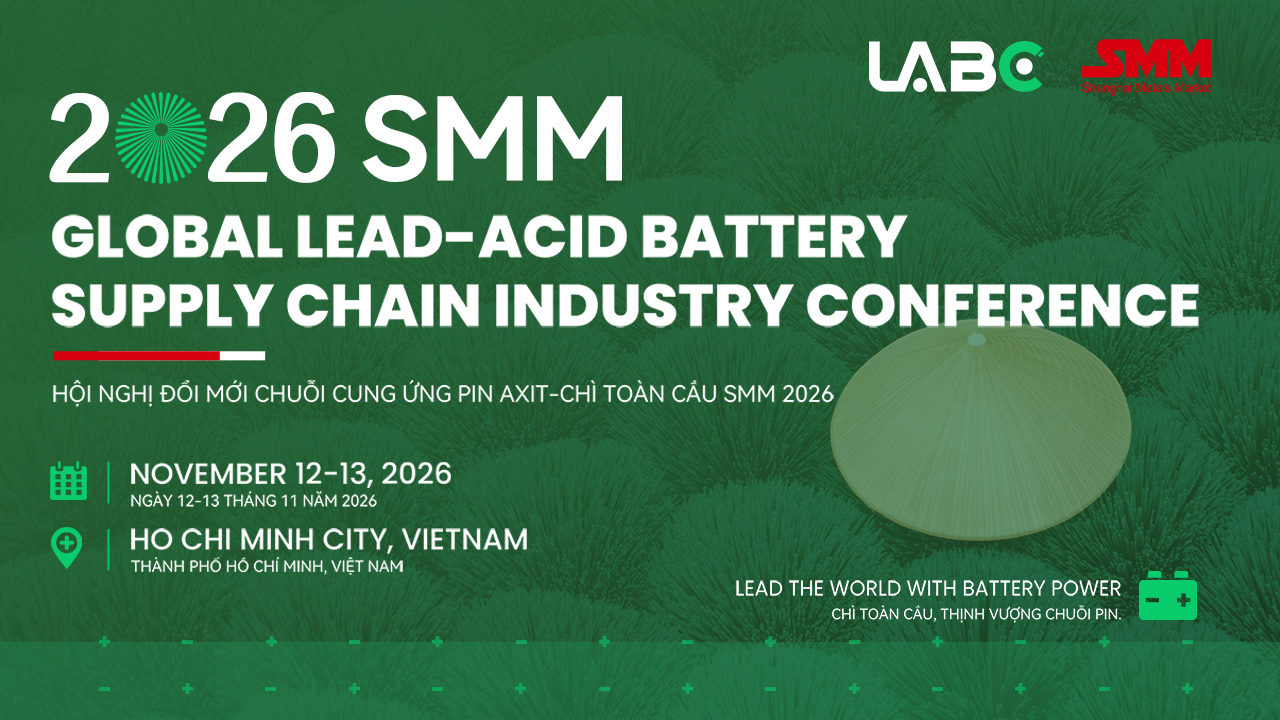 EventsNov 23 - 24, 2026 (GMT+8)Ho Chi Minh City, Vietnam
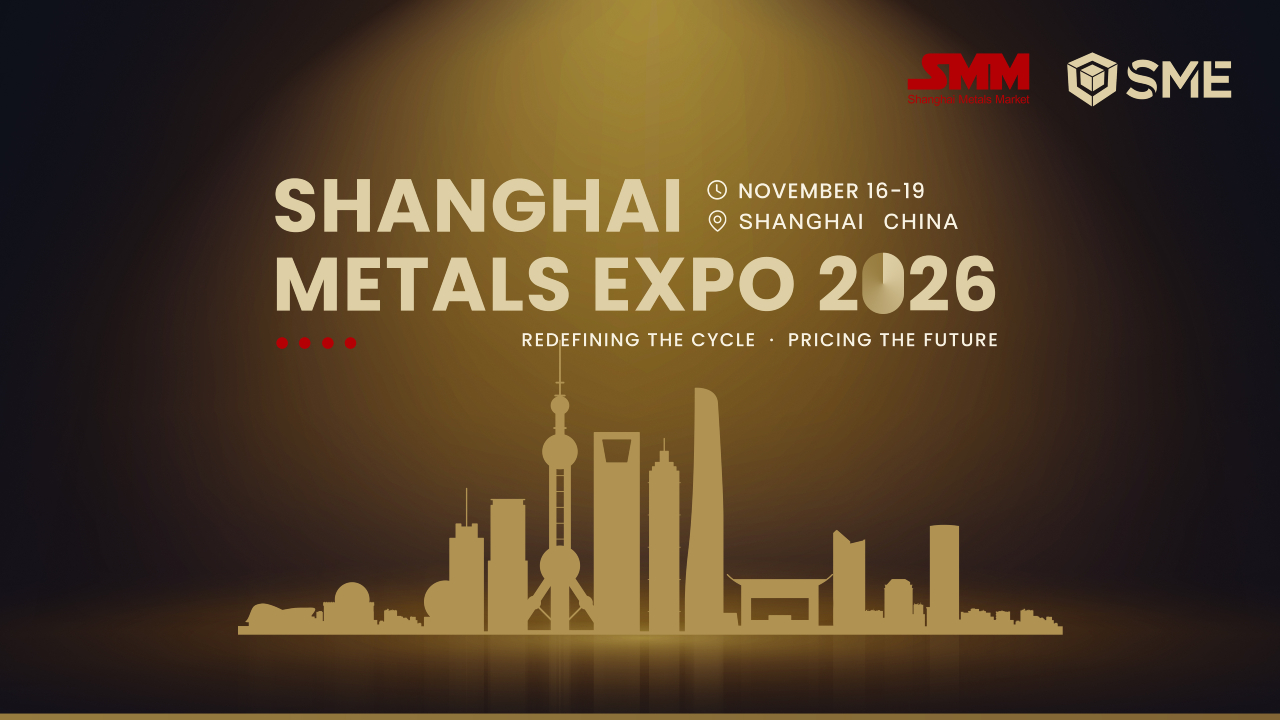 EventsNov 16 - 19, 2026 (GMT+8)Shanghai, China
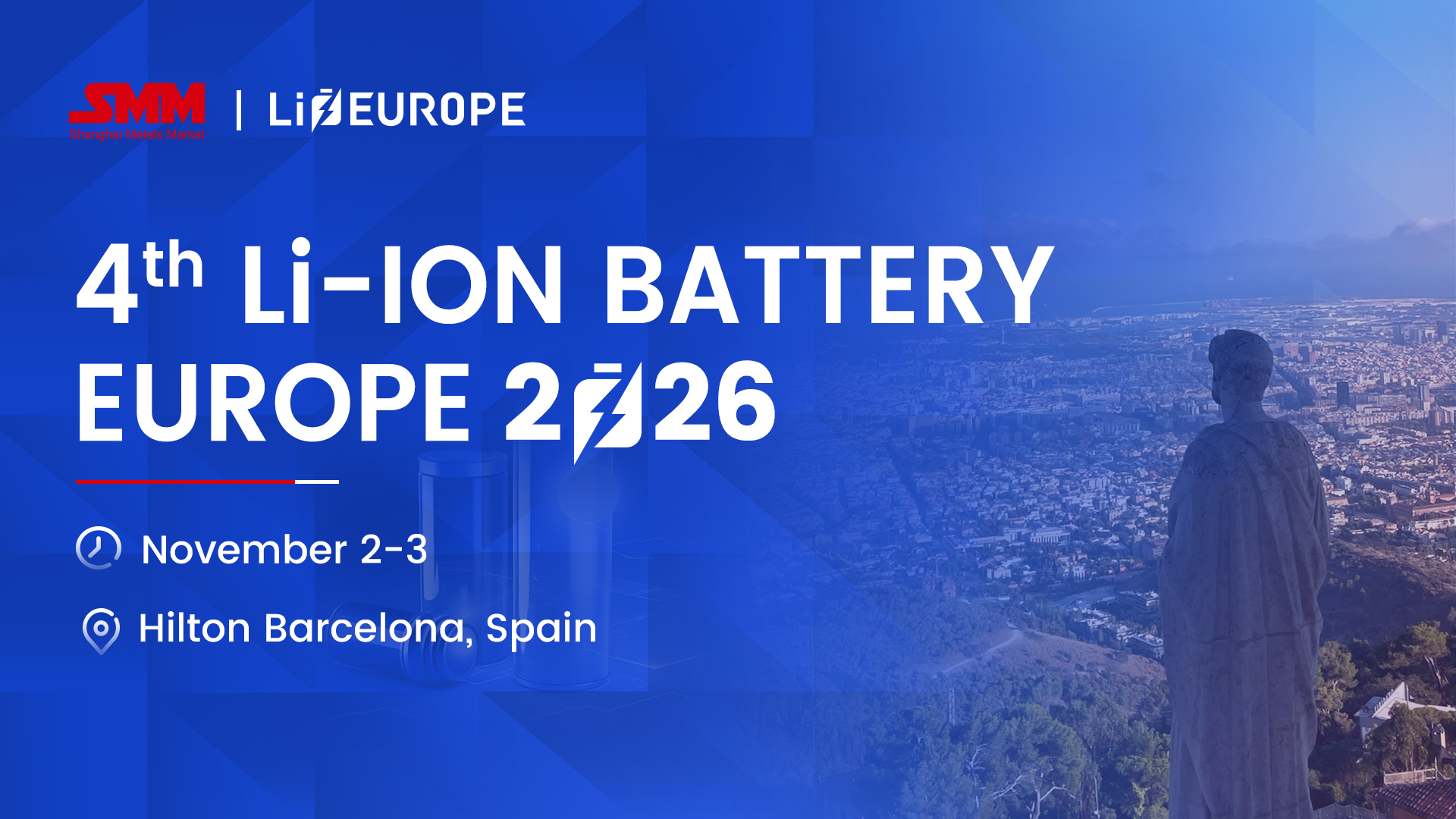 EventsNov 2 - 3, 2026 (GMT+8)Hilton Barcelona, Spain